March 11, 2011
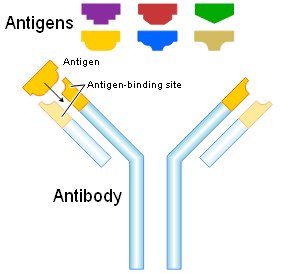

An antigen [ann-tuh-jen] is a protein expressed by a bacteria or virus that is recognized by an immune system as foreign which can stimulate the production of antibodies and combine specifically with them. Usually an antibody is a molecule, perhaps on the cell surface of a bacterium or virus. Antibodies are always ‘foreign’; except in rare cases the system is tolerant of its own molecules. Autoimmune diseases are caused when this safeguard fails. When an antigen is introduced into the body it causes the production of antibodies. Antigens include bacteria, cells of transplanted organs, plant pollen and toxins.
The first time that a new antigen comes into contact with the body the response of the immune system will be a complete immune response. During this first response, the antigen will cause antibodies to be made. The next time the same antigen contacts the body, a full scale immune response is not needed as the body already has a specific antibody available instantly for that antigen. This means that the body can begin fighting an infection much sooner for illnesses it has encountered before, and takes more time to begin to fight an infection in new illnesses.
Posted in Health, Language, Science |
Leave a Comment »
March 8, 2011


The glycemic index or GI is a measure of the effects of carbohydrates on blood sugar levels. Carbohydrates that break down quickly during digestion and release glucose rapidly into the bloodstream have a high GI; carbohydrates that break down more slowly, releasing glucose more gradually into the bloodstream, have a low GI.
The concept was developed by Dr. David J. Jenkins and colleagues in 1980 at the University of Toronto in their research to find out which foods were best for people with diabetes.
read more »
Posted in Food, Health, Science |
Leave a Comment »
March 7, 2011

Sarsaparilla [sas-puh-ril-uh] is a soft drink, originally made from the Smilax regelii plant, but now often made with artificial flavors. It was popular in the US in the 19th century. According to advertisements for patent medicines of the period, it was considered to be a remedy for skin and blood problems.
In Hollywood westerns from the 1930s to the 1950s, ordering sarsaparilla in a saloon (instead of whiskey) is often met with mockery by the manly cowboys nearby. Sarsaparilla drinks feature widely in American popular culture, particularly in works related to the American West. In the 1957-1961 ABC western television series, ‘Sugarfoot,’ the title character, Tom Brewster, played by Will Hutchins, is a teetotaler who orders sarsaparilla ‘with a dash of cherry’ whenever he enters a saloon.
read more »
Posted in Drugs, Food, Health |
Leave a Comment »
March 7, 2011

Spruce beer is a beverage flavored with the buds, needles, or essence of spruce trees. Spruce beer can refer to either alcoholic or non-alcoholic beverages. A number of flavors are associated with spruce-flavored beverages, ranging from floral, citrusy, and fruity to cola-like flavors to resinous and piney. This diversity in flavor likely comes from the choice of spruce species, the season in which the needles are harvested, and the manner of preparation.
The fresh shoots of many spruces and pines are a natural source of vitamin C. Captain Cook made alcoholic sugar-based spruce beer during his sea voyages in order to prevent scurvy in his crew. Though spruce has sometimes been used as a flavoring ingredient in beer, such as Alba Scots Pine Ale,[and the Alaskan Brewing Company’s Winter Ale, the only beer termed ‘spruce beer’ is Wigram Brewing Company’ Spruce Beer, which is based on Captain Cooks first beer brewed in New Zealand in 1773.
Posted in Drugs, Food, Health |
Leave a Comment »
March 7, 2011

Brain lateralization [lat-er-uh-luh-zey-shuhn] is the distribution of function into right and left hemispheres. In most brains the left hemisphere is the center of language, logic, and rationality and controls the right side of the body, and the right hemisphere is the focus of creativity, intuition, holistic thought, and controls the left side of the body. In common speech lateralization is referred to as handedness, the preference for using either the left or the right side of the body for certain things.
Lateralization occurs in animals when one side of the brain is stronger (more dominant) than the other. Until fairly recently it was thought humans preferred the left or right sides of their body was because they could speak. However, it was later discovered that many nonverbal species display lateralization. For example, elephants often have preferences for whether they swing their trunks to the left or the right. Honeybees have right antennas that are more sensitive to smells. Parrots can be left- or right-footed, and some are ambidextrous. Chickens and minnows like to look for food with one eye and look out for predators with the other.
Posted in Health, Language, Science |
Leave a Comment »
March 4, 2011


Eating Animals is the third book by the American writer Jonathan Safran Foer, published in 2009. It is a work of non-fiction exploring the topics of factory farming and commercial fisheries. He examines topics such as by-catch (fish caught unintentionally in a fishery while intending to catch other fish) and slaughterhouse conditions, learning that Indonesian shrimp trawlers kill 58 pounds of sea creatures for every 1 pound of shrimp, and that in American slaughterhouses, cows are consistently ‘bled, dismembered, and skinned while conscious.’
He also explores the health risks which pervade American factory farming, for example that H1N1 originated in a North Carolina factory farm, and that according to Consumer Reports, 98 percent of American chicken is infected with campylobacter or salmonella at the time of consumption. Foer also examines the cultural meaning of food, beginning with the experience of his own grandmother, who survived the holocaust, with a lifelong obsession over food. He builds on and ultimately criticizes the work of Michael Pollan on our relationship to the food we eat.
Posted in Art, Food, Health |
Leave a Comment »
March 3, 2011
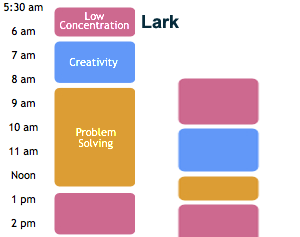

Chronotype is an attribute of animals, including human beings, reflecting at what time of the day their physical functions (hormone level, body temperature, cognitive faculties, eating and sleeping) are active. This phenomenon is commonly reduced to sleeping habits only, referring to people as ‘larks’ and ‘owls’ where morning people wake up early and are most alert in the first part of the day, and evening people are most alert in the late evening hours and prefer to go to bed late.
read more »
Posted in Health, Science |
Leave a Comment »
March 1, 2011
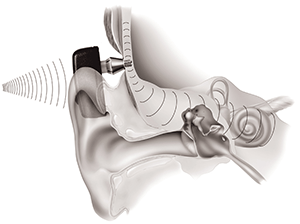

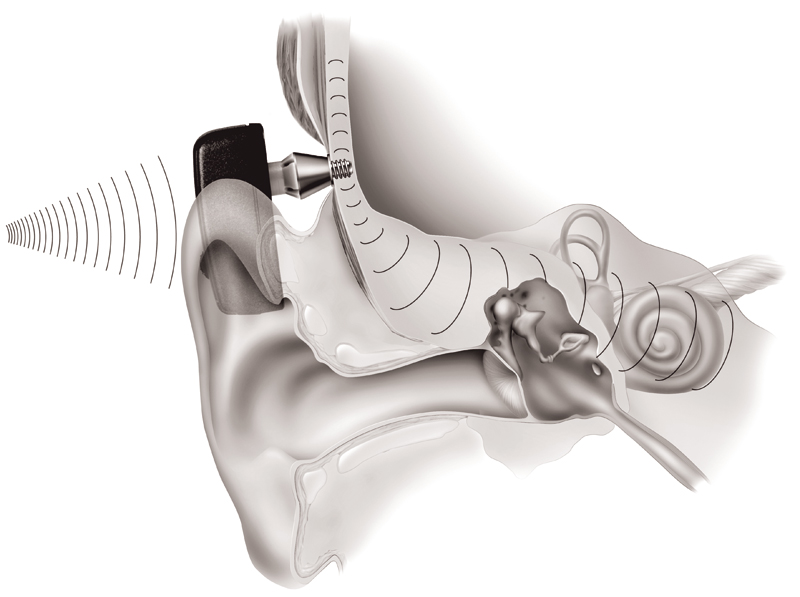
Bone conduction is the transmission of sound to the inner ear through the bones of the skull. Because the skull conducts low frequencies better than air, people perceive their own voices to be lower and deeper than others do. Bone conduction is ears-free, thus providing extended use comfort and safety, has high sound clarity in very noisy environments, and can be used with hearing protection.
However, some implementations require more power than headphones, and the overall clarity is not on par with traditional headphones and microphone due to reduced frequency bandwidth. One example of a bone conduction speaker is a piezo-electric flexing disc about 40mm across and 6mm thick used by scuba divers. Bone conduction transmission is also useful for individuals with impaired hearing.
Posted in Health, Technology |
Leave a Comment »
March 1, 2011

The anterior fornix erogenous zone (AFE or A-Spot) is a female erogenous zone that when stimulated can lead to rapid vaginal lubrication and arousal, sometimes without any other form of stimulation, with continued stimulation resulting in an intense orgasm. It is located at or near the deepest point on the anterior wall of the vagina, above the cervix, where the anterior wall of the vagina starts to curve upward. The posterior fornix is also believed to be an erogenous zone, called the ‘deep spot.’
Some believe that the AFE is the anterior fornix itself, but some sex experts believe it to be a degenerated female prostate (a theory that many have already applied to the G-spot and the Skene’s gland) or the area where the vaginal nerves connect, which is thought to be near it. One other theory is that it is the vesicouterine pouch, due to its proximity to the supposed location of the AFE zone and the supposed erogenous qualities of the rectouterine pouch. The AFE redirects female ejaculatory fluid, which is expelled from the Skene’s gland during G-spot orgasms, and turns it into vaginal lubrication. Because stimulating the AFE zone causes this mechanism and creates an erotic sensation simultaneously, full arousal occurs very quickly.
Posted in Health, Science, Sex |
1 Comment »
February 27, 2011
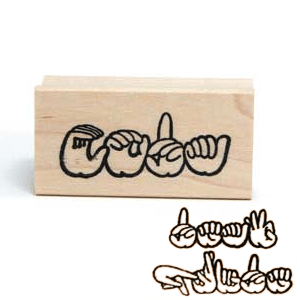
A child of a deaf adult, often known by the acronym CODA, is a person who was raised by a deaf parent or guardian. Many CODAs identify with both deaf and hearing cultures. The organization CODA (Children of Deaf Adults) was established in 1983 for hearing children of deaf adults in the United States. CODA began hosting annual conferences in 1986, in Fremont, California. The conferences have grown, taking on an international status with attendees hailing from worldwide.
Posted in Health, Language, Politics |
Leave a Comment »
February 24, 2011
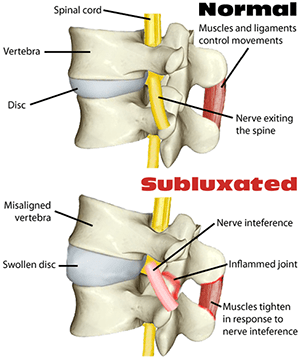
Vertebral [vur-tuh-bruhl] subluxation [suhb-luhk-sey-shuhn] is a controversial term that is commonly used by chiropractors to describe signs and symptoms of the spinal column. The chiropractic vertebral subluxation complex has been a source of controversy since its inception in 1895 due to its metaphysical origins and claims of far reaching effects on health and disease. Although some in the chiropractic profession reject the concept of subluxation and shun the use of this term as a diagnosis, its current and officially accepted status by the profession has been repeatedly confirmed.
In 2010 the General Chiropractic Council, the statutory regulatory body for chiropractors in the United Kingdom, issued guidance for chiropractors stating that the chiropractic vertebral subluxation complex ‘is not supported by any clinical research evidence that would allow claims to be made that it is the cause of disease or health concerns.’ A similar stance is taken by the National Health Service: ‘There is also no scientific evidence to support the idea that most illness is caused by misalignment of the spine.’
Posted in Health, Language, Science |
Leave a Comment »
February 23, 2011
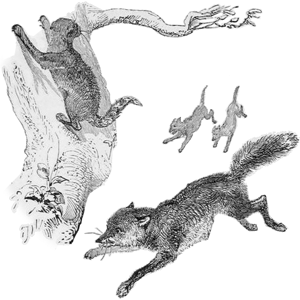
The term ‘analysis paralysis‘ refers to over-analyzing (or over-thinking) a situation, so that a decision or action is never taken, in effect paralyzing the outcome. A decision can be treated as over-complicated, with too many detailed options, so that a choice is never made, rather than try something and change if a major problem arises. A person might be seeking the optimal or ‘perfect’ solution upfront, and fear making any decision which could lead to erroneous results, when on the way to a better solution.
In Aesop’s Fables’ ‘The Fox and the Cat,’ the fox has ‘hundreds of ways of escaping’ while the cat has ‘only one.’ When they heard the hounds approaching, the cat scampered up a tree while ‘the Fox in his confusion was caught up by the hounds.’ The fable ends with the moral, ‘Better one safe way than a hundred on which you cannot reckon.’
Posted in Health, Language |
Leave a Comment »



 The Daily Omnivore