November 17, 2014
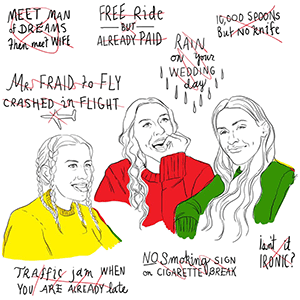
Irony is when something happens that is opposite from what is expected. In literature, it is sometimes used for comedic effect, but it is also used in tragedies. There are many types of irony, such as ‘dramatic irony’ (when the audience knows something is going to happen on stage that the characters on stage do not), ‘Socratic irony’ (when a teacher feigns ignorance to his students), ‘cosmic irony’ (when something that everyone thinks will happen actually happens very differently — as opposed to ‘situational irony’ that only affects a small group or individual), ‘verbal irony’ (an absence of expression and intention or the use of sarcasm), and ‘ironic fate’ (misfortune as the result of fate or chance).
The word ‘irony’ comes from Ancient Greek (‘eironeia’: ‘dissimulation, feigned ignorance’), in specific terms it is a rhetorical device, literary technique, or event characterized by an incongruity, or contrast, between what the expectations of a situation are and what is really the case, with a third element, that defines that what is really the case is ironic because of the situation that led to it. Verbal, dramatic, and situational irony are often used to underscore the assertion of a truth. The ironic form of simile, used in sarcasm, and some forms of litotes (understatement used to emphasize a point by denying the opposite) can highlight one’s meaning by the deliberate use of language which states the opposite of the truth, denies the contrary of the truth, or drastically and obviously understates a factual connection.
read more »
Posted in Art, Humor, Language |
1 Comment »
November 8, 2014
Bathroom singing is common because the hard wall surfaces, often tiles or wooden panels, and lack of soft furnishings, create an aurally pleasing acoustic environment. The multiple reflections from walls enrich the sound of one’s voice. Small dimensions and hard surfaces of a typical bathroom produce various kinds of standing waves, reverberation and echoes, giving the voice ‘fullness and depth.’
This habit was first reported (with an attempt of explanations) in the 14th century by Arab historian Ibn Khaldun. In Chapter 1 of his ‘Muqaddimah’ writes: ‘Likewise, when those who enjoy a hot bath inhale the air of the bath, so that the heat of the air enters their spirits and makes them hot, they are found to experience joy. It often happens that they start singing, as singing has its origin in gladness.’
read more »
Posted in Art, Humor |
1 Comment »
November 8, 2014


Gelotology [jel-uh-tol-uh-jee] (from the Greek ‘gelos,’ meaning ‘laughter’) is the study of laughter and its effects on the body, from a psychological and physiological perspective. Its proponents often advocate induction of laughter on therapeutic grounds in complementary medicine. The field of study was pioneered by psychiatrist William F. Fry at Stanford.
Although healers since antiquity have recommended laughter as a form of medicine, the field was initially deprecated by most other physicians, who doubted that laughter possessed analgesic (painkilling) qualities. One early study that demonstrated the effectiveness of laughter in a clinical setting showed that it could help patients with atopic dermatitis (a recurring, itchy skin disorder) respond less to allergens. Other studies have shown that laughter can help alleviate stress and pain, and can even assist cardiopulmonary rehabilitation (treatment for patients recovering from cardiac surgeries).
read more »
Posted in Health, Humor, Science |
Leave a Comment »
November 5, 2014

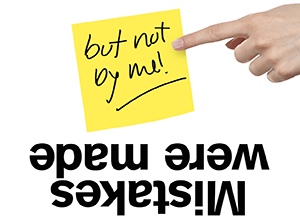
Cover your ass (CYA) describes activity, usually in a work-related or bureaucratic context, done by an individual to protect himself or herself from possible subsequent legal penalties or criticism. According to lexicographer William Safire, it describes the bureaucratic technique of ‘deflecting responsibility in advance,’ that is, diffusing responsibility for one’s actions as a form of insurance against possible negative repercussions. It can denote a type of institutional risk-averse mentality which works against accountability and responsibility, often characterized by excessive paperwork and documentation (red tape), which can be harmful to the institution’s overall effectiveness.
The activity, sometimes seen as instinctive, is generally unnecessary towards accomplishing the goals of the organization, but helpful to protect a particular individual’s career within it, and it can be seen as a type of institutional corruption working against individual initiative. In a slightly different sense, it can be used to describe rightful steps to protect oneself properly while in a difficult situation, such as what steps to take to protect oneself after being fired (due diligence).
read more »
Posted in Humor, Language, Politics |
Leave a Comment »
November 4, 2014

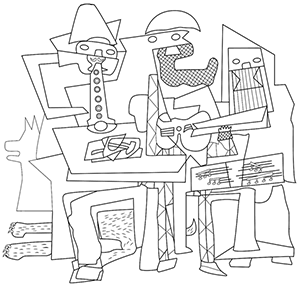
Commedia [kuh-mey-dee-uh] dell’arte [del-ahr-tee] is a form of improvisational theater that began in Italy in the 16th century. The actors often wore masks and the stories were often about the cunning pursuit of love, money, or simply food. The genre developed several stock characters that represent fixed social types, such as foolish old men, devious servants, or military officers full of false bravado including Harlequin (comic servant), Pantalone (rich old miser), Colombina (tricky slave wife), Pulcinella (disfigured trickster), Pierrot (unrequited clown), and Scaramuccia (roguish clown).
Stock characters can be divided into three groups, ‘Innamorati’ (‘The Lovers,’ who are never masked nor well developed as characters), ‘Vecchi’ (‘The Old People,’ often the Lovers’ parents, who get in the way of their romance), and ‘Zanni’ (‘The Servants/ Commoners,’ always hungry, and often responsible for the Lovers finding their way to the altar). Characters such as Pantalone, the Venetian merchant; Dottore Gratiano, the pedant from Bologna; or Arlecchino, the mischievous servant from Bergamo, began as satires on Italian ‘types’ and became the archetypes of many of the favorite characters of 17th- and 18th-century European theater.
read more »
Posted in Art, Humor, Language |
1 Comment »
October 20, 2014


In engineering, fiction, and thought experiments, unobtainium [uhn-uhb-tey-nee-uhm] is any fictional, extremely rare, costly, or impossible material, or (less commonly) device needed to fulfill a given design for a given application. The properties of any particular unobtainium depend on the intended use. For example, a pulley made of unobtainium might be massless and frictionless; however, if used in a nuclear rocket, unobtainium would be light, strong at high temperatures, and resistant to radiation damage. The concept of unobtainium is often applied flippantly or humorously.
Since the late 1950s, aerospace engineers have used the term when referring to unusual or costly materials, or when theoretically considering a material perfect for their needs in all respects, except that it does not exist. By the 1990s, the term was in wide use, even in formal engineering papers such as ‘Towards unobtainium [new composite materials for space applications].’ The word may well have been coined in the aerospace industry to refer to materials capable of withstanding the extreme temperatures expected in reentry. Aerospace engineers are frequently tempted to design aircraft which require parts with strength or resilience beyond that of currently available materials.
read more »
Posted in Art, Humor, Technology |
Leave a Comment »
October 3, 2014

Comic relief is the inclusion of a humorous character, scene, or witty dialogue in an otherwise serious work, often to relieve tension. It is a narrative technique that momentarily alleviates the stressful emotions and angst building up in a dramatic story. Comic relief often takes the form of a bumbling, wisecracking sidekick of the hero or villain in a work of fiction. The secondary character will often remark on the absurdity of the hero’s situation and make comments that would be inappropriate for a character who is to be taken seriously. Other characters may use comic relief as a means to irritate others or keep themselves confident.
Comic relief can also occur during dramatic moments in comedies. Greek tragedy does not allow any comic relief. Even the Elizabethan critic Sidney following Horace’s ‘Ars Poetic’ pleaded for the exclusion of comic elements from a tragic drama. But in Renaissance England, Marlowe among the University Wits (a group of late-16th-century English playwrights and pamphleteers who were educated at Oxford or Cambridge) introduced comic relief through the presentation of crude scenes in ‘Doctor Faustus’ following the native tradition of Interlude which was usually introduced between two tragic plays. In fact, in the classical tradition the mingling of the tragic and the comic was not allowed.
Posted in Art, Humor |
Leave a Comment »
October 2, 2014
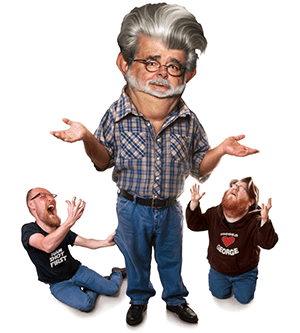
Jar Jar Binks is a fictional character from the Star Wars saga created by George Lucas for his prequel trilogy. He was the first lead computer generated character of the franchise, he was portrayed by Ahmed Best in most of his appearances. Jar Jar’s primary role in ‘Episode I’ was to provide comic relief for the audience, and was generally met with extremely negative comments from both critics and viewers. He is often acknowledged as one of the worst and most hated characters of all time.
Joe Morgenstern of ‘The Wall Street Journal’ described him as a ‘Rastafarian Stepin Fetchit on platform hoofs, crossed annoyingly with Butterfly McQueen.’ Race theorist Patricia J. Williams suggested that many aspects of Jar Jar’s character are reminiscent of blackface minstrelsy, while others have suggested the character is a ‘laid-back clown character’ representing a black Caribbean stereotype. George Lucas has denied any racist implications. Ahmed Best also rejected the allegations, saying that ‘Jar Jar has nothing to do with the Caribbean.’
read more »
Posted in Art, Humor |
Leave a Comment »
September 16, 2014

Blonde hair has several stereotypes associated with it. In women is has been considered attractive and desirable, but is also associate with the negative stereotypes of the women ‘who relies on her looks rather than on intelligence.’ The latter stereotype of a ‘dumb blonde’ is exploited in ‘blonde jokes.’ In cognitive linguistics, the stereotype uses expressivity of words to affect an emotional response which determines a gender role of a certain kind. In feminist critique, stereotypes like the blonde bombshell or the dumb blonde’ are seen as negative images that undermine the power of women.
Some blonde jokes rely on sexual humor to portray or stereotype their subjects as promiscuous. Many of these are rephrased ‘Valley girl’ or ‘Essex girl’ jokes. Others are based on long-running ethnic jokes, such as humor denigrating the intelligence of Polish people. Similar jokes about stereotyped minorities have circulated since the seventeenth century with only the wording and targeted groups changed. In 20th century, a class of meta-jokes about blondes (i.e. jokes about blonde jokes) has emerged where a blonde person complains about the unfairness of the stereotype propagated by blonde jokes, with a punch line actually reinforcing the stereotype.
read more »
Posted in Humor, Science, Sex |
Leave a Comment »
August 20, 2014
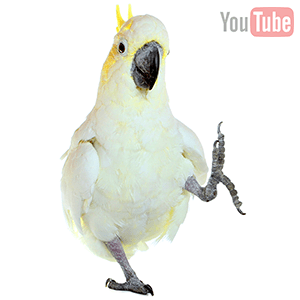
Snowball (hatched c. 1996) is a male Eleonora Cockatoo, noted as being the first non-human animal conclusively demonstrated to be capable of beat induction— perceiving music and synchronizing body movements to the beat (i.e., dancing).
Snowball’s abilities first became apparent after being acquired from a bird show at the age of six by his previous owner. He was observed bobbing his head in time to the Backstreet Boys song, ‘Everybody (Backstreet’s Back).’ The owner and his children encouraged this behavior and observed him developing rhythmic foot-lifting gestures, perhaps in imitation of his human companions’ arm-lifting gestures.
read more »
Posted in Art, Humor, Science |
Leave a Comment »
August 5, 2014
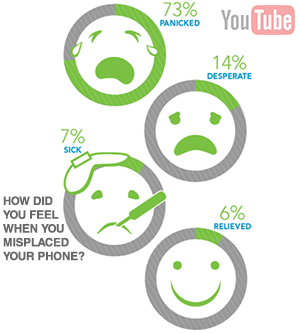
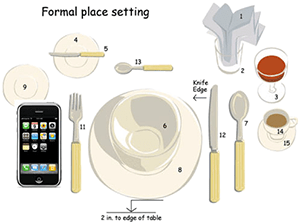
Nomophobia (‘no-mobile-phone phobia’) is the fear of being out of mobile phone contact. The term was coined during a 2010 study by the UK Post Office who commissioned YouGov, a UK-based research organization to look at anxieties suffered by mobile phone users. The study found that nearly 53% of mobile phone users in Britain tend to be anxious when they ‘lose their mobile phone, run out of battery or credit, or have no network coverage.’ The study found that about 58% of men and 47% of women suffer from the phobia, and an additional 9% feel stressed when their mobile phones are off.
The study indicated that stress levels induced by the average case of nomophobia are similar in severity to ‘wedding day jitters’ and trips to the dentists. Ten percent of those questioned said they needed to be contactable at all times because of work. It is, however, arguable that the word ‘phobia’ is misused and that in the majority of cases it is only a normal anxiety. More than one in two nomophobes never switch off their mobile phones. The study prompted two editorial columns authored by those who minimize their mobile phone use or choose not to own one at all, treating the condition with levity or outright disbelief.
Posted in Health, Humor, Technology |
Leave a Comment »
July 23, 2014

The picaresque [pik-uh-resk] novel (Spanish:’picaresca,’ from ‘pícaro,’ for ‘rogue’ or ‘rascal’) is a popular subgenre of prose fiction which might sometimes be satirical and depicts, in realistic and often humorous detail, the adventures of a roguish hero of low social class who lives by his wits in a corrupt society. This style of novel originated in 16th-century Spain and flourished throughout Europe in the 17th and 18th centuries. The word ‘picaro’ does not appear in ‘Lazarillo de Tormes’ (1554), the novella credited with founding the genre. The expression ‘picaresque novel’ was coined in 1810. The genre continues to influence modern literature.
Picaresque novels are usually written in first person as an autobiographical account. A Lazarillo or picaro character is an alienated outsider, whose ability to expose and ridicule individuals compromised with society gives him a revolutionary stance. Lazarillo states that the motivation for his writing is to communicate his experiences of overcoming deception, hypocrisy, and falsehood (desengaño).
read more »
Posted in Art, Humor |
1 Comment »



 The Daily Omnivore