November 20, 2015
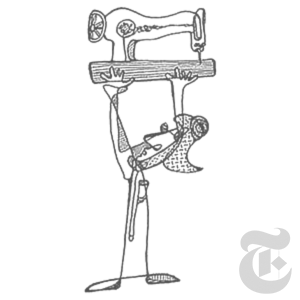
Red mercury is a hoax substance of uncertain composition purportedly used in the creation of nuclear bombs, as well as a variety of unrelated weapons systems. It is purported to be mercuric iodide, a poisonous, odorless, tasteless, water-insoluble scarlet-red powder that becomes yellow when heated above 126 °C (258 °F), due to a thermochromatic change in crystalline structure.
However, samples of ‘red mercury’ obtained from arrested would-be terrorists invariably consisted of nothing more than various red dyes or powders of little value, which some suspect was being sold as part of a campaign intended to flush out potential nuclear smugglers. The hoax was first reported in 1979 and was commonly discussed in the media in the 1990s. Prices as high as $1,800,000 per kilogram were reported.
read more »
Posted in Humor, Science, War |
1 Comment »
November 3, 2015

QI (‘Quite Interesting’) is a British television quiz show hosted by comedian Stephen Fry. There are four contestants in each show, of whom one is always stand-up comic Alan Davies. Most of the questions are extremely obscure, making it unlikely that the correct answer will be given. To compensate, points are awarded not only for right answers, but also for interesting ones, regardless of whether they are right or even relate to the original question.
QI has stated it follows a philosophy: everything in the world, even that which appears to be the most boring, is ‘quite interesting’ if looked at in the right way.
read more »
Posted in Art, Games, Humor |
1 Comment »
October 29, 2015

You ain’t gonna need it (YAGNI) is a principle of extreme programming (XP) that states a programmer should not add functionality until deemed necessary. XP co-founder Ron Jeffries said: ‘Always implement things when you actually need them, never when you just foresee that you need them.’ Jeffries argues that prematurely adding features leads to software bloat, feature creep, and takes time away from core functionality improvement.
YAGNI is a principle behind the XP practice of ‘do the simplest thing that could possibly work’ (DTSTTCPW). It is meant to be used in combination with several other practices, such as continuous refactoring (code reorganization), continuous automated unit testing, and continuous integration (conforming code segments work within the larger codebase). However, the efficacy of YAGNI, even when considered in combination with safeguards, is controversial.
Posted in Humor, Language, Technology |
Leave a Comment »
September 19, 2015
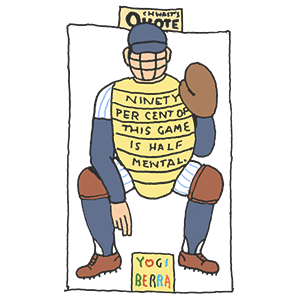
An Irish bull is a ludicrous, incongruent or logically absurd statement, generally unrecognized as such by its author. The addition of the epithet Irish is a late addition. The ‘Irish bull’ is to the sense of a statement what the dangling participle is to the syntax. A jarring or amusing absurdity is created by hastiness or lack of attention to speech or writing.
Although, strictly speaking, Irish bulls are so structured grammatically as to be logically meaningless, their actual effect upon listeners is usually to give vivid illustrations to obvious truths. Hence, as John Pentland Mahaffy, Provost of Trinity College, Dublin, famously observed, ‘an Irish bull is always pregnant,’ i.e. with truthful meaning.
read more »
Posted in Humor, Language, World |
2 Comments »
July 16, 2015

A user error is an error made by the human user of a complex system, usually a computer system, in interacting with it. Related terms such as PEBCAK (Problem Exists Between Chair And Keyboard), ID-10T error (idiot error), and other similar phrases are also used as slang in technical circles with derogatory meaning. A highly popularized example of this is a user mistaking their CD-ROM tray for a cup holder, or a user looking for the ‘any key.’
This usage implies a lack of computer savvy, asserting that problems arising when using a device are the fault of the user. Critics of the term argue that the problems are caused instead by a device that doesn’t take into account human limitations and is thus designed in a way that induces errors.
read more »
Posted in Humor, Technology |
Leave a Comment »
May 27, 2015
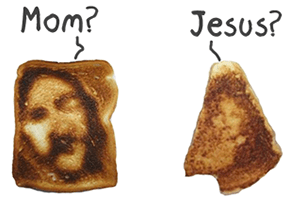
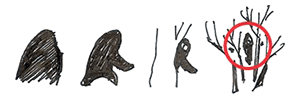
The term Lourdes [loordz] effect was coined by Belgian philosopher and skeptic Etienne Vermeersch to describe the observation that supernatural powers never manifest themselves in a completely unambiguous fashion. According to Vermeersch, should the miraculous power of Lourdes actually exist there would be no reason to think that it would be more difficult for the Virgin Mary or God to reattach a severed arm than to cure paralysis or blindness.
The accounts and photos of, for instance, the Loch Ness Monster and the Yeti lack reliability and clarity due to a similar effect. Vermeersch uses this term to mock what he calls the selective and uncritical approach to miracles, or the frivolous attribution of supernatural gifts to human beings.
Posted in Humor, Philosophy, Science |
1 Comment »
May 17, 2015

Grim Fandango is a dark comedy neo-noir adventure game released by LucasArts in 1998 for Windows, with game designer Tim Schafer as project leader. It is the first adventure game by LucasArts to use 3D computer graphics overlaid on pre-rendered, static backgrounds. As with other LucasArts adventure games, the player must converse with other characters and examine, collect, and use objects correctly to solve puzzles in order to progress.
Grim Fandango ’s world combines elements of the Aztec belief of afterlife with style aspects of film noir, including ‘The Maltese Falcon,’ ‘On the Waterfront, ‘and ‘Casablanca,’ to create the Land of the Dead, through which recently departed souls, represented in the game as calaca-like figures, must travel before they reach their final destination, the Ninth Underworld. The story follows travel agent Manuel ‘Manny’ Calavera as he attempts to save Mercedes ‘Meche’ Colomar, a newly arrived but virtuous soul, during her long journey.
read more »
Posted in Art, Games, Humor |
Leave a Comment »
May 6, 2015
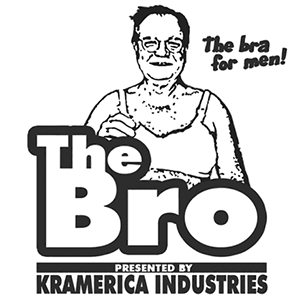
A male bra (also known as a compression bra, compression vest, or gynecomastia vest) is a brassiere worn by a man. Adolescent boys and middle-aged men sometimes develop breasts (gynecomastia). Although there are options for treating gynecomastia, some elect surgery to reduce their breasts or wear a male bra, which typically flatten rather than lift. Other men wear bras for cross-dressing, for sexual purposes such as transvestic fetishism or feminization, or as a form of submission to their partner.
Additionally, some male athletes – more specifically runners – may choose to wear a sports bra under their shirts in order to prevent a common medical condition called jogger’s nipple, also known as nipple chafing. This condition is caused by excessive rubbing of wet sweat-soaked material over one’s nipples. In an episode ‘Seinfeld,’ titled ‘The Doorman,’ Kramer invented a male bra, which he called a ‘bro,’ for Frank Costanza, who was said to have very large breasts. Frank initially decided to market the invention, but disagreed on the name, instead wanting to call it a ‘Manssiere.’
Posted in Health, Humor, Sex |
Leave a Comment »
May 5, 2015
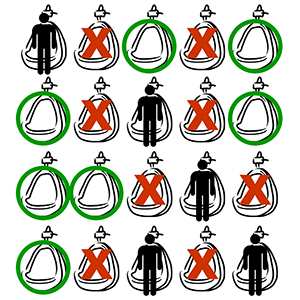
Male Restroom Etiquette is a 2006 American short subject created by humorist Phil R. Rice and produced by his company Zarathustra Studios. The film is a mockumentary about unwritten rules of behavior in male restrooms and is intended to be a parody of educational and social guidance films. The film was made using the machinima technique of recording video footage from computer games, namely ‘The Sims 2’ and ‘SimCity 4.’ In the short, the narrator states that increased cultural diversity has necessitated the exposition of previously unwritten rules regarding the use of malerestrooms.
According to these rules, males should use restrooms as quickly as possible, maximize physical separation from each other when using urinals, flush urinals when they contain concentrated urine, avoid stalls with unflushed toilets, and avoid eye contact and communication with others. The film depicts a scenario in which excess communication leads to a mess in the restroom and thus deficient hygiene and homeostasis, the latter of which is in the lowest tier in Maslow’s hierarchy of needs. As the scenario continues, the restroom occupants turn to violence, leading to police and biological hazard team involvement that closes the restroom. Forced to go elsewhere, other men repeat the scenario, eventually leading to complete societal breakdown.
Posted in Games, Humor |
1 Comment »
April 28, 2015

An anti-proverb or a ‘perverb’ is the transformation of a standard proverb for humorous effect. Paremiologist (proverb scholar) Wolfgang Mieder defines them as ‘parodied, twisted, or fractured proverbs that reveal humorous or satirical speech play with traditional proverbial wisdom.’ They have also been defined as ‘an allusive distortion, parody, misapplication, or unexpected contextualization of a recognized proverb, usually for comic or satiric.’
To have full effect, an anti-proverb must be based on a known proverb. For example, ‘If at first you don’t succeed, quit’ is only funny if the hearer knows the standard proverb ‘If at first you don’t succeed, try, try again.’ Anti-proverbs are used commonly in advertising, such as ‘Put your burger where your mouth is’ from Red Robin. Anti-proverbs are also common on T-shirts, such as ‘Taste makes waist’ and ‘If at first you don’t succeed, skydiving is not for you.’
read more »
Posted in Humor, Language |
2 Comments »
April 21, 2015

Project Blue Book was one of a series of systematic studies of unidentified flying objects (UFOs) conducted by the United States Air Force. It started in 1952, and it was the third study of its kind (the first two were projects ‘Sign’ in 1947 and ‘Grudge’ in 1949). A termination order was given for the study in 1969. Project Blue Book had two goals: To determine if UFOs were a threat to national security, and To scientifically analyze UFO-related data. Thousands of UFO reports were collected, analyzed and filed.
As the result of the ‘Condon Report’ (1968), which concluded there was nothing anomalous about UFOs, Project Blue Book was ordered shut down in 1970. Ultimately, Project Blue Book stated that UFOs sightings were generated as a result of: hysteria, fraud, hoaxes, and misidentification. The Air Force continues to provide the following summary of its investigations: ‘There was no evidence indicating that sightings categorized as ‘unidentified’ were extraterrestrial vehicles.’
read more »
Posted in Humor, Technology, War |
Leave a Comment »
April 10, 2015

In terms of fiction, a quibble [kwib-uhl] is a plot device, used to fulfill the exact verbal conditions of an agreement in order to avoid the intended meaning. Typically quibbles are used in legal bargains and, in fantasy, magically enforced ones. In one of the best known examples, William Shakespeare used a quibble in ‘The Merchant of Venice.’ Portia saves Antonio in a court of law by pointing out that the agreement called for a pound of flesh, but no blood, and therefore Shylock can collect only if he sheds no blood.
A ‘pact with the Devil’ commonly contains clauses that allow the devil to quibble over what he grants, and equally commonly, the maker of the pact finds a quibble to escape the bargain. In Norse mythology, Loki, having bet his head with Brokk and lost, forbids Brokk to take any part of his neck, saying he had not bet it; Brokk is able only to sew his lips shut.
read more »
Posted in Humor, Language, Politics |
1 Comment »



