June 3, 2013
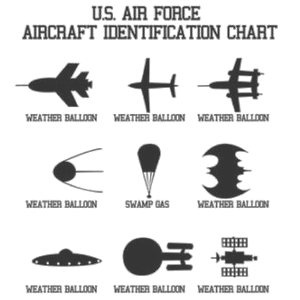
Area 51 is a military base, and a remote detachment of Edwards Air Force Base. It is in the southern portion of Nevada, 83 miles north-northwest of downtown Las Vegas. At its center, on the southern shore of Groom Lake, is a large military airfield. The base’s primary purpose is to support development and testing of experimental aircraft and weapons systems. Though the name ‘Area 51’ is used in official CIA documentation, other names used for the facility include ‘Dreamland,’ ‘Paradise Ranch,’ ‘Home Base,’ ‘Watertown Strip,’ ‘Groom Lake,’ and most recently ‘Homey Airport.’
The area is part of the Nellis Military Operations Area, and the restricted airspace around the field is referred to as R- 4808N, known by the military pilots in the area as ‘The Box’ or ‘the Container.’ The intense secrecy surrounding the base, the very existence of which the US government did not even acknowledge until 2003, has made it the frequent subject of conspiracy theories and a central component to unidentified flying object (UFO) folklore.
Posted in Humor, Technology, War |
Leave a Comment »
May 31, 2013
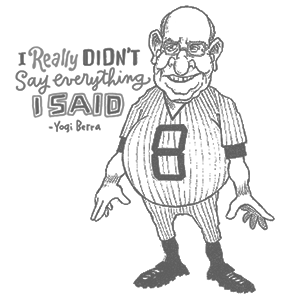
A howler is a glaring blunder, typically an amusing one. Eric Partridge’s ‘A Dictionary of Slang and Unconventional English’ (1951) defined it in part as: ‘… A glaring (and amusing) blunder: from before 1890; … also, a tremendous lie … Literally something that howls or cries for notice, or perhaps … by way of contracting howling blunder.’ Another common interpretation of this usage is that a howler is a mistake fit to make one howl with laughter.
All over the world, probably in all natural languages, there are many informal terms for blunders; the English term ‘howler’ occurs in many translating dictionaries. There are other colloquial English words for howler, in particular the mainly United States and Canadian slang term ‘boner’ which has various interpretations, including that of blunder. Like howler, boner can be used in any sense to mean an ignominious and usually laughable blunder, and also like howler, it has been used in the titles of published collections of largely schoolboy blunders since at least the 1930s.
read more »
Posted in Humor, Language |
Leave a Comment »
May 29, 2013
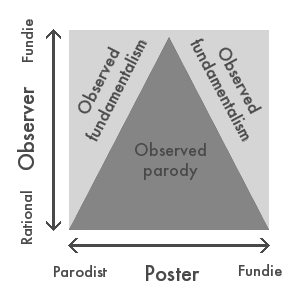
Poe’s law is an Internet adage reflecting the idea that without a clear indication of the author’s intent, it is difficult or impossible to tell the difference between an expression of sincere extremism and a parody of extremism. A corollary of Poe’s law is the reverse phenomenon: sincere fundamentalist beliefs can be mistaken for a parody of those beliefs.
The statement was formulated in 2005 by Nathan Poe on the website christianforums.com in a debate about creationism. The original sentence read: ‘Without a winking smiley or other blatant display of humor, it is utterly impossible to parody a Creationist in such a way that someone won’t mistake [it] for the genuine article.’
read more »
Posted in Humor, Language, Philosophy |
Leave a Comment »
May 29, 2013
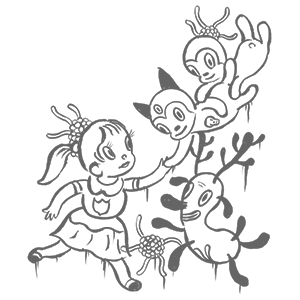
Gary Baseman (b. 1960) is a contemporary artist who works in various creative fields, including illustration, fine art, toy design, and animation. He is the creator of the Emmy-winning ABC/Disney cartoon series, ‘Teacher’s Pet,’ and the artistic designer of ‘Cranium,’ a popular board game.
Baseman’s aesthetic combines iconic pop art images, pre- and post-war vintage motifs, cross-cultural mythology and literary and psychological archetypes. He is noted for his playful, devious and cleverly named creatures, which recur throughout his body of work. Baseman’s art is frequently associated with the lowbrow pop movement, also known as pop surrealism.
read more »
Posted in Art, Games, Humor |
Leave a Comment »
May 24, 2013
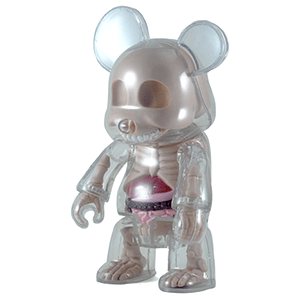
Jason Freeny (b. 1970) is a New York-based artist specialising in sculpture and computer-generated imagery. He is the owner of the Moist Production studio, which acts as the primary publisher and distributor of his works. He is best known for his anatomical art, where he produces cutaway drawings of (typically toy) inanimate objects such as a Lego man, Barbie doll, the animated fish Nemo or a balloon art dog. Jason’s sculptural and illustration work has been the basis for several mass-produced toys.
He has collaborated with Hong Kong-based Toy2R (working on the Qee figurines), Hong Kong-based Fame Master toys producing Gummy bear anatomical toys, United States-based Jailbreak Collective producing the ‘CAPSL’ collectable series and United States-based Marbles the Brain Store creating Freeny’s Brain Cube puzzle.
Posted in Art, Humor |
Leave a Comment »
May 24, 2013
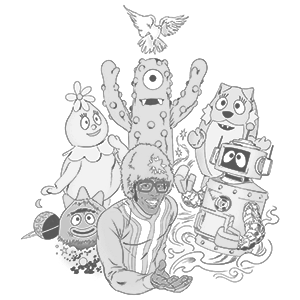
Yo Gabba Gabba! is an American children’s television show that airs on the Nick Jr. cable network. Created by Christian Jacobs (lead singer of the Aquabats) and Scott Schultz, the series premiered in 2007.
Popular artists appearing on the show include The Killers, Jimmy Eat World, Solange Knowles, Devo, Of Montreal, Chromeo, My Chemical Romance, Weezer, The Roots, MGMT, Jack Black, Tony Hawk, Elijah Wood, and The Ting Tings. Among the varied animation sequences during the show is ‘Super Martian Robot Girl,’ designed by indie cartoonists Evan Dorkin and Sarah Dyer. The toy models of the characters that appear at the beginning and end of each show were made by designer toy firm Kidrobot.
read more »
Posted in Art, Education, Humor |
Leave a Comment »
May 22, 2013
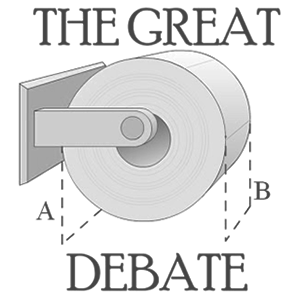
The concept of irreconcilable differences (sometimes called irremediable breakdown, irretrievable breakdown, or incompatibility) provides possible grounds for divorce in a number of jurisdictions. Australian family law uses a no-fault divorce approach, and irreconcilable differences is the sole grounds for divorce, with adequate proof being that the estranged couple have been separated for more than 12 months. In the United States, this is one of several possible grounds.
Often, it is used as justification for a no-fault divorce. In many cases, irreconcilable differences were the original and only grounds for no-fault divorce, such as in California, which enacted America’s first purely no-fault divorce law in 1969. California now lists one other possible basis, ‘incurable insanity,’ on its divorce petition form.
Posted in Humor, Language, Politics |
Leave a Comment »
May 22, 2013
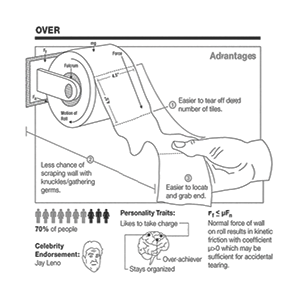
Toilet paper when used with a toilet roll holder with a horizontal axle parallel to the wall has two possible orientations: the toilet paper may hang over (in front of) or under (behind) the roll. The choice is largely a matter of personal preference, dictated by habit. In surveys of American consumers and of bath and kitchen specialists, 60–70% of respondents prefer over.
Despite its being an apparently trivial topic, some people hold strong opinions on the matter. Advice columnist Ann Landers said that the subject was the most controversial issue in her column’s history. Defenders of either position cite advantages ranging from aesthetics, hospitality, and cleanliness to paper conservation, the ease of detaching individual squares, and compatibility with a recreational vehicle or a cat. Celebrities and experts are found on both sides. Some writers have proposed connections to age, sex, or political philosophy; and survey evidence has shown a correlation with socioeconomic status.
read more »
Posted in Humor, Science |
Leave a Comment »
May 22, 2013
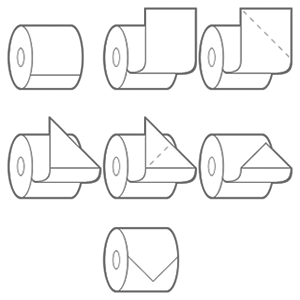
Hotel toilet paper folding is a common practice performed by hotels worldwide as a way of assuring guests that the bathroom has been cleaned. Elaborate folding is sometimes used to impress or delight guests with the management’s creativity and attention to detail.
The common fold normally involves creating a triangle or ‘V’ shape out of the first sheet or square on a toilet paper roll. Commonly, the two corners of the final sheet are tucked behind the paper symmetrically, forming a point at the end of the roll. More elaborate folding results in shapes like fans, sailboats, and even flowers.
read more »
Posted in Humor, Money |
Leave a Comment »
May 21, 2013
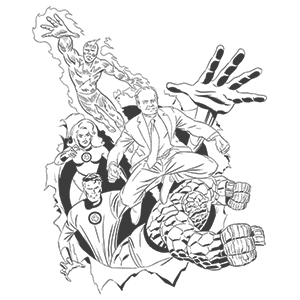
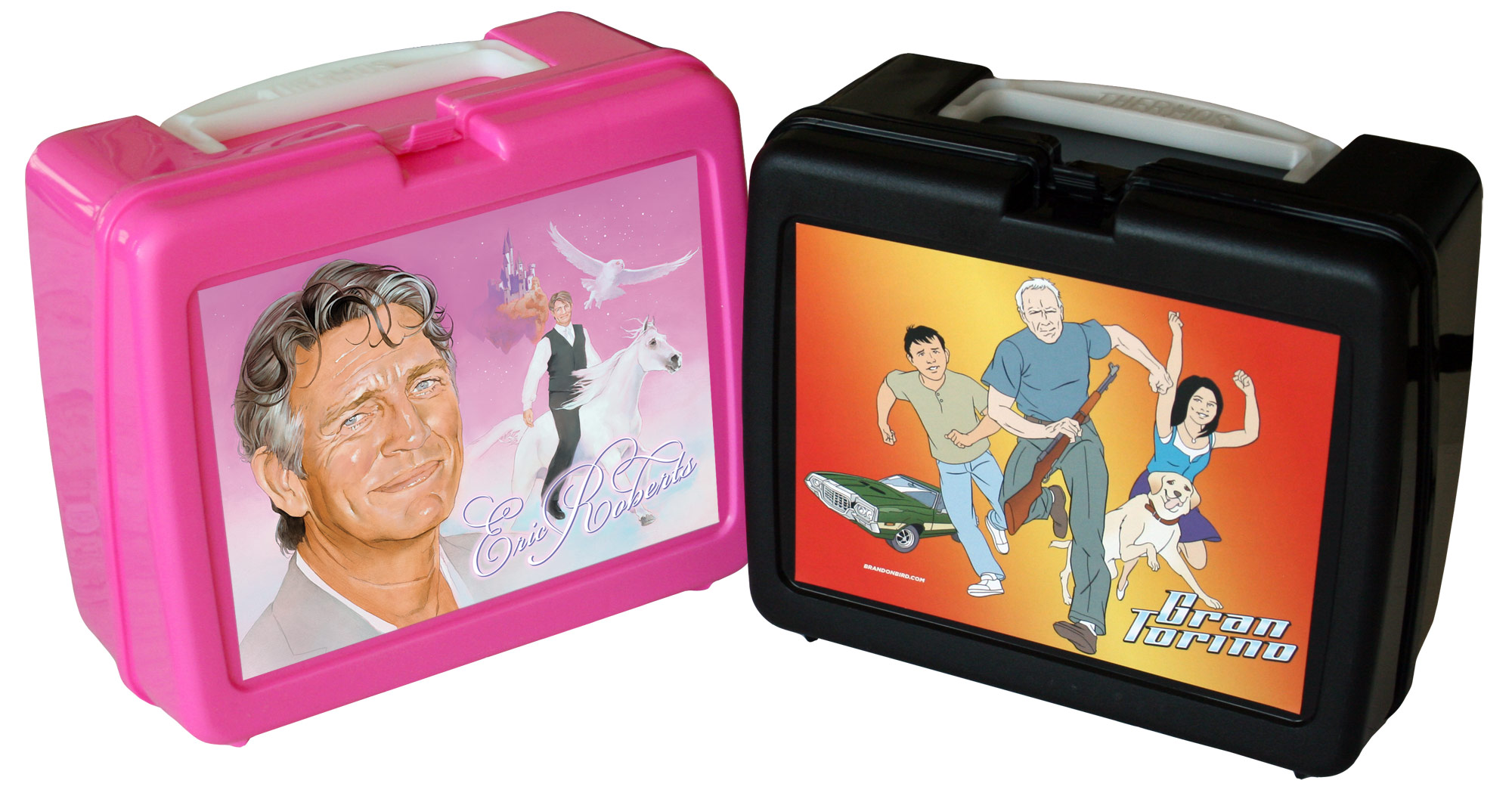
Brandon Bird (b. 1980) is an artist. He attended University of California, Santa Cruz and was an artist-in-residence from 2004-2006 at Risley Residential College at Cornell University.
His most common medium is oil paints on canvas, but works in a number of genres, including pen and ink and digital mediums. He has a significant cult following for his tendency to paint figures from history and popular culture such as Christopher Walken, Chuck Norris, and Abraham Lincoln, in absurd situations. He is a regular contributor to ‘The Believer’ (an American literary magazine that also covers other arts and general culture). He has also done work for ‘Las Vegas Weekly’ and rock band, The Aquabats.
Posted in Art, Humor |
Leave a Comment »
May 6, 2013
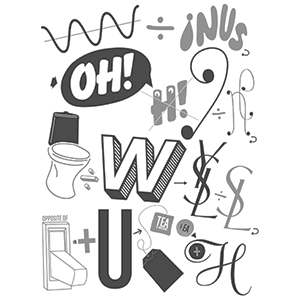
A rebus [ree-buhs] is an allusional device that uses pictures to represent words or parts of words. It was a favorite form of heraldic expression used in the Middle Ages to denote surnames, for example in its basic form three salmon fish to denote the name ‘Salmon.’
A more sophisticated example was the rebus of Bishop Walter Lyhart of Norwich, consisting of a stag (or hart) lying down in a conventional representation of water. The composition alludes to the name, profession or personal characteristics of the bearer, and speaks to the beholder ‘Non verbis, sed rebus’ (Latin: ‘not by words but by things’).
read more »
Posted in Games, Humor, Language |
Leave a Comment »
April 26, 2013
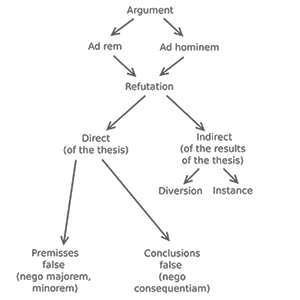
‘The Art of Being Right: 38 Ways to Win an Argument’ (1831) is an acidulous (biting) treatise written by the German philosopher Arthur Schopenhauer in sarcastic deadpan. He examines a total of thirty-eight methods of showing up one’s opponent in a debate. Schopenhauer introduces his essay with the idea that philosophers have concentrated in ample measure on the rules of logic, but have not (especially since the time of Immanuel Kant) engaged with the darker art of the dialectic, of controversy.
Whereas the purpose of logic is classically said to be a method of arriving at the truth, dialectic, says Schopenhauer, ‘…on the other hand, would treat of the intercourse between two rational beings who, because they are rational, ought to think in common, but who, as soon as they cease to agree like two clocks keeping exactly the same time, create a disputation, or intellectual contest.’
read more »
Posted in Humor, Language, Politics |
1 Comment »


 The Daily Omnivore