September 29, 2012
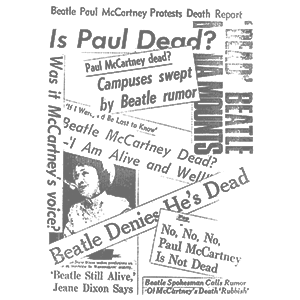
Backmasking is a recording technique in which a sound or message is recorded backward on to a track that is meant to be played forward. Backmasking is a deliberate process, whereas a message found through ‘phonetic reversal’ may be unintentional. Backmasking was popularized by The Beatles who used backward instrumentation on their 1966 album ‘Revolver.’ Artists have since used backmasking for artistic, comedic and satiric effect, on both analogue and digital recordings.
The technique has also been used to censor words or phrases for ‘clean’ releases of rap songs. Backmasking has been a controversial topic in the United States since the 1980s, when allegations from Christian groups of its use for Satanic purposes were made against prominent rock musicians, leading to record-burning protests and proposed anti-backmasking legislation by state and federal governments.
read more »
Posted in Humor, Philosophy, Science |
Leave a Comment »
September 25, 2012


Profanity in science fiction (SF) shares all of the issues of profanity in fiction in general, but has several unique aspects of its own, including the use of alien profanities (such as the alien expletive ‘shazbot!’ from ‘Mork & Mindy,’ a word that briefly enjoyed popular usage outside of that television show).
In his advice to other SF writers, Orson Scott Card states that there are no hard-and-fast rules for the use of profanity in SF stories, despite what may have been expected of writers in the past. The onus is squarely on the writer to determine how much profanity to use, to enquire as to each magazine publisher’s individual limits, and to think about the effect that the use of profanity will have on the reader, both in terms of how the reader will perceive the characters and in terms of how the reader will be offended by the story as a whole.
read more »
Posted in Art, Humor, Language |
Leave a Comment »
September 20, 2012
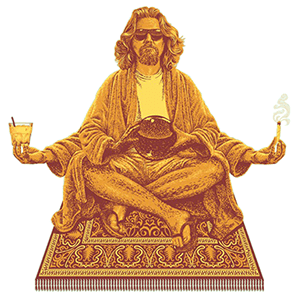
Dudeism has sometimes been referred to as a ‘mock religion,’ though its founder and many adherents regard it as ‘real.’ Its stated primary objective is to promote a philosophy and lifestyle consistent with the original form of Chinese Taoism, outlined in ‘Tao and Laozi’ (6th century BCE), blended with concepts by the Ancient Greek philosopher Epicurus (341-270 BCE), and personified by the modern day character ‘The Dude’ (Jeff Bridges) in the Coen Brothers’ 1998 film ‘The Big Lebowski.’
Founded in 2005 by Oliver Benjamin, a journalist based in Thailand, Dudeism’s official organizational name is ‘The Church of the Latter-Day Dude.’ At least 160,000 ‘Dudeist Priests’ have been ordained.
read more »
Posted in Humor, Philosophy |
Leave a Comment »
September 17, 2012

In psychology, compensation is a strategy whereby one covers up, consciously or unconsciously, weaknesses, frustrations, desires, feelings of inadequacy or incompetence in one life area through the gratification or (drive towards) excellence in another area.
Compensation can cover up either real or imagined deficiencies and personal or physical inferiority. The compensation strategy, however does not truly address the source of this inferiority. Positive compensations may help one to overcome one’s difficulties. On the other hand, negative compensations do not, which results in a reinforced feeling of inferiority.
read more »
Posted in Health, Humor, Money |
1 Comment »
September 15, 2012

Yahoo! Answers (formerly known as ‘Yahoo! Q & A’) is a community-driven question-and-answer (Q&A) site or a knowledge market launched by Yahoo! in 2005 that allows users to both submit questions to be answered and answer questions asked by other users.
The site gives members the chance to earn points as a way to encourage participation and is based on a service developed by Naver (a popular search portal in South Korea).
read more »
Posted in Humor, Technology, World |
Leave a Comment »
September 15, 2012
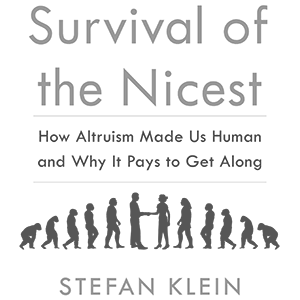
Nice guy is a term in the general public discourse and in popular culture describing an adult or teenage male with friendly yet unassertive personality traits in the context of a relationship with a woman. A typical nice guy believes in putting the needs of others before his own, avoids confrontations, does favors, gives emotional support, tries to get out of trouble, and generally acts nicely towards women.
There is an active debate about whether the nice guy personality profile may actually make a man less desirable to women romantically or sexually. Part of this debate includes speculation about hypocrisy among women in the dating world: that women may say they want a nice guy but won’t date him or have sex with him, and rather subconsciously prefer men who are more confident and assertive but less considerate.
read more »
Posted in Humor, Love, Sex |
Leave a Comment »
September 15, 2012

In popular culture, the ‘friend zone‘ refers to a platonic relationship where one person wishes to enter into a romantic relationship while the other does not. The most typical friend zone situation involves a man that is romantically interested in a woman who does not reciprocate or is unaware of his interest. It is generally considered to be an undesirable situation by the lovelorn person.
Once the friend zone is established, it is said to be difficult to move beyond that point in a relationship. There are differing explanations about what causes a person to be placed in the friend zone by another. One report suggests that some women don’t see their male friends as potential love interests because they fear that deepening their relationship might cause a loss of the romance and mystery or lead to rejection later.
read more »
Posted in Humor, Love, Sex |
2 Comments »
September 14, 2012

In linguistics, an eggcorn is an idiosyncratic substitution of a word or phrase for a word or words that sound similar or identical in the speaker’s dialect. The new phrase introduces a meaning that is different from the original, but plausible in the same context, such as ‘old-timers’ disease’ for ‘Alzheimer’s disease.’ This is as opposed to a malapropism, where the substitution creates a nonsensical phrase. Classical malapropisms generally derive their comic effect from the fault of the user, while eggcorns are errors that exhibit creativity or logic. Eggcorns often involve replacing an unfamiliar, archaic, or obscure word with a more common or modern word (‘baited breath’ for ‘bated breath’).
The term eggcorn was coined by professor of linguistics Geoffrey Pullum in 2003, in response to an article by Mark Liberman on ‘Language Log,’ a blog for linguists. Liberman discussed the case of a woman who substitutes the phrase ‘egg corn’ for the word ‘acorn,’ arguing that the precise phenomenon lacked a name; Pullum suggested using ‘eggcorn’ itself. The phenomenon is very similar to the form of wordplay known as the pun, except that, by definition, the speaker (or writer) intends the pun to have some effect on the recipient, whereas one who speaks or writes an eggcorn is unaware of the mistake.
Posted in Humor, Language |
Leave a Comment »
September 12, 2012

Mingering Mike is a fictitious funk and soul recording artist created in the late 1960s as the subject of works of album art by a young Mike Stevens, an outsider artist. More recently, Mingering Mike was rediscovered by law firm investigator Dori Hadar and his friend Frank Beylotte, who came across the art work at a flea market. Mingering Mike had created a whole complex, yet nonexistent music career (including a Bruce Lee concept album), and had released more than 50 album covers in 10 years.
When Mike was rediscovered, it was learned that he had yet more unreleased material from the same time period as his first releases and it is in the process of being released as a real album. Mingering Mike at first refused to release his real name or allow a photo to be taken of him, because he’s afraid his new celebrity status will cause him to lose his two day jobs.
Posted in Art, Humor |
Leave a Comment »
September 11, 2012
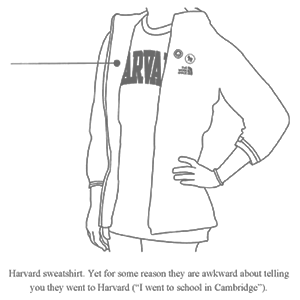
Stuff White People Like (SWPL) is a blog that takes a satirical aim at the interests of North American ‘left-leaning, city-dwelling, white folk.’ The blog was created in 2008 by a white Canadian, Christian Lander, a Los Angeles copywriter who grew up in Toronto and graduated from McGill University. Lander co-authored the site with his Filipino Canadian friend Myles Valentin, after Valentin teased Lander for watching the HBO television series ‘The Wire.’
Although the blog ‘has spurred an outpouring from those who view it as offensive and racist,’ it is not about the interests of all white people, but rather a stereotype of affluent, environmentally and socially conscious, anti-corporate white North Americans, who typically hold a degree in the liberal arts. Lander claims to be lampooning contemporary versions of bohemian/hipster culture, and jokingly refers to other classes and subcultures of white people as ‘the wrong kind of white people.’ Despite the site’s satirical edge, Lander regards the people he describes with affection and numbers himself among them, describing himself as ‘a self-aware, left-wing person who’s not afraid to recognize the selfishness and contradictions that come on the left.’
Posted in Humor, Money, Politics |
Leave a Comment »
September 11, 2012

Cards Against Humanity is a multiplayer party game currently available as a free download or a published hardcopy. The game is available under a Creative Commons license. Its title references the phrase ‘crimes against humanity,’ reflecting its politically incorrect content.
Cards Against Humanity was created by a group of alumni of Highland Park High School as a party game for a New Year’s Eve celebration. The project was financed through the website Kickstarter. Co-creator Ben Hantoot stated in an interview that the game was developed by ‘8 of us who are the core writer-creators, 5 or 6 additional ‘part time’ developers’ and ‘dozens of friends and acquaintances who have played the game.’
read more »
Posted in Games, Humor, Language |
Leave a Comment »
September 10, 2012

‘Gangnam Style‘ is a 2012 K-pop single by the South Korean rapper PSY. ‘Gangnam Style’ is widely praised for its humor, catchy rhythm as well as Psy’s unusual dance moves that have introduced many people to K-pop (South Korean pop music). ‘Gangnam Style’ is a Korean language colloquialism that refers to a luxurious lifestyle associated with the Gangnam district, an affluent and trendy area of Seoul. The music video depicts Psy dancing at various locations in Gangnam.
The song is about ‘the perfect girlfriend who knows when to be refined and when to get wild.’ The music video shows PSY dancing a comical horse-riding dance and appearing in unexpected locations around Gangnam such as an outdoor yoga session and a hot tub. The ‘skewering [of] the Gangnam image’ by the ‘non-Gangnam PSY’ is recognizable to Korean viewers, but those less familiar with the cultural context have found the video ‘fresh’ amidst the teen pop idol groups increasingly popular with overseas viewers.
Posted in Art, Humor, World |
Leave a Comment »



 The Daily Omnivore