June 8, 2012

Laughter is an audible expression or appearance of excitement, an inward feeling of joy. It may ensue from jokes, tickling, and other stimuli. It is associated with a number of positive emotional states, such as joy, mirth, happiness, and relief. However on some occasions it may express other emotions, such as embarrassment, contrition, or confusion.
A nervous laugh or courtesy laugh is rendered by a more conscious effort, in an attempt to move a situation along more quickly. Laughter is a part of human behavior regulated by the brain, helping humans clarify their intentions in social interaction and providing an emotional context to conversations.
read more »
Posted in Health, Humor |
Leave a Comment »
June 7, 2012
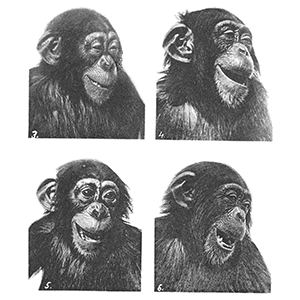
Laughter in animals other than humans describes animal behavior which resembles human laughter. Self awareness is conscious concomitant of the physiological processes involving laughter or smiling reflex (response) and its grades, degrees, or spectrum varies according to phylogenetic development, with no clear cut demarcation. The emotional ingredients (such as contempt, hatred, ridicule, sarcasm, love, amusement etc.) are variable and involve different neurophysiological and physiological processes.
Chimpanzees, gorillas, bonobos and orangutans show laughter-like vocalizations in response to physical contact, such as wrestling, play chasing, or tickling. This is documented in wild and captive chimpanzees. Chimpanzee laughter is not readily recognizable to humans as such, because it is generated by alternating inhalations and exhalations that sound more like panting or screeching. The differences between chimpanzee and human laughter may be the result of adaptations that have evolved to enable human speech. It is hard to tell, though, whether or not the chimpanzee is expressing joy.
read more »
Posted in Humor, Science |
1 Comment »
June 5, 2012

Kenny Scharf (b. 1958) is an American painter who lives in Brooklyn, whose works consist of popular culture based art with made up science-related backgrounds.
Scharf came to prominence in the 80s interdisciplinary art scene making sparkly, pop-ed, and monstrous paintings and installations.
read more »
Posted in Art, Humor, Money |
Leave a Comment »
June 4, 2012
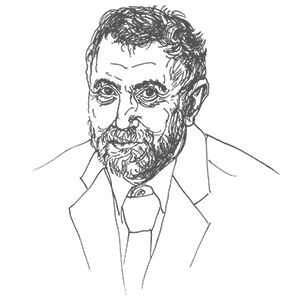
‘The Theory of Interstellar Trade‘ is a paper written in 1978 by economist Paul Krugman. The paper was first published in 2010 in the journal ‘Economic Inquiry.’ He described the paper as something he wrote to cheer himself up when he was an oppressed assistant professor, caught up in the academic rat race.
Krugman analyzed the question of how interest rates on goods in transit should be computed when the goods travel at close to the speed of light. This is a problem because the time taken in transit will appear less to an observer traveling with the goods than to a stationary observer.
read more »
Posted in Humor, Money, Technology |
1 Comment »
May 30, 2012

Bill, the Galactic Hero is a satirical science fiction novel by Harry Harrison, first published in 1965. Harrison reports having been approached by a Vietnam veteran who described Bill as ‘the only book that’s true about the military.’ Harrison introduced a new euphemism, ‘bowb,’ in the series to cover the vulgarity necessary to render military life accurately. It is used extensively in Bill, the Galactic Hero.
Bill is a farmboy on a small backward agricultural planet who is drugged, hypnotized, then shanghaied into the Space Troopers and sent to recruit training under a fanged instructor named Deathwish Drang. After surviving boot camp, he is transferred to active duty as a fuse tender on the flagship of the space fleet in battle with the Chingers, a small reptillian race. Injured and with the fleet almost destroyed, he fires off a shot witnessed by the admiralty and is proclaimed a hero.
Posted in Humor, Language, War |
Leave a Comment »
May 30, 2012

James Bolivar DiGriz, alias ‘Slippery Jim’ and ‘The Stainless Steel Rat,’ is the fictional hero of a series of humorous science fiction novels written by Harry Harrison. He is a futuristic con man, thief and all-round rascal. He is charming and quick-witted, a master of disguise and martial arts, an accomplished bank robber, an expert on breaking and entering, and (perhaps most usefully) a skilled liar. A master of self-rationalization, the Rat frequently justifies his crimes by arguing that he is providing society with entertainment; and besides which, he only steals from institutions which have insurance coverage. He displays a strong morality, albeit in a much more restricted sense than is traditional. (For example, he will happily steal, but deplores killing.)
The character was introduced in Harrison’s short story, ‘The Stainless Steel Rat,’ which was first published in 1957 in ‘Astounding’ magazine. Like other characters created by Harrison, the Rat is a speaker of Esperanto and advocates atheism. From the original publisher’s blurb: ‘…We must be as stealthy as rats in the wainscoting of their society. It was easier in the old days, of course, and society had more rats when the rules were looser, just as old wooden buildings have more rats than concrete buildings. But there are rats in the building now as well. Now that society is all ferrocrete and stainless steel there are fewer gaps in the joints. It takes a very smart rat indeed to find these openings. Only a stainless steel rat can be at home in this environment…’
Posted in Art, Humor, Language |
Leave a Comment »
May 30, 2012
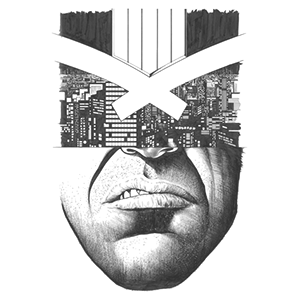
‘Judge Dredd’ is a comics character whose strip in the British science fiction anthology ‘2000 AD’ is the magazine’s longest running, having been featured there since its second issue in 1977.
Dredd is an American law enforcement officer in a violent city of the future where uniformed Judges combine the powers of police, judge, jury, and executioner. Dredd and his fellow Judges are empowered to arrest, sentence, and even execute criminals on the spot. The character was created by writer John Wagner and artist Carlos Ezquerra, although editor Pat Mills also deserves some credit for early development. The series explores issues such as the police state, authoritarianism and the rule of law.
read more »
Posted in Art, Humor, Politics |
Leave a Comment »
May 30, 2012

Big Dave is an infamous character created and written by Grant Morrison and Mark Millar, with artwork by Steve Parkhouse, for ‘2000 AD,’ a British science fiction comic. The character was created for ‘The Summer Offensive,’ an experiment in which the magazine was handed over to Millar, Morrison, and John Smith for eight weeks. Big Dave first appeared in prog (issue) 842 in his first story which featured Saddam Hussein trying to take over the world and turn everyone into ‘poofs’ with the aid of some scary aliens. Big Dave, ‘the hardest man in Manchester,’ manages to stop Saddam’s plan with the help of Terry Waite, English humanitarian. This story proved controversial, but the next story surpassed it.
It featured the British Royal Family as robots plus The Princess of Wales and The Duchess of York as a pair of horny drunks. The story ends with Dave in bed with both royals. A third had Dave leading a minibus full of disabled children to the football world cup final where they defeat a German team managed by Adolf Hitler. Both Morrison and Millar appeared happy with such controversy but the character did split ‘2000 AD’ fans’ opinion down the middle, with some praising it as the best series the comic had ever run, while others thought it was nothing more than puerile rubbish.
Posted in Humor, Language, World |
Leave a Comment »
May 30, 2012

The Mighty Tharg is a recurrent character in science fiction comic ‘2000 AD,’ one of only two characters to appear in nearly every issue of the comic (the other being Judge Dredd). The main Tharg-free period in ‘2000 AD’ was when the men from Vector 13 staged a takeover (in prog [issue] 1014), while Tharg was away dealing with a crisis. Other than a spate of strips in the early 1980s, Tharg rarely appears in stories, but instead purports to be the comic’s editor.
Tharg is an alien from the fictional planet ‘Quaxxann,’ supposedly in orbit around the real-life star Betelgeuse (but he works in a British publisher’s office), with green skin and a ‘rosette of Sirius’ on his forehead. His favorite food is said to be polystyrene cups. Tharg writes the comic’s introduction, answers letters, and doles out prizes to readers (for artwork or story suggestions) – winners could choose payment either in pounds sterling or in ‘galactic groats.’ Tharg speaks mostly in English, but with various pithy Betelgusian aphorisms thrown in for color. In one episode, a Tharg suit in the comic’s office was explained as a skin that Tharg had shed.
Posted in Art, Humor |
Leave a Comment »
May 30, 2012
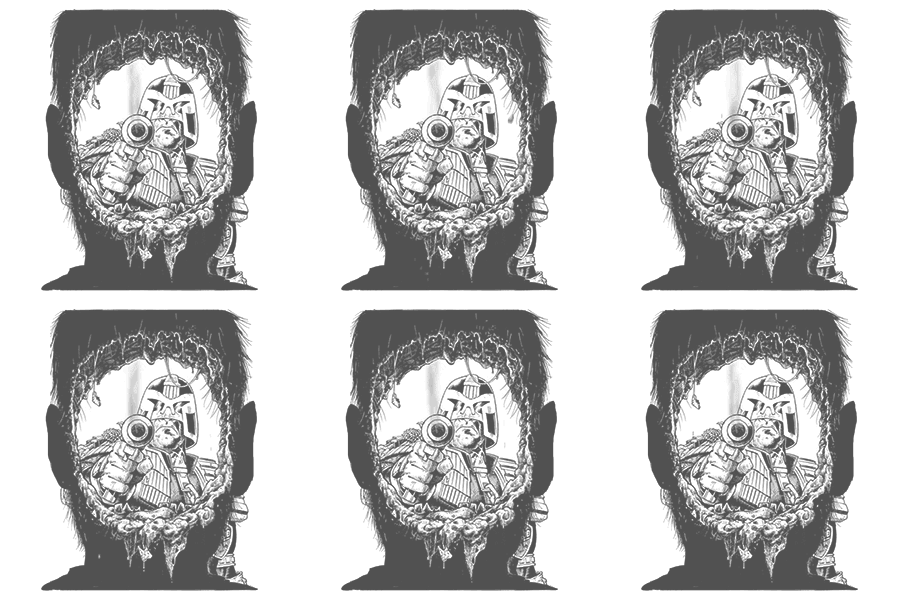
2000 AD is a weekly British science fiction-oriented comic. As a comics anthology it serializes a number of separate stories each issue (known as ‘progs’) and was first published by IPC Magazines in 1977. It has changed hands a number of times over the years; in 2000 it was bought by Rebellion Developments.
It is most noted for its Judge Dredd stories, and has been contributed to by a number of artists and writers who became renowned in the field internationally, such as Alan Moore, Neil Gaiman, Grant Morrison, Bryan Talbot, Brian Bolland, and Mike McMahon. ‘2000 AD’ has been successful launchpad for UK talent into the larger American comics market, and has also been the source of a number of film licences. Unlike earlier weekly titles, ‘2000 AD’ was based on a 6 page strip format. This gave the writers greater opportunity to develop character and meant that the artists had greater scope in designing the layout.
read more »
Posted in Art, Humor, Language |
1 Comment »
May 29, 2012
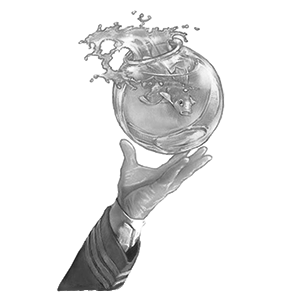
Commandant Eric Lassard is the fictional head of the Metropolitan Police Academy in the 1984 film ‘Police Academy,’ as well as its six sequels. He is portrayed by actor George Gaynes (b. 1917). Lassard is rather eccentric. He is rarely seen without his many goldfish, frequently travels by golf cart, and tends to destroy things while golfing in his office. He also often loses track of his thoughts, either by beginning to pace and proceeding to walk several yards away from the group he is addressing, or by repeating the word ‘very’ (e.g. ‘have a very, very, very good day’). The commandant is a skilled billiards player, once clearing an entire table in a single turn.
Comdt. Lassard’s younger brother, Captain Pete Lassard (played by Howard Hesseman) is head of a precinct that has one of the worst crime rates in the city until the a group of Eric’s graduates eventually snag a gang that’s been terrorizing the streets. A nephew (possibly Pete’s son), Nick Lassard, is with the Miami Police, but leaves to join Eric in ‘Police Academy 6.’
Posted in Humor |
Leave a Comment »
May 29, 2012
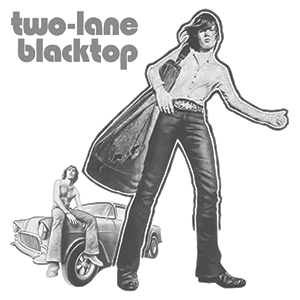
The Gumball 3000 is an annual British 3,000-mile international road rally which takes place on public roads, with a different route around the world each year. Founded in 1999 by British entrepreneur Maximillion Cooper, it sees an annual entry of 120 cars, which are mostly exotic and powerful sports cars. However, more unusual entries (such as police cars and camper-vans) have been seen.
The Rally is not a serious race in the traditional sense of rally races – there are no prizes for being fastest or official timekeeping of any sort. Organizers emphasize that it is a road trip adventure and not a race. The accolade of ‘Spirit of the Gumball’ Trophy is awarded to the driver(s) each year that embody the fun freedom of spirit and adventure that the event strives for. It is often awarded to the drivers of the vehicle that has perhaps been regarded as an ‘underdog’ (such as the Citroen 2CV, a Ford Transit ice-cream van, or 1963 VW Campervan) – or to the participants that have completed the 3000 miles against all odds, such as fixing their broken vehicle, or getting lost en route.
read more »
Posted in Games, Humor, Money |
Leave a Comment »


 The Daily Omnivore