May 30, 2012

James Bolivar DiGriz, alias ‘Slippery Jim’ and ‘The Stainless Steel Rat,’ is the fictional hero of a series of humorous science fiction novels written by Harry Harrison. He is a futuristic con man, thief and all-round rascal. He is charming and quick-witted, a master of disguise and martial arts, an accomplished bank robber, an expert on breaking and entering, and (perhaps most usefully) a skilled liar. A master of self-rationalization, the Rat frequently justifies his crimes by arguing that he is providing society with entertainment; and besides which, he only steals from institutions which have insurance coverage. He displays a strong morality, albeit in a much more restricted sense than is traditional. (For example, he will happily steal, but deplores killing.)
The character was introduced in Harrison’s short story, ‘The Stainless Steel Rat,’ which was first published in 1957 in ‘Astounding’ magazine. Like other characters created by Harrison, the Rat is a speaker of Esperanto and advocates atheism. From the original publisher’s blurb: ‘…We must be as stealthy as rats in the wainscoting of their society. It was easier in the old days, of course, and society had more rats when the rules were looser, just as old wooden buildings have more rats than concrete buildings. But there are rats in the building now as well. Now that society is all ferrocrete and stainless steel there are fewer gaps in the joints. It takes a very smart rat indeed to find these openings. Only a stainless steel rat can be at home in this environment…’
Posted in Art, Humor, Language |
Leave a Comment »
May 30, 2012
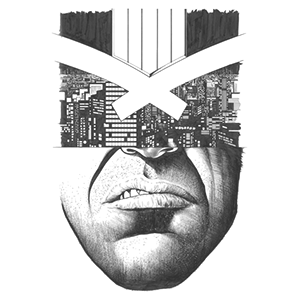
‘Judge Dredd’ is a comics character whose strip in the British science fiction anthology ‘2000 AD’ is the magazine’s longest running, having been featured there since its second issue in 1977.
Dredd is an American law enforcement officer in a violent city of the future where uniformed Judges combine the powers of police, judge, jury, and executioner. Dredd and his fellow Judges are empowered to arrest, sentence, and even execute criminals on the spot. The character was created by writer John Wagner and artist Carlos Ezquerra, although editor Pat Mills also deserves some credit for early development. The series explores issues such as the police state, authoritarianism and the rule of law.
read more »
Posted in Art, Humor, Politics |
Leave a Comment »
May 30, 2012

Big Dave is an infamous character created and written by Grant Morrison and Mark Millar, with artwork by Steve Parkhouse, for ‘2000 AD,’ a British science fiction comic. The character was created for ‘The Summer Offensive,’ an experiment in which the magazine was handed over to Millar, Morrison, and John Smith for eight weeks. Big Dave first appeared in prog (issue) 842 in his first story which featured Saddam Hussein trying to take over the world and turn everyone into ‘poofs’ with the aid of some scary aliens. Big Dave, ‘the hardest man in Manchester,’ manages to stop Saddam’s plan with the help of Terry Waite, English humanitarian. This story proved controversial, but the next story surpassed it.
It featured the British Royal Family as robots plus The Princess of Wales and The Duchess of York as a pair of horny drunks. The story ends with Dave in bed with both royals. A third had Dave leading a minibus full of disabled children to the football world cup final where they defeat a German team managed by Adolf Hitler. Both Morrison and Millar appeared happy with such controversy but the character did split ‘2000 AD’ fans’ opinion down the middle, with some praising it as the best series the comic had ever run, while others thought it was nothing more than puerile rubbish.
Posted in Humor, Language, World |
Leave a Comment »
May 30, 2012

The Mighty Tharg is a recurrent character in science fiction comic ‘2000 AD,’ one of only two characters to appear in nearly every issue of the comic (the other being Judge Dredd). The main Tharg-free period in ‘2000 AD’ was when the men from Vector 13 staged a takeover (in prog [issue] 1014), while Tharg was away dealing with a crisis. Other than a spate of strips in the early 1980s, Tharg rarely appears in stories, but instead purports to be the comic’s editor.
Tharg is an alien from the fictional planet ‘Quaxxann,’ supposedly in orbit around the real-life star Betelgeuse (but he works in a British publisher’s office), with green skin and a ‘rosette of Sirius’ on his forehead. His favorite food is said to be polystyrene cups. Tharg writes the comic’s introduction, answers letters, and doles out prizes to readers (for artwork or story suggestions) – winners could choose payment either in pounds sterling or in ‘galactic groats.’ Tharg speaks mostly in English, but with various pithy Betelgusian aphorisms thrown in for color. In one episode, a Tharg suit in the comic’s office was explained as a skin that Tharg had shed.
Posted in Art, Humor |
Leave a Comment »
May 30, 2012
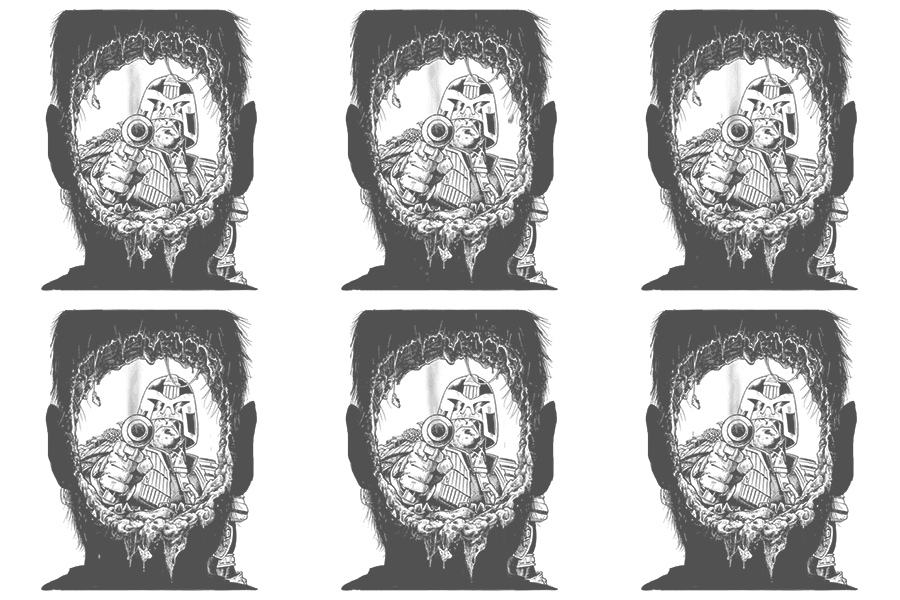
2000 AD is a weekly British science fiction-oriented comic. As a comics anthology it serializes a number of separate stories each issue (known as ‘progs’) and was first published by IPC Magazines in 1977. It has changed hands a number of times over the years; in 2000 it was bought by Rebellion Developments.
It is most noted for its Judge Dredd stories, and has been contributed to by a number of artists and writers who became renowned in the field internationally, such as Alan Moore, Neil Gaiman, Grant Morrison, Bryan Talbot, Brian Bolland, and Mike McMahon. ‘2000 AD’ has been successful launchpad for UK talent into the larger American comics market, and has also been the source of a number of film licences. Unlike earlier weekly titles, ‘2000 AD’ was based on a 6 page strip format. This gave the writers greater opportunity to develop character and meant that the artists had greater scope in designing the layout.
read more »
Posted in Art, Humor, Language |
1 Comment »
May 29, 2012
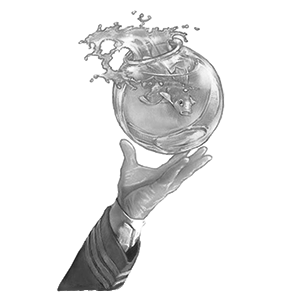
Commandant Eric Lassard is the fictional head of the Metropolitan Police Academy in the 1984 film ‘Police Academy,’ as well as its six sequels. He is portrayed by actor George Gaynes (b. 1917). Lassard is rather eccentric. He is rarely seen without his many goldfish, frequently travels by golf cart, and tends to destroy things while golfing in his office. He also often loses track of his thoughts, either by beginning to pace and proceeding to walk several yards away from the group he is addressing, or by repeating the word ‘very’ (e.g. ‘have a very, very, very good day’). The commandant is a skilled billiards player, once clearing an entire table in a single turn.
Comdt. Lassard’s younger brother, Captain Pete Lassard (played by Howard Hesseman) is head of a precinct that has one of the worst crime rates in the city until the a group of Eric’s graduates eventually snag a gang that’s been terrorizing the streets. A nephew (possibly Pete’s son), Nick Lassard, is with the Miami Police, but leaves to join Eric in ‘Police Academy 6.’
Posted in Humor |
Leave a Comment »
May 29, 2012
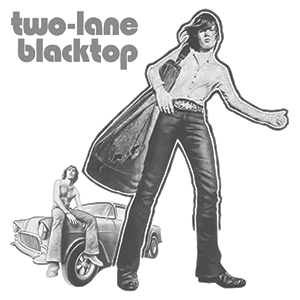
The Gumball 3000 is an annual British 3,000-mile international road rally which takes place on public roads, with a different route around the world each year. Founded in 1999 by British entrepreneur Maximillion Cooper, it sees an annual entry of 120 cars, which are mostly exotic and powerful sports cars. However, more unusual entries (such as police cars and camper-vans) have been seen.
The Rally is not a serious race in the traditional sense of rally races – there are no prizes for being fastest or official timekeeping of any sort. Organizers emphasize that it is a road trip adventure and not a race. The accolade of ‘Spirit of the Gumball’ Trophy is awarded to the driver(s) each year that embody the fun freedom of spirit and adventure that the event strives for. It is often awarded to the drivers of the vehicle that has perhaps been regarded as an ‘underdog’ (such as the Citroen 2CV, a Ford Transit ice-cream van, or 1963 VW Campervan) – or to the participants that have completed the 3000 miles against all odds, such as fixing their broken vehicle, or getting lost en route.
read more »
Posted in Games, Humor, Money |
Leave a Comment »
May 21, 2012

Adventure Time is an American animated television series created by Pendleton Ward (a former writer and storyboard artist of ‘The Marvelous Misadventures of Flapjack’) and produced by Frederator Studios for Cartoon Network. The series follows the adventures of Finn, a 14-year old boy whose best friend is Jake, a dog with magical powers such as growing and shrinking or stretching into many shapes. Finn and Jake live in the post-apocalyptic Land of Ooo.Ward describes Finn as a ‘fiery little kid with strong morals,’ while Jake is based on Bill Murray’s character in the movie ‘Meatballs.’ The series is based on a short produced for Frederator’s Nickelodeon animation incubator series ‘Random! Cartoons.’ After the short became a viral hit on the Internet, Cartoon Network picked it up for a full-length series that premiered in 2010.
According to Ward, the show’s style was influenced by his time at CalArts and his work as a storyboard artist on ‘The Marvelous Misadventures of Flapjack.’ He tries to include ‘beautiful’ moments like those in Hayao Miyazaki’s ‘My Neighbor Totoro’ and some subversive humor, inspired by series like ‘The Simpsons’ and ‘Pee-wee’s Playhouse.’ Executive producer Fred Seibert compares the show’s animation style to that of ‘Felix the Cat’ and the Max Fleischer cartoons (e.g. ‘Betty Boop,’ ‘Popeye’) but says its world is also equally inspired by ‘Dungeons and Dragons’ and video games. Ward intends the show’s world to have a certain physical logic instead of ‘cartoony slapstick’ — even though magic exists in the story, the show’s writers try to create an internal consistency in how the characters interact with the world.
Posted in Art, Humor |
Leave a Comment »
May 17, 2012
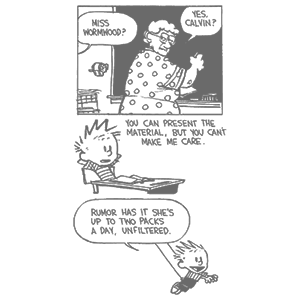
L’enfant terrible [ahn-fahn te-ree-bluh] (‘terrible child’) is a French term for a child who is terrifyingly candid by saying embarrassing things to adults, especially parents.
The OED describes it as, ‘a child who embarrasses his elders by untimely remarks; transf. a person who compromises his associates or his party by unorthodox or ill-considered speech or behavior; loosely, one who acts unconventionally.’ Webster’s defines an enfant terrible as an unusual person who is strikingly unorthodox, innovative, and/or avant-garde.
Posted in Humor, Language |
1 Comment »
May 16, 2012

Max Headroom is a fictional British artificial intelligence, known for his wit and stuttering, distorted, electronically sampled voice. It was introduced in early 1984. The character was created by George Stone, Annabel Jankel, and Rocky Morton, and portrayed by Matt Frewer as ‘The World’s first computer generated TV host’ although the computer generated appearance was achieved with prosthetic make up. The classic look for the character was a shiny dark suit – which was actually a fibreglass mould – often paired with Ray-Ban Wayfarer sunglasses.
Only his head and shoulders were depicted, usually against a ‘computer generated’ backdrop of a slowly rotating wire-frame cube interior, which was also initially generated by analogue means – in this case traditional cel animation, though later actual computer graphics were employed for the backdrop. Another distinguishing trademark of Max was his chaotic speech patterns – his voice would seemingly randomly pitch up or down, or occasionally get stuck in a loop. These modulations also appeared when the character was performed live.
read more »
Posted in Humor, Money, Technology |
Leave a Comment »
May 16, 2012
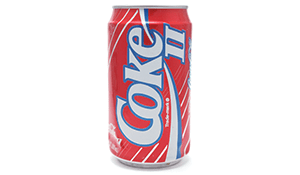

New Coke was the reformulation of Coca-Cola introduced in 1985; it originally had no separate name of its own, and was simply known as ‘the new taste of Coca-Cola’ until 1992 when it was renamed Coca-Cola II. The American public’s reaction to the change was negative and the new cola was a major marketing failure.
The subsequent reintroduction of Coke’s original formula, re-branded as ‘Coca-Cola Classic,’ resulted in a significant gain in sales, leading to speculation that the introduction of the New Coke formula was just a marketing ploy.
read more »
Posted in Food, Humor, Money |
Leave a Comment »
May 16, 2012
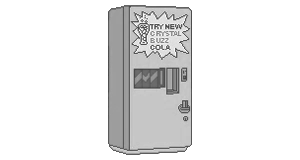

Crystal Pepsi was a caffeine-free soft drink made by PepsiCo from 1992 to 1993 in the United States, Canada, and for a short time in Australia. Crystal Pepsi was sold for a longer time in Europe.
In the early 1990s, a marketing fad equating clarity with purity began with the remake of Ivory soap from its classic milky solution; the idea spread to many companies, including PepsiCo. Its marketing slogan was ‘You’ve never seen a taste like this.’ A large marketing campaign was launched, for which the company invented the world’s first photo-realistic, computer-generated bus wrap printing. A series of television advertisements featuring Van Halen’s hit song ‘Right Now’ during Super Bowl XXVII.
read more »
Posted in Food, Humor, Money |
1 Comment »



