July 3, 2012

Allegro Non Troppo is a 1976 Italian animated film directed by Bruno Bozzetto. Featuring six pieces of classical music, the film is a parody of Disney’s ‘Fantasia,’ two of its episodes being arguably derived from the earlier film. The classical pieces are set to color animation, ranging from comedy to deep tragedy. At the beginning, in between the animation, and at the end are black and white live-action sequences, displaying the fictional animator, orchestra, conductor and filmmaker, with many humorous scenes about the fictional production of the film.
Some of these sections mix animation and live action. In music, an instruction of ‘allegro ma non troppo’ means to play ‘fast, but not overly so.’ In the context of this film, and without the ‘ma,’ it means ‘Not So Fast!’, an interjection meaning ‘slow down’ or ‘think before you act.’ The common meaning of ‘allegro’ in Italian is ‘joyful.’ The title reveals therefore a catch with the dual meaning of ‘allegro,’ and can also be read as ‘joyful, but not so much’ or ‘not overly joyful.’
read more »
Posted in Art, Humor, World |
Leave a Comment »
July 2, 2012
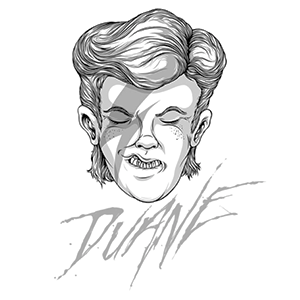
Everything is Terrible! is a Chicago-based video blogging website launched in 2007 that features clips of VHS tapes from the late 20th century. The project was founded in 2000 by a group of friends while at Ohio University. They search at thrift stores, garage sales, and ‘bargain bins’ for the worst and most outrageous VHS tapes in which to share with each other. The website has also been attempting to amass the largest collection of tapes that feature the film ‘Jerry Maguire’; according to member Ghoul Skool: ‘We always have noticed since the beginning that there seems to be nothing but just ‘Jerry Maguire’ tapes filling our nation’s thrift stores. I don’t know why.’
The people behind ‘Everything is Terrible’ also perform live shows wearing cloaks and gold VHS tapes around their necks to showcase their new VHS discoveries. In 2009, the website released a video titled ‘Everything is Terrible! The Movie,’ which featured the same type of VHS clips that would be featured on their website. The ‘A.V. Club’ called the video ‘a portal into a world halfway between showbiz and real life—a look at how the people who make entertainment for a living think the rest of us saps actually live,’ adding that it’s ‘simultaneously enlightening, hilarious, and deeply sad.
Posted in Art, Humor, Technology |
Leave a Comment »
June 26, 2012

Nutopia is a conceptual micronation founded by John Lennon and Yoko Ono to address Lennon’s then-ongoing immigration problems though satirical means. There is no leadership and not all citizenships have been recorded. As a result, the population is unknown. It was first announced on April Fool’s Day 1973 at a press conference in New York City. The Lennons were ambassadors of the country and sought (creatively, though unsuccessfully) diplomatic immunity to end Lennon’s ongoing immigration troubles, as he and Ono tried to remain in the United States.
Ono already had a Resident Alien ‘green card’ through her previous husband, Tony Cox, but Lennon had been denied permanent residence status. John talked about the imaginary country, which would live up to the ideals of his song ‘Imagine,’ saying this in the ‘official’ declaration: ‘We announce the birth of a conceptual country, NUTOPIA. Citizenship of the country can be obtained by declaration of your awareness of NUTOPIA. NUTOPIA has no land, no boundaries, no passports, only people. NUTOPIA has no laws other than cosmic. All people of NUTOPIA are ambassadors of the country. As two ambassadors of NUTOPIA, we ask for diplomatic immunity and recognition in the United Nations of our country and its people.
Posted in Humor, Politics, World |
Leave a Comment »
June 26, 2012


The mudflap girl is an iconic silhouette of a woman with an hourglass body shape, sitting, leaning back on her hands, with her hair being blown in the wind. The icon is typically found on mudflaps, clothing, and other items associated with trucking in the United States. The image is sometimes also known as trucker girl, trucker lady or seated lady. This famous design was created in the 1970s by Bill Zinda of Wiz Enterprises in Long Beach, California, to promote his line of truck and auto accessories. It is variously claimed to be modeled on Leta Laroe, a famous exotic dancer at the time, or on Rachel Ann Allen, a friend’s wife, and mother of Ed Allen, the trademark’s owner.
As a parody, Wyoming Libraries use a mudflap girl holding a book, in an effort to attract readers. In another parody the feminist blog Feministing uses a version depicting the mudflap girl holding up her middle finger as an ironic logo. Optimus Prime has been portrayed as having a mudflap with the silhouette of Elita One (leader of the female autobots). At McMurdo Station, Antarctica, the mudflap girl is depicted on a utility vehicle, but wearing more appropriate attire for Antarctic environment.
Posted in Humor, Money, Sex |
Leave a Comment »
June 26, 2012

The Gatorade shower is a sports tradition that involves dumping a cooler full of liquid (most commonly Gatorade mixed with ice) over a coach’s (or occasionally star player or owner’s) head following a meaningful win, such as the Super Bowl. The tradition began with the New York Giants in the mid-1980s.
According to several sources, including Jim Burt of the Giants, in 1985, when the Giants beat the Washington Redskins 17-3, Burt dumped a cooler on Bill Parcells after being angry about the coach’s treatment of him that week. Burt insisted that Harry Carson dump the Gatorade on Parcells, because Carson was a favorite and wouldn’t get in trouble.
read more »
Posted in Food, Games, Humor |
Leave a Comment »
June 9, 2012
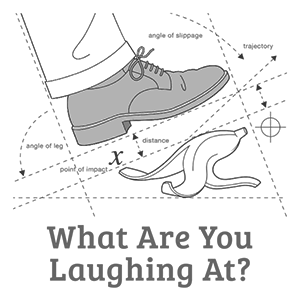
There are many theories of humor which attempt to explain what humor is, what social function it serves, and what would be considered humorous. It would be very difficult to explain humor to a hypothetical person who did not have a sense of humor already. In fact, to such a person humor would appear to be quite strange if not outright irrational behavior.
Among the prevailing types of theories that attempt to account for the existence of humor there are: psychological theories (the vast majority of which consider humor to be very healthy behavior); spiritual theories (which may consider humor to be a ‘gift from God’). There are also theories that consider humor to be an unexplainable mystery, very much like a mystical experience. Although various classical theories of humor and laughter may be found, in contemporary academic literature three theories of humor appear repeatedly: relief theory, superiority theory, and incongruity theory.
read more »
Posted in Health, Humor, Philosophy |
Leave a Comment »
June 9, 2012

Nervous laughter is laughter evoked from an audience’s expression of embarrassment, alarm, discomfort, or confusion, rather than amusement. Nervous laughter is usually less robust in expression than ‘a good belly laugh,’ and may be combined with confused glances or awkward silence on the part of others in the audience. Nervous laughter is considered analogous to a courtesy laugh, which may be rendered by more of a conscious effort in an attempt to move a situation along more quickly, especially when the comedian is pausing for laughter.
Nervous laughter is a physical reaction to stress, tension, confusion, or anxiety – just like sweaty palms or an elevated heart-rate. It’s not a conscious decision; it has nothing to do with one’s sense of humor and can occur at the unfunniest of times. Neuroscientist Vilayanur Ramachandran states ‘We have nervous laughter because we want to make ourselves think what horrible thing we encountered isn’t really as horrible as it appears, something we want to believe.’ Those are the most embarrassing times, too, naturally.
read more »
Posted in Health, Humor |
1 Comment »
June 8, 2012

Laughter is an audible expression or appearance of excitement, an inward feeling of joy. It may ensue from jokes, tickling, and other stimuli. It is associated with a number of positive emotional states, such as joy, mirth, happiness, and relief. However on some occasions it may express other emotions, such as embarrassment, contrition, or confusion.
A nervous laugh or courtesy laugh is rendered by a more conscious effort, in an attempt to move a situation along more quickly. Laughter is a part of human behavior regulated by the brain, helping humans clarify their intentions in social interaction and providing an emotional context to conversations.
read more »
Posted in Health, Humor |
Leave a Comment »
June 7, 2012
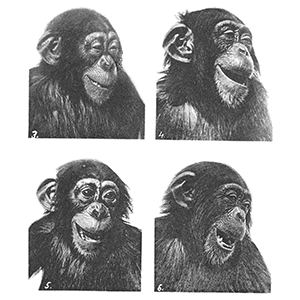
Laughter in animals other than humans describes animal behavior which resembles human laughter. Self awareness is conscious concomitant of the physiological processes involving laughter or smiling reflex (response) and its grades, degrees, or spectrum varies according to phylogenetic development, with no clear cut demarcation. The emotional ingredients (such as contempt, hatred, ridicule, sarcasm, love, amusement etc.) are variable and involve different neurophysiological and physiological processes.
Chimpanzees, gorillas, bonobos and orangutans show laughter-like vocalizations in response to physical contact, such as wrestling, play chasing, or tickling. This is documented in wild and captive chimpanzees. Chimpanzee laughter is not readily recognizable to humans as such, because it is generated by alternating inhalations and exhalations that sound more like panting or screeching. The differences between chimpanzee and human laughter may be the result of adaptations that have evolved to enable human speech. It is hard to tell, though, whether or not the chimpanzee is expressing joy.
read more »
Posted in Humor, Science |
1 Comment »
June 5, 2012

Kenny Scharf (b. 1958) is an American painter who lives in Brooklyn, whose works consist of popular culture based art with made up science-related backgrounds.
Scharf came to prominence in the 80s interdisciplinary art scene making sparkly, pop-ed, and monstrous paintings and installations.
read more »
Posted in Art, Humor, Money |
Leave a Comment »
June 4, 2012

‘The Theory of Interstellar Trade‘ is a paper written in 1978 by economist Paul Krugman. The paper was first published in 2010 in the journal ‘Economic Inquiry.’ He described the paper as something he wrote to cheer himself up when he was an oppressed assistant professor, caught up in the academic rat race.
Krugman analyzed the question of how interest rates on goods in transit should be computed when the goods travel at close to the speed of light. This is a problem because the time taken in transit will appear less to an observer traveling with the goods than to a stationary observer.
read more »
Posted in Humor, Money, Technology |
1 Comment »
May 30, 2012
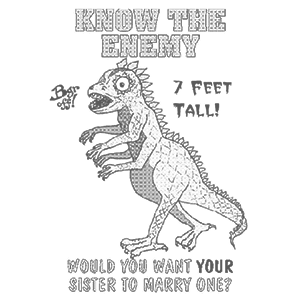
Bill, the Galactic Hero is a satirical science fiction novel by Harry Harrison, first published in 1965. Harrison reports having been approached by a Vietnam veteran who described Bill as ‘the only book that’s true about the military.’ Harrison introduced a new euphemism, ‘bowb,’ in the series to cover the vulgarity necessary to render military life accurately. It is used extensively in Bill, the Galactic Hero.
Bill is a farmboy on a small backward agricultural planet who is drugged, hypnotized, then shanghaied into the Space Troopers and sent to recruit training under a fanged instructor named Deathwish Drang. After surviving boot camp, he is transferred to active duty as a fuse tender on the flagship of the space fleet in battle with the Chingers, a small reptillian race. Injured and with the fleet almost destroyed, he fires off a shot witnessed by the admiralty and is proclaimed a hero.
Posted in Humor, Language, War |
Leave a Comment »



