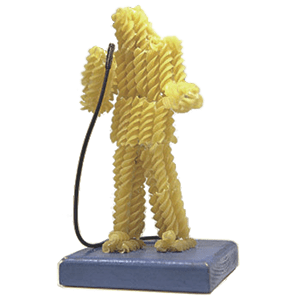
‘The Fusilli Jerry‘ is the 107th episode of the sitcom ‘Seinfeld.’
This was the 21st episode of the sixth season. It aired in 1995. Working titles for this episode were ‘The Move’, ‘The Proctologist,’ and ‘The Assman.’
Everything is Interesting
‘The Fusilli Jerry‘ is the 107th episode of the sitcom ‘Seinfeld.’
This was the 21st episode of the sixth season. It aired in 1995. Working titles for this episode were ‘The Move’, ‘The Proctologist,’ and ‘The Assman.’

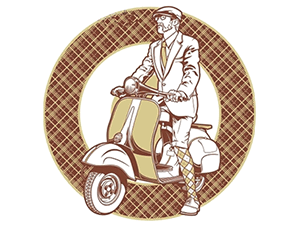
The term young fogey was humorously applied, in British context, to some younger-generation, rather buttoned-down writers and journalists, such as Simon Heffer, Charles Moore and, for a while, A. N. Wilson. The term is attributed to Alan Watkins writing in 1984 in ‘The Spectator.’ Young fogey is still used to describe conservative young men (aged approximately between 15 and 40) who dress in a vintage style (usually that of the 1920s-1950s, also known as the ‘Brideshead’ look – after the influence of ‘Brideshead Revisited’, by Evelyn Waugh), and who tend towards erudite, conservative cultural pursuits.
The young fogey is sometimes confused with the ‘Sloane Ranger’ (a stereotype in London of young, upper class or upper-middle-class people who live near Sloane Square in Chelsea), but this is incorrect; whilst there is some crossover between the two in clothing styles, the young fogey tends toward reserved, intellectual and cultured pursuits, and avoids heartiness. The young-fogey style of dress also has some surface similarity with the preppy style, but it is essentially an anglo-centric style, restricted to the United Kingdom and the more anglicized areas of the British Commonwealth such as Australia and New Zealand.
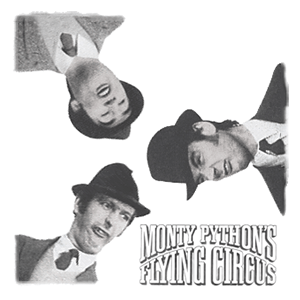
The Upper Class Twit of the Year is a classic comedy sketch that was seen on the TV show ‘Monty Python’s Flying Circus,’ and also in a modified format as the finale of the movie ‘And Now For Something Completely Different.’ It is notable for its savage satire on dim-witted members of the English upper class. The sketch features horse race style commentary by John Cleese about an obstacle-course race among five stereotypical, upper-class twits (imbeciles), to determine the 127th Annual Upper-Class Twit of the Year.
The obstacles include: Kicking The Beggar (the Twits must approach a beggar with a tray and kick him until he falls over); Reversing Into The Old Lady (the Twits must get into their sports cars and reverse them into a cardboard cut-out of an old lady, then speed off; into Waking The Neighbor (the Twits must drive their cars forward and then try to wake up a neighbor (who is attempting to get some sleep) by slamming their doors, tooting their horns, etc. Finally, the Twits approach a table with five revolvers on it. The winner is the first Twit to shoot himself. The three coffins of the winning Twits are placed on the medal rostrum and medals are draped around them. Cleese ends his commentary by remarking that ‘there’ll certainly be some car door slamming in the streets of Kensington tonight.’
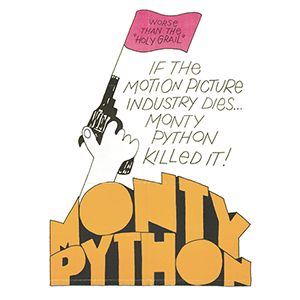
And Now for Something Completely Different is a film spin-off from the television comedy series ‘Monty Python’s Flying Circus’ featuring favorite sketches from the first two seasons. The title was used as a catchphrase in the television show. The film, released in 1971, consists of 90 minutes of the best sketches seen in the first two series of the television show. The sketches were remade on film without an audience, and were intended for an American audience which had not yet seen the series. The announcer (John Cleese) uses the phrase ‘and now for something completely different’ several times during the film, in situations such as being roasted on a spit and lying on top of the desk in a small, pink bikini.
This was the Pythons’ first feature film, of sketches re-shot on an extremely low budget (and often slightly edited) for cinema release. Some famous sketches included are: the ‘Dead Parrot’ sketch, ‘The Lumberjack Song,’ ‘Upperclass Twits,’ ‘Hell’s Grannies,’ and the ‘Nudge Nudge’ sketch. Financed by Playboy’s UK executive Victor Lownes, it was intended as a way of breaking Monty Python in America, and although it was ultimately unsuccessful in this, the film did good business in the UK. The group did not consider the film a success, but it enjoys a cult following today.
read more »
The World Beard and Moustache Championships is a biennial competition in which men with beards and moustaches display lengthy, highly-styled facial hair in several categories which are rated by a panel of judges. The first Championship took place in Höfen-Enz, Germany, in 1990. The 2011 championships were hosted by ‘The Norwegian Moustache Club of 91’ in Trondheim, Norway.
The 12th incarnation of the contest will be in Stuttgart, Germany in 2013 and will be hosted by Belle Moustache Beard and Culture Club. There are 3 brackets of facial hair: Moustache, Partial Beard and Full Beard. Each bracket is broken into individual categories. There are usually 17 categories but there were 18 different categories for the 2009 championships.
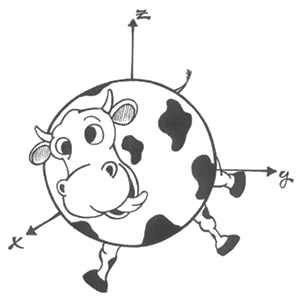
Spherical cow is a metaphor for highly simplified scientific models of complex real life phenomena.The phrase comes from a joke about theoretical physicists: ‘Milk production at a dairy farm was low, so the farmer wrote to the local university, asking for help from academia. A multidisciplinary team of professors was assembled, headed by a theoretical physicist, and two weeks of intensive on-site investigation took place. The scholars then returned to the university, notebooks crammed with data, where the task of writing the report was left to the team leader. Shortly thereafter the physicist returned to the farm, saying to the farmer ‘I have the solution, but it only works in the case of spherical cows in a vacuum.’
It is told in many variants. In Russian, it is called a spherical horse in a vacuum, from a joke about a physicist who said he could predict the winner of any horse race to multiple decimal points – provided it was a spherical horse moving through a vacuum.The point of the joke is that physicists will often reduce a problem to the simplest form they can imagine in order to make calculations more feasible, even though such simplification may hinder the model’s application to reality.
Dimensions of Dialogue (Czech: ‘Možnosti dialogu’) is a 1982 Czechoslovak animated short film directed by Jan Švankmajer. It is 14 minute long and created with stop motion. The animation is divided into three sections:
‘Exhaustive discussion’ shows Arcimboldo-like heads gradually reducing each other to bland copies; ‘Passionate discourse’ shows a clay man and woman who dissolve into one another sexually, then quarrel and reduce themselves to a frenzied, boiling pulp; and ‘Factual conversation’ consists of two elderly clay heads who extrude various objects on their tongues (toothbrush and toothpaste; shoe and shoelaces, etc.) and intertwine them in various combinations.

Jan Švankmajer [shvank-mai-er] (b.1934) is a Czech filmmaker and artist whose work spans several media. He is a self-labeled surrealist known for his surreal animations and features, which have greatly influenced other artists such as Terry Gilliam and the Brothers Quay. An early influence on his later artistic development was a puppet theater he was given for Christmas as a child. He studied at the College of Applied Arts in Prague and later in the Department of Puppetry at the Prague Academy of Performing Arts.
He contributed to Emil Radok’s film ‘Doktor Faust’ in 1958 and then began working for Prague’s Semafor Theatre where he founded the Theatre of Masks. He then moved on to the Laterna Magika multimedia theatre, where he renewed his association with Radok. This theatrical experience is reflected in Švankmajer’s first film ‘The Last Trick,’ which was released in 1964. Under the influence of theoretician Vratislav Effenberger Švankmajer moved from the mannerism of his early work to classic surrealism, first manifested in his film ‘The Garden’ (1968), and joined the Czechoslovakian Surrealist Group.
read more »

PES (Adam Pesapane) is a director and animator of numerous short films and commercials. He uses everyday objects and stop-motion animation to create short films such as ‘Roof Sex,’ and ‘Western Spaghetti.’ An early influence on PES’s animation style is the work of Czech surrealist Jan Švankmajer. PES’s first animated film, ‘Roof Sex,’ features two life-sized chairs having sex on a New York rooftop. Though only a minute long, the film took 20 shooting days to complete. The war short ‘KaBoom!’ (2004) was instrumental in defining the artist’s personal style and approach to animating objects. The film features an atomic airstrike on a miniature city using children’s toys and festive objects such as gift bows, Christmas ornaments, and clown-head cupcake toppers.
In ‘Game Over’ (2006) PES recreated classic arcade death sequences (from the games Centipede, Frogger, Asteroids, Space Invaders, and Pac-Man) with familiar objects including muffins, toy cars, insects, pizza and fried eggs. The film was inspired by an interview with Toru Iwatani, the creator of Pac-Man, who said the original source of inspiration for the Pac-Man character was a pizza with a slice missing. In 2008, PES released his short ‘Western Spaghetti.’ The film shows PES cooking spaghetti (the hands in the film are PES’s) but all the ingredients in the dish are replaced with objects such as tomato pin cushions, rubber bands, rubik’s cubes, post-it notes, and bubblewrap, and all are brought to life through stop-motion animation.

‘Asshole: How I Got Rich and Happy by Not Giving a Shit About You’ is a 2008 spoof self-help book and memoir by American author Martin Kihn. The first line of the book, is ‘I was the nicest guy in the world and it was killing me.’ Kihn, who worked for a marketing company, was told by his boss that unless he started ‘playing hardball,’ they were going to demote him and upgrade a colleague Kihn calls ‘The Nemesis’ to a window office. So to save his career, Kihn decided to turn himself into an asshole, and in telling his story, he describes exactly how the reader can can follow his lead.
To become an asshole, Kihn builds a team, consisting of an acting coach, life coach and both personal and dog trainer – to help ‘master the art of assholism.’ Kihn then creates a ten-step “assholism’ program which involves ‘ignoring other peoples’ feelings, never saying sorry, dressing in black silk and only eating red meat.’ Other tasks saw Kihn signing up to the National Rifle Association, learning kickboxing, screaming at colleagues and eating garlic bagels on public transport. Additionally, Kihn takes inspiration from famous figures whom he considers ‘assholes’ such as: Donald Trump, Rudy Giuliani, Martha Stewart, David Letterman, Nicole Kidman, Machiavelli, Scarface and Paris Hilton. He also takes inspiration from Ayn Rand’s ‘The Fountainhead’ and ‘The Virtue of Selfishness.’


A shock site is a website that is intended to be offensive, disgusting and/or disturbing to its viewers, containing materials of high shock value which is also considered distasteful and crude, and is generally of a pornographic, scatological, violent, insulting, painful, profane, or otherwise provocative nature. Some shock sites display a single picture, animation, video clip or a small gallery, and are often passed around via e-mail or online forums as a bait and switch hoax.
Some have gained their own subcultures and become internet memes. Goatse.cx was one of the best-known shock sites, featuring an image of a man stretching his anus with his hands. The site featured a page devoted to fan-submitted artwork and tributes to the site, and a parody of the image was also shown by a BBC newscast as an alternative for the then recently unveiled logo for the 2012 Summer Olympics. The site was shut down in 2004; however, various mirror sites featuring the image still exist.
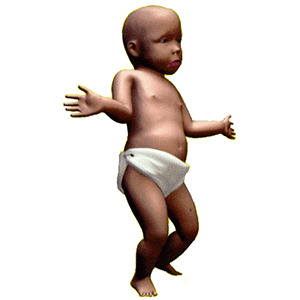
A viral video is one that becomes popular through the process of Internet sharing, typically through video sharing websites, social media and email. Viral videos often contain humorous content and include televised comedy sketches, such as The Lonely Island’s ‘Lazy Sunday’ and ‘Dick in a Box,’ amateur video clips like ‘Star Wars Kid,’ the ‘Numa Numa’ videos, ‘The Evolution of Dance,’ and ‘Chocolate Rain,’ and web-only productions such as ‘I Got a Crush… on Obama.’ Some eyewitness events have also been caught on video and have ‘gone viral’ such as the ‘Battle at Kruger.’
The proliferation of camera phones and inexpensive video editing and publishing tools credited with fueling phenomena. These consumer-shot videos are typically non-commercial, intended for viewing by friends or family. A video becoming viral is often unexpected, and an accident, and therefore a video cannot be called viral purely in the creator’s intention at the time of recording.
read more »


 The Daily Omnivore