February 14, 2012
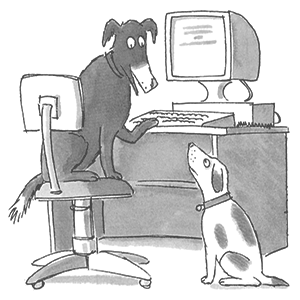
On the Internet, nobody knows you’re a dog‘ is an adage which began as the caption of a cartoon by Peter Steiner published by ‘The New Yorker’ in 1993. Steiner, a cartoonist and contributor to ‘The New Yorker’ since 1979, said the cartoon initially did not get a lot of attention, but later took on a life of its own, and that he felt similar to the person who created the ‘smiley face.’ In fact, Steiner was not that interested in the Internet when he drew the cartoon, and although he did have an online account, he recalled attaching no ‘profound’ meaning to the cartoon; it was just something he drew in the manner of a ‘make-up-a-caption’ cartoon.
In response to the comic’s popularity, he stated, ‘I can’t quite fathom that it’s that widely known and recognized.’ The cartoon marks a notable moment in Internet history. Once the exclusive domain of government engineers and academics, the Internet was now a subject of discussion in general interest magazines like ‘The New Yorker.’ Lotus 1-2-3 founder and early Internet activist Mitch Kapor commented in a ‘Time’ magazine article in 1993 that ‘the true sign that popular interest has reached critical mass came this summer when the ‘New Yorker printed a cartoon showing two computer-savvy canines.’
read more »
Posted in Humor, Politics, Technology |
1 Comment »
February 13, 2012

Bathos [bey-thos] (Greek: ‘depth’) is an abrupt transition in style from the exalted to the commonplace, producing a ludicrous effect. While often unintended, bathos may be used deliberately to produce a humorous effect. If bathos is overt, it may be described as Burlesque or mock-heroic.
As used in English bathos originally referred to a particular type of bad poetry, but it is now used more broadly to cover any seemingly ridiculous artwork or bad performance. It should not be confused with pathos, a mode of persuasion within the discipline of rhetoric, intended to arouse emotions of sympathy and pity.
read more »
Posted in Art, Humor, Language |
Leave a Comment »
February 13, 2012

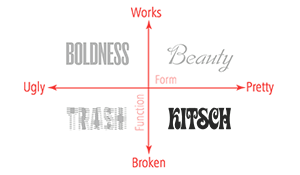
Camp is an aesthetic sensibility that regards something as appealing or humorous because of its deliberate ridiculousness. The concept is closely related to kitsch, and things with camp appeal may also be described as being ‘cheesy.’
When the usage appeared, in 1909, it denoted: ostentatious, exaggerated, affected, theatrical, and effeminate behaviour, and, by the middle of the 1970s, the definition comprised: banality, artifice, mediocrity, and ostentation so extreme as to have perversely sophisticated appeal. American writer Susan Sontag’s essay ‘Notes on ‘Camp” (1964) emphasised its key elements as: artifice, frivolity, naïve middle-class pretentiousness, and ‘shocking’ excess. Camp as an aesthetic has been popular from the 1960s to the present.
read more »
Posted in Art, Humor, Language |
Leave a Comment »
February 13, 2012

Paul Sturgess is an English-born basketball player for the Harlem Globetrotters. At 7 ft 7.82 in (2.3322 m) and 320 lb (150 kg), Sturgess was the tallest ever college basketball player in the US, is the tallest professional basketball player in the world, and is taller than any basketballer ever to play for the NBA. He joined the team in 2011 with fellow rookie, Jonte ‘Too Tall’ Hall, who at 5 ft 2 in (1.57 m) is the shortest ever player and is 2.5 ft (77 cm) shorter than Sturgess.
Sturgess wears a size 21 shoe. Examinations as a teenager revealed that his growth is healthy and not the result of disorder, rather he possesses familial tall stature, that is to say his height is genetic. His biological father is 6 ft 9 in (2.06 m) and there are other tall members in his family although his mother is 5 ft 5 in (1.65 m) and his younger sister is 5 ft 6 in (1.68 m). Sturgess was always tall but a growth spurt between the ages of 16-17 resulted in a foot (30 cm) of height added within a single year. Sturgess enjoys playing many other sports and before concentrating on basketball also played golf and soccer.
Posted in Games, Humor |
Leave a Comment »
February 10, 2012

Reality distortion field (RDF) is a term coined by Bud Tribble (who still works at Apple) at Apple Computer in 1981, to describe company co-founder Steve Jobs’ charisma and its effects on the developers working on the Mac project. Tribble claimed that the term came from ‘Star Trek.’ Later the term has also been used to refer to perceptions of his keynote speeches (or ‘Stevenotes’) by observers and devoted users of Apple computers and products.
The RDF was said by Andy Hertzfeld (member of the original Apple team) to be Steve Jobs’ ability to convince himself and others to believe almost anything with a mix of charm, charisma, bravado, hyperbole, marketing, appeasement, and persistence. RDF was said to distort an audience’s sense of proportion and scales of difficulties and made them believe that the task at hand was possible. While RDF has been criticized as anti-reality, those close to Jobs have also illustrated numerous instances in which creating the sense that the seemingly impossible was possible led to the impossible being accomplished. Similarly, the optimism which Jobs sowed in those around him contributed to the loyalty of his colleagues and fans.
Posted in Humor, Money, Technology |
1 Comment »
February 9, 2012

An egg of Columbus refers to a brilliant idea or discovery that seems simple or easy after the fact. The expression refers to a popular story of how Christopher Columbus, having been told that discovering the Americas was no great accomplishment, challenged his critics to make an egg stand on its tip.
After his challengers gave up, Columbus did it himself by tapping the egg on the table so as to flatten its tip. The story is often alluded to when discussing creativity.
read more »
Posted in Games, Humor, Language |
Leave a Comment »
February 6, 2012
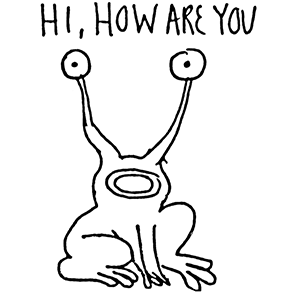
New sincerity is a term that has been used in music, aesthetics, film criticism, poetry, literary criticism and philosophy, generally to describe art or concepts that run against prevailing modes of postmodernist irony or cynicism. ‘New Sincerity’ was used as a collective name for a loose group of alternative rock bands, centered in Austin, Texas in the years from about 1985 to 1990, who were perceived as reacting to the ironic outlook of then-prominent music movements like punk rock and New Wave.
The use of ‘New Sincerity’ in connection with these bands began with an off-handed comment by Austin punk rocker/author Jesse Sublett to his friend, local music writer Margaret Moser: ‘All those new sincerity bands, they’re crap.’
read more »
Posted in Art, Humor, Language |
Leave a Comment »
February 6, 2012
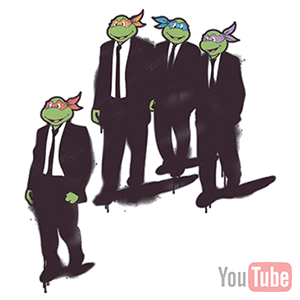
A video mashup is the combination of multiple sources of video—which usually have no relation with each other—into a derivative work, often lampooning its component sources or another text.
Many mashup videos are humorous movie trailer parodies, a later genre of mashups gaining much popularity. To the extent that mashups are ‘transformative’ of original content, they may find protection from copyright claims under the ‘fair use’ doctrine of copyright law.
Posted in Art, Humor, Technology |
Leave a Comment »
February 6, 2012
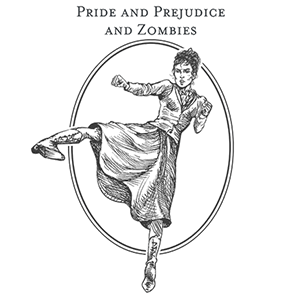
A mashup novel is a work of fiction which combines a pre-existing text, often a classic work of fiction, with a certain popular genre such as vampire or zombie narratives. ‘Pride and Prejudice and Zombies,’ which combines Jane Austen’s classic novel ‘Pride and Prejudice’ with elements of modern zombie fiction, is arguably the first, and certainly one of the most famous and successful works in the genre, and has been credited with spawning a rash of imitations. The term ‘Mashup’ was borrowed from the world of computers and music. Mashup books are seen as distinct from parody novels like ‘Bored of the Rings,’ and parallel novels like ‘The Wind Done Gone’ or ‘Wicked’ since they do not merely make fun of the original text, or tell an alternative version of it, but also introduce the themes and characteristics of a wholly different genre.
While most works in this genre (or cross-genre trend) rely on fictional texts as their basis, other works like ‘Abraham Lincoln, Vampire Hunter’ superimpose the popular genres over historical figures and events. A more recent phenomenon within the genre is the combination of more than two original works, or genres, as in the case of ‘Robinson Crusoe (The Eerie Adventures of the Lycanthrope),’ which combines the original novel with elements borrowed from the works of H.P. Lovecraft as well as the popular genre of werewolf fiction, and is accordingly attributed to three authors – Daniel Defoe, H.P. Lovecraft, and Peter Clines.
Posted in Art, Humor, Language |
Leave a Comment »
February 3, 2012
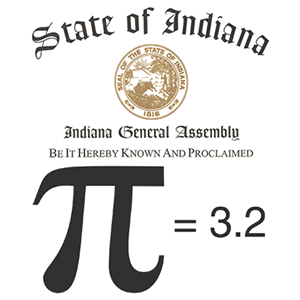
The Indiana Pi Bill is the popular name for bill #246 of the 1897 sitting of the Indiana General Assembly, one of the most famous attempts to establish scientific truth by legislative fiat. Despite that name, the main result claimed by the bill is a method to square the circle, rather than to establish a certain value for the mathematical constant π (pi), the ratio of the circumference of a circle to its diameter. However, the bill does contain text that appears to dictate various incorrect values of π, such as 3.2.
The bill never became law, due to the intervention of a mathematics professor who happened to be present in the legislature. The impossibility of squaring the circle using only compass and straightedge, suspected since ancient times, was rigorously proved in 1882 by Ferdinand von Lindemann. Better approximations of π than those inferred from the bill have been known since ancient times.
read more »
Posted in Humor, Politics, Science |
1 Comment »
February 2, 2012
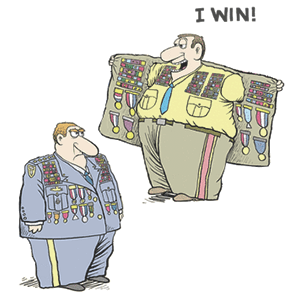
One-upmanship is the art or practice of successively outdoing a competitor. The term originated as the title of a book by Stephen Potter, published in 1952 as a follow-up to ‘The Theory and Practice of Gamesmanship (or the Art of Winning Games without Actually Cheating)’ (1947) and ‘Lifemanship’ titles in his series of tongue-in-cheek self-help books, and film and television derivatives, that teach various ‘ploys’ to achieve this. In that context, the term refers to a satiric course in the gambits required for the systematic and conscious practice of ‘creative intimidation,’ making one’s associates feel inferior and thereby gaining the status of being ‘one-up’ on them.
This satire of self-help style guides manipulates traditional stuffy British conventions for the gamester, all life being a game, who understands that if you’re not one-up, you’re one-down. Potter’s unprincipled principles apply to almost any possession, experience or situation, deriving maximum undeserved rewards and discomforting the opposition. Viewed seriously, it is a phenomenon of group dynamics that can have significant effects in the management field: for instance, manifesting in office politics. The term has been extended to a generic, often punning, extension upmanship used for any assertion of superiority: for instance, Native Upmanship.
Posted in Games, Humor |
1 Comment »
January 31, 2012

15 minutes of fame is short-lived, often ephemeral, media publicity or celebrity of an individual or phenomenon. The expression was coined by Andy Warhol, who said in 1968 that ‘In the future, everyone will be world-famous for 15 minutes.’ The phenomenon is often used in reference to figures in the entertainment industry or other areas of popular culture, such as reality TV and YouTube. It is believed that the statement was an adaption of a theory of Marshall McLuhan, explaining the differences of media, where TV differs much from other media using contestants.
The expression is a paraphrase of a line in Warhol’s catalog for a 1968 exhibit at the Moderna Museet in Stockholm. In 1979 Warhol reiterated his claim, ‘…my prediction from the sixties finally came true: In the future everyone will be famous for 15 minutes.’ Becoming bored with continually being asked about this particular statement, Warhol attempted to confuse interviewers by changing the statement variously to ‘In the future 15 people will be famous’ and ‘In 15 minutes everybody will be famous.’
read more »
Posted in Art, Humor, Language |
Leave a Comment »



