January 12, 2012

A peanut gallery is an audience that heckles the performer. The term originated in the days of vaudeville (1880s) as a nickname for the cheapest (and ostensibly rowdiest) seats in the theater; the least expensive snack served at the theater would often be peanuts, which the patrons would sometimes throw at the performers on stage to show their disapproval.
The phrases ‘no comments from the peanut gallery’ or ‘quiet in the peanut gallery’ are extensions of the name. ‘Peanut gallery’ may also refer to a social network audience that passively observes a syndicated web feed.
read more »
Posted in Humor, Language, Money |
Leave a Comment »
January 11, 2012
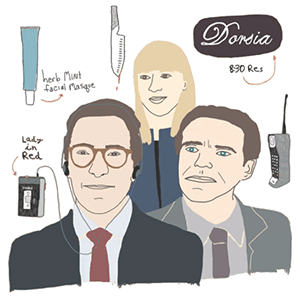
Yuppie [yuhp-ee] (short for ‘young urban professional’ or ‘young upwardly mobile professional’) is a term that refers to a member of the upper middle class or upper class in their 20s or 30s. It first came into use in the early-1980s and largely faded from American popular culture in the late-1980s, due to the 1987 stock market crash and the early 1990s recession. However it has seen a small revival in the 2000s and 2010s.
Yuppies are derided for their conspicuous personal consumption and hunger for attention social status among their peers. Cornell University economist Robert H. Frank, author of ‘Luxury Fever,’ has remarked, ‘When people were denouncing yuppies, they had considerably lower incomes than yuppies, so the things yuppies spent their money on seemed frivolous and unnecessary from their vantage point.’ Pro-skateboarder and businessman Tony Hawk has said that yuppies give ‘us visions of bright V-neck sweaters with collars underneath, and all that was vile in the eighties,’ and he has remarked as well as that a ‘bitchin’ tattoo cannot hide your inner desire to be Donald Trump.’
read more »
Posted in Humor, Language, Money |
1 Comment »
January 11, 2012
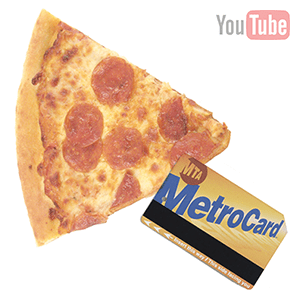
The New York Pizza Connection, or Pizza Principle, is a humorous but generally historically accurate ‘economic law’ proposed by native New Yorker Eric M. Bram. He noted in 1980 that from the early 1960s the price of a slice of pizza ‘matched, with uncanny precision, the cost of a New York City Subway ride.’ The term ‘Pizza Connection’ referring to this phenomenon was coined in early 2002 by ‘New York Times’ columnist Clyde Haberman. He predicted the cost of a slice of pizza would increase by as high as two dollars in midtown Manhattan.
In 2003 ‘The New Yorker’ magazine proclaimed the validity of the Pizza Connection (which they renamed the pizza principle) in accurately predicting the rise of the subway fare to $2.00 the week before. They also quoted Mr. Bram (by then a patent attorney) as warning that since the New York City Transit Authority had announced the discontinuation of the subway token itself in favor of the variable-fare cost MetroCard, the direct correlation between the cost of an off-the-street slice of cheese pizza and the cost of a subway token might not continue to hold. However, in 2005, and again in 2007, Haberman noted the price of a slice was again rising, and, citing the Pizza Connection, worried that the subway fare might soon rise again. The fare did indeed rise to $2.25 in 2009 and again in 2011 to $2.50.
Posted in Food, Humor, Money |
Leave a Comment »
January 10, 2012
Unintentional humor is the act of making other people laugh without actually meaning to. There are several different kinds of unintentional humor that arise out of various situations. It is possible for unintentional humor to arise when two different well-meaning people contribute independent pieces of information, but in combination, they contradict each other. A misstep in the (in)appropriate environment is often considered humorous, that is the tension or embarrassment it creates is released by laughter. Examples are misspeaks or falls by a famous individual, catching somebody at an official event with inappropriate manners or embarrassing body noises.
Some books, movies, and other literary works end up being unintentionally funny because they are comically clichéd or overwrought, despite appearing to be earnest and serious efforts by their creators. Examples are ‘so bad they’re good’ movies, such as ‘Plan 9 from Outer Space,’ and the style of bad writing celebrated by the Bulwer-Lytton Fiction Contest (where entrants are invited ‘to compose the opening sentence to the worst of all possible novels’).
Posted in Humor |
Leave a Comment »
January 10, 2012

The Museum of Bad Art (MOBA) is a privately owned museum whose stated aim is ‘to celebrate the labor of artists whose work would be displayed and appreciated in no other forum.’ It has branches in Dedham and Somerville, outside Boston. Its permanent collection includes 500 pieces of ‘art too bad to be ignored,’ 25 to 35 of which are on public display at any one time.
Explaining the reasoning behind the museum’s establishment, co-founder Jerry Reilly said in 1995: ‘While every city in the world has at least one museum dedicated to the best of art, MOBA is the only museum dedicated to collecting and exhibiting the worst.’ To be included in MOBA’s collection, works must be original and have serious intent, but they must also have significant flaws without being boring; curators are not interested in displaying deliberate kitsch.
read more »
Posted in Art, Humor |
1 Comment »
January 5, 2012
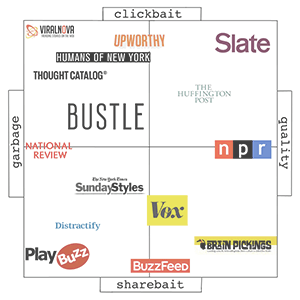
Betteridge’s Law of Headlines is an adage that states, ‘Any headline which ends in a question mark can be answered by the word ‘no.” It is based on a point made by journalist Ian Betteridge about sensational headlines that end in a question mark: ‘The reason why journalists use that style of headline is that they know the story is probably bullshit, and don’t actually have the sources and facts to back it up, but still want to run it.’ The maxim trends towards being universally true because of a simple principle of headline writing: if a story has enough sources to have a high chance of accuracy, a headline will be assertive. If sources are weak, or only a single source is found, headline writers will hedge their bets by posing the headline as a question.
It was among UK journalist Andrew Marr’s suggestions for how to read a newspaper if you really want to know what is going on: ‘If the headline asks a question, try answering ‘no.’ Is This the True Face of Britain’s Young? (Sensible reader: No.) Have We Found the Cure for AIDS? (No; or you wouldn’t have put the question mark in.) Does This Map Provide the Key for Peace? (Probably not.) A headline with a question mark at the end means, in the vast majority of cases, that the story is tendentious or over-sold. It is often a scare story, or an attempt to elevate some run-of-the-mill piece of reporting into a national controversy and, preferably, a national panic. To a busy journalist hunting for real information a question mark means ‘don’t bother reading this bit.”
Posted in Humor, Language, Money |
Leave a Comment »
January 4, 2012


The Missionary Church of Kopimism is a congregation of file sharers which hold that copying information as a sacred virtue. The sect, which is based in Sweden, is petitioning the Swedish government to have their church officially recognized as a religion.
The sect’s followers are called Kopomists from ‘copy me.’ According to the church, ‘In our belief, communication is sacred.’
Posted in Humor, Money, Philosophy |
Leave a Comment »
January 2, 2012
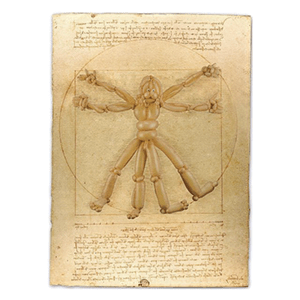
Balloon modelling is the shaping of special modelling balloons into almost any given shape, often a balloon animal. People who create balloon animals and other twisted balloon sculptures are called Twisters, Balloon Benders and Balloon Artists. Twisters often perform in restaurants, at birthday parties, fairs and at public and private events or functions. Two of the primary design styles are single balloon modelling, which restricts itself to the use of one balloon per model, and multiple balloon modelling, which uses more than one balloon.
Each style has its own set of challenges and skills, but few twisters who have reached an intermediate or advanced skill level limit themselves to one style or another. Depending on the needs of the moment, they might easily move between the one-balloon or multiple approaches, or they might even incorporate additional techniques such as ‘weaving’ and ‘stuffing.’ Modelling techniques have evolved to include a range of very complex moves, and a highly specialized vocabulary has emerged to describe the techniques involved and their resulting creations.
Posted in Art, Humor |
Leave a Comment »
January 2, 2012
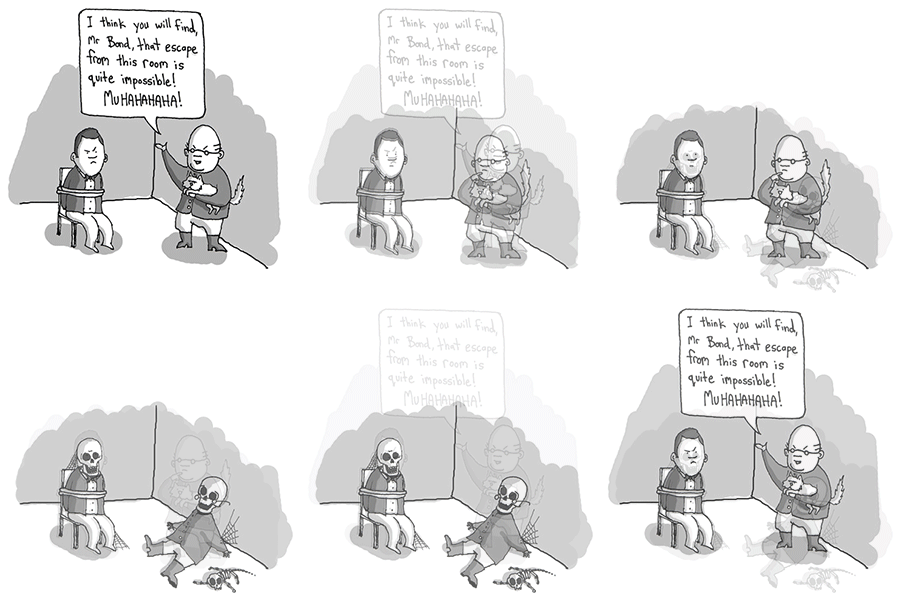
A deathtrap is a literary and dramatic plot device in which a villain, who has captured the hero or another sympathetic character, attempts to use an elaborate and usually sadistic method of murdering him/her. It is often used as a means to create dramatic tension in the story and to have the villain reveal important information to the hero, confident that the hero will shortly not be able to use it. It may also be a means to show the hero’s resourcefulness in escaping, or the writer’s ingenuity at devising a last-minute rescue or deus ex machina.
This plot device is generally believed to have been popularized by movie serials and 19th century theatrical melodramas. A well known example is the cliché of the moustache-twirling villain leaving the heroine tied to railroad tracks. Its use in the James Bond film series and superhero stories is well known.
read more »
Posted in Death, Humor, Language |
1 Comment »
January 2, 2012
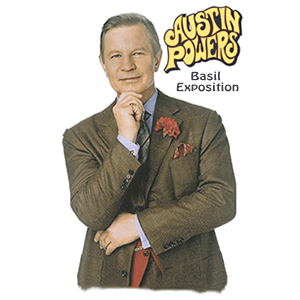
When the presentation of information in fiction becomes wordy, it is sometimes referred to as an ‘information dump.’ It is expressed by characters in dialogue or monologue and sometimes referred to as ‘idiot lectures.’ They are sometimes placed at the beginning of stories as a means of establishing the premise of the plot.
They also appear in science fiction, but it is considered poor writing when characters explain things to each other that they would already know. For example, if you need to call someone, you don’t stop to explain to a colleague that you are now going to use a device controlled with digital circuits to use radio waves to transmit your voice. Why? Because your contemporaries already know how cellular radio telephones work.
read more »
Posted in Art, Humor, Language |
Leave a Comment »
December 30, 2011
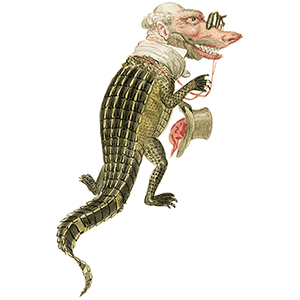
A krewe [kroo] is an organization that puts on a parade and or a ball for the Carnival season. The term is best known for its association with New Orleans Mardi Gras, but is also used in other Carnival celebrations around the Gulf of Mexico, such as the Gasparilla Pirate Festival in Tampa, Florida, and Springtime Tallahassee as well as in La Crosse, Wisconsin and at the Saint Paul Winter Carnival in Minnesota. The word is thought to have been coined in the early 19th century by an organization calling themselves Ye Mistick Krewe of Comus, as an archaic affectation; with time it became the most common term for a New Orleans Carnival organization. The Mystick Krewe of Comus itself was inspired by a Mobile mystic society (a Carnival social organization), with annual parades in Mobile, Alabama, called the Cowbellion de Rakin Society that dated from 1830.
Krewe members are assessed fees in order to pay for the parade and/or ball. Fees can range from thousands of dollars a year per person for the most elaborate parades to as little as $20 a year for smaller marching clubs. Criteria for krewe membership varies similarly, ranging from exclusive organizations largely limited to relatives of previous members to other organizations open to anyone able to pay the membership fee. Krewes with low membership fees may also require members to work to help build and decorate the parade floats and make their own costumes; higher priced krewes hire professionals to do this work. Parading krewe members are usually responsible for buying their own throws, the trinkets thrown to parade spectators according to Mobile and New Orleans tradition.
Posted in Games, Humor |
Leave a Comment »
December 28, 2011
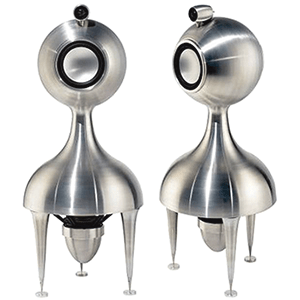
Wife Acceptance Factor (WAF) refers to design elements that increase the likelihood a wife will approve the purchase of expensive consumer electronics products such as home theater systems and personal computers. Stylish, compact, unobtrusive forms and appealing colors are commonly considered WAF. The term is a tongue-in-cheek play on electronics jargon such as ‘form factor’ and ‘power factor’ and derives from the gender stereotype that men are predisposed to appreciate gadgetry and performance criteria whereas women must be wooed by visual and aesthetic factors.
Larry Greenhill first used the term in 1983, writing for ‘Stereophile’ magazine, but Greenhill credited fellow reviewer and music professor Lewis Lipnick with the coining of the term. Lipnick himself traces the origin to the 1950s when hi-fi loudspeakers were so large that they overwhelmed most living rooms. Lipnick’s wife, actress Lynn-Jane Foreman, arrived at a different term: Marriage Interference Factor (MIF). Foreman suggested that audiophile husbands should balance their large and ugly electronic acquisitions with gifts to the wife made on the basis of similar expense, with opera tickets, jewelry and vacations abroad among the suggestions.
Posted in Humor, Money, Technology |
1 Comment »


 The Daily Omnivore