October 23, 2011


An innuendo [in-yoo-en-doh] is a baseless invention of thoughts or ideas. It can also be a remark or question, typically disparaging (also called insinuation), that works obliquely by allusion. In the latter sense, the intention is often to insult or accuse someone in such a way that one’s words, taken literally, are innocent. It is an indirect remark about somebody or something, usually suggesting something bad, mean or rude. The word is often used to express disapproval.
The term sexual innuendo has acquired a specific meaning, namely that of a ‘risque’ double entendre by playing on a possibly sexual interpretation of an otherwise innocent uttering. For example: ‘We need to go deeper’ can be seen as both a request for further inquiry on any given issue or a request to go deeper into an orifice. Alternatively the more simple changing the pronunciation of a word in order for it to sound vulgar e.g. innuendo to ‘in-your-endo.’
Posted in Humor, Language, Sex |
Leave a Comment »
October 23, 2011

A pub quiz is a quiz held in a public house (or pub for short). Origins of the pub quiz are unclear but there is little evidence of them existing before 1970 in the United Kingdom. Pub quizzes (also known as live trivia, or table quizzes) are often weekly events and will have an advertised start time, most often in the evening. While specific formats vary, most pub quizzes depend on answers being written in response to questions which may themselves be written or announced by a quizmaster.
Generally someone (either one of the bar staff or the person running the quiz) will come around with pens and quiz papers, which may contain questions or may just be blank sheets for writing the answers on. A mixture of both is common, in which case often only the blank sheet is to be handed in. Traditionally a member of the team hands the answers in for adjudication to the quiz master or to the next team along for marking when the answers are called.
read more »
Posted in Education, Games, Humor |
Leave a Comment »
October 23, 2011

A factoid [fak-toid] is a questionable or spurious (unverified, false, or fabricated) statement presented as a fact, but without supporting evidence. The word can also be used to describe a particularly insignificant or novel fact, in the absence of much relevant context. The word is defined as ‘an item of unreliable information that is repeated so often that it becomes accepted as fact.’
The term was coined by Norman Mailer in his 1973 biography of Marilyn Monroe. He described a factoid as ‘facts which have no existence before appearing in a magazine or newspaper,’ and created the word by combining ‘fact’ and the ending -‘oid’ to mean ‘similar but not the same.’ ‘The Washington Times’ described Mailer’s new word as referring to ‘something that looks like a fact, could be a fact, but in fact is not a fact.’
read more »
Posted in Education, Humor, Language |
1 Comment »
October 23, 2011

The Liberal Arts is a curriculum of seven subjects, the first three of which are called the trivia (grammar, rhetoric and logic). Its literal meaning in Latin could have been, ‘appropriate to the street corner, commonplace, vulgar.’
In medieval Latin, it came to refer to the lower division of the Liberal Arts (the other four were the quadrivium, namely arithmetic, geometry, music, and astronomy, which were more challenging). Hence, trivial in this sense would have meant ‘of interest only to an undergraduate.’ The meaning ‘trite, commonplace, unimportant, slight’ occurs from the late 16th century, notably in the works of Shakespeare.
read more »
Posted in Education, Games, Humor |
1 Comment »
October 20, 2011


Tactical frivolity is a form of public protest involving humor, often including peaceful non-compliance with authorities, carnival and whimsical antics. Humor has played a role in political protests at least as far back as the Classical period in ancient Greece. Yet it is only since the 1990s that the term tactical frivolity has gained common currency for describing the use of humor in opposing perceived political injustice.
There is no universally agreed definition as to which sorts of humorous protest count as tactical frivolity. Generally the term is used for a whimsical, non confrontational approach rather than aggressive mocking or cutting jokes.
read more »
Posted in Humor, Money, Politics |
1 Comment »
October 19, 2011
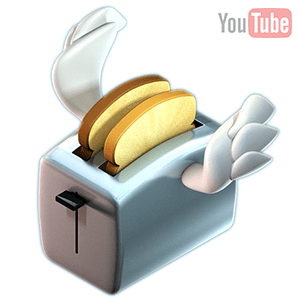
After Dark is a series of computer screensaver software introduced in 1989 by Berkeley Systems for the Macintosh, and later for Windows. Following the original, new editions were introduced including ‘More After Dark’ and ‘Before Dark,’ as well as editions themed around licensed properties such as ‘Star Trek,’ ‘The Simpsons,’ and Disney. The screensaver modules were often noted for their intertextuality, such as the flying toasters appearing in the Fish screensaver, and the cat from Boris screensaver appearing in the Bad Dog screensaver.
Of the screensaver modules included, the most famous is the iconic Flying Toasters which featured 1940s-style chrome toasters sporting bird-like wings, flying across the screen with pieces of toast. A slider enabled users to adjust the toast’s darkness and an updated Flying Toasters Pro module added a choice of music: Richard Wagner’s ‘Ride of the Valkyries’ or a flying toaster anthem with optional karaoke lyrics. Yet another version called ‘Flying Toasters!’ added bagels and pastries, baby toasters, and more elaborate toaster animation.
Posted in Humor, Technology |
1 Comment »
October 19, 2011

Birth control glasses, officially called GI glasses, are eyeglasses issued by the American military to its service members. At one time they were officially designated as ‘Regulation Prescription Glasses,’ or RPGs. This was commonly said to mean ‘Rape Prevention Glasses’ due to their unstylish appearance. The glasses are relatively thick frames made of brown translucent plastic, with a thin metal wire extending down the center of each of the earpieces.
The shape of the corrective lenses is nearly rectangular, with rounded edges, and a slight diagonal angle adjacent to the integrated nose pieces. This design reflects a specification for durability at the lowest possible cost. There are two designs available for female and male soldiers who require prescription eye wear.
read more »
Posted in Humor, Sex, War |
Leave a Comment »
October 18, 2011
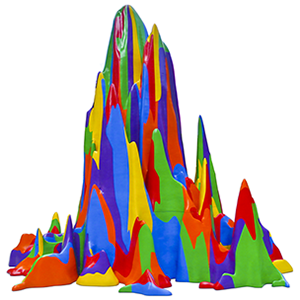
Plop art (or Plonk art) is a pejorative slang term for public art (usually large, abstract, modernist or contemporary sculpture) made for government or corporate plazas, spaces in front of office buildings, skyscraper atriums, parks, and other public venues. The term connotes that the work is unattractive or inappropriate to its surroundings – that is, it has been thoughtlessly ‘plopped’ where it lies.
The very word ‘plop’ suggested something falling wetly and heavily in the manner of excrement — extruded, as it were, from the fundament of the art world, and often at public expense. Plop art is a play on the term pop art. The term was coined by architect James Wines in 1969. Wines was critical of the failure of much public art to take an environmentally-oriented approach to the relationship between public art and architecture.
Posted in Art, Humor, Language |
Leave a Comment »
October 16, 2011

The Tinkerbell effect is a term describing things that are thought to exist only because people believe in them. The effect is named for Tinker Bell, the fairy in the play Peter Pan who is revived from near death by the belief of the audience.
Claimed cases include: private property; the value of a nation’s money in a fiat system; the value of gold; civil society; and the ‘rule of law.’
Posted in Humor, Money, Politics |
Leave a Comment »
October 15, 2011

The Chewbacca defense is a fictional legal strategy used in an episode of ‘South Park’ in1998. The aim of the argument is to deliberately confuse the jury by making use of the fallacy known as ignoratio elenchi, or a red herring. It starts by stating that Chewbacca lives on the planet Endor (doubly incorrect: No longer sedentary, he used to live on a different planet, Kashyyyk.). The argument continues from there, the false premise leading to a series of nonsense conclusions. The concept satirized attorney Johnnie Cochran’s closing argument defending O. J. Simpson in his murder trial. The Associated Press noted it as an example of Cochran’s position in popular culture. The concept has become a minor Internet phenomenon, used frequently as a running gag on satirical sites and in forums as a form of rhetoric.
‘Why would a Wookiee, an 8-foot-tall Wookiee, want to live on Endor, with a bunch of 2-foot-tall Ewoks? That does not make sense! But more important, you have to ask yourself: What does this have to do with this case? Nothing. Ladies and gentlemen, it has nothing to do with this case! It does not make sense! Look at me. I’m a lawyer defending a major record company, and I’m talkin’ about Chewbacca! Does that make sense? Ladies and gentlemen, I am not making any sense! None of this makes sense! And so you have to remember, when you’re in that jury room deliberatin’ and conjugatin’ the Emancipation Proclamation, does it make sense? No! Ladies and gentlemen of this supposed jury, it does not make sense! If Chewbacca lives on Endor, you must acquit! The defense rests.’
Posted in Humor, Politics |
Leave a Comment »
October 11, 2011

Humans United Against Robots (often abbreviated as HUAR) is a semi-tongue-in-cheek organization designed to unify the human race and prepare them for a futuristic robotic uprising. HUAR was created by humorist Keith Malley.
‘HUAR was designed to educate and awaken the citizenry of the world to the impending attack that computers and robots will put into effect against humans. It is a collection of human beings that spread the word of this impending doom as well as doing what they can to help minimize the threat. Between computer programs that can identify human speech and match that up with their computerized dictionaries in order to understand our weaknesses to jokester scientists building robots specifically made to breathe fire from their mouths and shoot lasers from their eyes, it is evident that a task force had to be formed of members that take being at the top of the food chain seriously. Robots will uprise. HUAR will be there.’
Posted in Humor, Technology, War |
Leave a Comment »
September 30, 2011
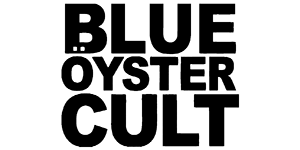
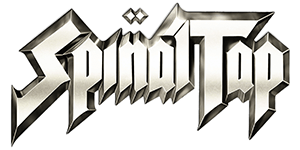
A metal umlaut [oom-lout] (also known as röck döts) is a trema (in Germanic languages called Umlaut) that is sometimes used gratuitously or decoratively over letters in the names of hard rock or heavy metal bands—for example those of Mötley Crüe and Motörhead. Amongst English speakers, the use of umlaut marks and other diacritics with a blackletter style typeface is a form of foreign branding intended to give a band’s logo a Teutonic quality—denoting stereotypes of boldness and strength commonly attributed to ancient northern European peoples, such as the Vikings and Goths. Its use has been attributed to a desire for a ‘Gothic horror’ feel. The metal umlaut is not generally intended to affect the pronunciation of the band’s name.
These decorative umlauts have been parodied in film and fiction; in the mockumentary film ‘This Is Spinal Tap’ (spelled with an umlaut mark over the n and a dotless i), fictional rocker David St. Hubbins (Michael McKean) says, ‘It’s like a pair of eyes. You’re looking at the umlaut, and it’s looking at you.’
read more »
Posted in Art, Humor, Language |
1 Comment »


 The Daily Omnivore