December 9, 2010

Cyriak Harris is a British freelance animator better known by his first name Cyriak, or by his pseudonym Mutated Monty. He is known for his surreal short web animations. A regular contributor to the British website B3ta since 2004, Cyriak displays a surreal and often disturbing animation style with a distinct British theme. He uses a combination of Adobe Photoshop and After Effects for his animation and visuals along with FL Studio (formerly known as Fruity Lookps) for original music pieces alongside his videos.
Posted in Art, Humor |
Leave a Comment »
December 8, 2010
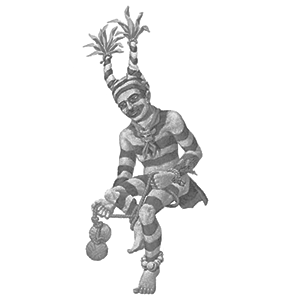
Clown society is a term used in anthropology and sociology for an organization of comedic entertainers (or ‘clowns’) who have a formalized role in a culture or society. Sometimes clown societies have a sacred role, to represent a trickster character in religious ceremonies. Other times the purpose served by members of a clown society is only to parody excessive seriousness, or to deflate pomposity. A clown shows what is wrong with the ordinary way of doing things, and a clown shows how to do ordinary things the wrong way.
Members of a clown society always dress in some kind of a special costume reserved for clowns, which is usually an absurdly extreme form of normal dress. While in their costume, clowns have special permission from their society to parody or criticize defective aspects of their own culture. Clown societies usually train new members to become clowns in an apprentice system. Sometimes the training is improvisational comedy, but usually a clown society trains members in well known forms of costume, pantomime, song, dance, and common visual gags
Posted in Humor, Philosophy, World |
Leave a Comment »
December 8, 2010

Bouffon is a modern french theater term that was re-coined in the early 1960s by French acting instructor Jacques Lecoq to describe a specific style of performance work that has a main focus in the art of mockery. Similar to, but distinct from clowning, the bouffon draws from burlesque, commedia dell’arte, farce, gallows humor, parody, satire, and slapstick.
According to Lecoq, ‘the difference between the clown and the bouffon is that while the clown is alone, the bouffon is part of a gang; while we make fun of the clown, the bouffon makes fun of us. At the heart of the bouffon is mockery pushed to the point of parody. Bouffons amuse themselves by reproducing the life of man in their own way, through games and pranks.’
Posted in Art, Humor, Language |
Leave a Comment »
December 7, 2010

Area code 321 is the area code serving Brevard County, Florida and home to the Kennedy Space Center. It has been in use since November 1, 1999, and was assigned to the area after a successful petition drive due to the Space Coast’s impact on the county (if pronounced properly – ‘three, two, one’– the code resembles the countdown which launches the many spacecraft from Cape Canaveral).
Posted in Humor, Politics, Technology |
Leave a Comment »
December 7, 2010

Tongue-in-cheek is a figure of speech used to imply that a statement or other production is humorously or otherwise not seriously intended, and it should not be taken at face value. The facial expression typically indicates that one is joking or making a mental effort. In the past, it may also have indicated contempt, but that is no longer common. By 1842, the phrase had acquired its contemporary meaning. Early users of the phrase include Sir Walter Scott in his 1828 novel ‘The Fair Maid of Perth.’ The ironic usage originates with the idea of suppressed mirth—biting one’s tongue to prevent an outburst of laughter.
Putting one’s tongue into a cheek was formerly used to signify contempt. For example, in Scottish author Tobias George Smollett’s ‘The Adventures of Roderick Random,’ which was published in 1748, the eponymous hero is taking a coach to Bath and apprehends a highwayman. This provokes an altercation with a less brave passenger: ‘He looked black and pronounced with a faultering voice, ‘O! ’tis very well—damn my blood! I shall find a time.’ I signified my contempt of him by thrusting my tongue in my cheek, which humbled him so much, that he scarce swore another oath aloud during the whole journey.’
Posted in Humor, Language |
Leave a Comment »
December 7, 2010

(With) a grain of salt is a literal translation of a Latin phrase, ‘(cum) grano salis.’ It is often used to show that intelligence and personal judgment are needed, as in ‘I drink wine cum grano salis since I must drive’ (with care, moderately) or ‘please, repair this electric cable cum grano salis’ (aware of the dangers). ‘Cum grano salis’ also means, like in modern English, that something should not be taken too literally. In Italy ‘to have salt on your pumpkin’ (pumpkin being your head) means to have intelligence and reasoning capabilities.
The phrase comes from Pliny the Elder’s ‘Naturalis Historia,’ regarding the discovery of a recipe for an antidote to a poison. In the antidote, one of the ingredients was a grain of salt. Threats involving the poison were thus to be taken ‘with a grain of salt’ and therefore less seriously. An alternative account says that the Roman general Pompey believed he could make himself immune to poison by ingesting small amounts of various poisons, and he took this treatment with a grain of salt to help him swallow the poison. In this version, the salt is not the antidote, it was taken merely to assist in swallowing the poison.
Posted in Food, Humor, Language |
Leave a Comment »
December 7, 2010
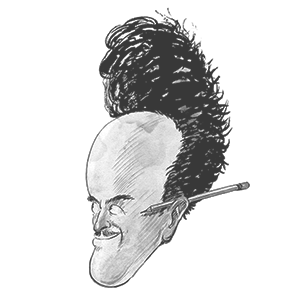
Ub Iwerks (1901 – 1971) was an American animator and special effects technician who created several of Walt Disney’s early characters including Mickey Mouse. Iwerks was considered by many to be Disney’s oldest friend, and he spent most of his career working for Disney in some capacity. The two met in 1918 while working for the Kansas City Art Studio, and would eventually start their own commercial art business together.
He was responsible for the distinctive style of the earliest Disney animated cartoons, and was also responsible for creating several early characters including Mickey Mouse, Clarabelle Cow, and Horace Horsecollar. The first few Mickey Mouse and Silly Symphonies cartoons were animated almost entirely by Iwerks. Disney and he had a falling out over the credit for the characters success. Their friendship and working partnership was severed when Iwerks accepted a contract with Disney competitor Pat Powers to start an animation studio under his own name.
read more »
Posted in Art, Humor, Money |
Leave a Comment »
November 30, 2010

Anti-humor (also known as unjokes) are a kind of humor based on the surprise factor of absence of an expected joke or of a punch line in a narration which is set up as a joke. This kind of anticlimax is similar to that of the shaggy dog story. In anti-comedy the gist of the humor is in how poor the joke is or how poorly it was told. A popular kind of unjoke involves any seemingly humorous setup leading to the non-sequitur punchline of ‘No soap, radio’ or the joke ‘A man walks into a bar. He is an alcoholic and it’s destroying his family.’ Another form of anti-humor is poking fun at bad humor by the way of parody. An example is Jim’s Journal, a comic strip by Scott Dikkers, co-founder of The Onion, whose four-panel strips end without any sort of punchline.
Alternative comedy, among its other aspects, parodies the traditional idea of the joke as a form of humor. Andy Kaufman saw himself as a practitioner of anti-humor. Other comedians known for their anti-humor are Tim and Eric of Tim and Eric Awesome Show, Great Job!, Norm Macdonald, Ted Chippington, Neil Hamburger, Corey Mystyshyn, Jimmy Carr, and Bill Bailey.
Posted in Humor |
Leave a Comment »
November 30, 2010

Two elephants are sitting in the bathtub. One elephant says to the other, ‘Pass the soap.’
The elephant replies to the other elephant, ‘No soap, radio!‘
read more »
Posted in Humor, Science |
Leave a Comment »
November 18, 2010

Troma Entertainment is an American independent film production and distribution company founded by Lloyd Kaufman and Michael Herz in 1974. The company produces low-budget independent movies that play on 1950s horror with elements of farce. Many Troma films contain social commentary and have developed cult followings. Troma films are B-movies known for their surrealistic nature, along with their use of shocking imagery. They typically contain overt sexuality, graphic violence, gore and nudity, so much that the term ‘Troma Film’ has become synonymous with these characteristics.
Troma’s slogan is ‘Movies of the Future.’ Troma is also known for reusing the same props, actors, and scenes over and over again. Examples include a severed leg, a penis Monster, and the flipping/exploding car filmed for the movie ‘Sgt. Kabukiman, NYPD,’ which is used in place of any other car that needs to crash and explode. Troma produced or acquired many early films featuring several rising talents, such as Carmen Elektra (‘The Chosen One’), Billy Bob Thornton (‘Chopper Chicks in Zombietown’), Vanna White (‘Graduation Day’), Kevin Costner (‘Sizzle Beach, U.S.A.’), Samuel L. Jackson (‘Def by Temptation’), Marisa Tomei (‘The Toxic Avenger’), Vincent D’Onofrio (‘The First Turn-On!’), ‘Paul Sorvino’ (Cry Uncle), Trey Parker and Matt Stone (‘Cannibal! The Musical’), before they were discovered.
Posted in Art, Humor, Money |
Leave a Comment »
November 18, 2010
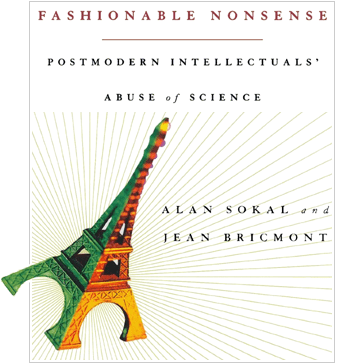
The Sokal affair was a publishing hoax perpetrated by Alan Sokal, a physics professor at New York University. In 1996, Sokal submitted an article to Social Text, an academic journal of postmodern cultural studies. The submission was an experiment to test the magazine’s intellectual rigor and, specifically, to learn if such a journal would ‘publish an article liberally salted with nonsense if it (a) sounded good and (b) flattered the editors’ ideological preconceptions.’
read more »
Posted in Humor, Language, Science |
Leave a Comment »
November 16, 2010

Principia Discordia is a Discordian religious text written by Greg Hill (Malaclypse The Younger) and Kerry Thornley (Omar Khayyam Ravenhurst). It was originally published under the title ‘Principia Discordia or How The West Was Lost’ in a limited edition of 5 copies in 1965. Discordianism is a religion centered on the idea that chaos is all that there is, and that disorder and order are both illusions that are imposed on chaos. There is some division as to whether it should be regarded as a parody religion, and if so to what degree.
It has been called ‘Zen for roundeyes,’ based on similarities with absurdist interpretations of the Rinzai school of Buddhism. Discordianism recognizes chaos, discord, and dissent as valid and desirable qualities, in contrast with most religions, which idealize harmony and order. While the Principia is full of literal contradictions and unusual humor, it contains several passages which propose that there is serious intent behind the work. Saints identified include Emperor Norton, Yossarian, Don Quixote, and Bokonon.
Posted in Humor, Language, Philosophy |
1 Comment »



