January 10, 2017

In legal history, an animal trial was the criminal trial of a non-human animal. Such trials are recorded as having taken place in Europe from the thirteenth century until the eighteenth. In modern times, it is considered in most criminal justice systems that non-human creatures lack moral agency and so cannot be held culpable for an act.
Animals, including insects, faced the possibility of criminal charges for several centuries across many parts of Europe. According to a 1624 treatise by Johannis Gross, in 1474 a rooster was put on trial for ‘the heinous and unnatural crime of laying an egg,’ which the townspeople were concerned was spawned by Satan and contained a cockatrice (a mythical beast).
read more »
Posted in Humor, Politics |
Leave a Comment »
November 16, 2016


‘May you live in interesting times’ is an English expression purported to be a translation of a traditional Chinese curse. While seemingly a blessing, the expression is always used ironically, with the clear implication that ‘uninteresting times,’ of peace and tranquillity, are more life-enhancing than interesting ones, which from historical perspective usually include disorder and conflict.
Despite being so common in English as to be known as ‘the Chinese curse,’ the saying is apocryphal, and no actual Chinese source has ever been produced. The nearest related Chinese expression is usually translated as ‘Better to be a dog in a peaceful time, than to be a human in a chaotic (warring) period.’ The expression originates from a 1627 short story collection, ‘Stories to Awaken the World.’
Posted in Humor, Philosophy, World |
Leave a Comment »
November 1, 2016
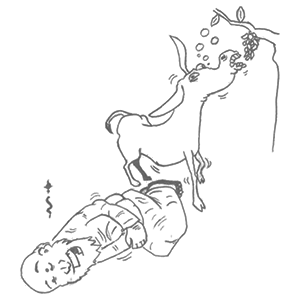
Death from laughter is a rare form of death, usually resulting from cardiac arrest or asphyxiation, caused by a fit of laughter. Instances of death by laughter have been recorded from the times of ancient Greece to the modern day. Certain brain injuries can cause pathological, uncontrollable laughter such as infarction of the pons and medulla oblongata.
Laughter can cause atonia and collapse (‘gelastic syncope,’ a short episode of low blood pressure caused by laughter), which in turn can cause trauma. Gelastic seizures, a rare type of seizure that involves a sudden burst of energy, usually in the form of laughing or crying, can be due to focal lesions to the hypothalamus. Depending upon the size of the lesion, the emotional lability (mood swings) may be a sign of an acute condition, and not itself the cause of the fatality. Gelastic syncope has also been associated with the cerebellum.
read more »
Posted in Death, Health, Humor |
Leave a Comment »
September 13, 2016


The three wishes joke is a form of joke in which the protagonist is given three wishes by a supernatural being, and fails to make the best use of them. Common scenarios include releasing a genie from confinement – perhaps finding an old oil lamp and rubbing it; catching and agreeing to release a mermaid or magical fish; or crossing paths with the devil.
The protagonist of the joke makes their first two wishes and finds that all is well. Often, the third wish is either misinterpreted, or intentionally granted in an awkwardly literal fashion, and cannot be reversed because it is the final wish, resulting in the punchline of the joke. Alternatively, the wishes are split between three people, with the last person inadvertently or intentionally messing up or undoing the wishes of the others with their wish to form the punchline.
read more »
Posted in Humor, Language |
Leave a Comment »
August 17, 2016

Mom jeans is a humorously pejorative term for a type of women’s jeans worn in the 80’s considered to be unfashionable and unflattering to the wearer’s figure. This style usually consists of a high waist (rising above the belly button), making the buttocks appear disproportionately longer, larger, and flatter than they otherwise might. It also tends to have excess space in the zipper/crotch and leg areas. The jeans are usually in a solid, light-blue color, with no form of stone washing or fading.
Other attributes of the style often seen are pleats, tapered legs, and elastic waistbands. The style is often accompanied by a blouse or shirt that is tucked into the jeans. This style of jeans was popular with women in the United States until the mid-1990s, when lower rise jeans started to become fashionable. High-waisted jeans became popular with young fashionable women once again in the early 2010s.
read more »
Posted in Art, Humor |
1 Comment »
June 23, 2016

‘Lenin was a mushroom‘ was a highly influential televised hoax by Soviet musician Sergey Kuryokhin and reporter Sergey Sholokhov. It was first broadcast in May 1991 on Leningrad Television. The hoax took the form of an interview on the television program ‘Pyatoe Koleso’ (‘The Fifth Wheel’). In the interview, Kuryokhin, impersonating a historian, narrated his findings that Vladimir Lenin consumed large quantities of psychedelic mushrooms and eventually became a mushroom himself.
Kuryokhin arrived at his conclusion through a long series of logical fallacies and appeals to the authority of various ‘sources’ (such as shamanic author Carlos Castaneda, MIT, and Soviet rocket scientist Konstantin Tsiolkovsky), creating the illusion of a reasoned and plausible logical chain. The incident has served as a watershed moment in Soviet (and Russian) culture and has often been used as proof of the gullibility of the masses.
read more »
Posted in Drugs, Humor, World |
Leave a Comment »
June 20, 2016

The turboencabulator (and its later incarnation, the ‘retroencabulator’) is a fictional machine whose alleged existence became an in-joke and subject of professional humor among engineers. The explanation of the supposed product makes extensive use of ‘technobabble’ (jargon that uses buzzwords, esoteric language, specialized technical terms).
‘Time’ magazine reported on the joke in 1946: ‘The original machine had a base-plate of prefabulated amulite, surmounted by a malleable logarithmic casing in such a way that the two spurving bearings were in a direct line with the pentametric fan. The main winding was of the normal lotus-o-delta type placed in panendermic semi-boloid slots in the stator, every seventh conductor being connected by a nonreversible tremie pipe to the differential girdlespring on the ‘up’ end of the grammeters.’
read more »
Posted in Humor, Language, Technology |
Leave a Comment »
June 13, 2016
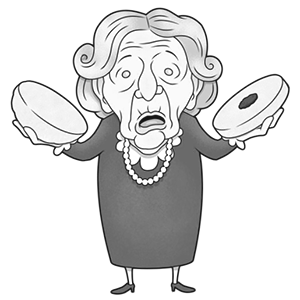
“Where’s the beef?” is a catchphrase in the United States and Canada. The phrase originated as a slogan for the fast food chain Wendy’s. Since then it has become an all-purpose phrase questioning the substance of an idea, event or product.
The phrase first came to public attention in a television commercial for the Wendy’s in 1984. In reality, the strategy behind the campaign was to distinguish competitors (McDonald’s and Burger King) big name sandwiches (Big Mac and Whopper respectively) from Wendy’s ‘modest’ Single by focusing on the large bun used by the competitors and the larger beef patty in Wendy’s sandwich. In the ad, titled ‘Fluffy Bun,’ actress Clara Peller receives a burger with a massive bun from a fictional competitor, which uses the slogan ‘Home of the Big Bun.’ The small patty prompts Peller to angrily exclaim, ‘Where’s the beef?’
read more »
Posted in Food, Humor, Money |
1 Comment »
May 29, 2016
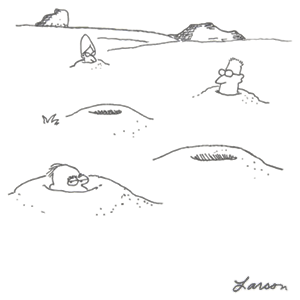
‘The Far Side‘ is a single-panel comic created by Gary Larson and syndicated by Universal Press Syndicate, which ran from January 1, 1980, to January 1, 1995. Its surrealistic humor is often based on uncomfortable social situations, improbable events, an anthropomorphic view of the world, logical fallacies, impending bizarre disasters, (often twisted) references to proverbs, or the search for meaning in life. Larson’s frequent use of animals and nature in the comic is popularly attributed to his background in biology. The series was preceded by a similar panel called ‘Nature’s Way,’ also by Larson.
Most of Larson’s comics relied on some combination of a visual and verbal gag, rather than just one or the other. Some recurring themes in the comic include people being stranded on desert islands, aliens, heaven, hell, and the life of cavemen. Many cartoons focused on animals, especially cows, bears, dogs, flies, and ducks. Notably, virtually all characters portrayed in the comic were overweight or obese, and usually wearing glasses. In addition, unless needed for a facial or comic expression, eyes are almost never drawn and characters usually show only a brow ridge.
Posted in Art, Humor, Language |
1 Comment »
May 16, 2016

Mukbang is a live online audiovisual broadcast in which a host eats large amounts of foods while interacting with their audience. Usually done through an internet webcast, mukbang became popular in South Korea in the 2010s. Foods ranging from pizza to noodles are consumed in front of a camera for an internet audience (who pay or not, depending on which platform one is watching). The word is a portmanteau of the Korean words for ‘eating’ (‘meokneun’) and ‘broadcast’ (‘bangsong’).
Some mukbangs involve eating large amounts of food rapidly, while others features hosts savoring small meals at a more normal pace. In 2018, the South Korean government announced that it would create and regulate mukbang guidelines by launching the ‘National Obesity Management Comprehensive Measures,’ which was intended to discourage binge eating.
read more »
Posted in Food, Humor, World |
Leave a Comment »
April 6, 2016

‘800-pound gorilla’ is an American English expression for a person or organization so powerful that it can act without regard to the rights of others or the law. The phrase is rooted in a joke riddle: ‘Where does an 800-lb. gorilla sit?’ The answer: ‘Anywhere it wants to.’
The term can describe a powerful geopolitical and military force, or, in business, a powerful corporate entity that has such a large majority percentage of whatever market they compete within that they can use that strength to crush would-be competitors. The metaphor has been mixed, on occasion, with the metaphor of the elephant in the room (an obvious truth that is going unaddressed).
Posted in Humor, Language |
1 Comment »
April 1, 2016
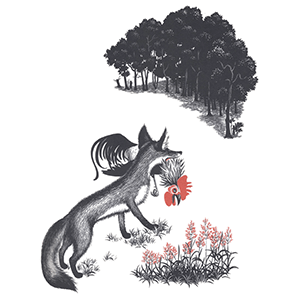
April Fools’ Day (sometimes called ‘All Fools’ Day’) is celebrated every year on the first day of April by playing practical jokes and spreading hoaxes. Pranksters expose their ruse by shouting ‘April Fool.’ Some newspapers, magazines, and other published media report fake stories, which are usually explained the next day or below the news section in small letters. Although popular since the 19th century, the day is not a public holiday in any country.
Geoffrey Chaucer’s ‘The Canterbury Tales’ (1392) contains the first recorded association between the first of April and foolishness. Some precursors of April Fools’ Day include the Roman festival of Hilaria, the Holi festival of India, and the Medieval Feast of Fools.
read more »
Posted in Humor, World |
1 Comment »



