May 31, 2016
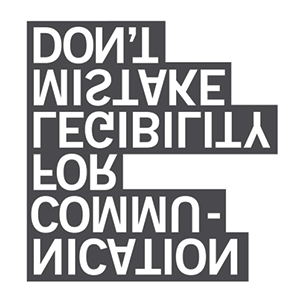
Typography is the art and technique of arranging type to make written language legible, readable, and appealing when displayed. The arrangement of type involves selecting typefaces, point size, line length, line-spacing (leading), letter-spacing (tracking), and adjusting the space within letters pairs (kerning). The term ‘typography’ is also applied to the style, arrangement, and appearance of the letters, numbers, and symbols created by the process.
In contemporary use, the practice and study of typography is very broad, covering all aspects of letter design and application, both mechanical (typesetting and typefaces) and manual (handwriting and calligraphy). Type design is a closely related craft, sometimes considered part of typography; most typographers do not design typefaces, and some type designers do not consider themselves typographers. Typography also may be used as a decorative device, unrelated to communication of information.
read more »
Posted in Art, Language, Technology |
Leave a Comment »
May 29, 2016
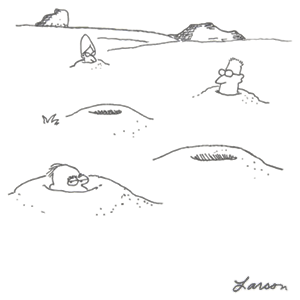
‘The Far Side‘ is a single-panel comic created by Gary Larson and syndicated by Universal Press Syndicate, which ran from January 1, 1980, to January 1, 1995. Its surrealistic humor is often based on uncomfortable social situations, improbable events, an anthropomorphic view of the world, logical fallacies, impending bizarre disasters, (often twisted) references to proverbs, or the search for meaning in life. Larson’s frequent use of animals and nature in the comic is popularly attributed to his background in biology. The series was preceded by a similar panel called ‘Nature’s Way,’ also by Larson.
Most of Larson’s comics relied on some combination of a visual and verbal gag, rather than just one or the other. Some recurring themes in the comic include people being stranded on desert islands, aliens, heaven, hell, and the life of cavemen. Many cartoons focused on animals, especially cows, bears, dogs, flies, and ducks. Notably, virtually all characters portrayed in the comic were overweight or obese, and usually wearing glasses. In addition, unless needed for a facial or comic expression, eyes are almost never drawn and characters usually show only a brow ridge.
Posted in Art, Humor, Language |
1 Comment »
April 27, 2016
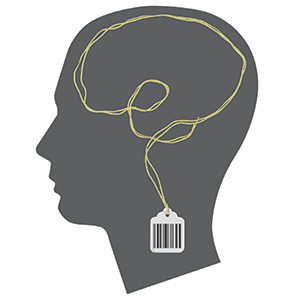
‘Buyology: Truth and Lies About Why We Buy’ (2008) is a bestselling book by Danish marketing expert Martin Lindstrom, in which he analyzes buying decisions. The author attempts to identify the factors that influence buyers’ decisions in a world cluttered with messages such as advertisements, slogans, jingles, and celebrity endorsements. Lindstrom, through a study of the human psyche, examines the subconscious mind and its role in deciding what the buyer will buy. He debunks some myths about advertising and promotion.
‘Buyology’ is claimed to be a result of the author’s three year neuromarketing study on 2,081 people to identify the effect of brands, logos, commercials, advertisements and products on them. Neuromarketing investigates the sensorimotor, cognitive, and affective response to marketing stimuli. The study was funded by seven corporations, including GlaxoSmithKline, Hakuhodo, Fremantle – and Lindstrom himself. The study evaluates the effectiveness of logos, product placement and subliminal advertising, the influence of our senses and the correlation between religion and branding.
Posted in Language, Money |
Leave a Comment »
April 8, 2016
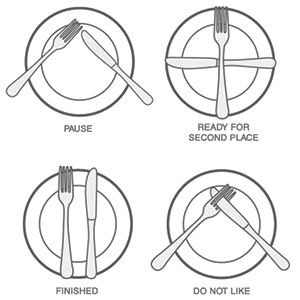
The silent service code is a way for a diner to ‘talk’ to servers during a meal without saying a word, mainly to tell them that the diner is finished. This will prevent any embarrassing situations where the server would take a meal prematurely.
To tell a server you have finished place your napkin to the left of your plate, and place all your utensils together in a ‘4-o’clock’ position on your plate. Utensils crossed on a plate signify that a diner is still eating. If you must leave during the meal, you should place the napkin on your chair to avoid any confusion. The code is almost always taught during business dining etiquette classes.
Posted in Food, Language |
Leave a Comment »
April 7, 2016

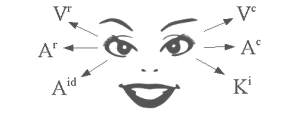
The term unsaid refers what is not explicitly stated, what is hidden or implied in the speech of an individual or a group of people. The unsaid may be the product of intimidation; of a mulling over of thought; or of bafflement in the face of the inexpressible. Sociolinguistics points out that in normal communication what is left unsaid is as important as what is actually said — that we expect our auditors regularly to fill in the social context/norms of our conversations as we proceed.
British sociologist Basil Bernstein described two types of speech: restricted and elaborated code. The former is suitable for insiders who share assumptions and understanding on the topic, whereas the latter is more explicit, more thorough, and does not require the listener to read between the lines.
read more »
Posted in Language |
Leave a Comment »
April 6, 2016

‘800-pound gorilla’ is an American English expression for a person or organization so powerful that it can act without regard to the rights of others or the law. The phrase is rooted in a joke riddle: ‘Where does an 800-lb. gorilla sit?’ The answer: ‘Anywhere it wants to.’
The term can describe a powerful geopolitical and military force, or, in business, a powerful corporate entity that has such a large majority percentage of whatever market they compete within that they can use that strength to crush would-be competitors. The metaphor has been mixed, on occasion, with the metaphor of the elephant in the room (an obvious truth that is going unaddressed).
Posted in Humor, Language |
1 Comment »
April 5, 2016

Fighting words are written or spoken words, generally expressed to incite hatred or violence from their target. Specific definitions, freedoms, and limitations of fighting words vary by jurisdiction. It is also used in a general sense of words that when uttered tend to create (deliberately or not) a verbal or physical confrontation by their mere usage.
In 1942, the Supreme Court established the doctrine by a 9–0 decision in ‘Chaplinsky v. New Hampshire.’ It held that ‘insulting or ‘fighting words,’ those that by their very utterance inflict injury or tend to incite an immediate breach of the peace’ are among the ‘well-defined and narrowly limited classes of speech the prevention and punishment of [which] … have never been thought to raise any constitutional problem.’ Chaplinsky, a Jehovah’s Witness, had purportedly told a New Hampshire town marshal who was attempting to prevent him from preaching that he was ‘a God-damned racketeer’ and ‘a damned fascist’ and was arrested. The court upheld the arrest.
read more »
Posted in Language, Politics |
1 Comment »
March 31, 2016
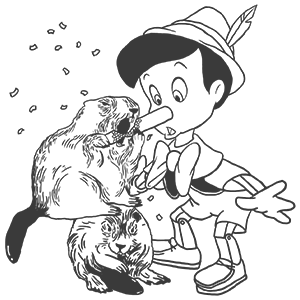
Dutch uncle refers to a person who issues frank, harsh, or severe comments and criticism to educate, encourage, or admonish (the reverse of what is normally thought of as avuncular or uncle-like, i.e. indulgent and permissive). During the Anglo-Dutch Wars in the 17th century, the English language gained an array of similar insults, such as: ‘Dutch courage’ (alcohol-induced bravery), ‘Double Dutch’ (incomprehensible, nonsense), ‘Dutch cap’ (contraceptive diaphragm), ‘Dutch wife’ (sex doll), ‘Dutch widow’ (prostitute), ‘Dutch comfort’ (saying that ‘Things could be worse!’), ‘Dutch metal’ or ‘Dutch gold’ (cheap alloy resembling gold), ‘Dutch treat’ (social date where the invitee pays for himself/herself), ‘Dutch concert’ (noise and uproar, as from a drunken crowd), and ‘Dutch-bottomed’ (empty).
Another proposed explanation is that the term, often expressed as ‘talk to one like a Dutch uncle,’ originated in the early 19th century as an allusion to the sternness and sobriety attributed to the Dutch. Dutch behavior is defined in the book ‘Culture Shock! Netherlands: A Survival Guide To Customs and Etiquette’ as ‘practical, direct, outspoken, stubborn, well-organized, blunt and thinking they are always right.’ Another book that advocates this theory is ‘The UnDutchables,’ which assigns comparable characteristics: ‘not lacking in self-esteem … caught up in a cycle of endless envy … always speak their mind … frank, obstinate, blunt,’ basically summed up by the phrase ‘the natives thrive on shaking their fingers at and scolding each other.’
Posted in Language, World |
1 Comment »
March 18, 2016

Dog-whistle politics is political messaging employing coded language that appears to mean one thing to the general population but has an additional, different or more specific resonance for a targeted subgroup. The phrase is often used as a pejorative, because of the inherently deceptive nature of the practice and because the messages are frequently coded because they are distasteful to the general populace. The analogy is to a dog whistle, whose high-frequency whistle is heard by dogs but inaudible to humans.
The term can be distinguished from ‘code words’ used in some specialist professions, in that dog-whistling is specific to the political realm. The messaging referred to as the dog-whistle has an understandable meaning for a general audience, rather than being incomprehensible.
read more »
Posted in Language, Politics |
1 Comment »
March 13, 2016

How to Photograph an Atomic Bomb is a book written by Peter Kuran and published in 2006 by VCE. It documents the stories of the men who photographed US nuclear weapons tests between 1945–1963 and the techniques they used to capture nuclear blasts on film. The book contains 250 photos and 12 technical diagrams, some of which were previously classified.
Research on the book began while Kuran was working as an animator for ‘Star Wars.’ He was able to interview and collect material from photographers who witnessed the blasts, whom he calls unrecognized patriots. A traveling exhibit based on the book was purchased by the Atomic Testing Museum and put on display in 2007. In 2010, the ‘New York Times’ featured a 23-image slideshow on its website with photos taken from the book accompanied by an audio recording of George Yoshitake, then one of the few surviving cameramen.
Posted in Language, Technology, War |
Leave a Comment »
March 11, 2016
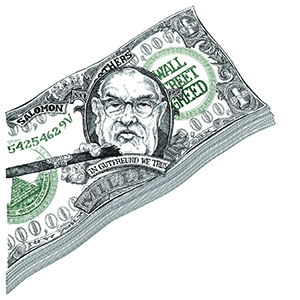
Liar’s Poker is a non-fiction, semi-autobiographical book by Michael Lewis describing the author’s experiences as a bond salesman on Wall Street during the late 1980s. Two important figures in that history feature prominently in the text, the head of Salomon Brothers’ mortgage department Lewis Ranieri and the firm’s CEO John Gutfreund. The book’s name is taken from a high-stakes gambling game popular with bond traders.
First published in 1989, it is considered one of the books that defined Wall Street in that era, along with Bryan Burrough and John Helyar’s ‘Barbarians at the Gate: The Fall of RJR Nabisco,’ and the fictional ‘The Bonfire of the Vanities by Tom Wolfe.’ The book captures an important period in the history of New York’s financial markets.
read more »
Posted in Games, Language, Money |
Leave a Comment »
March 8, 2016
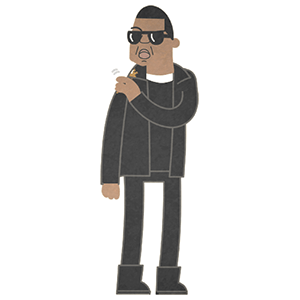
To have a chip on one’s shoulder refers to the act of holding a grudge or grievance that readily provokes disputation. The expression comes from the ancient right of shipwrights within the Royal Navy Dockyards to take home a daily allowance of offcuts of timber, even if good wood had to be cut up for this purpose. The privilege was instated as a prescriptive right from 1634. By 1756, the privilege was costing taxpayers too much in lost timber for warship repair and construction, and a decision was then made by the Navy Board to limit the quantity a shipwright could carry home. A warrant was issued to the Royal Dockyards to reduce the quantity of chips by ordering shipwrights to carry their bundles under their arms instead of on their shoulders, as one could not carry as much timber in this fashion.
There was an incident on the very first day the law was enforced: ‘Then came John Miller, shipwright, about thirty feet before the main body of the people, on which the Master Shipwright ordered him to lower his chips. He answered he would not, with that the Master Shipwright took hold of him, and said he should. He, the said Miller replied, ‘Are not the chips mine? I will not lower them.’ Immediately the main body pushed on with their chips on their shoulders, crowded and forced the Master Shipwright and the First Assistant through the gateway, and when out of the yard give three huzzas.’
Posted in Language, Money |
1 Comment »


 The Daily Omnivore