March 31, 2016
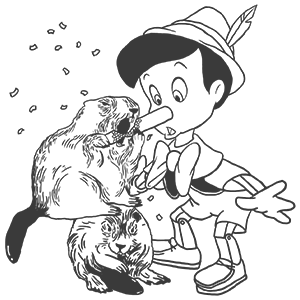
Dutch uncle refers to a person who issues frank, harsh, or severe comments and criticism to educate, encourage, or admonish (the reverse of what is normally thought of as avuncular or uncle-like, i.e. indulgent and permissive). During the Anglo-Dutch Wars in the 17th century, the English language gained an array of similar insults, such as: ‘Dutch courage’ (alcohol-induced bravery), ‘Double Dutch’ (incomprehensible, nonsense), ‘Dutch cap’ (contraceptive diaphragm), ‘Dutch wife’ (sex doll), ‘Dutch widow’ (prostitute), ‘Dutch comfort’ (saying that ‘Things could be worse!’), ‘Dutch metal’ or ‘Dutch gold’ (cheap alloy resembling gold), ‘Dutch treat’ (social date where the invitee pays for himself/herself), ‘Dutch concert’ (noise and uproar, as from a drunken crowd), and ‘Dutch-bottomed’ (empty).
Another proposed explanation is that the term, often expressed as ‘talk to one like a Dutch uncle,’ originated in the early 19th century as an allusion to the sternness and sobriety attributed to the Dutch. Dutch behavior is defined in the book ‘Culture Shock! Netherlands: A Survival Guide To Customs and Etiquette’ as ‘practical, direct, outspoken, stubborn, well-organized, blunt and thinking they are always right.’ Another book that advocates this theory is ‘The UnDutchables,’ which assigns comparable characteristics: ‘not lacking in self-esteem … caught up in a cycle of endless envy … always speak their mind … frank, obstinate, blunt,’ basically summed up by the phrase ‘the natives thrive on shaking their fingers at and scolding each other.’
Posted in Language, World |
1 Comment »
March 18, 2016

Dog-whistle politics is political messaging employing coded language that appears to mean one thing to the general population but has an additional, different or more specific resonance for a targeted subgroup. The phrase is often used as a pejorative, because of the inherently deceptive nature of the practice and because the messages are frequently coded because they are distasteful to the general populace. The analogy is to a dog whistle, whose high-frequency whistle is heard by dogs but inaudible to humans.
The term can be distinguished from ‘code words’ used in some specialist professions, in that dog-whistling is specific to the political realm. The messaging referred to as the dog-whistle has an understandable meaning for a general audience, rather than being incomprehensible.
read more »
Posted in Language, Politics |
1 Comment »
March 13, 2016

How to Photograph an Atomic Bomb is a book written by Peter Kuran and published in 2006 by VCE. It documents the stories of the men who photographed US nuclear weapons tests between 1945–1963 and the techniques they used to capture nuclear blasts on film. The book contains 250 photos and 12 technical diagrams, some of which were previously classified.
Research on the book began while Kuran was working as an animator for ‘Star Wars.’ He was able to interview and collect material from photographers who witnessed the blasts, whom he calls unrecognized patriots. A traveling exhibit based on the book was purchased by the Atomic Testing Museum and put on display in 2007. In 2010, the ‘New York Times’ featured a 23-image slideshow on its website with photos taken from the book accompanied by an audio recording of George Yoshitake, then one of the few surviving cameramen.
Posted in Language, Technology, War |
Leave a Comment »
March 11, 2016
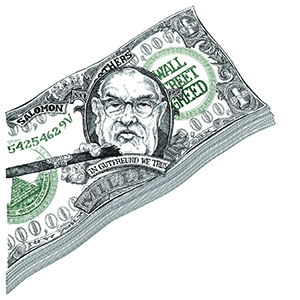
Liar’s Poker is a non-fiction, semi-autobiographical book by Michael Lewis describing the author’s experiences as a bond salesman on Wall Street during the late 1980s. Two important figures in that history feature prominently in the text, the head of Salomon Brothers’ mortgage department Lewis Ranieri and the firm’s CEO John Gutfreund. The book’s name is taken from a high-stakes gambling game popular with bond traders.
First published in 1989, it is considered one of the books that defined Wall Street in that era, along with Bryan Burrough and John Helyar’s ‘Barbarians at the Gate: The Fall of RJR Nabisco,’ and the fictional ‘The Bonfire of the Vanities by Tom Wolfe.’ The book captures an important period in the history of New York’s financial markets.
read more »
Posted in Games, Language, Money |
Leave a Comment »
March 8, 2016
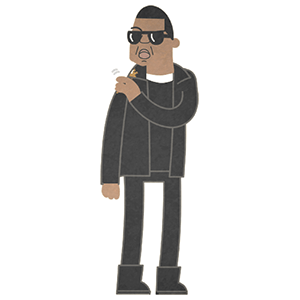
To have a chip on one’s shoulder refers to the act of holding a grudge or grievance that readily provokes disputation. The expression comes from the ancient right of shipwrights within the Royal Navy Dockyards to take home a daily allowance of offcuts of timber, even if good wood had to be cut up for this purpose. The privilege was instated as a prescriptive right from 1634. By 1756, the privilege was costing taxpayers too much in lost timber for warship repair and construction, and a decision was then made by the Navy Board to limit the quantity a shipwright could carry home. A warrant was issued to the Royal Dockyards to reduce the quantity of chips by ordering shipwrights to carry their bundles under their arms instead of on their shoulders, as one could not carry as much timber in this fashion.
There was an incident on the very first day the law was enforced: ‘Then came John Miller, shipwright, about thirty feet before the main body of the people, on which the Master Shipwright ordered him to lower his chips. He answered he would not, with that the Master Shipwright took hold of him, and said he should. He, the said Miller replied, ‘Are not the chips mine? I will not lower them.’ Immediately the main body pushed on with their chips on their shoulders, crowded and forced the Master Shipwright and the First Assistant through the gateway, and when out of the yard give three huzzas.’
Posted in Language, Money |
1 Comment »
February 28, 2016

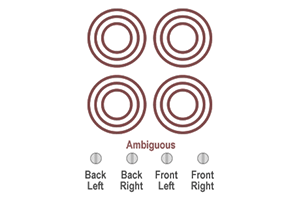
‘The Design of Everyday Things‘ is a 1988 book by cognitive scientist and usability engineer Donald Norman on design’s role in enabling communication been objects and their users, and how to optimize that conduit to make the experience more effective. One of the main premises of the book is that although people are often keen to blame themselves when objects appear to malfunction, it is not the fault of the user but rather the lack of intuitive guidance that should be present in the design. In the book, Norman introduced the term ‘affordance’ as it applied to design, defining it as things that afford the opportunity for an organism to perform an action.
For example, a knob affords twisting, and perhaps pushing, while a cord affords pulling. 20th century American psychologist James J. Gibson originally coined the term ‘affordance’ to describe changes made to one’s environment to make them more usable, such as carving stairs into a steep hill. Norman also popularized the term ‘user-centered design’ to describe design based on the needs of the user, leaving aside what he deemed secondary issues like aesthetics. User-centered design involves simplifying the structure of tasks, making things visible, getting the mapping right, exploiting the powers of constraint, designing for error, and explaining affordances.
Posted in Language, Technology |
Leave a Comment »
February 21, 2016

In scholastic philosophy, quiddity [kwid-i-tee] was another term for the essence of an object, literally ‘what it is’ or its ‘whatness.’ The term derives from the Latin word ‘quidditas,’ meaning ‘what it was to be (a given thing),’ which was used by the medieval scholastics as a literal translation of the equivalent term in Aristotle’s Greek. It describes properties that a particular substance (e.g. a person) shares with others of its kind. The question ‘what (quid) is it?’ asks for a general description by way of commonality.
Quiddity was often contrasted by the scholastic philosophers with the ‘haecceity’ or ‘thisness’ of an item, which was supposed to be a positive characteristic of an individual that caused them to be this individual, and no other. It is used in this sense in British poet George Herbert’s eponymous poem, ‘Quiddity.’ In law, the term is used to refer to a quibble or academic point. An example can be seen in Hamlet’s graveside speech: ‘Where be his quiddities now, his quillets, his cases, his tenures’ says Hamlet, referring to a lawyer’s quiddities.
Posted in Language, Philosophy |
1 Comment »
February 16, 2016


Magic words are words which have a specific, and sometimes unintended, effect. They are often nonsense phrases used in fantasy fiction or by stage prestidigitators. Certain comic book heroes use magic words to activate their super powers. Magic words are also used as Easter eggs or cheats in computer games, other software, and operating systems. (For example, the words ‘xyzzy,’ ‘plugh,’ and ‘plover’ were magic words in the classic computer adventure game ‘Colossal Cave Adventure’).
Examples of traditional magic words include: Abracadabra, Alakazam, Hocus pocus, Open sesame (used by the character Ali Baba in the English version of a tale from the collection popularly known as ‘1001 Arabian Nights’), Presto chango, Shazam (used by the comic book hero Captain Marvel), and Shemhamforash (used by Satanists). Craig Conley, a scholar of magic, writes that the magic words used by conjurers may originate from ‘pseudo-Latin phrases, nonsense syllables, or esoteric terms from religious antiquity,’ but that what they have in common is ‘language as an instrument of creation.’
read more »
Posted in Language |
Leave a Comment »
February 15, 2016
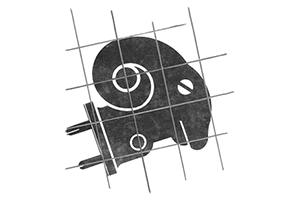

Do Androids Dream of Electric Sheep? is a science fiction novel by American writer Philip K. Dick. First published in 1968, the novel is set in a post-apocalyptic San Francisco, where Earth’s life has been greatly damaged by nuclear global war. Most animal species are endangered or extinct due to extreme radiation poisoning, so that owning an animal is now a sign of status and empathy, an attitude encouraged towards animals. The book served as the primary basis for the 1982 film ‘Blade Runner.’
The main plot follows a single day in the life of Rick Deckard, a bounty hunter hired by the San Francisco Police Department to ‘retire’ (kill) six escaped androids. A secondary plot follows John Isidore, a driver for an electric-animal repair company, who is a ‘special’ (a radioactively-damaged, intellectually slow human whose status prohibits him from emigrating). In connection with Deckard’s mission, the novel explores the issue of what it is to be human. Unlike humans, the androids are claimed to possess no sense of empathy.
read more »
Posted in Art, Language, Technology |
1 Comment »
February 4, 2016


Rebranding is a marketing strategy in which a new name, term, symbol, design, or combination thereof is created for an established brand with the intention of developing a new, differentiated identity in the minds of consumers, investors, competitors, and other stakeholders. Often, this involves radical changes to a brand’s logo, name, legal names, image, marketing strategy, and advertising themes. Such changes typically aim to reposition the brand/company, occasionally to distance itself from negative connotations of the previous branding, or to move the brand upmarket; they may also communicate a new message a new board of directors wishes to communicate.
Rebranding can be applied to new products, mature products, or even products still in development. The process can occur intentionally through a deliberate change in strategy or occur unintentionally from unplanned, emergent situations, such as a ‘Chapter 11 corporate restructuring,’ ‘union busting,’ or ‘bankruptcy.’ Rebranding can also refer to a change in a company/ corporate brand that may own several sub-brands for products or companies.
read more »
Posted in Language, Money |
Leave a Comment »
January 29, 2016


A Raisin in the Sun is a play by African American playwright Lorraine Hansberry that debuted on Broadway in 1959. The title comes from the poem ‘Harlem’ by Langston Hughes: ‘What happens to a dream deferred? Does it dry up like a raisin in the sun?’ The story tells a black family’s experiences in the Washington Park Subdivision of Chicago’s Woodlawn neighborhood as they attempt to ‘better’ themselves with an insurance payout from the death of the father.
Walter and Ruth Younger, their son Travis, along with Walter’s mother Lena (Mama) and sister Beneatha, live in poverty in a dilapidated two-bedroom apartment on Chicago’s south side. Walter is barely making a living as a limousine driver. Though Ruth is content with their lot, Walter is not and desperately wishes to become wealthy. His plan is to invest in a liquor store in partnership with Willy and Bobo, street-smart acquaintances of Walter’s.
read more »
Posted in Art, Language, Politics |
Leave a Comment »
January 18, 2016
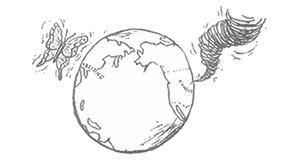
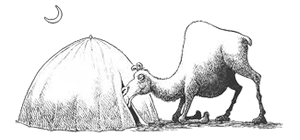
For Want of a Nail is a proverb, having numerous variations over several centuries, reminding that seemingly unimportant acts or omissions can have grave and unforeseen consequences: ‘For want of a nail the shoe was lost. For want of a shoe the horse was lost. For want of a horse the rider was lost. For want of a rider the message was lost. For want of a message the battle was lost. For want of a battle the kingdom was lost. And all for the want of a horseshoe nail.’
The earliest reference to the full proverb may refer to the death of Richard III of England at the Battle of Bosworth Field in 1485. This short variation of the proverb was published in ‘Fifty Famous People’ by James Baldwin. Richard III is unhorsed in the rhyme, but, historically Richard’s horse was merely mired in the mud. The reference to losing a horse is directly linked to the titular character famously shouting ‘A Horse! A Horse! My Kingdom for a Horse!,’ in Shakespeare’s ‘Richard III’ (c. 1591).
read more »
Posted in Language, Philosophy, War |
Leave a Comment »


 The Daily Omnivore