April 5, 2011
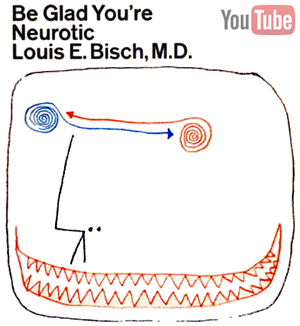

Neurosis [noo-roh-sis] is a class of functional mental disorders involving distress but neither delusions nor hallucinations, whereby behavior is not outside socially acceptable norms. Those suffering from it are said to be neurotic. The term essentially describes an ‘invisible injury’ and the resulting condition. The American Diagnostic and Statistical Manual of Mental Disorders (DSM) has eliminated the category of ‘Neurosis,’ reflecting a decision by the editors to provide descriptions of behavior as opposed to hidden psychological mechanisms as diagnostic criteria.
Neurosis should not be mistaken for psychosis, which refers to loss of touch with reality, or neuroticism, a fundamental personality trait characterized by an enduring tendency to experience negative emotional states.
read more »
Posted in Health, Language, Science |
Leave a Comment »
April 3, 2011

Speed reading refers to a number of ways to increase the speed at which a text can be read where the important facts are still understood. A trained reader is able to read and understand between 200 and 300 words per minute of basic text. Better training can improve this speed to over 1000 words per minute.
With a lot of exercise it’s possible to increase reading speed further; the best readers can read between 3000 and 4000 words per minute, and understand about 80% of them (at that speed a short novel can be read in under 20 minutes).
read more »
Posted in Education, Games, Language |
Leave a Comment »
April 1, 2011

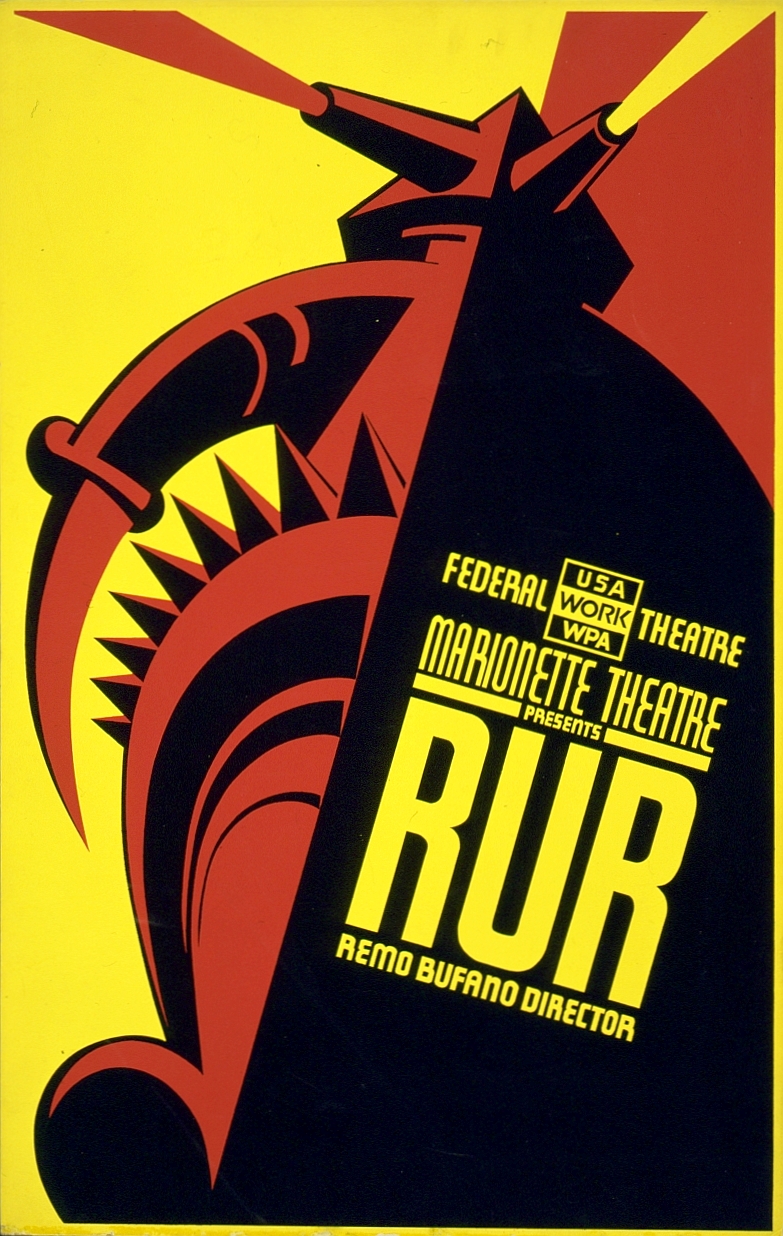
R.U.R. is a 1921 science fiction play in the Czech language by Karel Čapek. R.U.R. stands for Rossum’s Universal Robots, an English phrase used as the subtitle in the Czech original. The play begins in a factory that makes artificial people called ‘robots.’ Unlike the modern usage of the term, these creatures are closer to the modern idea of androids or even clones, as they can be mistaken for humans and can think for themselves.
They seem happy to work for humans, although that changes and a hostile robot rebellion leads to the extinction of the human race. After finishing the manuscript, Čapek realized that he had created a modern version of the Jewish Golem legend. The play introduced the word ‘Robot’ which displaced older words such as ‘automaton’ or ‘android’ in languages around the world. In its original Czech, ‘robota’ means forced labor of the kind that serfs had to perform on their masters’ lands, and is derived from rab, meaning ‘slave.’
Posted in Art, Language, Technology |
Leave a Comment »
April 1, 2011
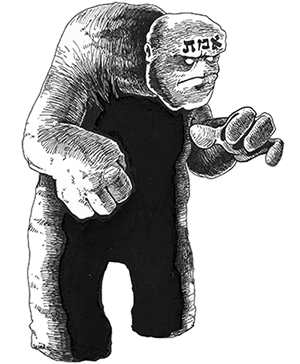
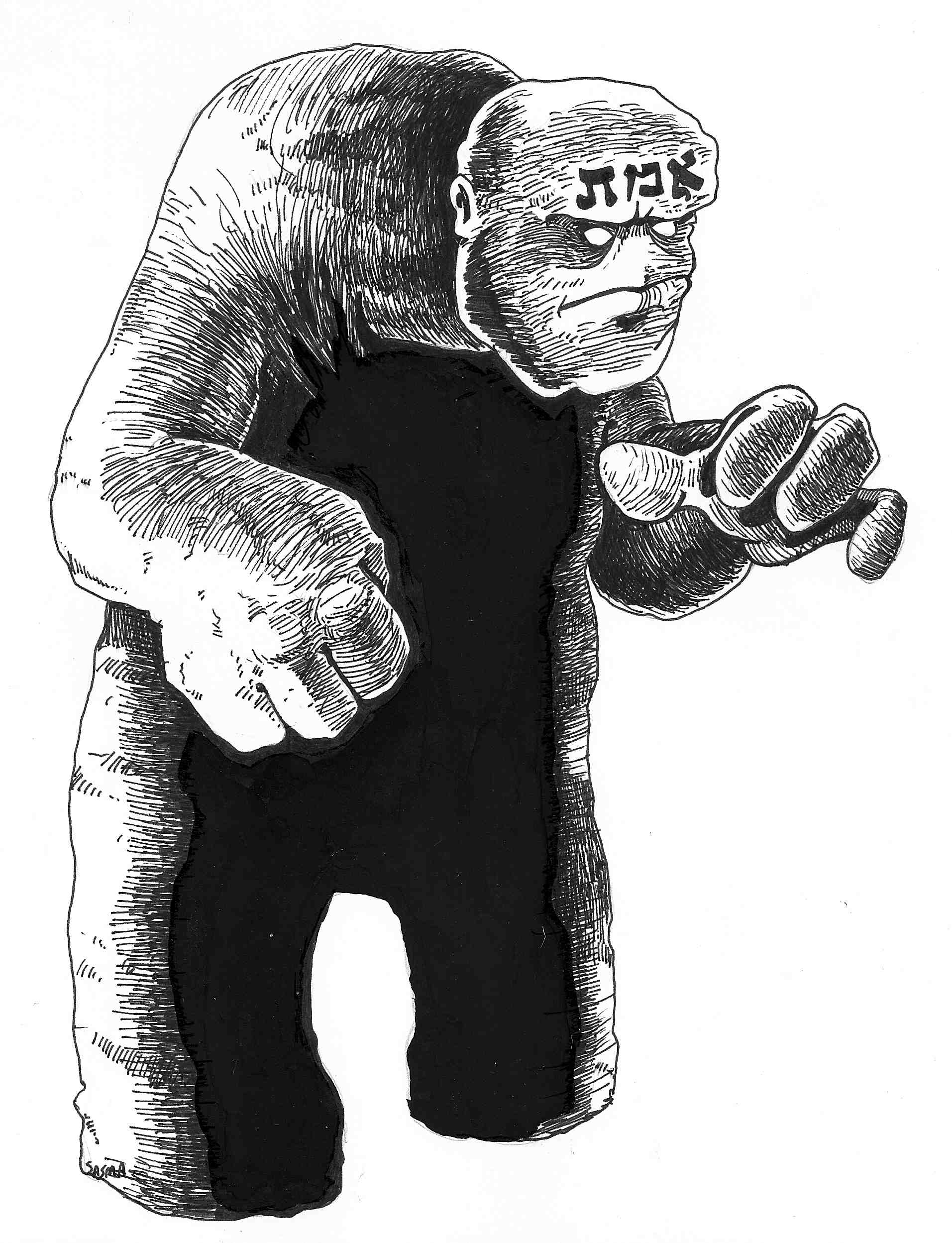
In Jewish folklore, a golem [goh-luhm] is an animated anthropomorphic being, created entirely from inanimate matter. The word was used to mean an amorphous, unformed material in Psalms and medieval writing. The word golem is used in the Bible to refer to an embryonic or incomplete substance.
In modern Hebrew the word golem means ‘dumb’ or ‘helpless.’ The Mishnah (Jewish oral tradition) uses the term for an uncultivated person. Similarly, golems are often used today as a metaphor for brainless lunks or entities who serve man under controlled conditions, but are hostile to him in others. Similarly, it is a Yiddish slang insult for someone who is clumsy or slow.
read more »
Posted in Language, Philosophy |
Leave a Comment »
April 1, 2011

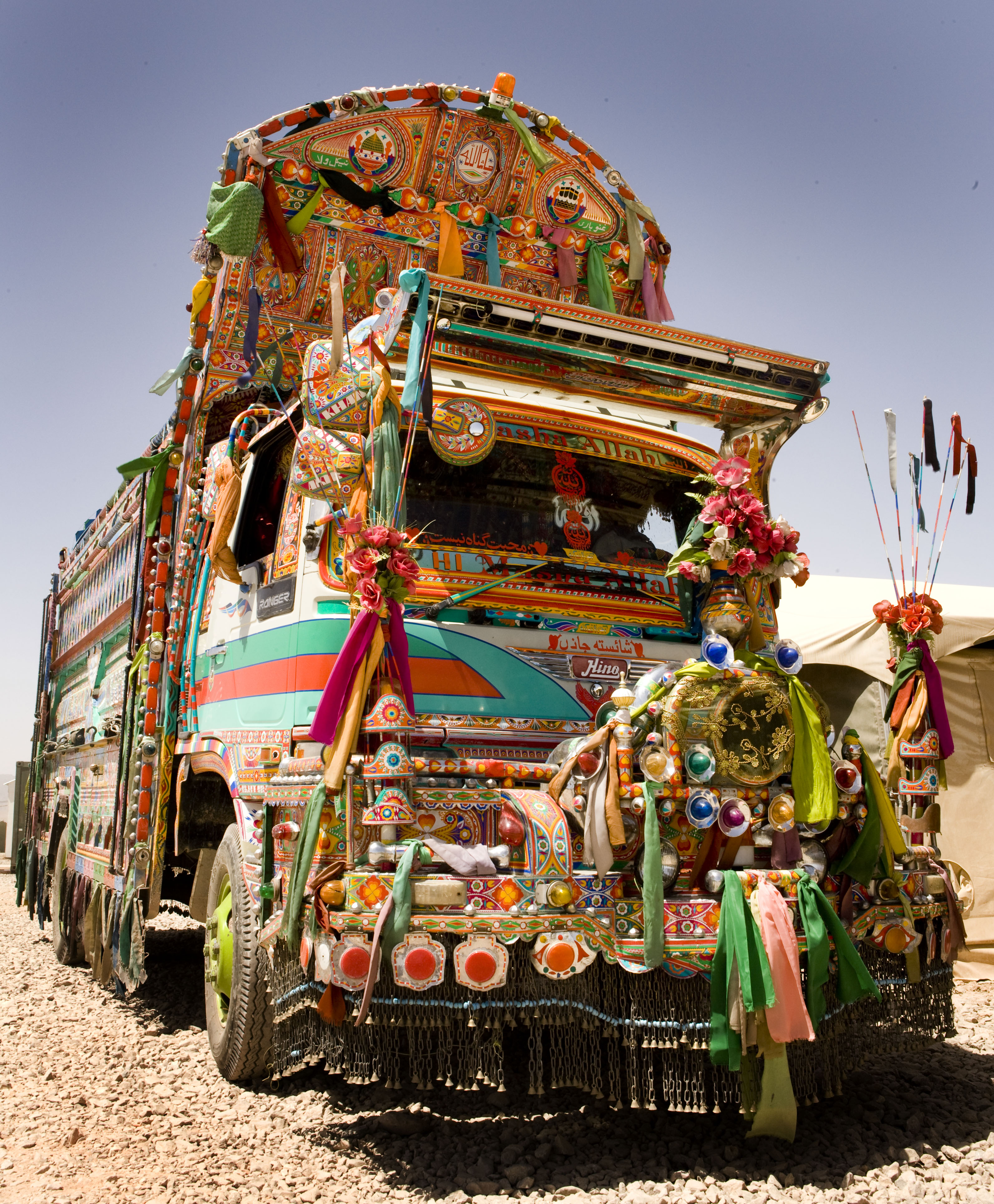
Jingle truck is US Military slang for colorfully decorated trucks, typically in central Asia. It is a slang term for the customised trucks and buses common throughout the region, including Afghanistan, Pakistan, and India. The name refers to a’ jingling’ sound made by chains hanging from the bumpers of the vehicles.
Posted in Art, Language, World |
1 Comment »
March 30, 2011

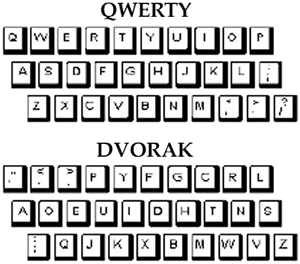
QWERTY is the most common modern-day keyboard layout. The name comes from the first six letters (keys) appearing in the top letter row of the keyboard, read left to right: Q-W-E-R-T-Y. The QWERTY design is based on a layout created by Christopher Latham Sholes in 1873 in Milwaukee, Wisconsin for the Sholes and Glidden typewriter and sold to Remington in the same year. The first model constructed by Sholes used a piano-like keyboard with two rows of characters arranged alphabetically.
The machine jammed at high typing speeds, so Sholes moved the keys he believed were most away from each other, to slow typists down. Several alternatives to QWERTY have been developed over the years, claimed by their designers and users to be more efficient, intuitive and ergonomic. Nevertheless, none has seen widespread adoption, due partly to the sheer dominance of available keyboards and training. The most widely used such alternative is the Dvorak Simplified Keyboard.
Posted in Language, Money, Technology |
Leave a Comment »
March 29, 2011

Schadenfreude [shahd-n-froi-duh] is a German loanword meaning ‘pleasure derived from the misfortunes of others.’ The corresponding German adjective is ‘schadenfroh.’ The word derives from ‘Schaden’ (‘adversity,’ ‘harm’) and ‘Freude’ (‘joy’). An English expression with a similar meaning is ‘Roman holiday,’ a metaphor taken from the poem ‘Childe Harold’s Pilgrimage’ by Lord Byron, where a gladiator in Ancient Rome expects to be ‘butcher’d to make a Roman holiday’ while the audience would take pleasure from watching his suffering. The term suggests debauchery and disorder in addition to sadistic enjoyment.
Another phrase with a meaning is ‘morose delectation’ (‘delectatio morosa’ in Latin), meaning ‘the habit of dwelling with enjoyment on evil thoughts.’ ‘Gloating’ is a related English word where ‘gloat’ is defined as ‘to observe or think about something with triumphant and often malicious satisfaction, gratification, or delight’ (‘gloat over an enemy’s misfortune’). The Buddhist concept of ‘mudita,’ ‘sympathetic joy’ or ‘happiness in another’s good fortune,’ is cited as an example of the opposite of schadenfreude. Alternatively, envy, which is unhappiness in another’s good fortune, could be considered the counterpart of schadenfreude. Completing the quartet is unhappiness at another’s misfortune, which may be termed empathy, pity, or compassion.
Posted in Language, Philosophy, World |
1 Comment »
March 29, 2011

Scapegoating is singling out someone for unmerited negative treatment or blame. A whipping boy or ‘fall guy’ is a form of scapegoat. The word is a mistranslation of the Hebrew word ‘Azazel.’ The Biblical scapegoat was a goat cast out into the desert as part of the ceremonies of the Day of Atonement.
Since this goat, carrying the sins of the people placed on it, is sent away to perish, the word ‘scapegoat’ has come to mean a person, often innocent, who is blamed and punished for the sins, crimes or sufferings of others, generally as a way of distracting attention from the real causes. In Christian theology, the story of the scapegoat in Leviticus is interpreted as a symbolic prefiguration of the self-sacrifice of Jesus, who takes the sins of humanity on his own head, having been crucified on a cross outside the city by order of the high priests.
read more »
Posted in Language, Philosophy, Politics |
Leave a Comment »
March 29, 2011

Sheeple (a portmanteau of ‘sheep’ and ‘people’) is a term of disparagement, in which people are likened to sheep. It is often used to denote persons who voluntarily acquiesce to a perceived authority or suggestion without sufficient research to understand fully the ramifications involved in that decision, and thus undermine their own human individuality or in other cases give up certain rights.
The implication of sheeple is that as a collective, people believe or do whatever they are told, especially if told so by a perceived authority figure believed to be trustworthy, without critically thinking about it or doing adequate research to be sure that it is an accurate representation of the real world around them. The term is generally used in a political, social, and mostly in a spiritual sense.
Posted in Humor, Language, Politics |
Leave a Comment »
March 26, 2011
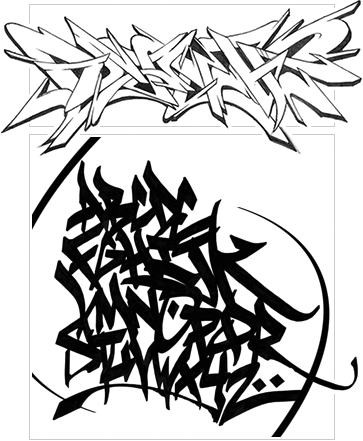
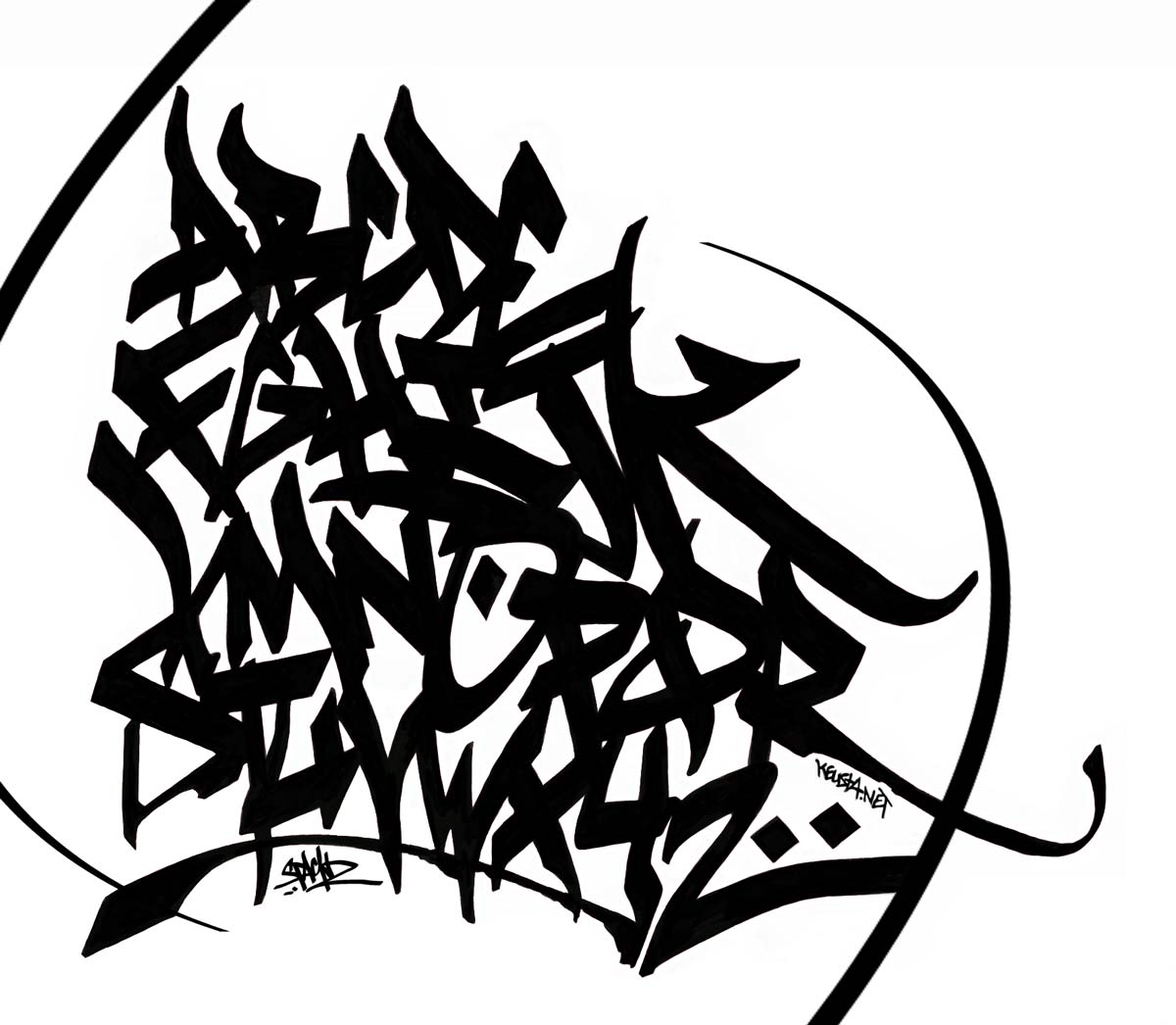
Wildstyle is a difficult and intricate form of graffiti. Due to its complexity, it is often very hard to read by people who are not familiar with it. It incorporates interwoven and overlapping letters and shapes, and may include arrows, spikes, and other decorative elements. It has also been common practice to incorporate 3D elements into the pieces, and even transform the whole letter structure into three dimensions, to add to the depth of visual perception of the work.
The numerous layers and shapes make this style extremely difficult to produce homogeneously, which is why developing an original style in this field is seen as one of the greatest artistic challenges to a graffiti writer. Wildstyle pieces are also known as ‘burners,’ meaning ‘hot’ as fire.
Posted in Art, Language |
Leave a Comment »
March 26, 2011


Graffiti refers to images or lettering scratched, scrawled, painted, or marked in any manner on property. Examples date back to Ancient Greece and the Roman Empire. The word ‘graffiti’ and the singular, ‘graffito,’ are from the Italian word ‘graffiato’ (‘scratched’).
The first known example of modern graffiti survives in the ancient Greek city of Ephesus (in modern-day Turkey). It is an advertisement for prostitution. Located near a mosaic and stone walkway, the graffiti shows a handprint that vaguely resembles a heart, along with a footprint and a number. This is believed to indicate that a brothel was nearby, with the handprint symbolizing payment and the number indicating the price.
read more »
Posted in Art, Language, Politics |
Leave a Comment »
March 25, 2011

Grisaille [gri-zahy] is a term for painting executed entirely in monochrome or near-monochrome, usually in shades of grey. It is particularly used in large decorative schemes in imitation of sculpture. Paintings executed in brown are sometimes referred to by the more specific term brunaille, and paintings executed in green are sometimes called verdaille.
A grisaille may be executed for its own sake, as underpainting for an oil painting (in preparation for glazing layers of color over it), or as a model for an engraver to work from. Full coloring of a subject makes many more demands of an artist, and working in grisaille was often chosen as being quicker and cheaper, although the effect was sometimes deliberately chosen for aesthetic reasons.
Posted in Art, Language |
Leave a Comment »



 The Daily Omnivore