April 7, 2011

The Martini is a cocktail made with gin (or vodka) and vermouth. All ingredients are poured into a mixer with ice cubes. The ingredients are mixed then strained and served ‘straight up’ (without ice) in a chilled cocktail glass and garnished with either a green olive or a twist of lemon (a strip of the peel, usually squeezed or twisted to express volatile oils onto the surface of the drink).
Garnishing with a pickled onion instead makes it a Gibson. The dryness of a martini refers to the amount of vermouth used in the drink, with a very dry Martini having little or no Vermouth.
read more »
Posted in Drugs, Food, Language |
Leave a Comment »
April 6, 2011

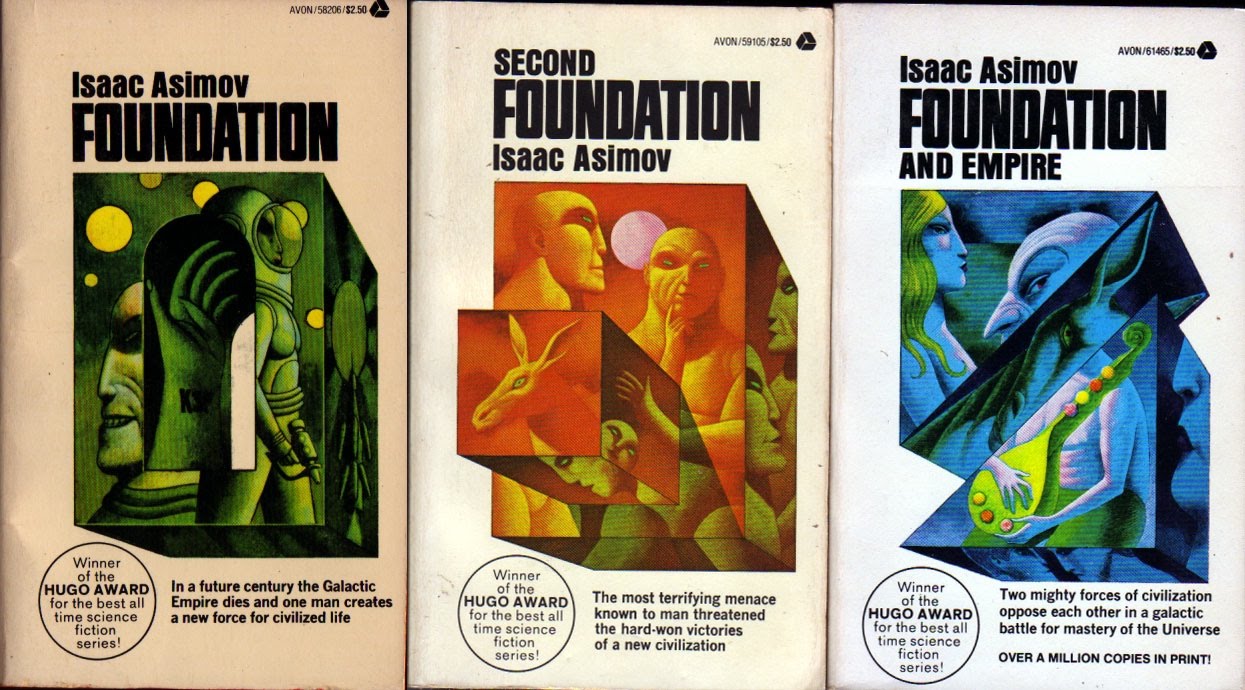
Foundation is the first book in Isaac Asimov’s Foundation Trilogy (and later Foundation Series). Foundation is a collection of five short stories, which were first published together as a book in 1951. It also appeared in 1955 under the title ‘The 1,000-Year Plan.’ The novel tells the story of a group of scientists who seek to preserve knowledge as the civilizations around them begin to regress. The first story is set on Trantor, the capital planet of the 12,000-year-old Galactic Empire. Whilst the empire gives the appearance of stability, beneath this façade it is suffering a slow decay. Hari Seldon, a mathematician, has developed ‘psychohistory,’ which equates all possibilities in large societies to mathematics, allowing predictable long term outcomes.
Seldon discovers a horrifying truth to the Empire’s decay, but his results are considered treasonable. On trial, Seldon shares the discoveries made through psychohistory, such as the collapse of the Empire within 500 years, followed by a 30,000-year period of barbarism. Seldon proposes an alternative to this future; one that would not avert the collapse but shorten the interregnum period to a mere 1000 years. But this plan would require a large group of people to develop a compendium of all human knowledge, titled the Encyclopedia Galactica. A still skeptical commission, not wanting to make a martyr of Seldon, exile him and his group of ‘Encyclopedists’ to a remote planet Terminus. There, they will carry out the Plan under an imperial decree, while Seldon would remain barred from returning to Trantor.
Posted in Art, Language, Technology |
Leave a Comment »
April 6, 2011

Isaac Asimov (b. 1920 – 1992) was an American author and professor of biochemistry at Boston University, best known for his works of science fiction and for his popular science books. Asimov was one of the most prolific writers of all time, having written or edited more than 500 books. His works have been published in nine of the ten major categories of the Dewey Decimal System (The sole exception being the 100s: philosophy and psychology). Isaac Asimov is widely considered a master of hard science fiction and, along with Robert A. Heinlein and Arthur C. Clarke, he was considered one of the ‘Big Three’ science fiction writers during his lifetime. Asimov’s most famous works are the ‘Foundation’ and ‘Robot’ series.
The prolific Asimov also wrote mysteries and fantasy, as well as much non-fiction. Most of his popular science books explain scientific concepts in a historical way, going as far back as possible to a time when the science in question was at its simplest stage. He often provides nationalities, birth dates, and death dates for the scientists he mentions, as well as etymologies and pronunciation guides for technical terms. Examples include his ‘Guide to Science,’ the three volume set ‘Understanding Physics,’ ‘Asimov’s Chronology of Science and Discovery,’ as well as numerous works on astronomy, chemistry, mathematics, the Bible, and William Shakespeare’s works.
Posted in Art, Language, Science |
Leave a Comment »
April 6, 2011
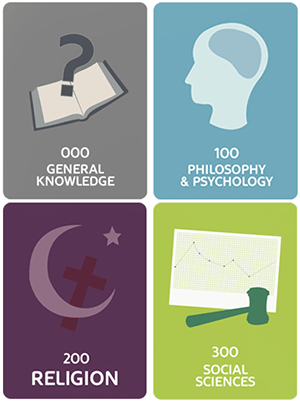
The Dewey Decimal System is a way to sort books. It’s usually used in public libraries and schools. It sorts the books by subject using numbers from 000 to 999. Each subject is broken up into 10 smaller, more specific categories, and has its own set of numbers. The system was created by American librarian Melvil Dewey in 1876.
Posted in Education, Language, Science |
Leave a Comment »
April 5, 2011

Purely Obsessional Obsessive-Compulsive Disorder (Pure O) is a lesser-known form or manifestation of OCD. There are usually no observable compulsions (checking, counting, hand-washing, etc.). While ritualizing and neutralizing behaviors do take place, they are almost entirely in the form of excessive mental rumination. The nature and type of Purely Obsessional OCD varies greatly, but the central theme for all sufferers is the emergence of a disturbing intrusive thought or question, an unwanted/inappropriate mental image, or a frightening impulse that causes the person extreme anxiety because it is antithetical to closely-held religious beliefs, morals, or societal mores.
Neurotypicals instinctively respond to bizarre intrusive thoughts or impulses as insignificant and part of a normal variance in the human mind. Someone with Purely Obsessional OCD will respond with profound alarm followed by an intense attempt to neutralize the thought or avoid having it again. The person begins to ask themselves constantly ‘Am I really capable of something like that?’ or ‘Could that really happen?’ or ‘Is that really me?’ (even though they usually realize that their fear is irrational, which causes them further distress) and put tremendous effort into escaping or resolving the unwanted thought. They then end up in a vicious cycle of mentally searching for reassurance and trying to get a definitive answer.
Posted in Health, Language, Science |
Leave a Comment »
April 5, 2011
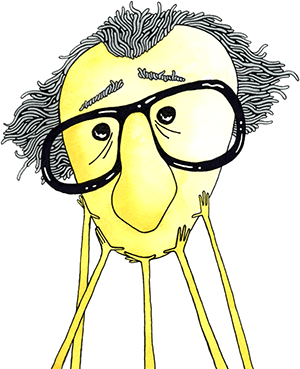

Neuroticism [noo-rot-uh-siz-uhm] is a fundamental personality trait in the study of psychology. It is an enduring tendency to experience negative emotional states. Individuals who score high on neuroticism are more likely than the average to experience such feelings as anxiety, anger, guilt, and depressed mood.
Neuroticism, along with other personality traits, has been mapped across states in the USA. People in eastern states such as New York, New Jersey, West Virginia, and Mississippi tend to score high on neuroticism, whereas people in many western states, such as Utah, Colorado, South Dakota, Oregon, and Arizona score lower on average. People in states that are higher in neuroticism also tend to have higher rates of heart disease and lower life expectancy.
read more »
Posted in Health, Language, Science |
Leave a Comment »
April 5, 2011
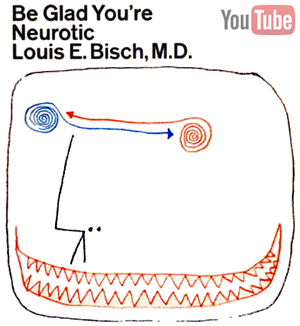

Neurosis [noo-roh-sis] is a class of functional mental disorders involving distress but neither delusions nor hallucinations, whereby behavior is not outside socially acceptable norms. Those suffering from it are said to be neurotic. The term essentially describes an ‘invisible injury’ and the resulting condition. The American Diagnostic and Statistical Manual of Mental Disorders (DSM) has eliminated the category of ‘Neurosis,’ reflecting a decision by the editors to provide descriptions of behavior as opposed to hidden psychological mechanisms as diagnostic criteria.
Neurosis should not be mistaken for psychosis, which refers to loss of touch with reality, or neuroticism, a fundamental personality trait characterized by an enduring tendency to experience negative emotional states.
read more »
Posted in Health, Language, Science |
Leave a Comment »
April 3, 2011

Speed reading refers to a number of ways to increase the speed at which a text can be read where the important facts are still understood. A trained reader is able to read and understand between 200 and 300 words per minute of basic text. Better training can improve this speed to over 1000 words per minute.
With a lot of exercise it’s possible to increase reading speed further; the best readers can read between 3000 and 4000 words per minute, and understand about 80% of them (at that speed a short novel can be read in under 20 minutes).
read more »
Posted in Education, Games, Language |
Leave a Comment »
April 1, 2011

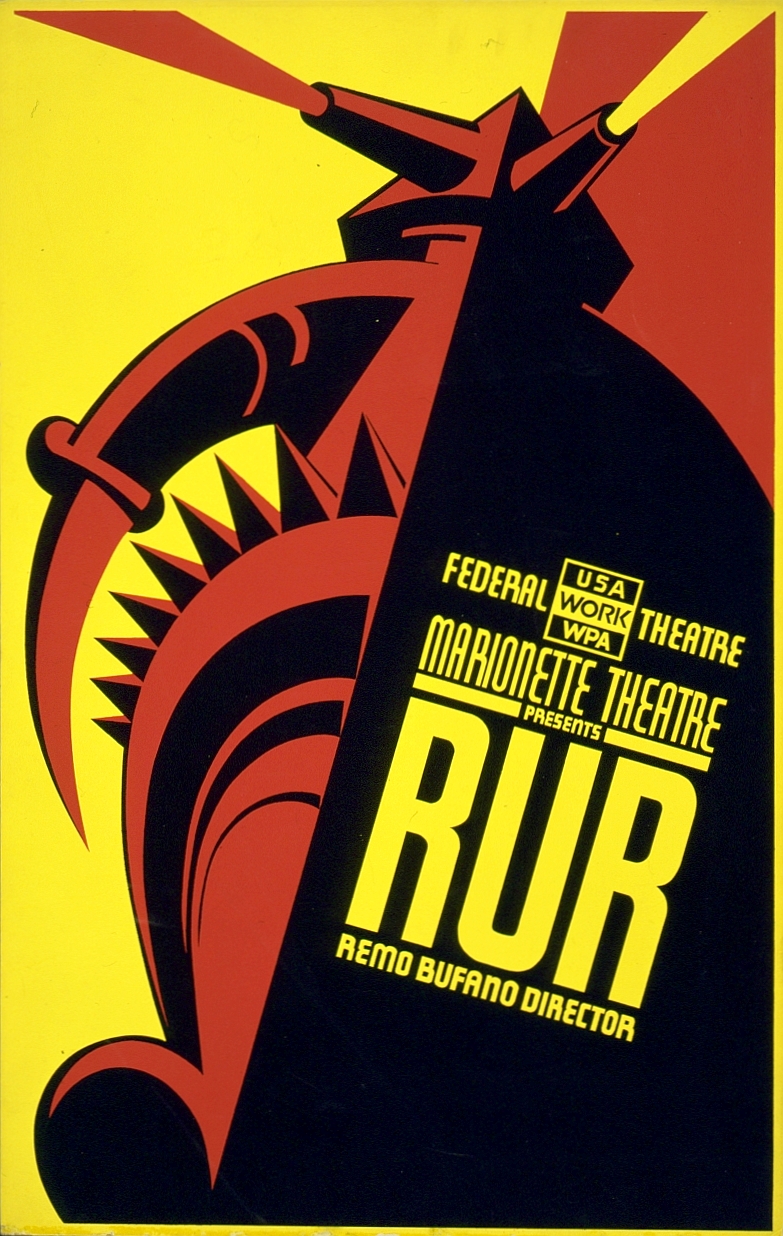
R.U.R. is a 1921 science fiction play in the Czech language by Karel Čapek. R.U.R. stands for Rossum’s Universal Robots, an English phrase used as the subtitle in the Czech original. The play begins in a factory that makes artificial people called ‘robots.’ Unlike the modern usage of the term, these creatures are closer to the modern idea of androids or even clones, as they can be mistaken for humans and can think for themselves.
They seem happy to work for humans, although that changes and a hostile robot rebellion leads to the extinction of the human race. After finishing the manuscript, Čapek realized that he had created a modern version of the Jewish Golem legend. The play introduced the word ‘Robot’ which displaced older words such as ‘automaton’ or ‘android’ in languages around the world. In its original Czech, ‘robota’ means forced labor of the kind that serfs had to perform on their masters’ lands, and is derived from rab, meaning ‘slave.’
Posted in Art, Language, Technology |
Leave a Comment »
April 1, 2011
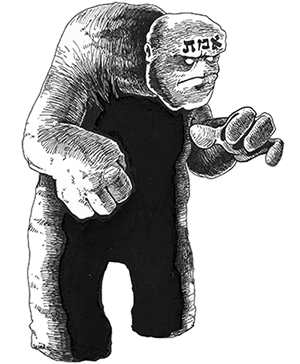
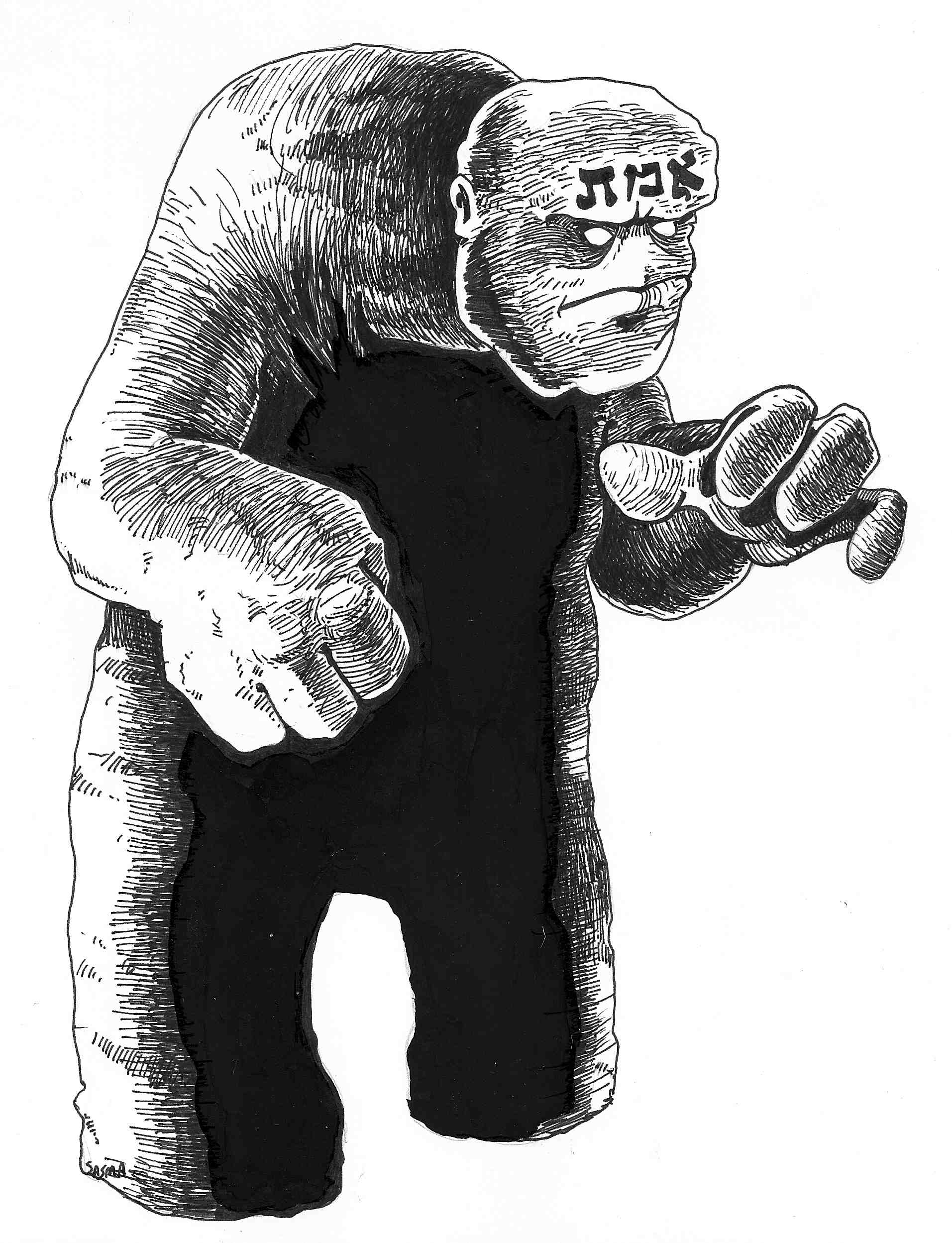
In Jewish folklore, a golem [goh-luhm] is an animated anthropomorphic being, created entirely from inanimate matter. The word was used to mean an amorphous, unformed material in Psalms and medieval writing. The word golem is used in the Bible to refer to an embryonic or incomplete substance.
In modern Hebrew the word golem means ‘dumb’ or ‘helpless.’ The Mishnah (Jewish oral tradition) uses the term for an uncultivated person. Similarly, golems are often used today as a metaphor for brainless lunks or entities who serve man under controlled conditions, but are hostile to him in others. Similarly, it is a Yiddish slang insult for someone who is clumsy or slow.
read more »
Posted in Language, Philosophy |
Leave a Comment »
April 1, 2011

Jingle truck is US Military slang for colorfully decorated trucks, typically in central Asia. It is a slang term for the customised trucks and buses common throughout the region, including Afghanistan, Pakistan, and India. The name refers to a’ jingling’ sound made by chains hanging from the bumpers of the vehicles.
Posted in Art, Language, World |
1 Comment »
March 30, 2011

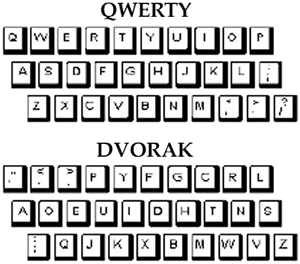
QWERTY is the most common modern-day keyboard layout. The name comes from the first six letters (keys) appearing in the top letter row of the keyboard, read left to right: Q-W-E-R-T-Y. The QWERTY design is based on a layout created by Christopher Latham Sholes in 1873 in Milwaukee, Wisconsin for the Sholes and Glidden typewriter and sold to Remington in the same year. The first model constructed by Sholes used a piano-like keyboard with two rows of characters arranged alphabetically.
The machine jammed at high typing speeds, so Sholes moved the keys he believed were most away from each other, to slow typists down. Several alternatives to QWERTY have been developed over the years, claimed by their designers and users to be more efficient, intuitive and ergonomic. Nevertheless, none has seen widespread adoption, due partly to the sheer dominance of available keyboards and training. The most widely used such alternative is the Dvorak Simplified Keyboard.
Posted in Language, Money, Technology |
Leave a Comment »