March 25, 2011

The Dilbert Principle refers to a 1990s satirical observation by ‘Dilbert cartoonist’ Scott Adams stating that companies tend to systematically promote their least-competent employees to management (generally middle management), in order to limit the amount of damage they are capable of doing. In the ‘Dilbert’ strip of February 5, 1995 Dogbert says that ‘leadership is nature’s way of removing morons from the productive flow.’ Adams expanded on the idea in a satirical 1996 book of the same name, which is required reading at some management and business programs.
The Dilbert principle is comparable to the Peter Principle (in a hierarchy every employee tends to rise to his level of incompetence). It assumes that people are promoted because they are competent, and that the tasks higher up in the hierarchy require skills or talents they do not possess. It concludes that due to this, a competent employee will eventually be promoted to, and remain at, a position at which he or she is incompetent. The Dilbert principle, by contrast, assumes that the upper echelons of an organization have little relevance to its actual production, and that the majority of real, productive work in a company is done by people lower in the power ladder.
Posted in Humor, Language, Money |
Leave a Comment »
March 25, 2011

Depressive realism is the proposition that people with depression actually have a more accurate perception of reality, specifically that they are less affected by positive illusions of illusory superiority, the illusion of control, and optimism bias.
The concept refers to people with borderline or moderate depression, suggesting that while non-depressed people see things in an overly positive light and severely depressed people see things in overly negative light, the mildly discontented grey area in between in fact reflects the most accurate perception of reality.
read more »
Posted in Health, Language, Science |
Leave a Comment »
March 25, 2011

Inbreeding depression is the reduced fitness in a given population as a result of breeding of related individuals. It is often the result of a population bottleneck. In general, the higher the genetic variation within a breeding population, the less likely it is to suffer from inbreeding depression. Inbreeding depression seems to be present in most groups of organisms, but is perhaps most important in hermaphroditic species. The majority of plants are hermaphroditic and thus are capable of the most severe degree of inbreeding depression.
Although severe inbreeding depression in humans is uncommon, there have been several cases. As with animals, this phenomenon tends to occur in isolated, rural populations that are cut off to some degree from other areas of civilization. A notable example is the Vadoma tribe of western Zimbabwe, many of whom carry the trait of having only two toes due to a small gene pool.
Posted in Health, Language, Science |
Leave a Comment »
March 25, 2011

Heterosis, or hybrid vigor or outbreeding enhancement, is the increased function of any biological quality in a hybrid offspring. It is the occurrence of a genetically superior offspring from mixing the genes of dissimilar parents. Heterosis is the opposite of inbreeding depression, which occurs in the offspring of closely related parents.
The term often causes controversy, particularly in regard to selective breeding of domestic animals, because sometimes it’s inaccurately claimed, that all crossbred plants or animals are genetically superior to their parents. It’s only true in certain circumstances. When a hybrid is seen to be superior to its parents, this is known as hybrid vigor. When the opposite happens, and a hybrid inherits traits from its parents that makes it unfit for survival, the result is referred to as outbreeding depression. Typical examples of this are crosses between wild and hatchery fish that have incompatible adaptations.
Posted in Health, Language, Science |
Leave a Comment »
March 25, 2011

Miscegenation [mi-sej-uh-ney-shuhn] (Latin: miscere ‘to mix,’ genus ‘kind’) is the mixing of different racial groups, a social construct, through marriage, cohabitation, sexual relations, and procreation. The term miscegenation has been used since the 19th century to refer to interracial marriage and interracial sex, and more generally to the process of racial interbreeding, which has taken place since ancient history.
The term entered historical records during European colonialism, but societies such as China and Japan also had restrictions on marrying with peoples they considered different. Historically the term has been used in the context of laws banning interracial marriage and sex, so-called anti-miscegenation laws.
read more »
Posted in Language, Politics, Sex |
Leave a Comment »
March 24, 2011
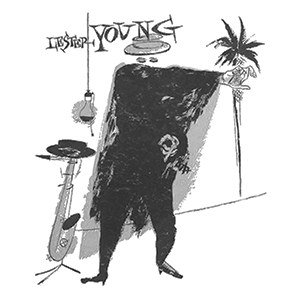
Lester Young (1909 – 1959), nicknamed ‘Prez,’ was an American jazz tenor saxophonist. He also played clarinet, trumpet, violin, and drums. Coming to prominence while a member of Count Basie’s orchestra, Young was one of the most influential players on his instrument, playing with a cool tone and using sophisticated harmonies. He invented or popularized much of the hipster ethos which came to be associated with the music. He is said to have popularized the term ‘cool’ as slang for something fashionable.
Another slang term he reputedly coined was the term ‘bread’ for money. He would ask ‘How does the bread smell?’ when asking how much a gig was going to pay. Young’s playing style influenced many other tenor saxophonists. Perhaps the most famous and successful of these were Stan Getz and Dexter Gordon, but he also influenced many in the cool movement such as Zoot Sims. Lester Young also had a direct influence on young Charlie Parker (‘Bird’), and thus the entire be-bop movement.
Posted in Art, Language, Money |
Leave a Comment »
March 24, 2011
Kinetic art is art that contains moving parts or depends on motion for its effect. The moving parts are generally powered by wind, a motor or the observer. ‘Bicycle Wheel’ (1913) by Marcel Duchamp, is said to be the first kinetic sculpture. Besides being an example of kinetic art it is also an example of a readymade, a type of art of which Duchamp made a number of varieties throughout his life.
read more »
Posted in Art, Language, Money |
Leave a Comment »
March 23, 2011
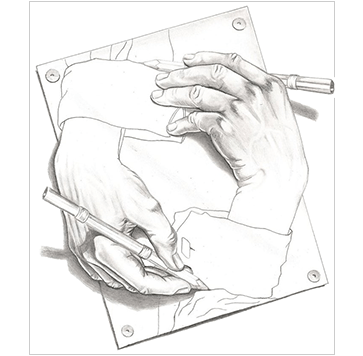

A strange loop arises when, by moving up or down through a hierarchical system, one finds oneself back where one started. Strange loops may involve self-reference and paradox.
The concept of a strange loop was proposed and extensively discussed by Douglas Hofstadter in ‘Gödel, Escher, Bach,’ and is further elaborated in Hofstadter’s book ‘I Am a Strange Loop,’ published in 2007. A tangled hierarchy is a hierarchical system in which a strange loop appears.
Posted in Language, Science |
Leave a Comment »
March 23, 2011

Antonin Carême [kah-rehm] (1784 – 1833), known as the ‘King of Chefs, and the Chef of Kings’ was an early practitioner and exponent of the elaborate style of cooking known as haute cuisine, the ‘high art’ of French cooking: a grandiose style of cookery favored by both international royalty and by the newly rich of Paris. Carême is often considered as one of the first, internationally renowned celebrity chefs.
He is remembered as the founder of the haute cuisine, and credited with creating the standard chef’s hat, the toque. He designed new sauces and dishes, and published a classification of all sauces into groups, based on four mother sauces. He is also frequently credited with replacing the practice of service à la française (serving all dishes at once) with service à la russe (serving each dish in the order printed on the menu).
read more »
Posted in Art, Food, Language |
Leave a Comment »
March 22, 2011
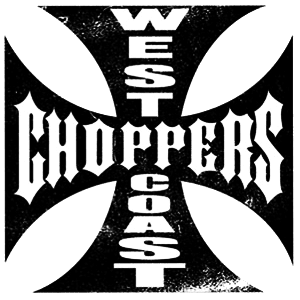
The Biker Cross is a derivative of the Iron Cross (a Prussian, and later German, military decoration). Bikers started to display the Iron Cross in the mid 1960’s with the advent of outlaw biker gangs. Originally bikers displayed the Iron Cross as a symbol of rebellion to society in general.
Today it is also worn to signify honor, valor, strength and ‘standing up for what you believe.’ Hot rodders (American car customizers) and others also use it as a provocative gesture to offend the public, or as a symbol of rebellion or non-conformity.
read more »
Posted in Art, Language, War |
Leave a Comment »
March 21, 2011
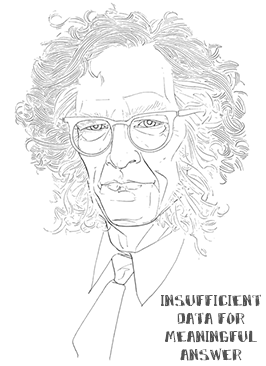
Multivac is the name of a fictional supercomputer in many stories by Isaac Asimov. Like most of the technologies Asimov describes in his fiction, Multivac’s exact specifications vary among appearances. In all cases, it is a government-run computer that answers questions, usually buried deep underground for security purposes. However, Asimov never settles on a particular size for the computer except for mentioning it is very large.
Unlike the artificial intelligences portrayed in his ‘Robot’ Series, Multivac’s interface is mechanized and impersonal, consisting of complex command consoles few humans can operate. Though the technology depended on bulky vacuum tubes, the concept – that all information could be contained on computer(s) and accessed from a domestic terminal – constitutes an early reference to the possibility of the Internet.
Posted in Art, Language, Technology |
1 Comment »
March 19, 2011

A kill screen is a stage or level in a video game (often an arcade game) that stops the player’s progress due to a programming error or design oversight. Rather than ‘ending’ in a traditional sense, the game will crash, freeze, or behave so erratically that further play is impossible. Pac-Man has a famous kill screen often referred to as the ‘Pac-Man Bomb Screen.’ The game’s level counter was a single 8-bit byte and could therefore store only 256 distinct values. Reaching the 256th level causes the counter that is used while drawing the fruit to overflow to zero, causing 256 fruits and seven blank spaces to be drawn.
Kill screens were much more common during the Golden Age of Arcade Games. Games from this era were often written with the assumption that the player would stop playing long before the numerical limits of the game code were reached; most games from this period were intended to continue until the players lost all of their lives. Additionally, the limited hardware of these early machines often meant that programmers could not spend memory on logical checks of the game state.
Posted in Games, Language, Technology |
Leave a Comment »



 The Daily Omnivore