February 28, 2016

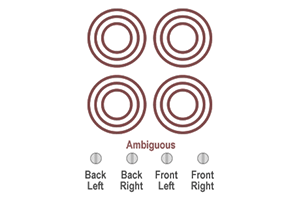
‘The Design of Everyday Things‘ is a 1988 book by cognitive scientist and usability engineer Donald Norman on design’s role in enabling communication been objects and their users, and how to optimize that conduit to make the experience more effective. One of the main premises of the book is that although people are often keen to blame themselves when objects appear to malfunction, it is not the fault of the user but rather the lack of intuitive guidance that should be present in the design. In the book, Norman introduced the term ‘affordance’ as it applied to design, defining it as things that afford the opportunity for an organism to perform an action.
For example, a knob affords twisting, and perhaps pushing, while a cord affords pulling. 20th century American psychologist James J. Gibson originally coined the term ‘affordance’ to describe changes made to one’s environment to make them more usable, such as carving stairs into a steep hill. Norman also popularized the term ‘user-centered design’ to describe design based on the needs of the user, leaving aside what he deemed secondary issues like aesthetics. User-centered design involves simplifying the structure of tasks, making things visible, getting the mapping right, exploiting the powers of constraint, designing for error, and explaining affordances.
Posted in Language, Technology |
Leave a Comment »
February 21, 2016

In scholastic philosophy, quiddity [kwid-i-tee] was another term for the essence of an object, literally ‘what it is’ or its ‘whatness.’ The term derives from the Latin word ‘quidditas,’ meaning ‘what it was to be (a given thing),’ which was used by the medieval scholastics as a literal translation of the equivalent term in Aristotle’s Greek. It describes properties that a particular substance (e.g. a person) shares with others of its kind. The question ‘what (quid) is it?’ asks for a general description by way of commonality.
Quiddity was often contrasted by the scholastic philosophers with the ‘haecceity’ or ‘thisness’ of an item, which was supposed to be a positive characteristic of an individual that caused them to be this individual, and no other. It is used in this sense in British poet George Herbert’s eponymous poem, ‘Quiddity.’ In law, the term is used to refer to a quibble or academic point. An example can be seen in Hamlet’s graveside speech: ‘Where be his quiddities now, his quillets, his cases, his tenures’ says Hamlet, referring to a lawyer’s quiddities.
Posted in Language, Philosophy |
1 Comment »
February 16, 2016


Magic words are words which have a specific, and sometimes unintended, effect. They are often nonsense phrases used in fantasy fiction or by stage prestidigitators. Certain comic book heroes use magic words to activate their super powers. Magic words are also used as Easter eggs or cheats in computer games, other software, and operating systems. (For example, the words ‘xyzzy,’ ‘plugh,’ and ‘plover’ were magic words in the classic computer adventure game ‘Colossal Cave Adventure’).
Examples of traditional magic words include: Abracadabra, Alakazam, Hocus pocus, Open sesame (used by the character Ali Baba in the English version of a tale from the collection popularly known as ‘1001 Arabian Nights’), Presto chango, Shazam (used by the comic book hero Captain Marvel), and Shemhamforash (used by Satanists). Craig Conley, a scholar of magic, writes that the magic words used by conjurers may originate from ‘pseudo-Latin phrases, nonsense syllables, or esoteric terms from religious antiquity,’ but that what they have in common is ‘language as an instrument of creation.’
read more »
Posted in Language |
Leave a Comment »
February 15, 2016
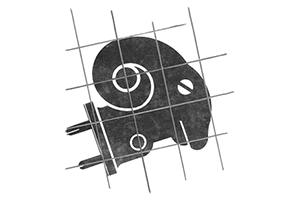

Do Androids Dream of Electric Sheep? is a science fiction novel by American writer Philip K. Dick. First published in 1968, the novel is set in a post-apocalyptic San Francisco, where Earth’s life has been greatly damaged by nuclear global war. Most animal species are endangered or extinct due to extreme radiation poisoning, so that owning an animal is now a sign of status and empathy, an attitude encouraged towards animals. The book served as the primary basis for the 1982 film ‘Blade Runner.’
The main plot follows a single day in the life of Rick Deckard, a bounty hunter hired by the San Francisco Police Department to ‘retire’ (kill) six escaped androids. A secondary plot follows John Isidore, a driver for an electric-animal repair company, who is a ‘special’ (a radioactively-damaged, intellectually slow human whose status prohibits him from emigrating). In connection with Deckard’s mission, the novel explores the issue of what it is to be human. Unlike humans, the androids are claimed to possess no sense of empathy.
read more »
Posted in Art, Language, Technology |
1 Comment »
February 4, 2016


Rebranding is a marketing strategy in which a new name, term, symbol, design, or combination thereof is created for an established brand with the intention of developing a new, differentiated identity in the minds of consumers, investors, competitors, and other stakeholders. Often, this involves radical changes to a brand’s logo, name, legal names, image, marketing strategy, and advertising themes. Such changes typically aim to reposition the brand/company, occasionally to distance itself from negative connotations of the previous branding, or to move the brand upmarket; they may also communicate a new message a new board of directors wishes to communicate.
Rebranding can be applied to new products, mature products, or even products still in development. The process can occur intentionally through a deliberate change in strategy or occur unintentionally from unplanned, emergent situations, such as a ‘Chapter 11 corporate restructuring,’ ‘union busting,’ or ‘bankruptcy.’ Rebranding can also refer to a change in a company/ corporate brand that may own several sub-brands for products or companies.
read more »
Posted in Language, Money |
Leave a Comment »
January 29, 2016


A Raisin in the Sun is a play by African American playwright Lorraine Hansberry that debuted on Broadway in 1959. The title comes from the poem ‘Harlem’ by Langston Hughes: ‘What happens to a dream deferred? Does it dry up like a raisin in the sun?’ The story tells a black family’s experiences in the Washington Park Subdivision of Chicago’s Woodlawn neighborhood as they attempt to ‘better’ themselves with an insurance payout from the death of the father.
Walter and Ruth Younger, their son Travis, along with Walter’s mother Lena (Mama) and sister Beneatha, live in poverty in a dilapidated two-bedroom apartment on Chicago’s south side. Walter is barely making a living as a limousine driver. Though Ruth is content with their lot, Walter is not and desperately wishes to become wealthy. His plan is to invest in a liquor store in partnership with Willy and Bobo, street-smart acquaintances of Walter’s.
read more »
Posted in Art, Language, Politics |
Leave a Comment »
January 18, 2016
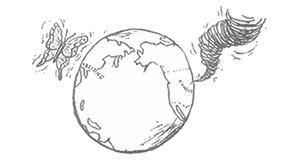
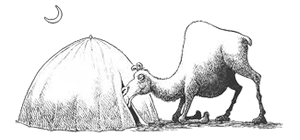
For Want of a Nail is a proverb, having numerous variations over several centuries, reminding that seemingly unimportant acts or omissions can have grave and unforeseen consequences: ‘For want of a nail the shoe was lost. For want of a shoe the horse was lost. For want of a horse the rider was lost. For want of a rider the message was lost. For want of a message the battle was lost. For want of a battle the kingdom was lost. And all for the want of a horseshoe nail.’
The earliest reference to the full proverb may refer to the death of Richard III of England at the Battle of Bosworth Field in 1485. This short variation of the proverb was published in ‘Fifty Famous People’ by James Baldwin. Richard III is unhorsed in the rhyme, but, historically Richard’s horse was merely mired in the mud. The reference to losing a horse is directly linked to the titular character famously shouting ‘A Horse! A Horse! My Kingdom for a Horse!,’ in Shakespeare’s ‘Richard III’ (c. 1591).
read more »
Posted in Language, Philosophy, War |
Leave a Comment »
January 5, 2016

In rhetoric, parrhesia [puh-reez-ee-uh] refers to speaking candidly or asking forgiveness for so speaking. Its nominal form, is translated from Latin to ‘free speech.’ The term first appears in Greek literature in the tragic plays of ‘Euripides.’ The term is borrowed from the Greek word meaning ‘to speak everything’ and by extension ‘to speak freely,’ ‘to speak boldly,’ or ‘boldness.’ It implies not only freedom of speech, but the obligation to speak the truth for the common good, even at personal risk.
In Ancient Greece, rhetoric and parrhesia were understood to be in opposition of each other through the dialogues written by Plato. There are two major philosophies during this time one being Sophistry and one being Dialectic. Sophistry is most commonly associated with the uses of rhetoric or means of persuasion to teach or persuade an audience. In its opposition is the practice of dialectic, supported by Plato and his mentor Socrates, which practices using dialogue to break apart complex issues in search of absolute truth or knowledge.
read more »
Posted in Language, Philosophy, Politics |
Leave a Comment »
January 1, 2016

Visual brand language is the unique ‘alphabet’ of design elements – such as shape, color, materials, finish, typography and composition – which directly and subliminally communicate a company’s values and personality through compelling imagery and design style. This ‘alphabet,’ properly designed, results in an emotional connection between the brand and the consumer. Visual brand language is a key ingredient necessary to make an authentic and convincing brand strategy that can be applied uniquely and creatively in all forms of brand communications to both employees and customers.
For example, the BMW ‘split grill’ has come to represent the brand. While the grill size and design details evolve over time, the underlying idea is constant and memorable. The use of color is also a powerful associative element for consistent imagery, as exemplified by the comprehensive application of orange by The Home Depot across all its brand materials.
read more »
Posted in Art, Language, Money |
Leave a Comment »
December 10, 2015


Prolefeed is a Newspeak term in the novel ‘Nineteen Eighty-Four’ by George Orwell. It was used to describe the deliberately superficial literature, movies and music that were produced by Prolesec, a section of the Ministry of Truth, to keep the ‘proles’ (i.e., proletariat) content and to prevent them from becoming too knowledgeable. The ruling Party believes that too much knowledge could motivate the proles to rebel against them.
The term is used occasionally to describe shallow entertainment in the real world. For example, Theodore Dalrymple wrote in the ‘The Spectator’ that ‘France …. is less dominated by mass distraction (known here as popular culture, but in ‘Nineteen Eighty-Four’ as prolefeed) than Britain is.’ The term has also been applied to fast food, such as that of McDonald’s: ‘Once seen as the all-American corporation, ‘McDonald’s’ is now shorthand for a globalist mass culture that provides cheap, unhealthy food to lower-class people. McDonald’s is, quite literally, prolefeed. Part of this image was a deliberate choice by the corporation.’
read more »
Posted in Language, Money, Politics |
Leave a Comment »
December 8, 2015

A pastiche [pa-steesh] is a work of visual art, literature, theatre, or music that imitates the style or character of the work of one or more other artists. Unlike parody, pastiche celebrates, rather than mocks, the work it imitates. The word pastiche is a French cognate of the Italian noun ‘pasticcio,’ which is a pâté or pie-filling mixed from diverse ingredients.
Metaphorically, pastiche and pasticcio describe works that are either composed by several authors, or that incorporate stylistic elements of other artists’ work. They are examples of eclecticism in art. Pastiche is sometimes confused with allusion, but a literary allusion may refer to another work, but it does not reiterate it. Moreover, allusion requires the audience to share in the author’s cultural knowledge. Both allusion and pastiche are mechanisms of intertextuality (the shaping of a text’s meaning by another text).
read more »
Posted in Art, Language |
Leave a Comment »
December 2, 2015
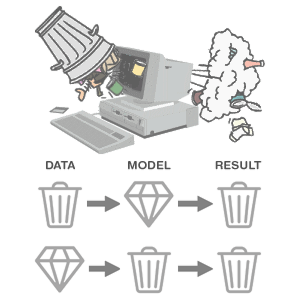
Garbage in, garbage out (GIGO) in the field of computer science or information and communications technology refers to the fact that computers, since they operate by logical processes, will unquestioningly process unintended, even nonsensical, input data (‘garbage in’) and produce undesired, often nonsensical, output (‘garbage out’). The principle applies to other fields as well.
The underlying principle was noted by the inventor of the first programmable computing device design: ‘On two occasions I have been asked, ‘Pray, Mr. Babbage, if you put into the machine wrong figures, will the right answers come out?’ … I am not able rightly to apprehend the kind of confusion of ideas that could provoke such a question.’
read more »
Posted in Humor, Language, Technology |
Leave a Comment »


 The Daily Omnivore