January 17, 2011

Dead cat bounce is a Wall Street term that refers to a small, brief recovery in the price of a declining stock. The term is derived from the expression: ‘Even a dead cat will bounce if it falls from a great height.’ The earliest record of the phrase dates from a 1985 Financial Times article describing the Singaporean and Malaysian stock markets bounce after a hard fall during the recession of that year. A similar expression has an older history in Cantonese and this may be the origin of the term.
Posted in Humor, Language, Money |
Leave a Comment »
January 17, 2011

Parkinson’s Law of Triviality (also known by the expression ‘color of the bike shed’) is British author, C. Northcote Parkinson’s 1957 argument that organizations give disproportionate weight to trivial issues. Parkinson compares a committee’s deliberations on a nuclear power plant to deliberation on a bicycle shed:
A nuclear reactor is so vastly expensive and complicated that an average person cannot understand it, so they assume that those working on it understand it; even those with strong opinions often withhold them for fear of being shown to be insufficiently informed. On the other hand, everyone understands a bicycle shed (or thinks he or she does), so building one can result in endless discussions because everyone involved wants to add his or her touch and show that they have contributed.
Posted in Humor, Language, Money |
Leave a Comment »
January 17, 2011
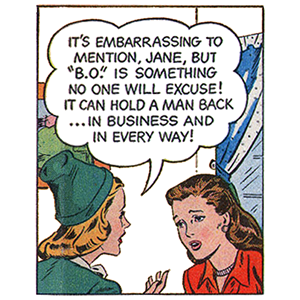
Two Cunts in a Kitchen, or sometimes, less graphically Two Cs in a K, is slang used within the advertising industry for a type of television commercial. Generally, the commercial shows two women in a domestic scene, discussing, using, or otherwise portraying the advertiser’s product in a positive manner.
Posted in Language, Money |
Leave a Comment »
January 13, 2011

Watson, named after IBM’s founder, Thomas J. Watson, is an artificial intelligence program developed to answer questions posed in natural language. Watson competed on the TV game show ‘Jeopardy!’ in 2011, defeating past champions Ken Jennings and Brad Rutter. During the game, Watson had access to 200 million pages of content, including the full text of Wikipedia. Watson consistently outperformed its human opponents on the game’s signaling device, but had trouble responding to a few categories, notably those having short clues containing only a few words.
The original Watson was made up of a cluster of 2880 POWER7 processor cores and 16 Terabytes of RAM. IBM’s master inventor and senior consultant Tony Pearson estimated Watson’s hardware cost about $3 million and with 80 TeraFLOPs would be placed 94th on the Top 500 Supercomputers list in 2011. In 2013, IBM announced that Watson software system’s first commercial application would be for utilization management decisions in lung cancer treatment at Sloan–Kettering in conjunction with health insurance company WellPoint. Watson’s business chief Manoj Saxena says that 90% of nurses in the field who use Watson now follow its guidance.
Posted in Language, Money, Technology |
Leave a Comment »
January 13, 2011


Helvetica is a widely used sans-serif typeface developed in 1957 by Swiss typeface designer Max Miedinger with Eduard Hoffmann to create a neutral typeface that had great clarity, no intrinsic meaning in its form, and could be used on a wide variety of signage. It’s original name was ‘Neue Haas Grotesk’; it was changed to ‘Helvetica’ (the Latin name for Switzerland) in 1960 in order to make it more marketable internationally. Generic versions of Helvetica have been made by various vendors; Monotype’s Arial, designed in 1982 has identical character widths and is indistinguishable by most non-specialists.
Helvetica is a popular choice for commercial wordmarks, including: 3M, American Airlines, American Apparel, BMW, Jeep, JCPenney, Lufthansa, Microsoft, Target, RE/MAX, Toyota, Panasonic, Motorola, Kawasaki, and Verizon Wireless. Apple Inc. has used Helvetica widely in its software. Helvetica is also widely used by the U.S. government; for example, federal income tax forms are set in Helvetica, and NASA uses the type on the Space Shuttle orbiter. New York City has been using Helvetica since 1989 for many of its subway signs. In 2007, director Gary Hustwit released a documentary, ‘Helvetica,’ to coincide with the fiftieth anniversary of the typeface.
Posted in Art, Language, Money |
Leave a Comment »
January 12, 2011

The Forer effect (also called the Barnum Effect after P.T. Barnum) is the observation that individuals will give high accuracy ratings to descriptions of their personality that supposedly are tailored specifically for them, but are in fact vague and general enough to apply to a wide range of people. This effect can provide a partial explanation for the widespread acceptance of some beliefs and practices, such as astrology, fortune telling, and some types of personality tests like the Myers-Briggs test.
read more »
Posted in Language, Money, Science |
Leave a Comment »
January 11, 2011

Gaslighting is a form of psychological abuse in which false information is presented to the victim with the intent of making them doubt their own memory and perception. It may simply be the denial by an abuser that previous abusive incidents ever occurred, or it could be the staging of bizarre events by the abuser with the intention of disorienting the victim. Sociopaths frequently use gaslighting tactics; they consistently transgress social mores, break laws, and exploit others, but are also typically charming and convincing liars who consistently deny wrongdoing. Thus, some who have been victimized by sociopaths may doubt their perceptions.
Gaslighting had a colloquial origin in a 1938 play ‘Gas Light,’ but the term has also been used in clinical and research literature. The play and its 1940 and 1944 film adaptations, concern a husband who attempts to drive his wife mad by manipulating small elements of their environment, and insisting that she is mistaken or misremembering when she points out these changes. The title stems from the husband’s subtle dimming of the house’s gas lights, which she accurately notices and which the husband insists she’s imagining.
Posted in Art, Language |
Leave a Comment »
January 11, 2011


Avram Noam Chomsky (b. 1928) is an American linguist, philosopher, political activist, author, and lecturer. He is a professor emeritus of linguistics at MIT. Chomsky created one of the most important contributions to the field of linguistics made in the 20th century: the theory of generative grammar, a branch of theoretical linguistics that works to provide a set of rules that can accurately predict which combinations of words are able to make grammatically correct sentences. In the 1950’s he helped start the cognitive revolution in psychology through his review of B. F. Skinner’s work.
He challenged the behaviorist way of looking at behavior and language. His natural approach to the study of language also changed the philosophy of language and mind. He invented the Chomsky hierarchy, a way of looking at formal languages in terms of their power to explain language. In the 1960s he criticized the Vietnam War. Because of that, Chomsky became more widely known for his media criticism and politics. He is a key intellectual figure within the left wing of United States politics.
Posted in Language, Philosophy, Politics |
Leave a Comment »
January 10, 2011


A spiritual successor, sometimes called a spiritual sequel or a companion piece, is a successor to a work of fiction which does not directly build upon the storyline established by a previous work as do most traditional prequels or sequels, but nevertheless features many of the same elements, themes, and styles as its source material.
read more »
Posted in Art, Language, Money |
Leave a Comment »
January 10, 2011

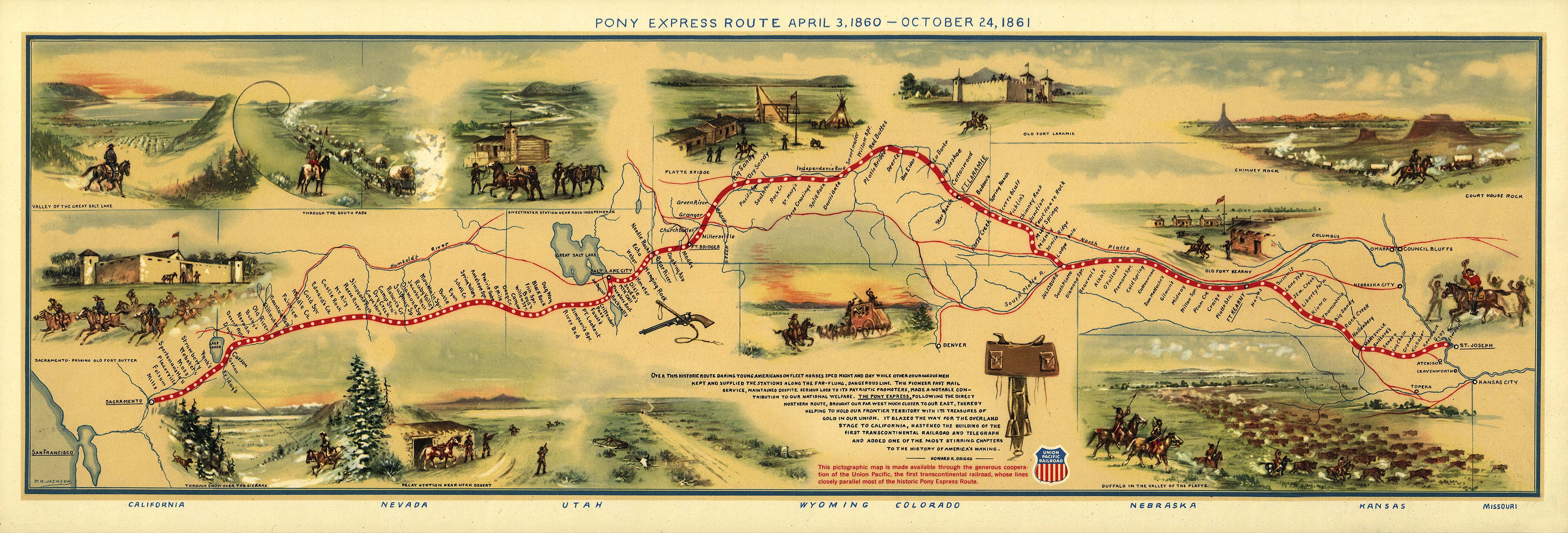
The Pony Express was a fast mail service crossing the Great Plains, the Rocky Mountains, and the High Sierras from Missouri to California, founded in 1860. It became the west’s most direct means of east-west communication before the telegraph and was vital for tying California closely with the Union just before the American Civil War. Patee House (a historic hotel in St. Joseph, Missouri) served as the Pony Express headquarters from 1860 to 1861. It is one block away from the home of infamous outlaw Jesse James, where he was shot and killed by Robert Ford. After his murder, Jesse James’ family took up lodging at the hotel.
Messages were carried by horseback riders in relays to stations across the prairies, plains, deserts, and mountains of the Western United States. For its 18 months of operation, it briefly reduced the time for messages to travel between the Atlantic and Pacific coasts to about ten days, with telegraphic communication covering about half the distance across the continent and mounted couriers the rest. The continued popularity of the Pony Express can be linked to Buffalo Bill Cody who claimed to have been an Express rider.
Posted in Language, Money |
Leave a Comment »
January 5, 2011

Heiligenschein [hahy-li-guhn-shahyn] (German for ‘aureola,’ literally ‘Holy shine’) is an optical phenomenon which creates a bright spot around the shadow of the viewer’s head. It is created when the surface on which the shadow falls has special optical characteristics. Dewy grass is known to exhibit these characteristics, and creates a heiligenschein. Nearly spherical dew droplets act as lenses to focus the light on the surface beneath them. Some of this light ‘backscatters’ in the direction of the sunlight as it passes back through the dew droplet. This makes the antisolar point appear the brightest.
The opposition effect creates a similar halo effect, a bright spot of light around the viewer’s head when the viewer is looking in the opposite direction of the sun, but is instead caused by shadows being hidden by the objects casting them. When viewing the Heiligenschein, there are no colored rings around the shadow of the observer, as in the case of a glory. In the 2006 Scripps National Spelling Bee, this was the word which eliminated crowd and national favorite Rajiv Tarigopula and elicited the audience to give him a standing ovation for receiving 4th place for the second consecutive year in a show of immense respect.
Posted in Language, Science |
Leave a Comment »
January 5, 2011

Osteopathy [os-tee-op-uh-thee] or osteopathic medicine is an approach to healthcare that emphasizes the role of the musculoskeletal system in health and disease. The first school of Osteopathy was founded in 1892 by Andrew Taylor Still, an Army surgeon in the American Civil War. In the United States an American-trained D.O. (Doctor of Osteopathic Medicine) is legally and professionally equivalent to an M.D. in all 50 states, since their medical education and training is mostly identical.
read more »
Posted in Health, Language, Science |
Leave a Comment »






 The Daily Omnivore