November 15, 2010

A kytoon [kahy-toon] (kite + balloon) is a kite with a significant amount of aerostatic lift from a lighter than air gas carried within. The primary advantage of a kytoon is that it remains up and at a reasonably stable position above the tether point, irrespective of the wind. Kytoons have been used in peace and war, been employed for raising rescue signals, antennae, and turbines for generating electricity.
Kytoons may be flown in earth or other planetary atmospheres. Any gas may be used to inflate the bladder parts of a kytoon. Hydrogen, methane, air, helium, etc. may be used to inflate the balloon aspect of a kytoon.
Posted in Language, Technology |
Leave a Comment »
November 15, 2010
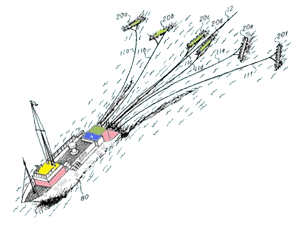

A paravane [par-uh-veyn], also called a water kite, is a towed winged (hydrofoiled) underwater object. Paravanes have applications in sport or commercial fishing, marine exploration, and defense. Navies equip paravanes with cable cutters to sever moored mines, and explosive paravanes are essentially towable mines. Commercial fishers use paravanes to tow bait and lead fish into trolling nets. Paravanes are also used for sampling water chemistry, taking seismic readings, and mapping marine geography.
Human-on-board paravanes are used to transport explorers, scuba divers, and spear-fishers. Foilboards used for recreation are also a type of water kite. Early work in coupling water kites was done by the late J.C. Hagedoorn, a geophysics professor at Delft University. His system coupled manned parafoils with water kites he named ‘hapas.’ Later experimenters also used the terminology ‘chien de mer’ (French for ‘sea dog’).
Posted in Language, Technology |
Leave a Comment »
November 15, 2010

The Voynich manuscript is a handwritten book thought to have been written between 1404 and 1438, composed of 240 vellum (mammal skin) pages, most with illustrations. Despite centuries of research, the author, script, and language remain unknown. Some think the manuscript is an elaborate hoax, others believe it was meant to serve as a pharmacopoeia or to address topics in medieval or early modern medicine.
Generally presumed to be some kind of ciphertext (an encrypted document), the Voynich manuscript has been studied by many professional and amateur cryptographers, including American and British codebreakers from both World War I and World War II. Yet it has defied all decipherment attempts, becoming a historical cryptology cause célèbre. The book is named after the Polish-Lithuanian-American book dealer Wilfrid M. Voynich, who acquired it in 1912. Currently the Voynich manuscript is owned by the Beinecke Rare Book and Manuscript Library of Yale University.
Posted in Art, Language |
Leave a Comment »
November 15, 2010
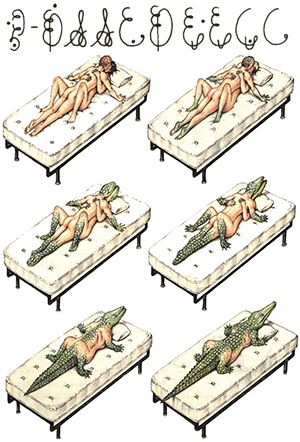

The Codex Seraphinianus is a book written and illustrated by the Italian artist, architect and industrial designer Luigi Serafini during thirty months, from 1976 to 1978. The book is a visual encyclopedia of an unknown world, written in one of its languages, a thus-far undeciphered alphabetic writing. The Codex is divided into eleven chapters, partitioned into two sections. The first section appears to describe the natural world, dealing with flora, fauna, and physics. The second deals with the humanities, the various aspects of human life: clothing, history, cuisine, architecture and so on. The illustrations are often surreal parodies of things in our world: bleeding fruit; a plant that grows into roughly the shape of a chair and is subsequently made into one; a lovemaking couple that metamorphoses into an alligator; etc.
The language of the codex has defied complete analysis by linguists for decades. The number system used for numbering the pages, however, has been discovered to be a variation of base 21. In a talk at the Oxford University Society of Bibliophiles held in 2009, Serafini stated that the script of the Codex is asemic, that his own experience in writing it was closely similar to automatic writing, and that what he wanted his alphabet to convey to the ‘reader’ is the sensation that children feel in front of books they cannot yet understand, although they see that their writing does make sense for grown-ups.
Posted in Art, Humor, Language |
2 Comments »
November 15, 2010

A bug-out bag is a portable kit that contains the items one would require to survive for seventy two hours when evacuating from a disaster. It is also known as a 72-hour kit, a grab bag, or a battle box. The focus is on evacuation, rather than long-term survival, distinguishing it from a survival kit, boating or aviation emergency kit, or a fixed-site disaster supplies kit. Bug-out bags are popular in the survivalist community. The term is related to, and possibly derived from, the ‘bail-out bag’ emergency kit many military aviators carry.
Typical contents include: 1 Gallon H2O per person, per day; Non-perishable food, Water purification supplies, Cooking supplies (camp stove, sterno, utensils), First aid kit, Fire starting tool (matches, ferrocerium rod, lighter), Disaster plan (location of emergency centers, rallying points, possible evacuation routes), Emergency reference literature,Maps, Clothing (rain poncho, hat, gloves), Bedding (bedroll, blankets), Medicine, Medical records, Radio, Lighting (flashlight, glow sticks), Firearm, Cash, Identification cards, Knife, Duct Tape, Rope, Plastic tarps, and Wire.
Posted in Health, Language |
1 Comment »
November 11, 2010

The Lamborghini Countach was a mid-engined sports car produced by Italian automaker Lamborghini from 1974 to 1990. A total of 2,042 cars were built during the Countach’s sixteen year lifetime: Its design both pioneered and popularized the wedge-shaped, sharply angled look popular in many high performance sports cars. The ‘cabin-forward’ design concept, which pushes the passenger compartment forward in order to accommodate a larger engine, was also popularized by the Countach.
The word ‘countach’ is an exclamation of astonishment in the local Piedmontese language — generally used by men on seeing an extremely beautiful woman. The Countach name stuck when Nuccio Bertone first saw ‘Project 112’ in his studio. The prototype was introduced to the world at the 1971 Geneva Motor Show. Most previous and subsequent Lamborghini car names were associated with bulls and bullfighting.
Posted in Language, Technology, World |
Leave a Comment »
November 11, 2010
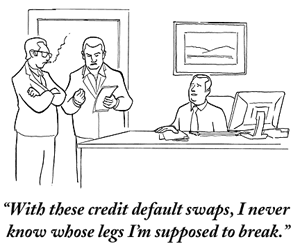
In finance, a derivative is a financial instrument (or, more simply, an agreement between two parties) that has a value, based on the expected future price movements of the asset to which it is linked—called the underlying— such as a share or a currency. There are many kinds of derivatives, with the most common being swaps, futures, and options.
Derivatives are a form of alternative investment, an investment product other than the traditional investments of stocks, bonds, cash or property. A derivative is not a stand-alone asset, since it has no value of its own. However, more common types of derivatives have been traded on markets before their expiration date as if they were assets. Among the oldest of these are rice futures, which have been traded on the Dojima Rice Exchange since the eighteenth century.
Posted in Language, Money |
Leave a Comment »
November 11, 2010
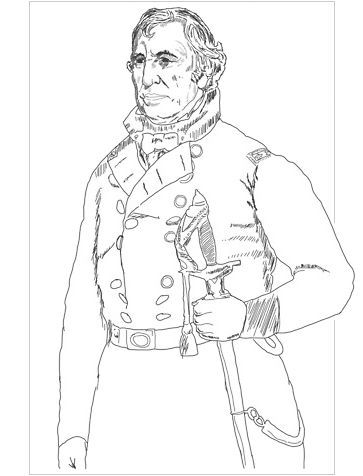
The Whig Party was a political party of the United States during the era of Jacksonian democracy (1833 – 1856). The party was formed in opposition to the policies of President Andrew Jackson and his Democratic Party to promote the strength of the presidency and executive branch at the expense of Congress. The Whigs advocated the supremacy of Congress over the presidency, and favored a program of modernization and economic protectionism. In its two decades of existence, the Whig Party saw two of its candidates, William Henry Harrison and Zachary Taylor, elected president.
read more »
Posted in Language, Politics |
Leave a Comment »
November 10, 2010
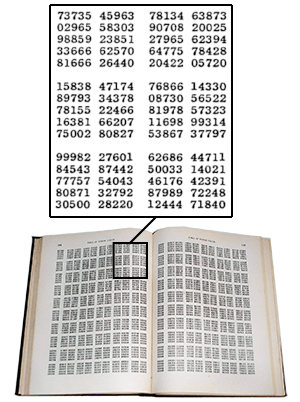
A Million Random Digits with 100,000 Normal Deviates is a 1955 book by the RAND Corporation. The book, comprising primarily of a random number table, was an important 20th century work in the field of statistics and random numbers. It was produced starting in 1947 by an electronic simulation of a roulette wheel attached to a computer, the results of which were then carefully filtered and tested before being used to generate the table. The book was one of the last of a series of random number tables produced from the mid-1920s through the 1950s, after which the development of high speed computers allowed faster operation through the generation of pseudorandom numbers rather than reading them from tables.
The RAND table was an important breakthrough in delivering random numbers, because such a large and carefully prepared table had never before been available. In addition to being available in book form, one could also order the digits on a series of punched cards. The main use of the tables was in statistics and the experimental design of scientific experiments, especially those which employed the ‘Monte Carlo method,’ a class of computational algorithms used in cryptography.
Posted in Language, Technology |
Leave a Comment »
November 10, 2010

Xerostomia [zeer-uh-stoh-mee-uh] is the medical term for the subjective complaint of dry mouth due to a lack of saliva; sometimes colloquially called pasties, cottonmouth, drooth, doughmouth or des (like a desert). Xerostomia can cause difficulty in speech and eating. It also leads to halitosis and a dramatic rise in the number of cavities, as the protective effect of saliva’s remineralizing the enamel is no longer present, and can make the mucosa and periodontal tissue of the mouth more vulnerable to infection.
Notably, a symptom of heavy methamphetamine use usually called ‘meth mouth’ is largely caused by xerostomia which is worsened by the fact that methamphetamine at recreational doses can cause tight clenching of the jaw, bruxism (compulsive grinding of the teeth), or a repetitive ‘chewing’ movement like the user is chewing without food in the mouth.
Posted in Health, Language |
Leave a Comment »
November 10, 2010

Meta (from Greek: ‘after,’ ‘beyond,’ ‘with,’ ‘adjacent,’ ‘self’), is a prefix used in English to indicate a concept which is an abstraction from another concept, used to complete or add to the latter. In epistemology, the prefix meta is used to mean about (its own category). For example, metadata are data about data (who has produced them, when, what format the data are in and so on). Similarly, metamemory in psychology means an individual’s knowledge about whether or not they would remember something if they concentrated on recalling it.
Another, slightly different interpretation of this term is ‘about’ but not ‘on’ (exactly its own category). For example, in linguistics a grammar is considered as being expressed in a metalanguage, or a sort of language for describing another language (and not itself). In Greek, the prefix meta- is generally less esoteric than in English; Greek meta- is equivalent to the Latin words post- or ad-. The use of the prefix in this sense occurs occasionally in scientific English terms derived from Greek. For example: the term Metatheria (the name for the clade of marsupial mammals) uses the prefix meta- merely in the sense that the Metatheria occur on the tree of life adjacent to the Theria (the placental mammals).
Posted in Language, Philosophy |
Leave a Comment »
November 10, 2010

The term ‘Fucking New Guy‘ (FNG) is a derogatory term for new recruits, made popular by US troops in the Vietnam war. Every unit had an FNG, and the term was used across all unit types, from front line combat through to support and medical units. The term was not gender specific; female personnel could be FNGs as well.
FNGs were an important part of the group dynamic of US units in Vietnam and their treatment had at its core an overall sense of ‘us’ (those with experience of the war) and ‘them’ (those who were back in the United States). As one soldier said, FNGs were ‘still shitting stateside chow.’ It was in combat units that the FNG was truly ignored and hated by his colleagues. An FNG in a combat unit was ‘treated as a non-person, a pariah to be shunned and scorned, almost vilified, until he passed that magic, unseen line to respectability.’
read more »
Posted in Humor, Language, War |
Leave a Comment »




 The Daily Omnivore