November 11, 2010
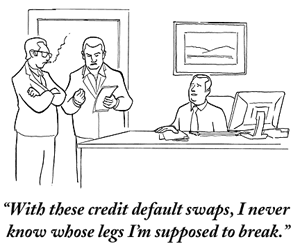
In finance, a derivative is a financial instrument (or, more simply, an agreement between two parties) that has a value, based on the expected future price movements of the asset to which it is linked—called the underlying— such as a share or a currency. There are many kinds of derivatives, with the most common being swaps, futures, and options.
Derivatives are a form of alternative investment, an investment product other than the traditional investments of stocks, bonds, cash or property. A derivative is not a stand-alone asset, since it has no value of its own. However, more common types of derivatives have been traded on markets before their expiration date as if they were assets. Among the oldest of these are rice futures, which have been traded on the Dojima Rice Exchange since the eighteenth century.
Posted in Language, Money |
Leave a Comment »
November 11, 2010

The Whig Party was a political party of the United States during the era of Jacksonian democracy (1833 – 1856). The party was formed in opposition to the policies of President Andrew Jackson and his Democratic Party to promote the strength of the presidency and executive branch at the expense of Congress. The Whigs advocated the supremacy of Congress over the presidency, and favored a program of modernization and economic protectionism. In its two decades of existence, the Whig Party saw two of its candidates, William Henry Harrison and Zachary Taylor, elected president.
read more »
Posted in Language, Politics |
Leave a Comment »
November 10, 2010

A Million Random Digits with 100,000 Normal Deviates is a 1955 book by the RAND Corporation. The book, comprising primarily of a random number table, was an important 20th century work in the field of statistics and random numbers. It was produced starting in 1947 by an electronic simulation of a roulette wheel attached to a computer, the results of which were then carefully filtered and tested before being used to generate the table. The book was one of the last of a series of random number tables produced from the mid-1920s through the 1950s, after which the development of high speed computers allowed faster operation through the generation of pseudorandom numbers rather than reading them from tables.
The RAND table was an important breakthrough in delivering random numbers, because such a large and carefully prepared table had never before been available. In addition to being available in book form, one could also order the digits on a series of punched cards. The main use of the tables was in statistics and the experimental design of scientific experiments, especially those which employed the ‘Monte Carlo method,’ a class of computational algorithms used in cryptography.
Posted in Language, Technology |
Leave a Comment »
November 10, 2010

Xerostomia [zeer-uh-stoh-mee-uh] is the medical term for the subjective complaint of dry mouth due to a lack of saliva; sometimes colloquially called pasties, cottonmouth, drooth, doughmouth or des (like a desert). Xerostomia can cause difficulty in speech and eating. It also leads to halitosis and a dramatic rise in the number of cavities, as the protective effect of saliva’s remineralizing the enamel is no longer present, and can make the mucosa and periodontal tissue of the mouth more vulnerable to infection.
Notably, a symptom of heavy methamphetamine use usually called ‘meth mouth’ is largely caused by xerostomia which is worsened by the fact that methamphetamine at recreational doses can cause tight clenching of the jaw, bruxism (compulsive grinding of the teeth), or a repetitive ‘chewing’ movement like the user is chewing without food in the mouth.
Posted in Health, Language |
Leave a Comment »
November 10, 2010

Meta (from Greek: ‘after,’ ‘beyond,’ ‘with,’ ‘adjacent,’ ‘self’), is a prefix used in English to indicate a concept which is an abstraction from another concept, used to complete or add to the latter. In epistemology, the prefix meta is used to mean about (its own category). For example, metadata are data about data (who has produced them, when, what format the data are in and so on). Similarly, metamemory in psychology means an individual’s knowledge about whether or not they would remember something if they concentrated on recalling it.
Another, slightly different interpretation of this term is ‘about’ but not ‘on’ (exactly its own category). For example, in linguistics a grammar is considered as being expressed in a metalanguage, or a sort of language for describing another language (and not itself). In Greek, the prefix meta- is generally less esoteric than in English; Greek meta- is equivalent to the Latin words post- or ad-. The use of the prefix in this sense occurs occasionally in scientific English terms derived from Greek. For example: the term Metatheria (the name for the clade of marsupial mammals) uses the prefix meta- merely in the sense that the Metatheria occur on the tree of life adjacent to the Theria (the placental mammals).
Posted in Language, Philosophy |
Leave a Comment »
November 10, 2010

The term ‘Fucking New Guy‘ (FNG) is a derogatory term for new recruits, made popular by US troops in the Vietnam war. Every unit had an FNG, and the term was used across all unit types, from front line combat through to support and medical units. The term was not gender specific; female personnel could be FNGs as well.
FNGs were an important part of the group dynamic of US units in Vietnam and their treatment had at its core an overall sense of ‘us’ (those with experience of the war) and ‘them’ (those who were back in the United States). As one soldier said, FNGs were ‘still shitting stateside chow.’ It was in combat units that the FNG was truly ignored and hated by his colleagues. An FNG in a combat unit was ‘treated as a non-person, a pariah to be shunned and scorned, almost vilified, until he passed that magic, unseen line to respectability.’
read more »
Posted in Humor, Language, War |
Leave a Comment »
November 9, 2010

A spider hole is U.S. military parlance for a camouflaged one-man foxhole, used for observation. They are typically a shoulder-deep, protective, round hole, often covered by a camouflaged lid, in which a soldier can stand and fire a weapon. A spider hole differs from a foxhole in that a foxhole is usually deeper and designed to emphasize cover rather than concealment.
The term is usually understood to be an allusion to the camouflaged hole constructed by the trapdoor spider. According to United States Marine Corps historian Major Chuck Melson, the term originated in the American Civil War, when it meant a hastily-dug foxhole. Spider holes were used during World War II by Japanese forces in many Pacific battlefields, including Leyte in the Philippines and Iwo Jima. The Japanese called them ‘octopus pots.’ On 13 December 2003, U.S. troops in Iraq undertaking Operation Red Dawn discovered Iraqi dictator Saddam Hussein hiding in what was characterized as a spider hole in a farmhouse near his hometown of Tikrit.
Posted in Language, War, World |
Leave a Comment »
November 8, 2010

Agnotology is the study of culturally-induced ignorance or doubt, particularly the publication of inaccurate or misleading scientific data. The neologism was coined by Robert N. Proctor, a Stanford University professor specializing in the history of science and technology. More generally, the term also highlights the increasingly common condition where more knowledge of a subject leaves one more uncertain than before. Proctor studied the tobacco industry’s conspiracy to manufacture doubt about the cancer risks of tobacco use. Under the banner of science, the industry produced research about everything except tobacco hazards to exploit public uncertainty.
Some of the root causes for culturally-induced ignorance are media neglect, corporate or governmental secrecy and suppression, document destruction, and myriad forms of inherent or avoidable culturopolitical selectivity, inattention, and forgetfulness. Agnotology also focuses on how and why diverse forms of knowledge do not ‘come to be’,’ or are ignored or delayed. For example, knowledge about plate tectonics was delayed for at least a decade because key evidence was classified military information related to underseas warfare.
Posted in Language, Science |
Leave a Comment »
November 8, 2010

A snowclone is a type of cliché and phrasal template originally defined as ‘a multi-use, customizable, instantly recognizable, time-worn, quoted or misquoted phrase or sentence that can be used in an entirely open array of different variants.’
An example of a snowclone is ‘grey is the new black,’ a version of the template ‘X is the new Y.’ Both the generic formula and the new phrases produced from it are called snowclones.
read more »
Posted in Language |
Leave a Comment »
November 8, 2010
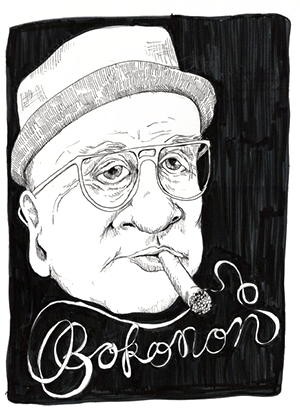
Bokononism is a fictional religion practiced by many of the characters in Kurt Vonnegut’s novel ‘Cat’s Cradle.’ It is based on the concept of ‘foma,’ which are defined as harmless untruths. The primary tenet of Bokononism is to ‘Live by the foma that make you brave and kind and healthy and happy.’
Many of the sacred texts of Bokononism were written in the form of calypsos. The foundation of Bokononism is that all religion, including Bokononism and all its texts, is formed entirely of lies; however, one who believes and adheres to these lies will at least have peace of mind, and perhaps live a good life.
read more »
Posted in Humor, Language, Philosophy |
Leave a Comment »
November 8, 2010

In the novel Nineteen Eighty-Four, doublethink is the act of simultaneously accepting as correct two mutually contradictory beliefs. It is related to, but distinct from, hypocrisy and neutrality. Its opposite is cognitive dissonance, where the two beliefs cause conflict in one’s mind.
Posted in Language, Politics |
Leave a Comment »
November 7, 2010

Progressivism [pruh-gres-uh-viz-uhm] is a political attitude advocating changes or reform through governmental action. Progressivism is often viewed in opposition to conservative or reactionary ideologies. The Progressive Movement began in cities with settlement workers and reformers who were interested in regulating tenement housing and child labor.
read more »
Posted in Language, Politics |
Leave a Comment »




