November 30, 2015

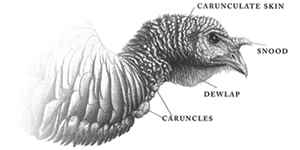
A dewlap [doo-lap] is a longitudinal flap of skin that hangs beneath the lower jaw or neck of many vertebrates. While the term is usually used in this specific context, it can also be used to include other structures occurring in the same body area with a similar aspect, such as those caused by a double chin or the submandibular vocal sac of a frog. In a more general manner, the term refers to any pendulous mass of skin, such as a fold of loose skin on an elderly person’s neck, or the wattle of a bird, a drooping protuberance hanging from various parts of the head or neck.
Many reptiles have dewlaps, most notably the anole species of lizard, which have large skin dewlaps which they can extend and retract. These dewlaps are usually of a different color from the rest of their body and when enlarged make the lizard seem much larger. They display them when indicating territorial boundaries and to attract females. Lizards usually accompany their dewlap movement with head bobs and other displays. Though much uncertainty resides around the purpose of these displays, the color of the dewlap and the head bobs are thought to be a means of contrasting background noise.
read more »
Posted in Language, Science |
Leave a Comment »
November 23, 2015

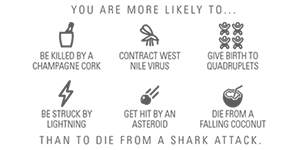
The Summer of the Shark refers to the coverage of shark attacks by American news media in the summer of 2001. The sensationalist coverage of shark attacks began in early July following the Fourth of July weekend shark attack on 8-year-old Jessie Arbogast, and continued almost unabated—despite no evidence for an actual increase in attacks—until the September 11 terrorist attacks shifted the media’s attention away from beaches. The ‘Summer of the Shark’ has since been remembered as an example of tabloid television perpetuating a story with no real merit beyond its ability to draw ratings.
In mid-August, many networks were showing footage captured by helicopters of hundreds of sharks coalescing off the southwest coast of Florida. Beach-goers were warned of the dangers of swimming, despite the fact that the swarm was likely part of an annual shark migration. The repeated broadcasts of the shark group has been criticized as blatant fear mongering, leading to the unwarranted belief of a so-called shark ‘epidemic.’
read more »
Posted in Death, Language, Money |
Leave a Comment »
November 17, 2015
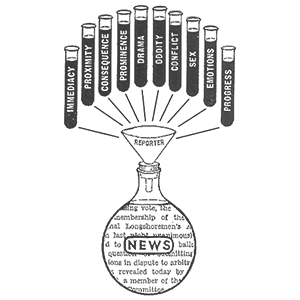
News values, or ‘news criteria,’ determine how much prominence a news story is given by a media outlet, and the attention it garners from its audience. These values are not universal and can vary widely between different cultures. In Western practice, decisions on the selection and prioritization of news are ostensibly made by editors on the basis of their experience and intuition.
However, a seminal analysis by Norwegian sociologists Johan Galtung and Mari Ruge in the ‘Journal of Peace Research’ in 1965 showed that several factors are common, such as familiarity (stories that ‘hit close to home’), negativity (‘if it bleeds, it leads’), and Unexpectedness (‘don’t report on fire in a furnace’). Basing his judgement on many years as a newspaper journalist Tim Hetherington has said that ‘anything which threatens people’s peace, prosperity, and well being is news and likely to make headlines.’
read more »
Posted in Language, Money, Politics |
1 Comment »
November 13, 2015


Political correctness (PC) means using words or behavior which will not offend any group of people. The term arose in the 1970s as a way of encouraging the replacement of bygone phrases such as ‘colored.’ By the 1990s, it had taken on pejorative and mocking overtones, and was described as symptomatic of excessive liberalism and the ‘nanny state.’ The phrase was widely used in the debate about the 1987 book ‘The Closing of the American Mind’ by philosopher Allan Bloom, and gained further currency in response to social commentator Roger Kimball’s ‘Tenured Radicals’ (1990).
Conservative author Dinesh D’Souza’s ‘Illiberal Education’ duology of books (1991, 1992) condemned what he saw as liberal efforts to advance victimization, multiculturalism through language, and affirmative action. Advocates of political correctness, however, argue that libertarians made an issue of the term in order to divert attention from more substantive matters of discrimination and as part of a broader culture war against liberalism. They have also said that the right wing has it own forms of political correctness.
read more »
Posted in Language, Politics |
Leave a Comment »
November 9, 2015

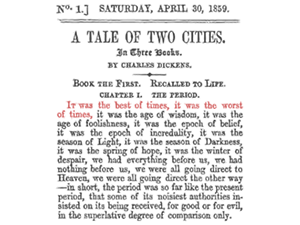
‘Once upon a time‘ is a stock phrase used to introduce a narrative of past events, typically in fairy tales and folktales. It has been used in some form since at least 1380 in storytelling in the English language and has opened many oral narratives since 1600. These stories often then end with ‘and they all lived happily ever after,’ or, originally, ‘happily until their deaths.’
The phrase is particularly common in fairy tales for younger children, where it is almost always the opening line of a tale. It was commonly used in the original translations of the stories of Charles Perrault as a translation for the French ‘il était une fois,’ of Hans Christian Andersen as a translation for the Danish ‘der var engang,’ (literally ‘there was once’), the Brothers Grimm as a translation for the German ‘es war einmal’ (literally ‘it was once’). An alternative German fairy tale opening translates to: ‘Back in the days when it was still of help to wish for a thing…’
Posted in Art, Language |
Leave a Comment »
October 29, 2015

You ain’t gonna need it (YAGNI) is a principle of extreme programming (XP) that states a programmer should not add functionality until deemed necessary. XP co-founder Ron Jeffries said: ‘Always implement things when you actually need them, never when you just foresee that you need them.’ Jeffries argues that prematurely adding features leads to software bloat, feature creep, and takes time away from core functionality improvement.
YAGNI is a principle behind the XP practice of ‘do the simplest thing that could possibly work’ (DTSTTCPW). It is meant to be used in combination with several other practices, such as continuous refactoring (code reorganization), continuous automated unit testing, and continuous integration (conforming code segments work within the larger codebase). However, the efficacy of YAGNI, even when considered in combination with safeguards, is controversial.
Posted in Humor, Language, Technology |
Leave a Comment »
October 28, 2015

‘Man After Man: An Anthropology of the Future’ is a 1990 book written by Scottish geologist Dougal Dixon exploring future evolutionary paths for humanity. Illustrator Philip Hood’s depictions of Dixon’s speculative organisms have been called fear-provoking and biologically horrific to the modern eye.
The book starts 200 years in the future where modern humans have genetically modified themselves into several subtypes including ‘aquamorphs’ (marine humans with gills instead of lungs) and ‘vacuumorphs’ (engineered for life in the vacuum of space, its skin and eyes carry shields of skin to keep its body stable even without pressure).
read more »
Posted in Language, Science |
Leave a Comment »
October 20, 2015


Daniel Okrent (b. 1948) is an American writer and editor. He is best known for having served as the first public editor of the ‘New York Times’ newspaper, for inventing ‘Rotisserie League Baseball’ (fantasy baseball), and for writing several books, most recently ‘Last Call: The Rise and Fall of Prohibition,’ which served as a source for the 2011 Ken Burns miniseries on the subject.
The job of the public editor is to supervise the implementation of proper journalism ethics at a newspaper, and to identify and examine critical errors or omissions, and to act as a liaison to the public. At the ‘New York Times,’ the position was created in response to the Jayson Blair scandal. In an interview he made about his new job, Daniel formulated what has become known as ‘Okrent’s law‘: ‘The pursuit of balance can create imbalance because sometimes something is true.’ He was referring to the phenomenon of the press providing legitimacy to fringe or minority viewpoints in an effort to appear even-handed.
Posted in Language, Politics |
Leave a Comment »
October 17, 2015

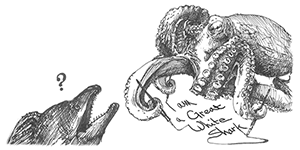
Unstructured Data refers to information that is not organized in a predefined manner. Properly formated computerized data is stored in a database (making it easily retrievable) and labeled with metadata (‘data about data,’ e.g., author, subject, size). Unstructured information has missing or conflicting metadata and may lack contextual clues that make it difficult to understand using traditional programs.
Techniques such as data mining, Natural Language Processing (NLP), and ‘noisy-text’ analytics provide different methods to find patterns in, or otherwise interpret, this information. NLP is a field in Artificial Intelligence, related to linguistics that attempts to program computers to understand human languages. There is considerable commercial interest in the field because of its application to news-gathering, text categorization, voice-activation, archiving, and large-scale content-analysis.
read more »
Posted in Language, Technology |
Leave a Comment »
October 14, 2015

Ghetto fabulous refers to a fashion stereotype alluding to individuals living in an affluent materialistic style while not actually wealthy. It is part of a larger cultural trend of the 1990s where black, urban fashion was becoming a hot commodity through the rise of ‘hardcore’ rap. Because of the circumstances of many inner city families, poverty and consumerism became the focal point of artistic expression. With the rise of malls in the 1980s, this could be seen in the larger cultural context as well.
‘Excessive consumerism and an obsession with bling are certainly not confined to any particular demographic. We are a nation of excess and instant gratification. It has become the American way.’ For inner city youth, the ghetto fabulous life was about trying to outrun their socio-economic situations. For centuries, fashion has represented socio-economic status, so lower classes will buy outside their means in order to try and fit into an image of the upper classes.
read more »
Posted in Language, Money, Politics |
1 Comment »
October 9, 2015


An alternative newspaper is a type of newspaper that eschews comprehensive coverage of general news in favor of stylized reporting, opinionated reviews and columns, investigations into edgy topics, and magazine-style feature stories highlighting local people and culture.
Its news coverage is more locally focused and their target audiences younger than those of daily newspapers. Typically, alternative newspapers are published in tabloid format and printed on newsprint. Most metropolitan areas of the United States and Canada are home to at least one alternative paper.
read more »
Posted in Art, Language, World |
1 Comment »
October 5, 2015


In law, a ‘reasonable person‘ is a composite of a relevant community’s judgment as to how a typical member of said community should behave in situations that might pose a threat of harm (through action or inaction) to the public. It is an emergent concept of common law (judicial precedent), with no accepted technical definition. As a legal fiction (a fact assumed by courts for purposes of expediency), the ‘reasonable person’ is not an average person or a typical person, leading to great difficulties in applying the concept in some criminal cases, especially in regards to the partial defence of provocation.
Legal humorist A. P. Herbert called the reasonable person an ‘excellent but odious character’: ‘He is an ideal, a standard, the embodiment of all those qualities which we demand of the good citizen … [he] invariably looks where he is going, … is careful to examine the immediate foreground before he executes a leap or bound; … neither stargazes nor is lost in meditation when approaching trapdoors or the margins of a dock; … never mounts a moving [bus] and does not alight from any car while the train is in motion, … uses nothing except in moderation, and even flogs his child in meditating only on the golden mean.’
read more »
Posted in Language, Politics |
1 Comment »


 The Daily Omnivore