October 28, 2015

‘Man After Man: An Anthropology of the Future’ is a 1990 book written by Scottish geologist Dougal Dixon exploring future evolutionary paths for humanity. Illustrator Philip Hood’s depictions of Dixon’s speculative organisms have been called fear-provoking and biologically horrific to the modern eye.
The book starts 200 years in the future where modern humans have genetically modified themselves into several subtypes including ‘aquamorphs’ (marine humans with gills instead of lungs) and ‘vacuumorphs’ (engineered for life in the vacuum of space, its skin and eyes carry shields of skin to keep its body stable even without pressure).
read more »
Posted in Language, Science |
Leave a Comment »
October 20, 2015


Daniel Okrent (b. 1948) is an American writer and editor. He is best known for having served as the first public editor of the ‘New York Times’ newspaper, for inventing ‘Rotisserie League Baseball’ (fantasy baseball), and for writing several books, most recently ‘Last Call: The Rise and Fall of Prohibition,’ which served as a source for the 2011 Ken Burns miniseries on the subject.
The job of the public editor is to supervise the implementation of proper journalism ethics at a newspaper, and to identify and examine critical errors or omissions, and to act as a liaison to the public. At the ‘New York Times,’ the position was created in response to the Jayson Blair scandal. In an interview he made about his new job, Daniel formulated what has become known as ‘Okrent’s law‘: ‘The pursuit of balance can create imbalance because sometimes something is true.’ He was referring to the phenomenon of the press providing legitimacy to fringe or minority viewpoints in an effort to appear even-handed.
Posted in Language, Politics |
Leave a Comment »
October 17, 2015


Unstructured Data refers to information that is not organized in a predefined manner. Properly formated computerized data is stored in a database (making it easily retrievable) and labeled with metadata (‘data about data,’ e.g., author, subject, size). Unstructured information has missing or conflicting metadata and may lack contextual clues that make it difficult to understand using traditional programs.
Techniques such as data mining, Natural Language Processing (NLP), and ‘noisy-text’ analytics provide different methods to find patterns in, or otherwise interpret, this information. NLP is a field in Artificial Intelligence, related to linguistics that attempts to program computers to understand human languages. There is considerable commercial interest in the field because of its application to news-gathering, text categorization, voice-activation, archiving, and large-scale content-analysis.
read more »
Posted in Language, Technology |
Leave a Comment »
October 14, 2015

Ghetto fabulous refers to a fashion stereotype alluding to individuals living in an affluent materialistic style while not actually wealthy. It is part of a larger cultural trend of the 1990s where black, urban fashion was becoming a hot commodity through the rise of ‘hardcore’ rap. Because of the circumstances of many inner city families, poverty and consumerism became the focal point of artistic expression. With the rise of malls in the 1980s, this could be seen in the larger cultural context as well.
‘Excessive consumerism and an obsession with bling are certainly not confined to any particular demographic. We are a nation of excess and instant gratification. It has become the American way.’ For inner city youth, the ghetto fabulous life was about trying to outrun their socio-economic situations. For centuries, fashion has represented socio-economic status, so lower classes will buy outside their means in order to try and fit into an image of the upper classes.
read more »
Posted in Language, Money, Politics |
1 Comment »
October 9, 2015


An alternative newspaper is a type of newspaper that eschews comprehensive coverage of general news in favor of stylized reporting, opinionated reviews and columns, investigations into edgy topics, and magazine-style feature stories highlighting local people and culture.
Its news coverage is more locally focused and their target audiences younger than those of daily newspapers. Typically, alternative newspapers are published in tabloid format and printed on newsprint. Most metropolitan areas of the United States and Canada are home to at least one alternative paper.
read more »
Posted in Art, Language, World |
1 Comment »
October 5, 2015


In law, a ‘reasonable person‘ is a composite of a relevant community’s judgment as to how a typical member of said community should behave in situations that might pose a threat of harm (through action or inaction) to the public. It is an emergent concept of common law (judicial precedent), with no accepted technical definition. As a legal fiction (a fact assumed by courts for purposes of expediency), the ‘reasonable person’ is not an average person or a typical person, leading to great difficulties in applying the concept in some criminal cases, especially in regards to the partial defence of provocation.
Legal humorist A. P. Herbert called the reasonable person an ‘excellent but odious character’: ‘He is an ideal, a standard, the embodiment of all those qualities which we demand of the good citizen … [he] invariably looks where he is going, … is careful to examine the immediate foreground before he executes a leap or bound; … neither stargazes nor is lost in meditation when approaching trapdoors or the margins of a dock; … never mounts a moving [bus] and does not alight from any car while the train is in motion, … uses nothing except in moderation, and even flogs his child in meditating only on the golden mean.’
read more »
Posted in Language, Politics |
1 Comment »
October 3, 2015

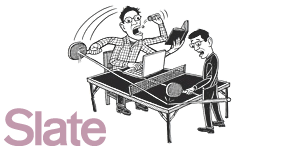
Joshua Foer (b. 1982) is a freelance journalist living in Connecticut, with a primary focus on hard sciences. He was the 2006 USA Memory Champion, whichwas described in his 2011 book, ‘Moonwalking with Einstein: The Art and Science of Remembering Everything.’ Foer set a new US record in the ‘speed cards’ event by memorizing a deck of 52 cards in 1 minute and 40 seconds. His book describes his journey from participatory journalist to national champion mnemonist, under the tutelage of British Grand Master of Memory, Ed Cooke. Penguin paid a $1.2 million advance for publishing rights, and the film rights were optioned by Columbia Pictures shortly after publication.
Foer was born in Washington, DC to Esther Foer, Director of Sixth & I Historic Synagogue, and Albert Foer, the president of the American Antitrust Institute, an antitrust watchdog. He is the younger brother of former ‘The New Republic’ editor Franklin Foer and novelist Jonathan Safran Foer. Josh has organized several websites and organizations based on his interests. He created the ‘Athanasius Kircher Society,’ which had only one session, featuring savant Kim Peek and proto-astronaut Joseph Kittinger. He is the co-founder of the ‘Atlas Obscura,’ an online compendium of ‘The World’s Wonders, Curiosities, and Esoterica.’ He is also a co-organizer of ‘Sukkah City’ a Kosher architectural design competition, and Sefaria, a non-profit dedicated to building digital experiences and infrastructure for Jewish texts.
Posted in Games, Language, Science |
Leave a Comment »
October 1, 2015

The Dr. Fox effect states that even experts will be fooled by a nonsensical lecture if it is delivered with warmth, liveliness, and humor. A 1980 study found that the perceived prestige of research is increased by using a confounding writing style, with research competency being positively correlated to reading difficulty.
The original experiment was conducted at USC School Of Medicine in 1970. Two speakers gave lectures to a classroom of psychiatrists and psychologists on a topic the attendees were unfamiliar with (‘Mathematical Game Theory as Applied to Physician Education’). The control group was lectured by an actual scientist and the other by an actor who was given the identity ‘Dr. Myron L. Fox,’ a graduate of Albert Einstein College of Medicine.
read more »
Posted in Education, Health, Language |
1 Comment »
September 30, 2015

Edisonade is a modern term, coined in 1993 by John Clute in his and Peter Nicholls’ ‘The Encyclopedia of Science Fiction,’ for fictional stories about a brilliant young inventor and his inventions. This subgenre started in the Victorian and Edwardian eras and had its apex of popularity during the late 19th and early 20th centuries, and was common in ‘scientific romance,’ an archaic term for the genre of fiction now known as ‘science fiction.’
The term ‘Edisonade’ originated in the 1850s to describe both fiction and elements of scientific writing, but has since come to refer to the science fiction of the late nineteenth and early twentieth century, primarily that of Jules Verne, H. G. Wells, and Arthur Conan Doyle. In recent years, the term has come to be applied to science fiction written in a deliberately anachronistic style, as a homage to or pastiche of the original scientific romances.
read more »
Posted in Art, Language, Technology |
Leave a Comment »
September 29, 2015

A Short History of Progress is a nonfiction book and lecture series by Canadian author Ronald Wright about societal collapse. The lectures were delivered as a series of five speeches, each taking place in different cities across Canada as part of the 2004 ‘Massey Lectures’ (an annual series of lectures on a political, cultural or philosophical topic given in Canada by a noted scholar) which were broadcast on the CBC Radio program, ‘Ideas.’
Wright, an author of fiction and nonfiction works, uses the fallen civilizations of Easter Island, Sumeria, Rome, and Maya, as well as examples from the Stone Age, to see what conditions led to the downfall of those societies. He examines the meaning of progress and its implications for civilizations—past and present—arguing that the twentieth century was a time of runaway growth in human population, consumption, and technology that has now placed an unsustainable burden on all natural systems.
read more »
Posted in Language, Politics, World |
1 Comment »
September 28, 2015
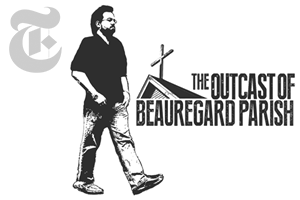

Jerry DeWitt is an American author and public speaker, and a prominent member of the American atheism movement. He is a former pastor of two evangelical churches, who publicly deconverted to atheism in 2011. DeWitt is the former executive director of ‘Recovering From Religion,’ a group which helps people find their way after a loss of faith.
He currently leads the ‘Community Mission Chapel,’ which DeWitt calls an ‘atheist church.’ In a story for the ‘New York Times,’ he said, ‘Just because we value critical thinking and the scientific method, that doesn’t mean we suddenly become disembodied and we can no longer benefit from our emotional lives.’
read more »
Posted in Health, Language, Philosophy |
Leave a Comment »
September 21, 2015


Trigger warnings are disclaimers that content contains strong writing or images which could unsettle those with mental health difficulties. Angus Johnston, a history professor at the City University of New York, said that trigger warnings can be a part of ‘sound pedagogy,’ noting that students encountering potentially triggering material are ‘coming to it as whole people with a wide range of experiences, and that the journey we’re going on together may at times be painful. It’s not coddling them to acknowledge that. In fact, it’s just the opposite.’
However, students at UC Santa Barbara passed a resolution in support of mandatory trigger warnings for classes that could contain potentially upsetting material. Professors would be required to alert students of such material and allow them to skip classes that could make them feel uncomfortable.
read more »
Posted in Health, Language, Politics |
Leave a Comment »



