September 13, 2010

A stalking horse is a person who acts on the behalf of an anonymous third party. The expression is generally used in politics and business. The term originally derived from the practice of hunting wildfowl, which flee immediately on the approach of humans, but tolerate the close presence of animals such as horses and cattle. Hunters slowly approach their quarry by walking alongside their horses, keeping out of sight until the flock is within firing range. Animals or devices used for this purpose are called stalking horses.
The phenomenon occurs particularly in politics, where a junior politician acts as the stalking horse to promote the interests of a senior politician who remains unseen in case the actions would damage him or her but nevertheless wants to provoke a debate or challenge to a party colleague. In some cases stalking horses are not working for a particular individual but may wish to provoke a response that leads others to join in. In politics, the truth about the relationship between an individual stalking horse and a candidate may never be known, as both sides may claim that the (alleged) stalking horse acted without the agreement of anyone else.
Posted in Language, Money, Politics |
Leave a Comment »
September 12, 2010

Bebop [bee-bop] or bop is a style of jazz characterized by fast tempo, instrumental virtuosity and improvisation based on the combination of harmonic structure and melody. It was developed in the early and mid-1940s. It first surfaced in musicians’ argot some time during the first two years of American involvement in WWII. This style of jazz ultimately became synonymous with modern jazz, as either category reached a certain final maturity in the 1960s.
read more »
Posted in Art, Language |
Leave a Comment »
September 10, 2010

The Streisand effect is a phenomenon in which an attempt to censor or remove a piece of information has the unintended consequence of causing the information to be publicized widely and to a greater extent than would have occurred if no censorship had been attempted. It is named after American entertainer Barbra Streisand, following a 2003 incident in which her attempts to suppress photographs of her residence inadvertently generated further publicity.
Posted in Humor, Language |
Leave a Comment »
September 10, 2010

A rōnin [roh-nin] was a samurai with no lord or master during the feudal period (1185–1868) of Japan. A samurai became masterless from the death or fall of his master, or after the loss of his master’s favor or privilege. The word rōnin literally means ‘wave man.’ The term originally referred to a serf who had fled or deserted his master’s land, and later came to be used for a samurai who had lost his master. According to the Bushido Shoshinshu (the Code of the Samurai), a samurai was supposed to commit oibara seppuku (also ‘hara kiri’ – ritual suicide) upon the loss of his master. One who chose not to honor the code was ‘on his own’ and was meant to suffer great shame.
The term rōnin is also used in modern Japan for students who fail the entrance examination for the high school or university of their choice, and then decide to spend the next year studying to retake the exam.
Posted in Language, World |
Leave a Comment »
September 3, 2010

The albedo [al-bee-doh] of an object is a measure of how strongly it reflects light from light sources such as the Sun. It is therefore a more specific form of the term reflectivity. Albedo is an important concept in climatology and astronomy, as well as in computer graphics.
Posted in Language, Science |
Leave a Comment »
August 29, 2010

Mammon [mam-uhn] is a term, derived from the Christian Bible, used to describe material wealth or greed, most often personified as a deity.
Posted in Language, Money, Philosophy |
Leave a Comment »
August 25, 2010
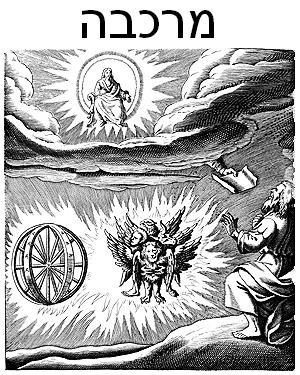
The Hebrew word Merkabah is used in Ezekiel (1:4-26) to refer to the throne-chariot of God, the four-wheeled vehicle driven by four ‘chayot’ (‘living creatures’), each of which has four rings and the four faces of a man, lion, ox, and eagle. Due to the concern of some Torah scholars that misunderstanding these passages as literal descriptions of God’s image might lead to blasphemy and/or idolatry, there was great opposition to studying this topic.
Jewish biblical commentaries emphasize that the imagery of the Merkaba is not meant to be taken literally; rather the chariot and its accompanying angels are analogies for the various ways that God reveals Himself in this world. Hasidic philosophy and Kabbalah discuss at length what each aspect of this vision represents in this world, and how the vision does not imply that God is made up of these forms. Jews customarily read the Biblical passages concerning the Merkaba in their synagogues every year on the holiday of Shavuot, which commemorates the receiving of the Ten Commandments.
Posted in Language, Philosophy |
1 Comment »
August 24, 2010

In video gaming a nerf is a change to a game that reduces the effectiveness of a particular game element. The term is also used as a verb for the act of making such a change. The opposite of nerfing is buffing. The term originated with ‘Ultima Online,’ and refers to the Nerf brand of toys which designed to prevent serious injury.
Game developers nerf aspects of a game in order to maintain game balance. Occasionally a new feature (such as an item, class, or skill) may be made too powerful, unfair, or too easily obtained to the extent that it unbalances the game system. This is sometimes due to an unforeseen bug or method of using or acquiring the object that was not considered by the developers.
Posted in Games, Language |
Leave a Comment »
August 24, 2010

Sprezzatura is an Italian word originating from Castiglione’s ‘The Book of the Courtier,’ where it is defined by the author as ‘a certain nonchalance, so as to conceal all art and make whatever one does or says appear to be without effort and almost without any thought about it.’
It is the ability of a courtier to display an easy facility in accomplishing difficult actions which hides the conscious effort that went into them. Sprezzatura has also been described as a form of defensive irony: the ability to disguise what one really desires, feels, thinks, and means or intends behind a mask of apparent reticence and nonchalance.
Posted in Language, World |
Leave a Comment »
August 17, 2010
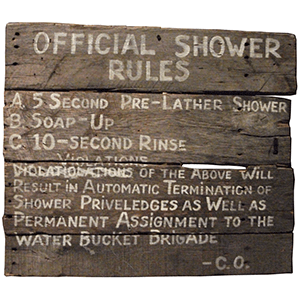
A navy shower (or ‘sea shower’) is a method of showering that allows for significant conservation of water and energy. The total time for the water being on is typically under two minutes. Navy showers originated on naval ships, where supplies of fresh water were often scarce. Using this method, crew members were able to stay clean, while conserving their limited water supply.
The idea has been adopted by many people who wish to conserve water and the energy needed to heat the water, for both environmental and economic reasons. Maritime cruisers often take navy showers when they are not in a port with easy access to fresh water. A ten-minute shower takes as much as 60 gallons of water, while a navy shower usually takes as little as three gallons; one person can save 15,000 gallons per year. The United States Navy refers to long lavish showers without limits on water usage as ‘Hollywood showers.’
Posted in Language, War |
Leave a Comment »
August 16, 2010
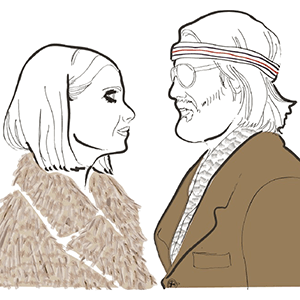
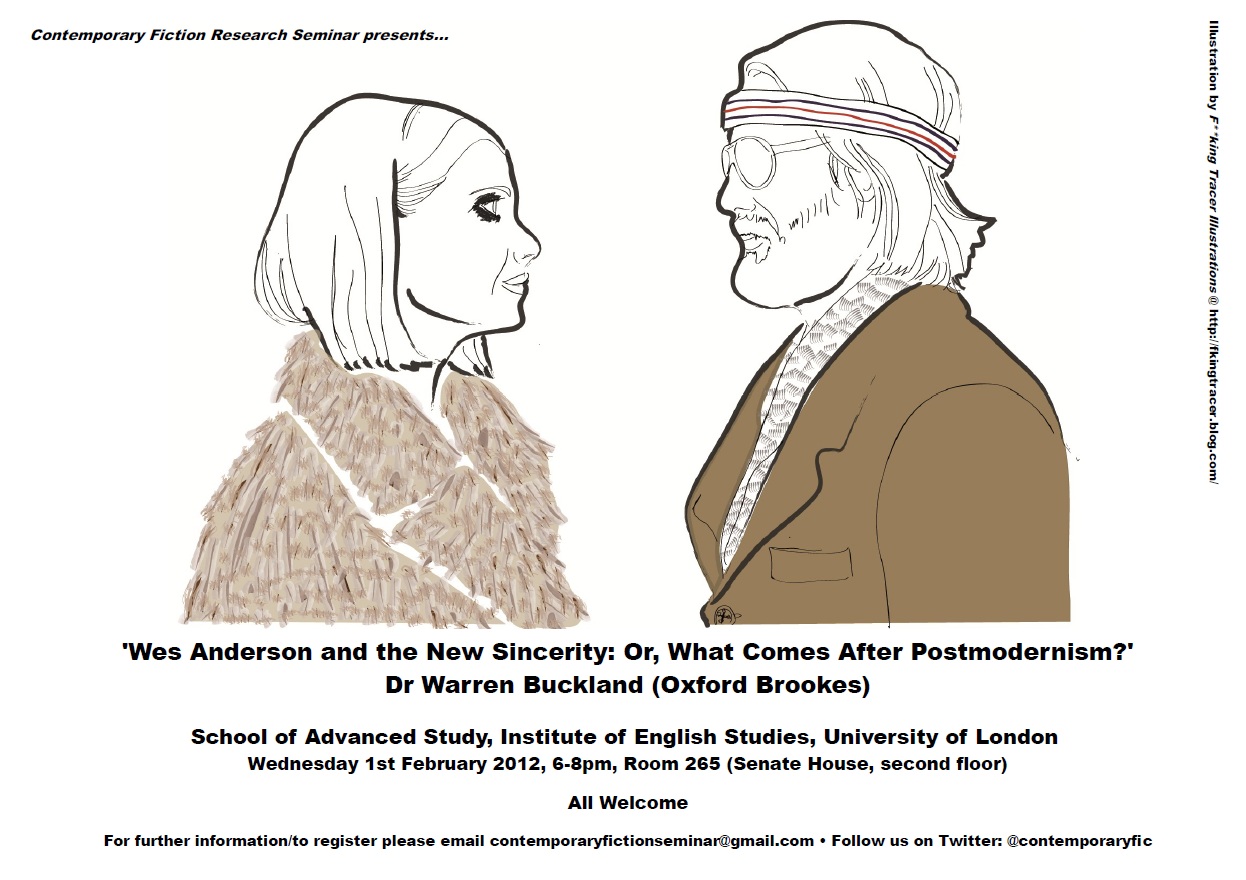
Mamihlapinatapai is a word from the Yaghan language of Tierra del Fuego, listed in The Guinness Book of World Records as the ‘most succinct word,’ and is considered one of the hardest words to translate. It describes ‘a look shared by two people with each wishing that the other will initiate something that they both desire but which neither one wants to start.’
Posted in Language, World |
Leave a Comment »
August 12, 2010

Formosa [fawr-moh-suh] is the name given to Taiwan (Ilha Formosa, ‘Beautiful Isle’) by passing Portuguese mariners in 1544. It is now also the name of a province of Argentina, a city in Brazil, a small island off the northwest coast of Africa, and the language of Taiwanese aborigines.
Posted in Language, World |
Leave a Comment »






 The Daily Omnivore