August 5, 2015
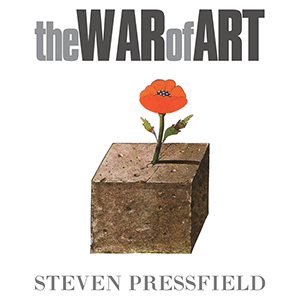
Resistance is a concept created by American novelist Steven Pressfield to describe a universal force that he claims acts against human creativity. It was first mentioned in his nonfiction book ‘The War of Art’ and elaborated in the follow-up books ‘Do The Work’ and ‘Turning Pro.’ It is also a recurring theme in some of his novels such as ‘The Legend of Bagger Vance’ and ‘The Virtues of War.’
Resistance is described in a mythical fashion as a universal force that has one sole mission: to keep things as they are. Pressfield claims that Resistance does not have a personal vendetta against anyone, rather it is simply trying to accomplish its only mission: maintenance of the status quo. It is the force that will stop an individual’s creative activity through any means necessary, such as rationalizing, inspiring fear and anxiety, emphasizing other distractions that require attention, or raising the voice of an inner critic.
read more »
Posted in Art, Language, Philosophy |
1 Comment »
August 4, 2015


A sigil [sij-il] is a symbol used in magic. The term has usually referred to a type of pictorial signature of a demon or other supernatural entity; in modern usage, especially in the context of chaos magic (a postmodern magical tradition which emphasizes the pragmatic use of belief systems), it refers to a symbolic representation of the magician’s desired outcome.
The term derives from the Latin ‘sigillum,’ meaning ‘seal,’ though it may also be related to the Hebrew word ‘segula’ meaning ‘word, action, or item of spiritual effect, talisman.’ The current use of the term is derived from Renaissance magic (a resurgence in hermeticism and Neo-Platonic varieties of ceremonial magic in the 15th and 16th centuries), which was in turn inspired by the magical traditions of antiquity.
read more »
Posted in Death, Language, Philosophy |
Leave a Comment »
August 1, 2015

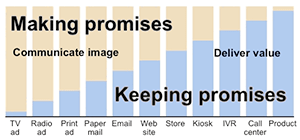
Upaya [oo-pah-yuh] (Sanskrit: ‘expedient means’) is a term used in Buddhism to refer to an aspect of guidance along the Buddhist Paths to liberation where a conscious, voluntary action is driven by an incomplete reasoning around its direction. Upaya is often combined with ‘kaushalya’ (‘cleverness’) to form ‘upaya-kaushalya’ meaning ‘skill in means,’ a concept emphasizing that practitioners may use their own specific methods or techniques that fit the situation in order to gain enlightenment. The implication is that even if a technique, view, etc., is not ultimately ‘true’ in the highest sense, it may still be an expedient practice to perform or view to hold; i.e., it may bring the practitioner closer to the true realization in a similar way.
The exercise of skill to which it refers, the ability to adapt one’s message to the audience, is of enormous importance in the ‘Pali Canon’ (some of the oldest texts in Buddhism). The most important concept in ‘skill in means’ is the use, guided by wisdom and compassion, of a specific teaching (means) geared to the particular audience taught. Edward Conze, in ‘A Short History Of Buddhism,’ says ”Skill in means’ is the ability to bring out the spiritual potentialities of different people by statements or actions which are adjusted to their needs and adapted to their capacity for comprehension.’
read more »
Posted in Language, Philosophy |
1 Comment »
July 31, 2015


A double bind is an emotionally distressing dilemma in communication in which an individual (or group) receives two or more conflicting messages, and one message negates the other. This creates a situation in which a successful response to one message results in a failed response to the other (and vice versa), so that the person will automatically be wrong regardless of response. The double bind occurs when the person cannot confront the inherent dilemma, and therefore can neither resolve it nor opt out of the situation.
The classic example given of a negative double bind is of a mother telling her child that she loves him or her, while at the same time turning away in disgust (the words are socially acceptable; the body language is in conflict with it). The child doesn’t know how to respond to the conflict between the words and the body language and, because the child is dependent on the mother for basic needs, he or she is in a quandary. Small children have difficulty articulating contradictions verbally and can neither ignore them nor leave the relationship.
read more »
Posted in Health, Language, Science |
1 Comment »
July 13, 2015

‘The Truth Machine‘ is a 1996 science fiction novel by James L. Halperin about an infallible lie detector. Soon, every citizen must pass a thorough test under a Truth Machine to get a job or receive any sort of license. Eventually, people begin wearing them all the time, thus eliminating dishonesty in all parts of human interaction, including most crime, terrorism and a great deal of general social problems.
The novel focuses on the life story of the machine’s inventor, Pete Armstrong, a child prodigy whose life has been defined by the tragic murder of his younger brother, Leonard, by an ex-convict who was believed to be capable of committing violent crimes again, but who could not be incarcerated on mere suspicions. Armstrong claimed that as long as it was employed universally (and not just by government officials), the ‘truth machine’ could revolutionize humanity and take it to that next evolutionary step. However, the protagonist places a back door in the device, allowing him to avoid detection when he repeats fragments of Walt Whitman’s poem ‘O Captain! My Captain!’ in his mind.
Posted in Language, Politics, Technology |
Leave a Comment »
July 9, 2015
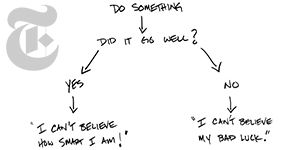

Explanatory style is a psychological attribute that indicates how people explain to themselves why they experience a particular event, either positive or negative. There are three main components: Personal (internal vs. external), Permanent (stable vs. unstable), and Pervasive (global vs. local/specific).
‘Personalization’ refers to how one explains the cause of an event. People experiencing events may see themselves as the cause; that is, they have internalized the cause for the event (e.g. ‘I always forget to make that turn,’ as opposed to, ‘That turn can sure sneak up on you’). ‘Permanenence’ describes how one explains the extent of the cause. People may see a situation as unchangeable (e.g., ‘I always lose my keys’ or ‘I never forget a face’). ‘Pervasiveness’ measures how one explains the extent of the effects. People may see a situation as affecting all aspects of life (e.g., ‘I can’t do anything right’ or ‘Everything I touch seems to turn to gold’).
read more »
Posted in Health, Language, Science |
1 Comment »
June 29, 2015

‘Character Strengths and Virtues‘ (CSV) is a 2004 book by psychologists Christopher Peterson and Martin Seligman that presents humanist ideals of virtue in an empirical, rigorously scientific manner. Seligman describes it as a ‘positive’ counterpart to the Diagnostic and Statistical Manual of Mental Disorders (DSM). While the DSM focuses on what can go wrong, CSV is designed to look at what can go right.
In their research they looked across cultures and time to distill a manageable list of virtues that have been highly valued from ancient China and India, through Greece and Rome, to contemporary Western cultures. Their list includes six character strengths: wisdom/knowledge, courage, humanity, justice, temperance, and transcendence. Each of these has three to five sub-entries; for instance, temperance includes forgiveness, humility, prudence, and self-regulation. The authors do not believe that there is a hierarchy for the six virtues; no one is more fundamental than or a precursor to the others.
read more »
Posted in Health, Language, Science |
Leave a Comment »
June 23, 2015
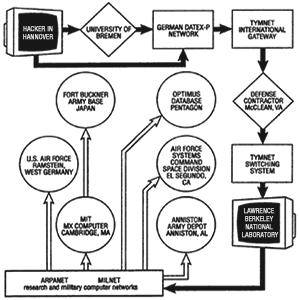
‘The Cuckoo’s Egg: Tracking a Spy Through the Maze of Computer Espionage’ is a 1989 book written by Clifford Stoll, an astronomer turned systems administrator of the computer center of the Lawrence Berkeley Laboratory (LBL) in California. It is his first-person account of the hunt for a computer hacker who broke into a computer at the lab.
In August of 1986 his supervisor asked him to resolve a US$0.75 accounting error in the computer usage accounts. He traced the error to an unauthorized user who had apparently used up nine seconds of computer time and not paid for it, and eventually realized that the unauthorized user was a hacker who had acquired root (high-level) access to the LBL system by exploiting a vulnerability in the movemail function of the original GNU Emacs (an open-source computer program that moves a user’s mail to another file).
read more »
Posted in Language, Technology, War |
Leave a Comment »
May 30, 2015
‘The Magic of Reality: How We Know What’s Really True’ is a 2011 book by British biologist Richard Dawkins, with illustrations by Dave McKean. It is a science book aimed primarily at children and young adults. He addresses topics that range from his most familiar territory, evolutionary biology and speciation (how the tree of life creates new branches), to physical phenomena such as atomic theory, optics, planetary motion, gravitation, stellar evolution (the life cycle of stars), spectroscopy (the study of the interactions of matter and electromagnetic radiation), and plate tectonics, as well as speculation on exobiology (alien life).
Most chapters begin with quick retellings of historical creation myths that emerged as attempts to explain the origin of particular observed phenomena. These myths are chosen from all across the world including Babylonian, Judeo-Christian, Aztec, Maori, Ancient Egyptian, Australian Aboriginal, Nordic, Hellenic, Chinese, Japanese, and other traditions, including contemporary alien abduction mythology.
read more »
Posted in Education, Language, Philosophy |
Leave a Comment »
May 20, 2015


‘How to Lie with Statistics‘ is a book written by Darrell Huff in 1954 presenting an introduction to statistics for the general reader. Huff was a journalist who wrote many ‘how to’ articles as a freelancer, but was not a statistician. The book is a brief, breezy, illustrated volume outlining errors when it comes to the interpretation of statistics, and how these errors lead to incorrect conclusions. In the 1960s and ’70s it became a standard textbook introduction to the subject of statistics for many college students. It has become one of the best-selling statistics books in history, with over one and a half million copies sold in the English-language edition, and has also been widely translated.
Themes of the book include ‘Correlation does not imply causation’ and ‘Using random sampling.’ It also shows how statistical graphs can be used to distort reality, for example by truncating the bottom of a line or bar chart, so that differences seem larger than they are, or by representing one-dimensional quantities on a pictogram by two- or three-dimensional objects to compare their sizes, so that the reader forgets that the images do not scale the same way the quantities do. The original edition contained humorous illustrations by artist Irving Geis. In a UK edition these were replaced with cartoons by Mel Calman.
Posted in Language, Science |
1 Comment »
May 18, 2015


Presence is the illusion that a virtual experience is real. Today, it often considers the effect that people experience when they interact with a computer-mediated or computer-generated environment. This use of the term derives from the word ‘telepresence,’ coined by MIT professor Marvin Minsky in 1980, which he described as the manipulation of objects in the real world through remote access technology. For example, a surgeon may use a computer to control robotic arms to perform minute procedures on a patient in another room. Or a NASA technician may use a computer to control a rover to collect rock samples on Mars.
As technologies progressed, the need for an expanded term arose. Thomas Sheridan (also of MIT, and a pioneer of robotics and remote control technology) extrapolated Minsky’s original definition. Using the shorter ‘presence,’ Sheridan explained that the term refers to the effect felt when controlling real world objects remotely as well as the effect people feel when they interact with and immerse themselves in virtual reality or virtual environments.
read more »
Posted in Games, Language, Technology |
Leave a Comment »
May 11, 2015

Small talk is an informal type of discourse that does not cover any functional topics of conversation or any transactions that need to be addressed. Small talk is conversation for its own sake. The phenomenon of small talk was initially studied in 1923 by Polish anthropologist Bronislaw Malinowski, who coined the term ‘phatic communication’ to describe it. For example: ‘You’re welcome’ is not intended to convey the message that the hearer is welcome; it is a phatic response to being thanked, which in turn is a phatic whose function is to acknowledge the receipt of a benefit. The ability to conduct small talk is a social skill; hence, small talk is part of social communication.
While seeming to have little useful purpose, small talk is a bonding ritual and a strategy for managing interpersonal distance. It serves many functions in helping to define the relationships between friends, work colleagues, and new acquaintances. In particular, it helps new acquaintances to explore and categorize each other’s social position. Small talk is closely related to the need for people to maintain positive face — to feel approved-of by those who are listening to them. It lubricates social interactions in a very flexible way, although the desired function is often dependent on the point in the conversation at which the small talk occurs (e.g. conversation openers are very different than closers).
read more »
Posted in Language, World |
1 Comment »


 The Daily Omnivore