April 9, 2015
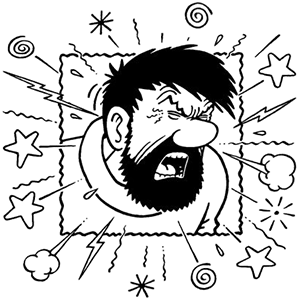
Coprolalia [kop-ruh-ley-lee-uh] is involuntary swearing or the involuntary utterance of obscene words or socially inappropriate and derogatory remarks. Coprolalia comes from the Greek ‘kopros’ meaning ‘feces’ and ‘lalia,’ ‘to talk.’ The term is often used as a clinomorphism (a simplification or amplification of the term for a medical condition), with ‘compulsive profanity’ inaccurately referred to as being Tourette syndrome (an inherited neurological disorder characterized by involuntary speech and movements). Related terms are ‘copropraxia,’ performing obscene or forbidden gestures, and ‘coprographia,’ making obscene writings or drawings.
Coprolalia encompasses words and phrases that are culturally taboo or generally unsuitable for acceptable social use, when used out of context. The term is not used to describe contextual swearing. It is usually expressed out of social or emotional context, and may be spoken in a louder tone or different cadence or pitch than normal conversation. It can be a single word, or complex phrases. A person with coprolalia may repeat the word mentally rather than saying it out loud; these subvocalizations can be very distressing.
read more »
Posted in Health, Language |
Leave a Comment »
April 6, 2015


Goose bumps (‘cutis anserina,’ also called ‘goose pimples’ or ‘goose flesh’) are bumps that develop on human skin at the base of body hairs in response to cold. They can also occur involuntarily as the result of strong emotions such as fear, nostalgia, pleasure, euphoria, awe, admiration, or sexual arousal. The same effect is manifested in the root word ‘horror’ in English, which is derived from Latin ‘horrere,’ which means ‘to bristle,’ and ‘be horrified,’ because of the accompanying hair reaction.
The reflex of producing goose bumps is known as ‘arasing,’ ‘piloerection,’ or the ‘pilomotor reflex.’ It occurs in many mammals besides humans; a prominent example is porcupines, which raise their quills when threatened, or sea otters when they encounter sharks or other predators. Small muscles at the follicles raise the body’s hair to make the animal appear larger and more imposing when facing predators. The formation of goose bumps in humans under stress is considered by some to be a vestigial reflex. In furred animals, the cold response erects hairs to trap air, creating a layer of insulation.
read more »
Posted in Health, Language, Science |
1 Comment »
March 25, 2015

Basic bitch (or simply ‘basic’) is a slang term in American popular culture used to pejoratively describe people who like popular, mainstream products or music. Interpretations of the term vary and its use has been criticized for being an overly vague and a misogynistic insult. Their male counterparts are usually termed ‘basic bros.’
The term was created by comedian Lil’ Duval in 2010. Over the next two years, it appeared in several American rap songs. In the songs ‘Hard in the Paint’ by Tyga and ‘I’m a Human Being’ by Lil Wayne, the singers insist that they are not basic bitches, while in the song ‘Basic Bitch’ by The Game, the singer warns others to avoid basic bitches because they are ‘fake.’ In 2011, rapper Kreayshawn debuted her song ‘Gucci Gucci,’ which included the chorus: ‘Gucci Gucci, Louis Louis, Fendi, Fendi Prada … basic bitches wear that shit so I don’t even bother.’
read more »
Posted in Humor, Language |
Leave a Comment »
March 13, 2015

‘Why Zebras Don’t Get Ulcers‘ is a 1994 (2nd ed. 1998, 3rd ed. 2004) book by Stanford University biologist Robert M. Sapolsky. The book proclaims itself as a ‘Guide to Stress, Stress-Related Diseases, and Coping’ on the front cover of its third and most recent edition. The title derives from Sapolsky’s idea that for animals such as zebras, stress is generally episodic (e.g., running away from a lion), while for humans, stress is often chronic (e.g., worrying about financial burdens). Therefore, many wild animals are less susceptible than humans to chronic stress-related disorders such asulcers, hypertension, decreased neurogenesis and increased hippocampal neuronal atrophy. However, chronic stress occurs in some social primates (Sapolsky studies baboons) for individuals on the lower side of the social dominance hierarchy.
Sapolsky focuses on the effects of glucocorticoids (a class of steroid hormones) on the human body, stating that they may be useful to animals in the wild escaping their predators during the fight-or-flight response, but the effects on humans, when secreted at high quantities or over long periods of time, are much less desirable. He relates the history of endocrinology, how the field reacted at times of discovery, and how it has changed through the years. While most of the book focuses on the biological machinery of the body, the last chapter of the book focuses on self-help. He also explains how social phenomena such as child abuse and the chronic stress of poverty affect biological stress, leading to increased risk of disease and disability.
Posted in Health, Language |
Leave a Comment »
March 12, 2015

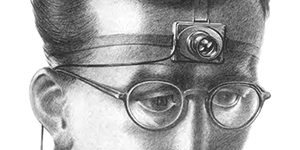
‘As We May Think‘ is an essay by engineer and Raytheon founder Vannevar Bush, first published in ‘The Atlantic’ in July 1945, and republished again as an abridged version two months later — before and after the atomic bombings of Hiroshima and Nagasaki. Bush expresses his concern for the direction of scientific efforts toward destruction, rather than understanding, and explicates a desire for a sort of collective memory machine with his concept of the memex that would make knowledge more accessible, believing that it would help fix these problems. Through this machine, Bush hoped to transform an information explosion into a knowledge explosion.
The article was a reworked and expanded version of Bush’s 1939 essay ‘Mechanization and the Record’ where he described a machine that would combine lower level technologies to achieve a higher level of organized knowledge (like human memory processes). Shortly after the publication of this essay, Bush coined the term ‘memex’ in a letter written to the editor of ‘Fortune’ magazine. That letter became the body of ‘As We May Think,’ adding only an introduction and conclusion.
read more »
Posted in Language, Technology, War |
Leave a Comment »
February 22, 2015
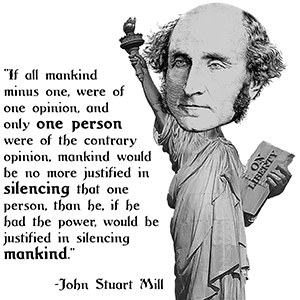
The ‘marketplace of ideas’ is a rationale for freedom of expression based on an analogy to the economic concept of a free market. The ‘marketplace of ideas’ belief holds that the truth will emerge from the competition of ideas in free, transparent public discourse. This concept is often applied to discussions of patent law as well as freedom of the press and the responsibilities of the media in a liberal democracy.
The general idea is that free speech should be tolerated because it will lead toward the truth. English poet John Milton suggested that restricting speech was not necessary because ‘in a free and open encounter,’ truth would prevail. President Thomas Jefferson argued that it is safe to tolerate ‘error of opinion … where reason is left free to combat it.’ Journalism professor Fredrick Siebert echoed the idea that free expression is self-correcting in ‘Four Theories of the Press’: ‘Let all with something to say be free to express themselves. The true and sound will survive. The false and unsound will be vanquished. Government should keep out of the battle and not weigh the odds in favor of one side or the other.’
read more »
Posted in Language, Money, Politics |
Leave a Comment »
February 17, 2015
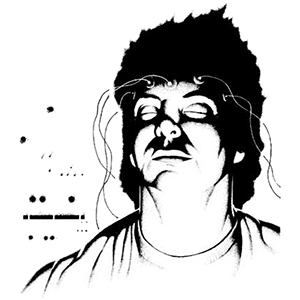
Cyberspace is ‘the notional environment in which communication over computer networks occurs.’ The word became popular in the 1990s when the uses of the internet, networking, and digital communication were all growing dramatically. The parent term is ‘cybernetics,’ derived from an Ancient Greek word meaning ‘steersman,’ ‘governor,’ ‘pilot,’ or ‘rudder’ (coined by American mathematician Norbert Wiener for his pioneering work in electronic communication and control science).
According to programmer Chip Morningstar and game developer F. Randall Farmer, cyberspace is defined more by the social interactions involved rather than its technical implementation. In their view, the computational medium in cyberspace is an augmentation of the communication channel between real people; the core characteristic of cyberspace is that it offers an environment that consists of many participants with the ability to affect and influence each other. They derive this concept from the observation that people seek richness, complexity, and depth within a virtual world.
read more »
Posted in Language, Technology |
Leave a Comment »
February 14, 2015
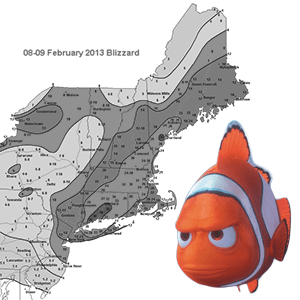
Winter storm naming in the United States has been used by The Weather Channel (TWC) since 2011, when the cable network informally used the previously-coined name ‘Snowtober’ for a 2011 Halloween nor’easter. In November 2012, TWC began systematically naming winter storms, starting with the November 2012 nor’easter it named ‘Winter Storm Athena.’ TWC compiled a list of winter storm names for the 2012–13 winter season. It would only name those storms that are ‘disruptive’ to people, said Bryan Norcross, a TWC senior director. TWC’s decision was met with criticism from other weather forecasters, who called the practice self-serving and potentially confusing to the public.
The U.S. government-operated National Oceanic and Atmospheric Administration (NOAA) (a division of which–the National Hurricane Center–has named hurricanes for many years) and its main division–the National Weather Service (NWS)–did not acknowledge TWC’s winter storm names and asked its forecast offices to refrain from using them. The NWS spokesperson Susan Buchanan stated, ‘The National Weather Service does not name winter storms because a winter storm’s impact can vary from one location to another, and storms can weaken and redevelop, making it difficult to define where one ends and another begins.’
Posted in Language, Money, Science |
Leave a Comment »
February 2, 2015
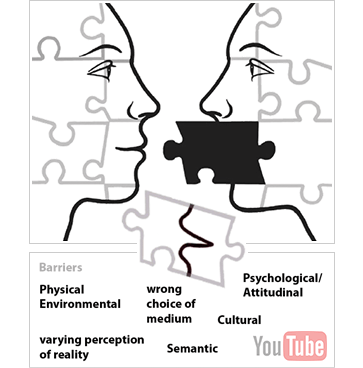
Effective communication occurs when information sharing results in a desired effect, such as eliciting change, generating action, creating understanding, or communicating a certain idea or point of view. This effect also ensures that messages are not distorted during the communication process. When the desired effect is not achieved, factors such as barriers to communication are explored, with the intention being to discover how the communication has been ineffective.
Barriers to effective communication can retard or distort the message and intention of the message being conveyed which may result in failure of the communication process or an effect that is undesirable. They include filtering, selective perception, information overload, emotions, language, silence, communication apprehension, gender differences and political correctness. Another common barrier is a lack of ‘knowledge-appropriate’ communication, which occurs when a person uses ambiguous or complex legal words, medical jargon, or descriptions of a situation or environment that is not understood by the recipient.
read more »
Posted in Language |
Leave a Comment »
January 31, 2015

To see a man about a dog (or see a man about a horse) is an English language colloquialism, usually used as a way to say one needs to apologize for one’s imminent departure or absence – generally euphemistically to conceal one’s true purpose, such as going to use the toilet or going to buy a drink (particularly during Prohibition). The original, non-facetious meaning was probably to place or settle a bet on a racing dog.
The earliest confirmed publication is the 1866 Dion Boucicault play ‘Flying Scud’ in which a character knowingly breezes past a difficult situation saying, ‘Excuse me Mr. Quail, I can’t stop; I’ve got to see a man about a dog.’ In a listing for a 1939 revival on the NBC Radio program ‘America’s Lost Plays,’ ‘Time’ magazine observed that the phrase was the play’s ‘claim to fame.’
Posted in Humor, Language |
Leave a Comment »
January 30, 2015
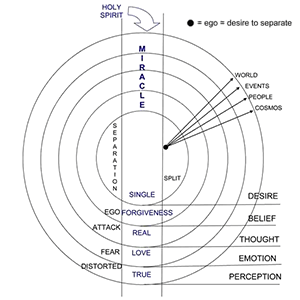
‘A Course in Miracles‘ (ACIM or simply the ‘Course’) is a book written and edited by psychologist Helen Schucman, with portions transcribed and edited by psychologist William Thetford, containing a self-study curriculum of spiritual transformation. It consists of three sections entitled ‘Text,’ ‘Workbook,’ and ‘Manual for Teachers.’ Written from 1965 to 1972, some distribution occurred via photocopies before a hardcover edition was published in 1976. The copyright and trademarks, which had been held by two foundations, were revoked in 2004 after a lengthy litigation because the earliest versions had been circulated without a copyright notice.
Schucman believed that an ‘inner voice,’ which she identified as Jesus, guided her writing. Throughout the 1980s annual sales of the book steadily increased each year, however the largest growth in sales occurred in 1992 after spiritual teacher Marianne Williamson discussed the book on ‘The Oprah Winfrey Show,’ with more than two million volumes sold. The book has been called everything from ‘a Satanic seduction’ to ‘The New Age Bible.’
read more »
Posted in Language, Philosophy |
1 Comment »
December 17, 2014

An argot [ahr-goh] is a secret language used by various groups — e.g. schoolmates, outlaws, colleagues, among many others — to prevent outsiders from understanding their conversations. The term is also used to refer to the informal specialized vocabulary from a particular field of study, occupation, or hobby, in which sense it overlaps with jargon (non-standard definitions). French author Victor Hugo was one of the first to research argot extensively. He describes it in his 1862 novel ‘Les Misérables’ as the language of the dark; at one point, he says, ‘What is argot; properly speaking? Argot is the language of misery.’ The earliest known record of the term in this context was in a 1628 document. The word was probably derived from the contemporary name, ‘les argotiers,’ given to a group of thieves at that time.
Under the strictest definition, an argot is a proper language, with its own grammar and style. But such complete secret languages are rare, because the speakers usually have some public language in common, on which the argot is largely based. Such argots are mainly versions of another language, with a part of its vocabulary replaced by words unknown to the larger public; argot used in this sense is synonymous with cant language, such as verlan and louchébem (similar to Pig Latin), which retain French syntax and apply transformations only to individual words (and often only to a certain subset of words, such as nouns, or semantic content words). Such systems are examples of ‘argots à clef,’ or ‘coded argots.’ Specific words can go from argot into common speech or the other way. For example, modern French ‘loufoque’ (‘crazy, goofy’), now common usage, originates in the louchébem transformation of ‘fou'(‘crazy’). ‘Piaf’ is a Parisian argot word for ‘bird, sparrow’ taken up by the singer Edith Piaf as her stage name.
Posted in Games, Language, World |
Leave a Comment »



