March 1, 2014

Comics studies is an academic field that focuses on comics and graphic novels. Formerly dismissed as less relevant pop culture texts, scholars in fields such as Semiotics and Composition Studies are now re-considering comics and graphic novels as complex texts deserving of serious scholarly study.
‘How to Read Nancy’ is a 1988 essay by underground cartoonists Mark Newgarden and Paul Karasik. The piece examines the comic strip ‘Nancy,’ focusing on creator Ernie Bushmiller’s use of the comics language in to deliver a gag. Finding correspondences to the minimalist architecture of Mies Van Der Rohe, the essay calls ‘Nancy’ ‘a complex amalgam of formal rules laid out by [its] designer.’
read more »
Posted in Art, Education, Language |
Leave a Comment »
February 27, 2014

Bill Watterson (b. 1958) is an American artist and the author of the comic strip ‘Calvin and Hobbes,’ which was syndicated from 1985 to 1995. Watterson stopped drawing the strip at the end of 1995 with a short statement to newspaper editors and his readers that he felt he had achieved all he could in the medium.
Watterson is known for his views on licensing (he refused to merchandise his creations on the grounds that displaying their images on commercially sold mugs, stickers and T-shirts would devalue the characters and their personalities) and his move back into private life after ‘Calvin and Hobbes.’
read more »
Posted in Art, Humor, Language |
1 Comment »
February 26, 2014

The Tube Bar prank calls are a series of prank calls made in the mid-1970s to the Tube Bar in Jersey City, in which pranksters would ask the proprietor of the bar if they could speak to a fictitiously named customer. The fictitious names given by the pranksters were pun-like/homophones for other—oftentimes more offensive—phrases. Recordings of the calls were circulated widely on duped cassette tapes and may have been the inspiration for a running gag in ‘The Simpsons.’
John Elmo and Jim Davidson, later known collectively as ‘Bum Bar Bastards,’ would call the Tube Bar, operated by heavyweight boxer Louis ‘Red’ Deutsch, asking for customers such as ‘Pepe Roni’ (pepperoni), ‘Hal Ja-Like-a-Kick’ (how’d you like a kick), ‘Phil My-Pockets’ (fill my pockets), ‘Al Coholic’ (alcoholic), and ‘Mike Hunt’ (my cunt). Most of the time, Deutsch would call out the names.
read more »
Posted in Humor, Language |
Leave a Comment »
February 20, 2014


‘Army Man‘ (tagline: ‘America’s Only Magazine’) was a short-lived comedy magazine published in the late 1980s by George Meyer, the acclaimed writer for ‘The Simpsons.’ The magazine consisted mostly of very short and very surreal jokes, along with some cartoons. Each issue also featured Jack Handey’s ‘Deep Thoughts,’ as well as other pieces written by him. Only three issues were ever published. Although Army Man was never widely distributed, it gathered a lot of attention in the comedy world.
Two of its writers (John Swartzwelder and Jon Vitti) were picked up alongside Meyer to be part of the original writing staff of ‘The Simpsons’ by the show’s developer and show-runner Sam Simon, an enormous fan of the magazine. Eventually other ‘Army Man’ writers would go on to write for ‘The Simpsons’ in later seasons. The writers were usually people Meyer knew from his years at the ‘Harvard Lampoon’ or who worked with him in TV shows like ‘Late Night with David Letterman,’ ‘The New Show,’ ‘Not Necessarily The News,’ and ‘Saturday Night Live.’
Posted in Art, Humor, Language |
Leave a Comment »
February 19, 2014

John Swartzwelder (b. 1950) is an American comedy writer and novelist, best known for his work on the animated television series ‘The Simpsons,’ as well as a number of novels. He is credited with writing the largest number of ‘Simpsons’ episodes by a large margin (59 full episodes, with contributions to several others). Swartzwelder was one of several writers recruited to show from the pages of George Meyer’s ‘Army Man’ magazine (a short-lived comedy periodical published in the late 1980s; Meyer would also go on to become an acclaimed ‘Simpsons’ writer).
Swartzwelder has been animated in the background of several episodes of ‘The Simpsons.’ His animated likeness closely resembles musician David Crosby, which prompted Matt Groening to state that anytime that David Crosby appears in a scene for no apparent reason, it is really John Swartzwelder. Additionally, Matt Groening has stated that the recurring character ‘Herman Hermann’ (the owner of Herman’s Military Antiques) was originally physically based on Swartzwelder–with the exception of his one arm.
read more »
Posted in Art, Humor, Language |
Leave a Comment »
February 18, 2014

‘Battle Hymn of the Tiger Mother‘ is a 2011 book by Yale law professor Amy Chua. The complete subtitle of the book is: ‘This is a story about a mother, two daughters, and two dogs. This was supposed to be a story of how Chinese parents are better at raising kids than Western ones. But instead, it’s about a bitter clash of cultures, a fleeting taste of glory, and how I was humbled by a thirteen-year-old.’
Chua reported that in one study of 48 Chinese immigrant mothers, the vast majority ‘said that they believe their children can be ‘the best’ students, that ‘academic achievement reflects successful parenting,’ and that if children did not excel at school then there was ‘a problem’ and parents ‘were not doing their job.” Chua contrasts them with the view she labels ‘Western’ – that a child’s self-esteem is paramount.
read more »
Posted in Education, Language, World |
Leave a Comment »
January 30, 2014

The spread of metrication [me-tri-key-shuhn] around the world in the last two centuries has been met with both support and opposition. All countries except Myanmar, Liberia, and the US have officially adopted the metric system. It has been partially adopted in the UK and Canada.
One argument used by opponents of the metric system is that traditional systems of measurement were developed organically from actual use. Early measures were human in scale. The prevalence in English of expressions such as a stone’s throw, within earshot, a cartload, or a handful illustrates both the intuitive accessibility and the inherently imprecise nature of analogous measurements and their units.
read more »
Posted in Language, Politics, World |
1 Comment »
January 24, 2014

Cryptonomicon is a 1999 novel by American author Neal Stephenson depicting the exploits of two groups of people in two different time periods, presented in alternating chapters. The first group is World War II-era Allied codebreakers and tactical-deception operatives affiliated with the Government Code and Cypher School at Bletchley Park in the UK and disillusioned Axis military and intelligence figures whom they encounter.
The second narrative is set in the late 1990s with descendants of the first narrative’s characters employing cryptologic, telecom, and computer technology to build an underground data haven in the fictional Sultanate of Kinakuta. Their goal is to facilitate anonymous Internet banking using electronic money and (later) digital gold currency, with a longer range objective to distribute Holocaust Education and Avoidance Pod (HEAP) media for instructing genocide-target populations on defensive warfare.
read more »
Posted in Language, Technology, War |
1 Comment »
January 17, 2014

‘The Republican Brain: The Science of Why They Deny Science’ by journalist Chris Mooney is about the psychological basis for many Republicans’ rejection of mainstream scientific theories, as well as theories of economics and history.
The book was criticized by American conservative Jonah Goldberg, who called it ‘conservative phrenology.’ Mooney responded that Goldberg had misrepresented his book in several respects. He also stated that Goldberg exhibited ‘precisely the traits he seeks to deny: ideological defensiveness, a lack of nuance, and a deeply unwarranted and overconfident sense of certainty.’ Mooney later rebutted a similar criticism by Andrew Ferguson of ‘The Weekly Standard’ and stated that Ferguson dismissed science himself while attacking the book.
Posted in Language, Politics, Science |
Leave a Comment »
January 14, 2014
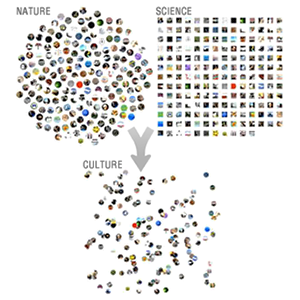
The Edge Foundation, Inc. is an association of science and technology intellectuals created in 1988 as an outgrowth of The Reality Club (as a group of mostly New York City-based intellectuals that met regularly from 1981 through 1996 for seminars on a variety of topics). Currently, its main activity is contributing to the edge.org website, edited by publisher and businessman John Brockman. The site is an online magazine exploring scientific and intellectual ideas. Many areas of academic work are incorporated, including genetics, physics, mathematics, psychology, evolutionary biology, philosophy and computing technology.
Brockman’s 1995 book ‘The Third Culture,’ which has been influential to the foundation, describes the growing movement towards (re)integration of literary and scientific thinking and is a nod toward British scientist C. P. Snow’s concept of ‘The Two Cultures’ of science and the humanities. At the Edge website scientists and others are invited to contribute their thoughts in a manner readily accessible to non-specialist readers. In doing so, leading thinkers are able to communicate directly with each other and the public without the intervention of middlemen such as journalists and journal editors.
Posted in Language, Science, Technology |
Leave a Comment »
January 4, 2014

A perp walk, or walking the perp, is a common custom of American law enforcement (particularly NYC) where an arrested suspect is escorted through a public place, creating an opportunity for the media to take photographs and video of the event. The defendant is typically handcuffed or otherwise restrained, and is sometimes dressed in prison garb. Originally only those accused of violent street crimes were subjected to it, but since Rudolph Giuliani had accused white-collar criminals perp-walked in the 1980s, it has been extended to almost every defendant.
The perp walk arose incidentally from the need to transport a defendant from a police station to court after arrest, and the general prohibition of prior restraint (censorship) under the First Amendment. Law enforcement agencies often coordinate with the media in scheduling and arranging them. It has been criticized as a form of public humiliation that violates a defendant’s right to privacy and is prejudicial to the presumption of innocence. Courts have permitted it on the grounds that it arises from the limitations and necessity of police procedure, but have also limited it only to those times when it is actually necessary.
Posted in Language, Politics |
1 Comment »
December 9, 2013

A heckler is a person who harasses and tries to disconcert others with questions, challenges, or gibes. They are often known to shout disparaging comments at a performance or event, or to interrupt set-piece speeches, with the intent of disturbing performers and/or participants.The term originates from the textile trade, where to heckle was to tease or comb out flax or hemp fibers.
The additional meaning, to interrupt speakers with awkward or embarrassing questions, was added in Scotland, and specifically perhaps in early nineteenth century Dundee, a famously radical town where the hecklers who combed the flax had established a reputation as the most radical and belligerent element in the workforce. In the heckling factory, one heckler would read out the day’s news while the others worked, to the accompaniment of interruptions and furious debate.
read more »
Posted in Art, Humor, Language |
2 Comments »



 The Daily Omnivore