January 30, 2014
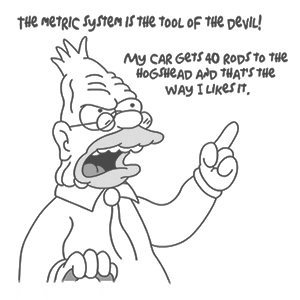
The spread of metrication [me-tri-key-shuhn] around the world in the last two centuries has been met with both support and opposition. All countries except Myanmar, Liberia, and the US have officially adopted the metric system. It has been partially adopted in the UK and Canada.
One argument used by opponents of the metric system is that traditional systems of measurement were developed organically from actual use. Early measures were human in scale. The prevalence in English of expressions such as a stone’s throw, within earshot, a cartload, or a handful illustrates both the intuitive accessibility and the inherently imprecise nature of analogous measurements and their units.
read more »
Posted in Language, Politics, World |
1 Comment »
January 24, 2014

Cryptonomicon is a 1999 novel by American author Neal Stephenson depicting the exploits of two groups of people in two different time periods, presented in alternating chapters. The first group is World War II-era Allied codebreakers and tactical-deception operatives affiliated with the Government Code and Cypher School at Bletchley Park in the UK and disillusioned Axis military and intelligence figures whom they encounter.
The second narrative is set in the late 1990s with descendants of the first narrative’s characters employing cryptologic, telecom, and computer technology to build an underground data haven in the fictional Sultanate of Kinakuta. Their goal is to facilitate anonymous Internet banking using electronic money and (later) digital gold currency, with a longer range objective to distribute Holocaust Education and Avoidance Pod (HEAP) media for instructing genocide-target populations on defensive warfare.
read more »
Posted in Language, Technology, War |
1 Comment »
January 17, 2014

‘The Republican Brain: The Science of Why They Deny Science’ by journalist Chris Mooney is about the psychological basis for many Republicans’ rejection of mainstream scientific theories, as well as theories of economics and history.
The book was criticized by American conservative Jonah Goldberg, who called it ‘conservative phrenology.’ Mooney responded that Goldberg had misrepresented his book in several respects. He also stated that Goldberg exhibited ‘precisely the traits he seeks to deny: ideological defensiveness, a lack of nuance, and a deeply unwarranted and overconfident sense of certainty.’ Mooney later rebutted a similar criticism by Andrew Ferguson of ‘The Weekly Standard’ and stated that Ferguson dismissed science himself while attacking the book.
Posted in Language, Politics, Science |
Leave a Comment »
January 14, 2014
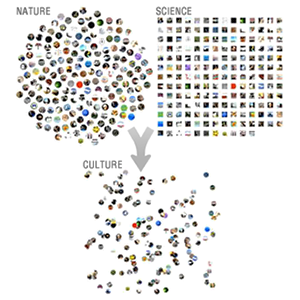
The Edge Foundation, Inc. is an association of science and technology intellectuals created in 1988 as an outgrowth of The Reality Club (as a group of mostly New York City-based intellectuals that met regularly from 1981 through 1996 for seminars on a variety of topics). Currently, its main activity is contributing to the edge.org website, edited by publisher and businessman John Brockman. The site is an online magazine exploring scientific and intellectual ideas. Many areas of academic work are incorporated, including genetics, physics, mathematics, psychology, evolutionary biology, philosophy and computing technology.
Brockman’s 1995 book ‘The Third Culture,’ which has been influential to the foundation, describes the growing movement towards (re)integration of literary and scientific thinking and is a nod toward British scientist C. P. Snow’s concept of ‘The Two Cultures’ of science and the humanities. At the Edge website scientists and others are invited to contribute their thoughts in a manner readily accessible to non-specialist readers. In doing so, leading thinkers are able to communicate directly with each other and the public without the intervention of middlemen such as journalists and journal editors.
Posted in Language, Science, Technology |
Leave a Comment »
January 4, 2014

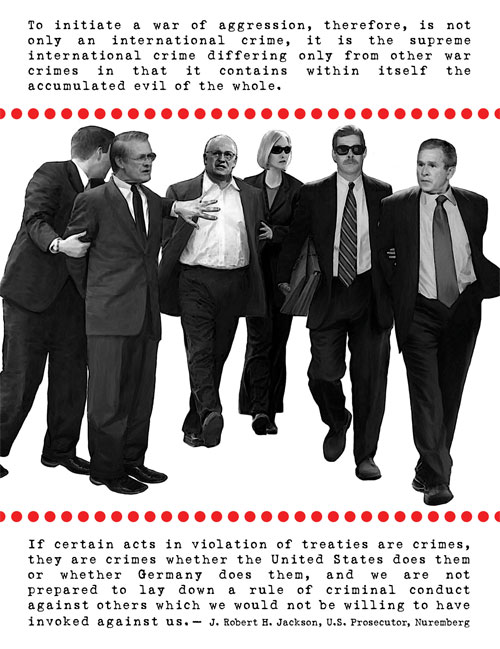
A perp walk, or walking the perp, is a common custom of American law enforcement (particularly NYC) where an arrested suspect is escorted through a public place, creating an opportunity for the media to take photographs and video of the event. The defendant is typically handcuffed or otherwise restrained, and is sometimes dressed in prison garb. Originally only those accused of violent street crimes were subjected to it, but since Rudolph Giuliani had accused white-collar criminals perp-walked in the 1980s, it has been extended to almost every defendant.
The perp walk arose incidentally from the need to transport a defendant from a police station to court after arrest, and the general prohibition of prior restraint (censorship) under the First Amendment. Law enforcement agencies often coordinate with the media in scheduling and arranging them. It has been criticized as a form of public humiliation that violates a defendant’s right to privacy and is prejudicial to the presumption of innocence. Courts have permitted it on the grounds that it arises from the limitations and necessity of police procedure, but have also limited it only to those times when it is actually necessary.
Posted in Language, Politics |
1 Comment »
December 9, 2013

A heckler is a person who harasses and tries to disconcert others with questions, challenges, or gibes. They are often known to shout disparaging comments at a performance or event, or to interrupt set-piece speeches, with the intent of disturbing performers and/or participants.The term originates from the textile trade, where to heckle was to tease or comb out flax or hemp fibers.
The additional meaning, to interrupt speakers with awkward or embarrassing questions, was added in Scotland, and specifically perhaps in early nineteenth century Dundee, a famously radical town where the hecklers who combed the flax had established a reputation as the most radical and belligerent element in the workforce. In the heckling factory, one heckler would read out the day’s news while the others worked, to the accompaniment of interruptions and furious debate.
read more »
Posted in Art, Humor, Language |
2 Comments »
November 28, 2013
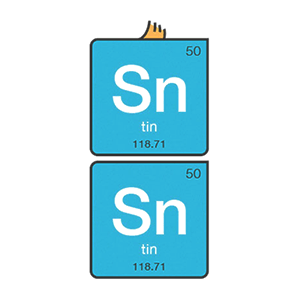
A visual pun is a pun involving an image or images (in addition to or instead of language). Visual puns in which the image is at odds with the inscription are common in cartoons such as ‘Lost Consonants’ or ‘The Far Side’ as well as in Dutch gable stones (decorative building markings).
For instance the ‘Batenburg’ stone from Amsterdam depicts silver coins entering a castle and gold golds exiting, which puns on the words ‘baten’ (‘to profit’) and ‘burg’ (‘castle’), the name of a village near Nijmegen. European heraldry contains the technique of canting arms, which can be considered punning.
Posted in Humor, Language |
Leave a Comment »
November 26, 2013

‘The Sirens of Titan‘ is a 1959 book by Kurt Vonnegut, Jr. His second novel, it involves issues of free will, omniscience, and the overall purpose of human history. Much of the story revolves around a Martian invasion of Earth. The protagonist is Malachi Constant, the richest man in 22nd-century America. He possesses extraordinary luck that he attributes to divine favor which he has used to build upon his father’s fortune.
He becomes the centerpoint of a journey that takes him from Earth to Mars in preparation for an interplanetary war, to Mercury with another Martian survivor of that war, back to Earth to be pilloried as a sign of Man’s displeasure with his arrogance, and finally to Titan where he again meets the man ostensibly responsible for the turn of events that have befallen him, Winston Niles Rumfoord.
read more »
Posted in Humor, Language |
Leave a Comment »
November 12, 2013

‘Horrible Histories‘ is a series of UK educational books first released in in 1993 with ‘The Terrible Tudors’ and ‘The Awful Egyptians.’ They are designed to engage children in history by presenting the unusual, gory, or unpleasant aspects in a tongue-in-cheek manner in contrast to the formality of lessons taught in school. The books are published by Scholastic and written primarily by Terry Deary (with illustrations by Martin Brown and others).
After a run of 60 books, Deary announced that the series would officially come to an end in 2013 for lack of stories, and said they would focus on the larger media franchise such as magazines, TV, and stage shows. Terry Deary studied at drama college and worked as an actor-teacher at the TIE company in Wales. He then became a theatre director and began to write plays for children. Many of his TIE plays were eventually rewritten and adapted for the ‘Horrible Histories’ books.
read more »
Posted in Death, Education, Language |
Leave a Comment »
November 9, 2013

‘Surely You’re Joking, Mr. Feynman!: Adventures of a Curious Character’ is an edited collection of reminiscences by the Nobel Prize-winning physicist, Richard Feynman. The anecdotes were edited from taped conversations that Feynman had with his close friend and drumming partner Ralph Leighton. The title derives from a woman’s response at Princeton University when, after she asked the newly arrived Feynman if he wanted cream or lemon in his tea, he naively requested both. The book, released in 1985, covers a variety of instances in Feynman’s life.
Some are lighthearted in tone, such as his fascination with safe-cracking, studying various languages, participating with groups of people who share different interests (such as biology or philosophy), and ventures into art and samba music. Others cover more serious material, including his work on the Manhattan Project (during which his first wife Arline Greenbaum died of tuberculosis) and his critique of the science education system in Brazil. The section ‘Monster Minds’ describes his slightly nervous presentation of his graduate work on the Wheeler-Feynman absorber theory in front of Albert Einstein, Wolfgang Pauli, and other major figures of the time.
Posted in Language, Science |
Leave a Comment »
November 4, 2013

A hashtag is a word or a phrase prefixed with the hash symbol: #. It is a form of metadata tag, for example, short messages on microblogging and social networking services such as Twitter or Instagram may be tagged by putting ‘#’ before important words, either as they appear in a sentence, or appended to it.
Hashtags provide a means of grouping such messages, since one can search for the hashtag and get the set of messages that contain it.
read more »
Posted in Language, Money, Technology |
1 Comment »
October 20, 2013

‘Nightfall‘ is a 1941 science fiction short story by Isaac Asimov about the coming of darkness to the people of a planet ordinarily illuminated at all times on all sides. It was adapted into a novel with Robert Silverberg in 1990. It was first published in an issue of ‘Astounding Science Fiction’ magazine under editor John W. Campbell. It was the 32nd story by Asimov, written while he was working in his father’s candy store and studying at Columbia University.
According to Asimov’s autobiography, Campbell asked Asimov to write the story after discussing with him a quotation from Ralph Waldo Emerson: ‘If the stars should appear one night in a thousand years, how would men believe and adore, and preserve for many generations the remembrance of the city of God!’ Campbell’s opinion to the contrary was: ‘I think men would go mad.’
read more »
Posted in Language, Science |
Leave a Comment »