November 28, 2013
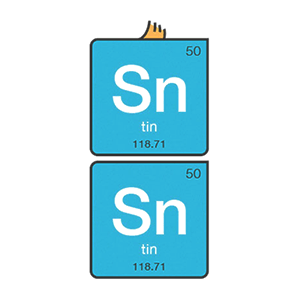
A visual pun is a pun involving an image or images (in addition to or instead of language). Visual puns in which the image is at odds with the inscription are common in cartoons such as ‘Lost Consonants’ or ‘The Far Side’ as well as in Dutch gable stones (decorative building markings).
For instance the ‘Batenburg’ stone from Amsterdam depicts silver coins entering a castle and gold golds exiting, which puns on the words ‘baten’ (‘to profit’) and ‘burg’ (‘castle’), the name of a village near Nijmegen. European heraldry contains the technique of canting arms, which can be considered punning.
Posted in Humor, Language |
Leave a Comment »
November 26, 2013

‘The Sirens of Titan‘ is a 1959 book by Kurt Vonnegut, Jr. His second novel, it involves issues of free will, omniscience, and the overall purpose of human history. Much of the story revolves around a Martian invasion of Earth. The protagonist is Malachi Constant, the richest man in 22nd-century America. He possesses extraordinary luck that he attributes to divine favor which he has used to build upon his father’s fortune.
He becomes the centerpoint of a journey that takes him from Earth to Mars in preparation for an interplanetary war, to Mercury with another Martian survivor of that war, back to Earth to be pilloried as a sign of Man’s displeasure with his arrogance, and finally to Titan where he again meets the man ostensibly responsible for the turn of events that have befallen him, Winston Niles Rumfoord.
read more »
Posted in Humor, Language |
Leave a Comment »
November 12, 2013
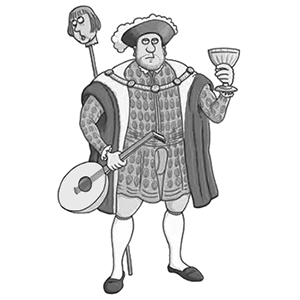
‘Horrible Histories‘ is a series of UK educational books first released in in 1993 with ‘The Terrible Tudors’ and ‘The Awful Egyptians.’ They are designed to engage children in history by presenting the unusual, gory, or unpleasant aspects in a tongue-in-cheek manner in contrast to the formality of lessons taught in school. The books are published by Scholastic and written primarily by Terry Deary (with illustrations by Martin Brown and others).
After a run of 60 books, Deary announced that the series would officially come to an end in 2013 for lack of stories, and said they would focus on the larger media franchise such as magazines, TV, and stage shows. Terry Deary studied at drama college and worked as an actor-teacher at the TIE company in Wales. He then became a theatre director and began to write plays for children. Many of his TIE plays were eventually rewritten and adapted for the ‘Horrible Histories’ books.
read more »
Posted in Death, Education, Language |
Leave a Comment »
November 9, 2013

‘Surely You’re Joking, Mr. Feynman!: Adventures of a Curious Character’ is an edited collection of reminiscences by the Nobel Prize-winning physicist, Richard Feynman. The anecdotes were edited from taped conversations that Feynman had with his close friend and drumming partner Ralph Leighton. The title derives from a woman’s response at Princeton University when, after she asked the newly arrived Feynman if he wanted cream or lemon in his tea, he naively requested both. The book, released in 1985, covers a variety of instances in Feynman’s life.
Some are lighthearted in tone, such as his fascination with safe-cracking, studying various languages, participating with groups of people who share different interests (such as biology or philosophy), and ventures into art and samba music. Others cover more serious material, including his work on the Manhattan Project (during which his first wife Arline Greenbaum died of tuberculosis) and his critique of the science education system in Brazil. The section ‘Monster Minds’ describes his slightly nervous presentation of his graduate work on the Wheeler-Feynman absorber theory in front of Albert Einstein, Wolfgang Pauli, and other major figures of the time.
Posted in Language, Science |
Leave a Comment »
November 4, 2013
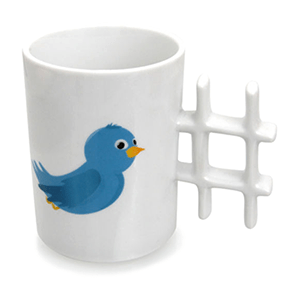
A hashtag is a word or a phrase prefixed with the hash symbol: #. It is a form of metadata tag, for example, short messages on microblogging and social networking services such as Twitter or Instagram may be tagged by putting ‘#’ before important words, either as they appear in a sentence, or appended to it.
Hashtags provide a means of grouping such messages, since one can search for the hashtag and get the set of messages that contain it.
read more »
Posted in Language, Money, Technology |
1 Comment »
October 20, 2013
‘Nightfall‘ is a 1941 science fiction short story by Isaac Asimov about the coming of darkness to the people of a planet ordinarily illuminated at all times on all sides. It was adapted into a novel with Robert Silverberg in 1990. It was first published in an issue of ‘Astounding Science Fiction’ magazine under editor John W. Campbell. It was the 32nd story by Asimov, written while he was working in his father’s candy store and studying at Columbia University.
According to Asimov’s autobiography, Campbell asked Asimov to write the story after discussing with him a quotation from Ralph Waldo Emerson: ‘If the stars should appear one night in a thousand years, how would men believe and adore, and preserve for many generations the remembrance of the city of God!’ Campbell’s opinion to the contrary was: ‘I think men would go mad.’
read more »
Posted in Language, Science |
Leave a Comment »
October 16, 2013
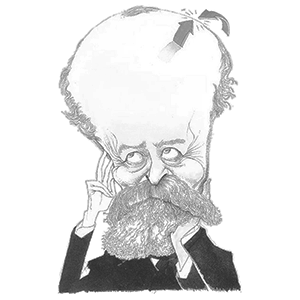
‘The Will to Believe‘ is a lecture by American philosopher and psychologist William James, first published in 1896, which defends, in certain cases, the adoption of a belief without prior evidence of its truth. In particular, James is concerned in this lecture about defending the rationality of religious faith even lacking sufficient evidence of religious truth.
James’ argument hinges on the idea that access to the evidence for whether or not certain beliefs are true depends crucially upon first adopting those beliefs without evidence. For example, it can be rational to have unsupported faith in one’s own ability to accomplish tasks that require confidence. Importantly, James points out that this is the case even for pursuing scientific inquiry. James then argues that like belief in one’s own ability to accomplish a difficult task, religious faith can also be rational even if one at the time lacks evidence for the truth of one’s religious belief.
read more »
Posted in Language, Philosophy |
Leave a Comment »
October 7, 2013

Counterintuitive means contrary to what seems intuitively right or correct. A counterintuitive proposition is one that does not seem likely to be true when assessed using intuition or gut feelings. Scientifically discovered, objective truths are often called counterintuitive when intuition, emotions, and other cognitive processes outside of deductive rationality interpret them to be wrong.
However, the subjective nature of intuition limits the objectivity of what to call counterintuitive because what is counter-intuitive for one may be intuitive for another. This might occur in instances where intuition changes with knowledge. For instance, many aspects of quantum mechanics or general relativity may sound counterintuitive to a layman, while they may be intuitive to a particle physicist.
read more »
Posted in Language, Science |
Leave a Comment »
September 30, 2013

Logical reasoning is the process of using evidence and reason to arrive at a conclusion. Broadly there are two main types of logical reasoning, deductive (general to specific) and inductive (specific to general).
In deduction, a general rule is applied to a particular case: ‘When it rains, things outside get wet. The grass is outside, therefore: when it rains, the grass gets wet.’ Mathematical logic and philosophical logic are commonly associated with this style of reasoning.
read more »
Posted in Language, Philosophy |
Leave a Comment »
September 29, 2013
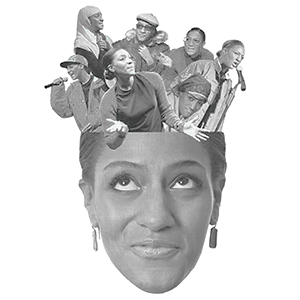
Bridge and tunnel (B&T) is a pejorative term for people who travel to Manhattan Island from surrounding communities, a commute that requires passing over a bridge and/or through a tunnel. Though the term originates from the Triborough Bridge and Tunnel Authority, which services the five boroughs that comprise New York City, it has come to encompass all people who originate commute from outside of Manhattan, including the four other boroughs, Connecticut, Long Island, New Jersey, and northern counties, such as Orange, Rockland, and Westchester.
As the Oxford Dictionaries explains: a bridge-and-tunnel person is one who lives in the suburbs and is perceived as unsophisticated.
read more »
Posted in Language, Money, World |
Leave a Comment »
September 22, 2013
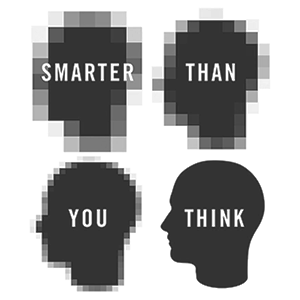
Clive Thompson (b. 1968) is a Canadian freelance journalist, blogger and science and technology writer. Thompson graduated from the University of Toronto with majors in political science and English. He previously worked for ‘Canada’s Report on Business’ magazine and ‘Shift’ magazine, then became a freelance contributor for ‘The New York Times Magazine,’ ‘The Washington Post, and several other publications. He writes about digital technologies and their social and cultural impact
He started his science and technology blog, ‘Collision Detection,’ in 2002. Thompson lives in Brooklyn with his wife Emily Nussbaum who is the TV critic for ‘The New Yorker.’
Posted in Language, Technology |
Leave a Comment »
September 19, 2013

Spooning is a sexual position and a cuddling technique. The name derives from the way that two spoons may be positioned side by side, with bowls aligned. In the sexual spoons position, the penetrative partner lies on one side, with knees bent. The receptive partner also lies on the same side, with back pressed against the penetrative partner’s front. Both partners’ upper bodies may be pressed together or separated with just the pelvises connecting, and their legs can also rest on top of each other. The receptive partner may have to lift the upper knee to allow for easier penetration.
This rear-entry position allows for a great deal of physical intimacy, as there is full-body contact which allows for cuddling. However, there is little visual stimulation for either partner, as they are not facing one another and cannot see each other’s bodies fully. Variations on this position include the partners lying on their sides face-to-face or in the ‘scissors’ position. The spoons position may be preferable for couples who have just woken up or are very tired. It may be used if the woman is pregnant, even during the last trimester, because it does not put any pressure on the abdomen.
Posted in Language, Sex |
Leave a Comment »


 The Daily Omnivore