October 16, 2013
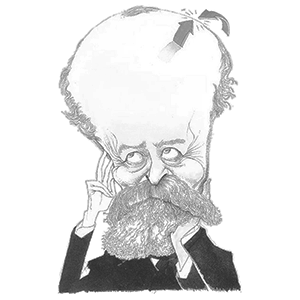
‘The Will to Believe‘ is a lecture by American philosopher and psychologist William James, first published in 1896, which defends, in certain cases, the adoption of a belief without prior evidence of its truth. In particular, James is concerned in this lecture about defending the rationality of religious faith even lacking sufficient evidence of religious truth.
James’ argument hinges on the idea that access to the evidence for whether or not certain beliefs are true depends crucially upon first adopting those beliefs without evidence. For example, it can be rational to have unsupported faith in one’s own ability to accomplish tasks that require confidence. Importantly, James points out that this is the case even for pursuing scientific inquiry. James then argues that like belief in one’s own ability to accomplish a difficult task, religious faith can also be rational even if one at the time lacks evidence for the truth of one’s religious belief.
read more »
Posted in Language, Philosophy |
Leave a Comment »
October 7, 2013

Counterintuitive means contrary to what seems intuitively right or correct. A counterintuitive proposition is one that does not seem likely to be true when assessed using intuition or gut feelings. Scientifically discovered, objective truths are often called counterintuitive when intuition, emotions, and other cognitive processes outside of deductive rationality interpret them to be wrong.
However, the subjective nature of intuition limits the objectivity of what to call counterintuitive because what is counter-intuitive for one may be intuitive for another. This might occur in instances where intuition changes with knowledge. For instance, many aspects of quantum mechanics or general relativity may sound counterintuitive to a layman, while they may be intuitive to a particle physicist.
read more »
Posted in Language, Science |
Leave a Comment »
September 30, 2013

Logical reasoning is the process of using evidence and reason to arrive at a conclusion. Broadly there are two main types of logical reasoning, deductive (general to specific) and inductive (specific to general).
In deduction, a general rule is applied to a particular case: ‘When it rains, things outside get wet. The grass is outside, therefore: when it rains, the grass gets wet.’ Mathematical logic and philosophical logic are commonly associated with this style of reasoning.
read more »
Posted in Language, Philosophy |
Leave a Comment »
September 29, 2013

Bridge and tunnel (B&T) is a pejorative term for people who travel to Manhattan Island from surrounding communities, a commute that requires passing over a bridge and/or through a tunnel. Though the term originates from the Triborough Bridge and Tunnel Authority, which services the five boroughs that comprise New York City, it has come to encompass all people who originate commute from outside of Manhattan, including the four other boroughs, Connecticut, Long Island, New Jersey, and northern counties, such as Orange, Rockland, and Westchester.
As the Oxford Dictionaries explains: a bridge-and-tunnel person is one who lives in the suburbs and is perceived as unsophisticated.
read more »
Posted in Language, Money, World |
Leave a Comment »
September 22, 2013

Clive Thompson (b. 1968) is a Canadian freelance journalist, blogger and science and technology writer. Thompson graduated from the University of Toronto with majors in political science and English. He previously worked for ‘Canada’s Report on Business’ magazine and ‘Shift’ magazine, then became a freelance contributor for ‘The New York Times Magazine,’ ‘The Washington Post, and several other publications. He writes about digital technologies and their social and cultural impact
He started his science and technology blog, ‘Collision Detection,’ in 2002. Thompson lives in Brooklyn with his wife Emily Nussbaum who is the TV critic for ‘The New Yorker.’
Posted in Language, Technology |
Leave a Comment »
September 19, 2013

Spooning is a sexual position and a cuddling technique. The name derives from the way that two spoons may be positioned side by side, with bowls aligned. In the sexual spoons position, the penetrative partner lies on one side, with knees bent. The receptive partner also lies on the same side, with back pressed against the penetrative partner’s front. Both partners’ upper bodies may be pressed together or separated with just the pelvises connecting, and their legs can also rest on top of each other. The receptive partner may have to lift the upper knee to allow for easier penetration.
This rear-entry position allows for a great deal of physical intimacy, as there is full-body contact which allows for cuddling. However, there is little visual stimulation for either partner, as they are not facing one another and cannot see each other’s bodies fully. Variations on this position include the partners lying on their sides face-to-face or in the ‘scissors’ position. The spoons position may be preferable for couples who have just woken up or are very tired. It may be used if the woman is pregnant, even during the last trimester, because it does not put any pressure on the abdomen.
Posted in Language, Sex |
Leave a Comment »
September 19, 2013


Kleptothermy [klep-toh-thur-mee] is any form of thermoregulation by which an animal shares in the metabolic thermogenesis of another animal. It may or may not be reciprocal, and occurs in both endotherms and ectotherms. Its most common form is huddling. Some species of ectotherms including lizards and snakes increase their effective mass by clustering tightly together. It is also widespread among gregarious endotherms such as bats and birds (such as the mousebird and emperor penguin) where it allows the sharing of body heat (particularly among juveniles).
In at least one case this is not reciprocal, and might be accurately described as heat-stealing. Some male Canadian red sided garter snakes engage in female mimicry by producing fake pheromones after emerging from hibernation. This causes rival males to cover them in a mistaken attempt to mate, and so transfer heat to them. This allows those males that mimic females to become more quickly revitalized after hibernation (which depends upon raising their body temperature), giving them an advantage in their own attempts to mate.
Posted in Health, Language, Science |
Leave a Comment »
September 16, 2013

Moral Mazes is a 1988 book from sociologist Robert Jackall that documents an investigation into the world of corporate managers in the United States. In the introduction, Jackall writes that he ‘went into these organizations to study how bureaucracy – the prevailing organizational form of our society – shapes moral consciousness.’ He called the book, ‘an interpretive sociological account of how managers think the world works.’
Jackall describes the ‘fundamental rules of corporate life’: ‘(1) You never go around your boss. (2) You tell your boss what he wants to hear, even when your boss claims that he wants dissenting views. (3) If your boss wants something dropped, you drop it. (4) You are sensitive to your boss’s wishes so that you anticipate what he wants; you don’t force him, in other words, to act as a boss. (5) Your job is not to report something that your boss does not want reported, but rather to cover it up. You do your job and you keep your mouth shut.’
read more »
Posted in Language, Money, Politics |
2 Comments »
September 12, 2013

Ailanthus altissima, commonly known as tree of heaven is a deciduous tree originating from China known for its ability to thrive in inhospitable urban environments; it has acquired the derisive nicknames of ‘ghetto palm,’ ‘stink tree,’ and ‘tree of Hell.’ The tree grows rapidly and is capable of reaching heights of 49 ft in 25 years. However, the species is also short lived and rarely lives more than 50 years.
In has become an invasive species due to its ability both to colonize disturbed areas quickly, including areas of rubble in war-torn Afghanistan, and to suppress competition with allelopathic chemicals. It is considered a noxious weed in Australia, the United States, New Zealand and several countries in southern and eastern Europe. The tree also resprouts vigorously when cut, making its eradication difficult and time consuming.
read more »
Posted in Language, Science, World |
Leave a Comment »
September 11, 2013

The phrase “the empire on which the sun never sets” has been used with variations to describe certain global empires that were so extensive that there was always at least one part of their territory in daylight.
It was originally used for the Spanish Empire in the 16th and 17th centuries, and for the British Empire in the 19th and early 20th centuries. German historian of language Georg Büchmann traces the idea to a speech in Herodotus’ Histories, made by Xerxes I of Persia before invading Greece.
read more »
Posted in Language, Politics, World |
3 Comments »
September 8, 2013

‘Holy cow!‘ is an exclamation of surprise used mostly in the United States, Canada, Australia and England. It is a minced oath or euphemism for ‘Holy Christ!’ Similar expressions such as ‘Holy buckets’ and ‘Holy underwear’ employ a play-on-words, ‘holy’ implying ‘riddled with holes.’
According to the ‘Dictionary of American Slang’ (1960): ‘It is also the common oath and popular exclamation put into the mouths of teenagers by many screenwriters, and, is universally heard on radio, television, and in the movies. It was first popularized by the ‘Corliss Archer’ series of short stories, television programs, and movies, which attempted to show the humorous, homey side of teenage life.’
read more »
Posted in Games, Humor, Language |
1 Comment »
September 7, 2013

Sacred cow is an idiom, a figurative reference to sacred cows in some religions. It is based on the popular understanding of the elevated place of cows in Hinduism and appears to have emerged in America in the late 19th century. A literal sacred cow or sacred bull is an actual cow or bull that is treated with sincere reverence. A figurative sacred cow is something else that is considered immune from question or criticism, especially unreasonably so.
There is an element of paradox in the concept of reverence for a sacred cow, as illustrated in a comment about the novelist V. S. Naipaul: ‘[He] has the ability to distinguish the death of an ordinary ox, which, being of concern to no one, may be put quickly out of its agony, from that of a sacred cow, which must be solicitously guarded so that it can die its agonizing death without any interference. ‘Irreverence is our only sacred cow’ is the motto of ‘The Realist,’ a pioneering magazine of social-political-religious criticism and satire.
Posted in Language, Philosophy, World |
Leave a Comment »



