September 19, 2013


Kleptothermy [klep-toh-thur-mee] is any form of thermoregulation by which an animal shares in the metabolic thermogenesis of another animal. It may or may not be reciprocal, and occurs in both endotherms and ectotherms. Its most common form is huddling. Some species of ectotherms including lizards and snakes increase their effective mass by clustering tightly together. It is also widespread among gregarious endotherms such as bats and birds (such as the mousebird and emperor penguin) where it allows the sharing of body heat (particularly among juveniles).
In at least one case this is not reciprocal, and might be accurately described as heat-stealing. Some male Canadian red sided garter snakes engage in female mimicry by producing fake pheromones after emerging from hibernation. This causes rival males to cover them in a mistaken attempt to mate, and so transfer heat to them. This allows those males that mimic females to become more quickly revitalized after hibernation (which depends upon raising their body temperature), giving them an advantage in their own attempts to mate.
Posted in Health, Language, Science |
Leave a Comment »
September 16, 2013

Moral Mazes is a 1988 book from sociologist Robert Jackall that documents an investigation into the world of corporate managers in the United States. In the introduction, Jackall writes that he ‘went into these organizations to study how bureaucracy – the prevailing organizational form of our society – shapes moral consciousness.’ He called the book, ‘an interpretive sociological account of how managers think the world works.’
Jackall describes the ‘fundamental rules of corporate life’: ‘(1) You never go around your boss. (2) You tell your boss what he wants to hear, even when your boss claims that he wants dissenting views. (3) If your boss wants something dropped, you drop it. (4) You are sensitive to your boss’s wishes so that you anticipate what he wants; you don’t force him, in other words, to act as a boss. (5) Your job is not to report something that your boss does not want reported, but rather to cover it up. You do your job and you keep your mouth shut.’
read more »
Posted in Language, Money, Politics |
2 Comments »
September 12, 2013

Ailanthus altissima, commonly known as tree of heaven is a deciduous tree originating from China known for its ability to thrive in inhospitable urban environments; it has acquired the derisive nicknames of ‘ghetto palm,’ ‘stink tree,’ and ‘tree of Hell.’ The tree grows rapidly and is capable of reaching heights of 49 ft in 25 years. However, the species is also short lived and rarely lives more than 50 years.
In has become an invasive species due to its ability both to colonize disturbed areas quickly, including areas of rubble in war-torn Afghanistan, and to suppress competition with allelopathic chemicals. It is considered a noxious weed in Australia, the United States, New Zealand and several countries in southern and eastern Europe. The tree also resprouts vigorously when cut, making its eradication difficult and time consuming.
read more »
Posted in Language, Science, World |
Leave a Comment »
September 11, 2013

The phrase “the empire on which the sun never sets” has been used with variations to describe certain global empires that were so extensive that there was always at least one part of their territory in daylight.
It was originally used for the Spanish Empire in the 16th and 17th centuries, and for the British Empire in the 19th and early 20th centuries. German historian of language Georg Büchmann traces the idea to a speech in Herodotus’ Histories, made by Xerxes I of Persia before invading Greece.
read more »
Posted in Language, Politics, World |
3 Comments »
September 8, 2013

‘Holy cow!‘ is an exclamation of surprise used mostly in the United States, Canada, Australia and England. It is a minced oath or euphemism for ‘Holy Christ!’ Similar expressions such as ‘Holy buckets’ and ‘Holy underwear’ employ a play-on-words, ‘holy’ implying ‘riddled with holes.’
According to the ‘Dictionary of American Slang’ (1960): ‘It is also the common oath and popular exclamation put into the mouths of teenagers by many screenwriters, and, is universally heard on radio, television, and in the movies. It was first popularized by the ‘Corliss Archer’ series of short stories, television programs, and movies, which attempted to show the humorous, homey side of teenage life.’
read more »
Posted in Games, Humor, Language |
1 Comment »
September 7, 2013

Sacred cow is an idiom, a figurative reference to sacred cows in some religions. It is based on the popular understanding of the elevated place of cows in Hinduism and appears to have emerged in America in the late 19th century. A literal sacred cow or sacred bull is an actual cow or bull that is treated with sincere reverence. A figurative sacred cow is something else that is considered immune from question or criticism, especially unreasonably so.
There is an element of paradox in the concept of reverence for a sacred cow, as illustrated in a comment about the novelist V. S. Naipaul: ‘[He] has the ability to distinguish the death of an ordinary ox, which, being of concern to no one, may be put quickly out of its agony, from that of a sacred cow, which must be solicitously guarded so that it can die its agonizing death without any interference. ‘Irreverence is our only sacred cow’ is the motto of ‘The Realist,’ a pioneering magazine of social-political-religious criticism and satire.
Posted in Language, Philosophy, World |
Leave a Comment »
September 6, 2013

‘The Ultimate Resource‘ is a 1981 book written by Julian Lincoln Simon challenging the notion that humanity was running out of natural resources. It was revised in 1996 as ‘The Ultimate Resource 2.’
The overarching thesis is that there is no resource crisis because as a particular resource becomes more scarce, its price rises, creating an incentive for people to discover more of the resource, ration and recycle it and, eventually, develop substitutes. The ‘ultimate resource’ is not any particular physical object but the capacity for humans to invent and adapt.
read more »
Posted in Language, Money, World |
1 Comment »
September 2, 2013
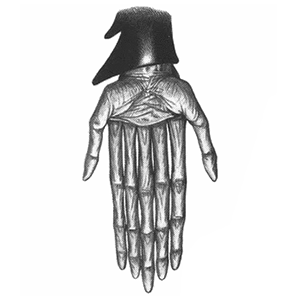
‘Childhood’s End‘ is a 1953 science fiction novel by the British author Arthur C. Clarke. The story follows the peaceful alien invasion of Earth by the mysterious Overlords, whose arrival ends all war, helps form a world government, and turns the planet into a near-utopia.
Many questions are asked about the origins and mission of the aliens, but they avoid answering, preferring to remain in their spacecraft, governing through indirect rule. Decades later, the Overlords show themselves, and their impact on human culture leads to a final utopic Golden Age, but at the cost of humanity’s identity and eventually the planet itself.
read more »
Posted in Language, Philosophy, World |
Leave a Comment »
September 1, 2013

The Wheel of Time is a series of epic fantasy novels written by American author James Oliver Rigney, Jr., under the pen name Robert Jordan. Originally planned as a six-book series, the series now spans fourteen volumes, in addition to a prequel novel and a companion book. Jordan began writing the first volume, ‘The Eye of the World,’ in 1984 and it was published in January 1990.
The author died in 2007 while working on what was planned to be the final volume in the series, although he had prepared extensive notes so another author could complete the book according to his wishes.
read more »
Posted in Art, Language, Philosophy |
Leave a Comment »
August 31, 2013

Twerking is a dance move that involves a person, usually a woman, shaking her hips in an up-and-down bouncing motion, causing the dancer to shake, ‘wobble’ and ‘jiggle.’ According to the Oxford Dictionary Online to twerk is ‘to dance to popular music in a sexually provocative manner involving thrusting hip movements and a low, squatting stance.’
Twerking carries both gendered and racialized connotations. The word is of uncertain origin. Possibilities include a contraction of ‘footwork,’ or a portmanteau of twist and jerk. Comparisons have been made with traditional African dances, for instance the Mapouka from West Africa which was banned from the television of Ivory Coast due to its suggestive nature.
read more »
Posted in Humor, Language, Sex |
2 Comments »
August 28, 2013

Glengarry Glen Ross is a 1992 American drama, adapted by David Mamet from his 1984 Pulitzer Prize- and Tony-winning play of the same name. The film depicts two days in the lives of four real estate salesmen and how they become desperate when the corporate office sends a trainer to ‘motivate’ them by announcing that, in one week, all except the top two salesmen will be fired. The film, like the play, is notorious for its use of profanity, leading the cast to jokingly refer to the film as ‘Death of a Fuckin’ Salesman.’ The title of the film comes from the names of two of the real estate developments being peddled by the salesmen characters: Glengarry Highlands and Glen Ross Farms.
The film was not a commercial success, making only $10.7 million in North America, just below its $12.5 million budget. Al Pacino was nominated for an Academy Award for Best Supporting Actor for his work in the film.
read more »
Posted in Art, Language, Money |
Leave a Comment »
August 25, 2013

A shyster [shahy-ster] is a slang word for someone who acts in a disreputable, unethical, or unscrupulous way, especially in the practice of law, politics or business. The etymology of the word is not generally agreed upon. The Merriam-Webster Dictionary says it is based on the German ‘Scheißer’ (literally ‘defecator’ but also used to refer to deceivers), but the Oxford English Dictionary describes it as ‘of obscure origin,’ possibly deriving from a historical sense of ‘shy’ meaning disreputable. Various false etymologies have suggested an anti-Semitic origin, but there is no proof for that. One source claims that the term originated in Philadelphia in 1843 from a disreputable attorney named ‘Schuster.’
Notable ‘shysters’ of fiction include Sylvester Shyster (a Walt Disney cartoon character introduced in 1930), a disbarred attorney who schemes to deprive Minnie Mouse of her inheritance; and Dave Kleinfeld, a mob lawyer in ‘Carlito’s Way’ (1993) who was parodied in ‘Grand Theft Auto: Vice City’ as Ken Rosenberg.
Posted in Language, Money, Politics |
1 Comment »


 The Daily Omnivore