September 2, 2013

‘Childhood’s End‘ is a 1953 science fiction novel by the British author Arthur C. Clarke. The story follows the peaceful alien invasion of Earth by the mysterious Overlords, whose arrival ends all war, helps form a world government, and turns the planet into a near-utopia.
Many questions are asked about the origins and mission of the aliens, but they avoid answering, preferring to remain in their spacecraft, governing through indirect rule. Decades later, the Overlords show themselves, and their impact on human culture leads to a final utopic Golden Age, but at the cost of humanity’s identity and eventually the planet itself.
read more »
Posted in Language, Philosophy, World |
Leave a Comment »
September 1, 2013

The Wheel of Time is a series of epic fantasy novels written by American author James Oliver Rigney, Jr., under the pen name Robert Jordan. Originally planned as a six-book series, the series now spans fourteen volumes, in addition to a prequel novel and a companion book. Jordan began writing the first volume, ‘The Eye of the World,’ in 1984 and it was published in January 1990.
The author died in 2007 while working on what was planned to be the final volume in the series, although he had prepared extensive notes so another author could complete the book according to his wishes.
read more »
Posted in Art, Language, Philosophy |
Leave a Comment »
August 31, 2013

Twerking is a dance move that involves a person, usually a woman, shaking her hips in an up-and-down bouncing motion, causing the dancer to shake, ‘wobble’ and ‘jiggle.’ According to the Oxford Dictionary Online to twerk is ‘to dance to popular music in a sexually provocative manner involving thrusting hip movements and a low, squatting stance.’
Twerking carries both gendered and racialized connotations. The word is of uncertain origin. Possibilities include a contraction of ‘footwork,’ or a portmanteau of twist and jerk. Comparisons have been made with traditional African dances, for instance the Mapouka from West Africa which was banned from the television of Ivory Coast due to its suggestive nature.
read more »
Posted in Humor, Language, Sex |
2 Comments »
August 28, 2013

Glengarry Glen Ross is a 1992 American drama, adapted by David Mamet from his 1984 Pulitzer Prize- and Tony-winning play of the same name. The film depicts two days in the lives of four real estate salesmen and how they become desperate when the corporate office sends a trainer to ‘motivate’ them by announcing that, in one week, all except the top two salesmen will be fired. The film, like the play, is notorious for its use of profanity, leading the cast to jokingly refer to the film as ‘Death of a Fuckin’ Salesman.’ The title of the film comes from the names of two of the real estate developments being peddled by the salesmen characters: Glengarry Highlands and Glen Ross Farms.
The film was not a commercial success, making only $10.7 million in North America, just below its $12.5 million budget. Al Pacino was nominated for an Academy Award for Best Supporting Actor for his work in the film.
read more »
Posted in Art, Language, Money |
Leave a Comment »
August 25, 2013

A shyster [shahy-ster] is a slang word for someone who acts in a disreputable, unethical, or unscrupulous way, especially in the practice of law, politics or business. The etymology of the word is not generally agreed upon. The Merriam-Webster Dictionary says it is based on the German ‘Scheißer’ (literally ‘defecator’ but also used to refer to deceivers), but the Oxford English Dictionary describes it as ‘of obscure origin,’ possibly deriving from a historical sense of ‘shy’ meaning disreputable. Various false etymologies have suggested an anti-Semitic origin, but there is no proof for that. One source claims that the term originated in Philadelphia in 1843 from a disreputable attorney named ‘Schuster.’
Notable ‘shysters’ of fiction include Sylvester Shyster (a Walt Disney cartoon character introduced in 1930), a disbarred attorney who schemes to deprive Minnie Mouse of her inheritance; and Dave Kleinfeld, a mob lawyer in ‘Carlito’s Way’ (1993) who was parodied in ‘Grand Theft Auto: Vice City’ as Ken Rosenberg.
Posted in Language, Money, Politics |
1 Comment »
August 19, 2013

‘More popular than Jesus‘ was a controversial remark made by musician John Lennon of the Beatles in 1966: Lennon said that Christianity was in decline and that the Beatles had become more popular than Jesus Christ.
When the quote appeared in the American teen magazine ‘Datebook,’ angry reactions flared up from Christian communities. Lennon had originally made the remark in March 1966 during interviews with Maureen Cleave on the lifestyles of the four individual Beatles. When Lennon’s words were first published, in the ‘London Evening Standard’ in the United Kingdom, they had provoked no public reaction.
read more »
Posted in Language, Philosophy, Politics |
Leave a Comment »
August 17, 2013

‘Just watch me‘ is a phrase made famous by Canadian Prime Minister Pierre Trudeau on October 13, 1970, during the October Crisis (two kidnappings of government officials by Québécois separatists). The term is still regularly used in Canadian political discussion. Trudeau, who had in previous years been a strong proponent of civil liberties, spoke of the need for drastic action to restore order in Quebec.
When questioned by CBC reporter Tim Ralfe on how far he would go in the suspension of civil liberties to maintain order, Trudeau replied ‘Well, just watch me.’ Three days later he invoked the ‘War Measures Act,’ which led to police action against many Quebec dissidents and great public controversy.
Posted in Language, Politics |
1 Comment »
August 16, 2013

Brené Brown Ph.D. LMSW is an American scholar, author, and public speaker, who is currently a research professor at the University of Houston Graduate College of Social Work.
Over the last ten years she has been involved in research on topics ranging from vulnerability, courage, and authenticity, to empathy and shame. She has written notable books such as ‘The Gifts of Imperfection’ (2010) and ‘Daring Greatly’ (2012). She is also the author of ‘Connections,’ a psychoeducational shame resilience curriculum.
Posted in Health, Language |
Leave a Comment »
August 16, 2013

A happy ending is an ending of the plot of a work of fiction in which almost everything turns out for the best for the protagonists, their sidekicks, and almost everyone except the villains.
In storylines where the protagonists are in physical danger, a happy ending would mainly consist in their surviving and successfully concluding their quest or mission; where there is no physical danger, a happy ending is often defined as lovers consummating their love despite various factors which may have thwarted it; and a considerable number of storylines combine both factors.
read more »
Posted in Art, Language |
Leave a Comment »
August 15, 2013


Quackery [kwak-uh-ree] is the promotion of unproven or fraudulent medical practices. Random House Dictionary describes a ‘quack’ as a ‘fraudulent or ignorant pretender to medical skill’ or ‘a person who pretends, professionally or publicly, to have skill, knowledge, or qualifications he or she does not possess; a charlatan.’ The word ‘quack’ derives from the archaic word ‘quacksalver,’ of Dutch origin, literally meaning ‘hawker of salve.’ In the Middle Ages the word ‘quack’ meant ‘shouting.’ The quacksalvers sold their wares on the market shouting in a loud voice.
‘Health fraud’ is often used as a synonym for quackery, but quackery’s salient characteristic is aggressive promotion (‘quacks quack!’) rather than fraud, greed or misinformation. ‘Pseudo-medicine’ is a term for treatments known to be ineffective, regardless of whether their advocates themselves believe in their effectiveness.
read more »
Posted in Health, Language, Money |
Leave a Comment »
August 14, 2013

‘Bad Science‘ is a 2008 book by British physician and science writer Ben Goldacre, criticizing mainstream media reporting on health and science issues. The book contains extended and revised versions of many of his ‘Guardian’ columns.
The book discusses topics such as detoxification (Aqua Detox, ear candles etc.) that can easily be shown to be bogus by simple experiments, and discusses the ‘detox phenomenon’ and purification rituals. He also addresses the claims for Brain Gym, a program of specific physical exercises that its commercial promoters claim can create new pathways in the brain. The uncritical adoption of this program by sections of the British school system is derided.
read more »
Posted in Health, Language, Science |
Leave a Comment »
August 9, 2013
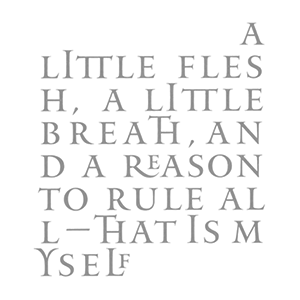
‘Meditations‘ (‘thoughts/writings addressed to himself’) is a series of personal writings by Marcus Aurelius, Roman Emperor 161–180 CE, setting forth his ideas on Stoic philosophy (the Stoics taught that destructive emotions resulted from errors in judgment).
It is not clear that he ever intended the writings to be published, so the title is but one of several commonly assigned to the collection. These writings take the form of quotations varying in length from one sentence to long paragraphs.
read more »
Posted in Language, Philosophy |
Leave a Comment »


 The Daily Omnivore