August 19, 2013

‘More popular than Jesus‘ was a controversial remark made by musician John Lennon of the Beatles in 1966: Lennon said that Christianity was in decline and that the Beatles had become more popular than Jesus Christ.
When the quote appeared in the American teen magazine ‘Datebook,’ angry reactions flared up from Christian communities. Lennon had originally made the remark in March 1966 during interviews with Maureen Cleave on the lifestyles of the four individual Beatles. When Lennon’s words were first published, in the ‘London Evening Standard’ in the United Kingdom, they had provoked no public reaction.
read more »
Posted in Language, Philosophy, Politics |
Leave a Comment »
August 17, 2013
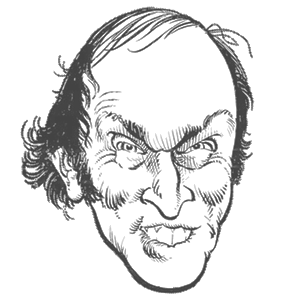
‘Just watch me‘ is a phrase made famous by Canadian Prime Minister Pierre Trudeau on October 13, 1970, during the October Crisis (two kidnappings of government officials by Québécois separatists). The term is still regularly used in Canadian political discussion. Trudeau, who had in previous years been a strong proponent of civil liberties, spoke of the need for drastic action to restore order in Quebec.
When questioned by CBC reporter Tim Ralfe on how far he would go in the suspension of civil liberties to maintain order, Trudeau replied ‘Well, just watch me.’ Three days later he invoked the ‘War Measures Act,’ which led to police action against many Quebec dissidents and great public controversy.
Posted in Language, Politics |
1 Comment »
August 16, 2013

Brené Brown Ph.D. LMSW is an American scholar, author, and public speaker, who is currently a research professor at the University of Houston Graduate College of Social Work.
Over the last ten years she has been involved in research on topics ranging from vulnerability, courage, and authenticity, to empathy and shame. She has written notable books such as ‘The Gifts of Imperfection’ (2010) and ‘Daring Greatly’ (2012). She is also the author of ‘Connections,’ a psychoeducational shame resilience curriculum.
Posted in Health, Language |
Leave a Comment »
August 16, 2013

A happy ending is an ending of the plot of a work of fiction in which almost everything turns out for the best for the protagonists, their sidekicks, and almost everyone except the villains.
In storylines where the protagonists are in physical danger, a happy ending would mainly consist in their surviving and successfully concluding their quest or mission; where there is no physical danger, a happy ending is often defined as lovers consummating their love despite various factors which may have thwarted it; and a considerable number of storylines combine both factors.
read more »
Posted in Art, Language |
Leave a Comment »
August 15, 2013
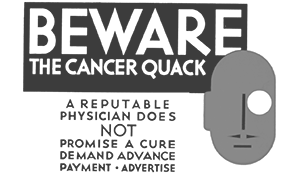

Quackery [kwak-uh-ree] is the promotion of unproven or fraudulent medical practices. Random House Dictionary describes a ‘quack’ as a ‘fraudulent or ignorant pretender to medical skill’ or ‘a person who pretends, professionally or publicly, to have skill, knowledge, or qualifications he or she does not possess; a charlatan.’ The word ‘quack’ derives from the archaic word ‘quacksalver,’ of Dutch origin, literally meaning ‘hawker of salve.’ In the Middle Ages the word ‘quack’ meant ‘shouting.’ The quacksalvers sold their wares on the market shouting in a loud voice.
‘Health fraud’ is often used as a synonym for quackery, but quackery’s salient characteristic is aggressive promotion (‘quacks quack!’) rather than fraud, greed or misinformation. ‘Pseudo-medicine’ is a term for treatments known to be ineffective, regardless of whether their advocates themselves believe in their effectiveness.
read more »
Posted in Health, Language, Money |
Leave a Comment »
August 14, 2013

‘Bad Science‘ is a 2008 book by British physician and science writer Ben Goldacre, criticizing mainstream media reporting on health and science issues. The book contains extended and revised versions of many of his ‘Guardian’ columns.
The book discusses topics such as detoxification (Aqua Detox, ear candles etc.) that can easily be shown to be bogus by simple experiments, and discusses the ‘detox phenomenon’ and purification rituals. He also addresses the claims for Brain Gym, a program of specific physical exercises that its commercial promoters claim can create new pathways in the brain. The uncritical adoption of this program by sections of the British school system is derided.
read more »
Posted in Health, Language, Science |
Leave a Comment »
August 9, 2013
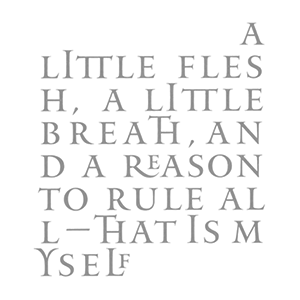
‘Meditations‘ (‘thoughts/writings addressed to himself’) is a series of personal writings by Marcus Aurelius, Roman Emperor 161–180 CE, setting forth his ideas on Stoic philosophy (the Stoics taught that destructive emotions resulted from errors in judgment).
It is not clear that he ever intended the writings to be published, so the title is but one of several commonly assigned to the collection. These writings take the form of quotations varying in length from one sentence to long paragraphs.
read more »
Posted in Language, Philosophy |
Leave a Comment »
August 9, 2013

A bon viveur [bawn vee-vur] is a person who enjoys the good things of life.
The phrase is derived from the French ‘bon vivant,’ meaning ‘good living,’ a bon viveur being a ‘good liver,’ or one who lives well. The phrase is not derogatory but conveys a sense of overindulgence. In his book, ‘Mind the Gaffe,’ linguist Larry Trask advised that the phrase is pretentious.
Posted in Language, World |
Leave a Comment »
August 9, 2013

Bad girl art is a superheroines art form genre coined after the analogy of ‘good girl art’ (‘girl art’ that is ‘good’) which also includes strong female characters in comic books. Bad girls are typically tough and violent superheroines.
While the ‘good’ in ‘good girl art’ refers to the art itself, the ‘bad’ in ‘bad girl art’ refers to the girls: anti-heroine characters, often portrayed as cruel, mercenary, or demonic, although it may also be intended to reflect on the crude mannerisms and exaggerated anatomy of the drawing style associated with those characters. While Good Girl Art was common in the 1940s and 1950s, Bad Girl Art arose in the comic book market of the 1980s and 1990s. During the heyday of the style, some 50 titles within the subgenre were being published, with ‘Lady Death’ as the best selling title.
read more »
Posted in Art, Language, Sex |
Leave a Comment »
August 8, 2013

Veronica Lodge (first appearance ‘Pep Comics’ #26 in 1942) is a fictional character in the ‘Archie Comics’ books series. She is called both by her name Veronica and her nickname Ronnie. Bob Montana, creator of the original Archie characters, knew the Lodges, because he had once painted a mural for them. Montana combined that name with actress Veronica Lake to create the character of Veronica Lodge. Her character was added just months after Archie Andrews, Betty Cooper, and Jughead Jones debuted, and just a few months before Reggie Mantle.
Veronica is the only child of Hiram Lodge, the richest man in Riverdale, and his wife Hermione Lodge. She is tall, slender and attractive with long black hair. Veronica favors expensive, up-to-the-minute fashion. In some comics, Mr. Lodge claimed that he moved his family to Riverdale in order to avoid Veronica becoming spoiled, like many of the children he knew and grew up with.
read more »
Posted in Art, Language, Money |
Leave a Comment »
August 7, 2013

Guido [gwee-doh] is a slang term for a lower-class or working-class urban Italian American. Originally, it was used as a demeaning term for Italian Americans in general. More recently, it has come to refer to Italian Americans who conduct themselves in a thuggish, overtly macho manner.
The time period in which it obtained the latter meaning is not clear, but some sources date it to the 1970s or 1980s. The term is derived from either the proper name ‘Guido’ or the Italian verb ‘guidare’ (‘to drive’). Fishermen of Italian descent were once often called ‘Guidos’ in medieval times.
read more »
Posted in Language, Politics |
Leave a Comment »
August 7, 2013
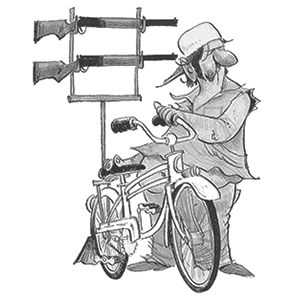
Redneck is a derogatory slang term used in reference to poor, uneducated white farmers, especially from the southern United States. It is similar in meaning to ‘cracker’ (especially regarding Georgia and Florida), ‘hillbilly’ (especially regarding Appalachia and the Ozarks), and ‘white trash’ (but without the last term’s suggestions of immorality).
By the 2000s, the term had expanded in meaning to refer to bigoted, loutish reactionaries who are opposed to modern ways, and has often been used to attack white Southern conservatives. The term is also used broadly to degrade working class and rural whites that are perceived by urban progressives to be insufficiently liberal. At the same time, some Southern whites have reclaimed the word, using it with pride and defiance as a self-identifier.
read more »
Posted in Language, Money, Politics |
Leave a Comment »


 The Daily Omnivore