August 7, 2013

Hillbilly is a term (often derogatory) for people who dwell in rural, mountainous areas of the United States, primarily Appalachia in the east but also the Ozarks in the center of the country. Owing to its strongly stereotypical connotations, the term can be offensive to those Americans of Appalachian heritage.
Origins of the term are obscure. According to Anthony Harkins in ‘Hillbilly: A Cultural History of an American Icon,’ it first appeared in print in a 1900 ‘New York Journal’ article, with the definition: ‘a Hill-Billie is a free and untrammeled white citizen of Alabama, who lives in the hills, has no means to speak of, dresses as he can, talks as he pleases, drinks whiskey when he gets it, and fires off his revolver as the fancy takes him.’
read more »
Posted in Language, Politics |
Leave a Comment »
August 7, 2013

Honky is a racial slur for white people, predominantly heard in the United States. The first recorded use of honky in this context may date back to 1946, although the use of ‘Honky Tonk’ (a type of bar common in the South) appeared in films well before that time.
The exact origins of the word are generally unknown and postulations about the subject vary. Honky may derive from the term ‘xonq nopp’ which, in the West African language Wolof, literally means ‘red-eared person’ or ‘white person.’ The term may have been brought to the US by slaves.
read more »
Posted in Language, Politics |
Leave a Comment »
August 7, 2013
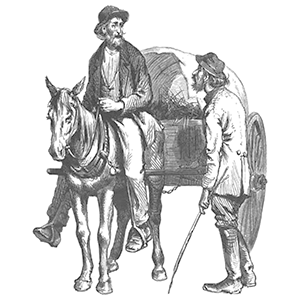
Cracker is a derogatory term for white people, especially poor rural whites in the Southern United States. In reference to a native of Florida or Georgia, however, it is sometimes used in a neutral or positive context and is sometimes used self-descriptively with pride as a form of reappropriation. There are multiple suggested etymologies for ‘cracker,’ most dating its origin to the 18th century or earlier.
One theory holds that the term derives from the ‘cracking’ of whips, either by slave foremen in the antebellum South against African slaves, or by rustics to guide their cattle. Those white foremen or rural poor who cracked their whips theoretically became known as ‘crackers.’ Another whip-derived theory is based on Florida’s ‘cracker cowboys’ of the 19th and early 20th centuries; distinct from the Spanish ‘vaquero’ and the Western ‘cowboy.’ Cracker cowboys did not use lassos to herd or capture cattle. Their primary tools were cow whips and dogs.
read more »
Posted in Language, Politics |
Leave a Comment »
August 6, 2013

Blockbuster, as applied to film, theater, and sometimes also video games, denotes a very popular or successful production. The term began to appear in the American press in the early 1940s, describing the largest of aerial bombs: single bombs capable of destroying a city block, also known as ‘cookies’ during the firebombing of Hamburg. Later figurative use referred to anything making a public impact:
‘Broadway reacted to the request of War Mobilization Director Byrnes to close all places of entertainment by midnight Feb. 26 as if a blockbuster had landed on Manhattan’ (1945). Some entertainment histories cite it as originally referring to a play that is so successful that competing theaters on the block are ‘busted’ and driven out of business, but the OED cites a 1957 use which is simply as a term of ‘biggest,’ after the bombs.
read more »
Posted in Art, Language, Money |
Leave a Comment »
August 2, 2013

‘Primary Colors: A Novel of Politics’ is a 1996 roman à clef, a work of fiction that purports to describe real life characters and events — namely, Bill Clinton’s first presidential campaign in 1992. It has been compared to two other novels about American politics; Robert Penn Warren’s ‘All the King’s Men’ (1946) and ‘O: A Presidential Novel’ (2011). The book was originally published by an anonymous author, who was later found to be columnist Joe Klein. Klein completed a sequel of sorts, ‘The Running Mate’ in 2000, focusing on the ‘Primary Colors’ character of Charlie Martin.
An early reviewer opined that the author wished to remain unknown because ‘Anonymity makes truthfulness much easier.’ Later commentators called the publishing of the book under an anonymous identity an effective marketing strategy that produced more publicity for the book, and thus more sales, without calling into question the author’s actual inside knowledge.
read more »
Posted in Language, Politics |
Leave a Comment »
August 1, 2013
Tough love is an expression used when someone treats another person harshly or sternly with the intent to help them in the long run. The phrase was evidently coined by American politician Bill Milliken when he wrote the book ‘Tough Love’ in 1968 and has been used by numerous authors since then.
In most uses, there must be some actual love or feeling of affection behind the harsh or stern treatment to be defined as tough love. For example, genuinely concerned parents refusing to support their drug-addicted child financially until he or she enters drug rehabilitation would be said to be practicing tough love. Athletic coaches who maintain strict rules and highly demanding training regimens, but who care about their players, could also be said to be practicing tough love.
read more »
Posted in Health, Language, Love |
Leave a Comment »
August 1, 2013

A thought-terminating cliché is a commonly used phrase, sometimes passing as folk wisdom, used to propagate cognitive dissonance (discomfort caused by holding conflicting thoughts). Though the phrase in and of itself may be valid in certain contexts, its application as a means of dismissing dissent or justifying fallacious logic is what makes it thought-terminating.
The term was popularized by American psychiatrist Robert Jay Lifton in his 1956 book ‘Thought Reform and the Psychology of Totalism.’ Lifton said, ‘The language of the totalist environment is characterized by the thought-terminating cliché. The most far-reaching and complex of human problems are compressed into brief, highly reductive, definitive-sounding phrases, easily memorized and easily expressed. These become the start and finish of any ideological analysis.’
read more »
Posted in Humor, Language |
Leave a Comment »
August 1, 2013

A platitude [plat-i-tood] is a trite, meaningless, or prosaic statement, generally directed at quelling social, emotional, or cognitive unease. The word derives from ‘plat,’ French word for ‘flat.’ Platitudes are geared towards presenting a shallow, unifying wisdom over a difficult topic. However, they are too overused and general to be anything more than undirected statements with ultimately little meaningful contribution towards a solution.
Examples could be statements such as ‘Meet in the middle,’ ‘Everybody has a right to an opinion,’ ‘Everything happens for a reason,’ ‘It is what it is,’ and ‘Do what you can.’ Platitudes are generally a form of thought-terminating cliché.
Posted in Language |
Leave a Comment »
July 30, 2013

‘The evolution of cooperation‘ is the title of a 1981 paper by political scientist Robert Axelrod and evolutionary biologist W. D. Hamilton on the emergence and persistence of cooperation (also known as cooperation theory) as elucidated by application of game theory.
Three years later, Axelrod discussed the topic at length in a similarly titled book. He was interested in how game theory and computer modeling were illuminating certain aspects of moral and political philosophy, particularly the role of individuals in groups, the ‘biology of selfishness and altruism,’ and the evolutionary advantages of cooperation.
read more »
Posted in Games, Language, Science |
Leave a Comment »
July 25, 2013

Fear of Missing Out or FoMO is a form of social anxiety — a compulsive concern that one might miss an opportunity for social interaction, a novel experience, profitable investment or other satisfying event. This is especially associated with modern technologies such as mobile phones and social networking services.
A study by Andrew Przybylski found that the condition was most common in those who had unsatisfied psychological needs such as wanting to be loved and respected. The condition is also associated with social networks such as Facebook and LinkedIn, which provide constant opportunity for comparison of one’s status.
Posted in Health, Language |
Leave a Comment »
July 25, 2013
YOLO is an acronym for ‘you only live once.’ Similar to ‘carpe diem’ (‘seize the day’) or ‘memento mori’ (‘remember that you will die’), it implies that one should enjoy life, even if that entails taking risks. The expression’ is commonly attributed to Golden Age film star Mae West, but variations of the phrase have been in use for over 100 years, including as far back as (the German equivalent of) ‘one lives but once in the world’ by Johann Wolfgang von Goethe in his 1774 play ‘Clavigo’ and as the title of a waltz, ‘Man lebt nur einmal!’ (‘You Only Live Once!’) by Johann Strauss II in 1855.
The acronym is in youth culture and music, and was popularized by the 2011 song ‘The Motto’ by Canadian rapper Drake (who later claimed to want royalties due to the proliferation of merchandise bearing the phrase). Actor Zac Efron has a tattoo with the acronym. The expression has been criticized for its use in conjunction with reckless behavior, most notably in a Twitter post by aspiring rapper Ervin McKinness just prior to his death: ‘Drunk af going 120 drifting corners #FuckIt YOLO.’
Posted in Humor, Language, Philosophy |
Leave a Comment »
July 24, 2013
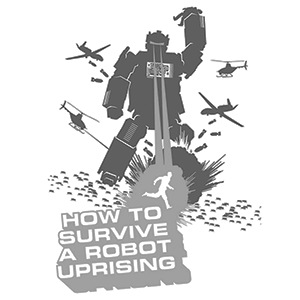
The Butlerian Jihad is an event in the back-story of Frank Herbert’s fictional ‘Dune’ universe. Occurring over 11,000 years in the future (10,000 years before the events chronicled in ‘Dune’), this jihad leads to the outlawing of certain technologies, primarily ‘thinking machines,’ a collective term for computers and artificial intelligence of any kind.
This prohibition is a key influence on the nature of Herbert’s fictional setting. Herbert may have coined the name from 19th-century author Samuel Butler, who has the citizens of ‘Erewhon’ enact a prohibition on machines newer than 270 years fearing that, ‘it was the race of the intelligent machines and not the race of men which would be the next step in evolution.’
read more »
Posted in Language, Technology, War |
Leave a Comment »


 The Daily Omnivore