August 1, 2013

A platitude [plat-i-tood] is a trite, meaningless, or prosaic statement, generally directed at quelling social, emotional, or cognitive unease. The word derives from ‘plat,’ French word for ‘flat.’ Platitudes are geared towards presenting a shallow, unifying wisdom over a difficult topic. However, they are too overused and general to be anything more than undirected statements with ultimately little meaningful contribution towards a solution.
Examples could be statements such as ‘Meet in the middle,’ ‘Everybody has a right to an opinion,’ ‘Everything happens for a reason,’ ‘It is what it is,’ and ‘Do what you can.’ Platitudes are generally a form of thought-terminating cliché.
Posted in Language |
Leave a Comment »
July 30, 2013

‘The evolution of cooperation‘ is the title of a 1981 paper by political scientist Robert Axelrod and evolutionary biologist W. D. Hamilton on the emergence and persistence of cooperation (also known as cooperation theory) as elucidated by application of game theory.
Three years later, Axelrod discussed the topic at length in a similarly titled book. He was interested in how game theory and computer modeling were illuminating certain aspects of moral and political philosophy, particularly the role of individuals in groups, the ‘biology of selfishness and altruism,’ and the evolutionary advantages of cooperation.
read more »
Posted in Games, Language, Science |
Leave a Comment »
July 25, 2013

Fear of Missing Out or FoMO is a form of social anxiety — a compulsive concern that one might miss an opportunity for social interaction, a novel experience, profitable investment or other satisfying event. This is especially associated with modern technologies such as mobile phones and social networking services.
A study by Andrew Przybylski found that the condition was most common in those who had unsatisfied psychological needs such as wanting to be loved and respected. The condition is also associated with social networks such as Facebook and LinkedIn, which provide constant opportunity for comparison of one’s status.
Posted in Health, Language |
Leave a Comment »
July 25, 2013

YOLO is an acronym for ‘you only live once.’ Similar to ‘carpe diem’ (‘seize the day’) or ‘memento mori’ (‘remember that you will die’), it implies that one should enjoy life, even if that entails taking risks. The expression’ is commonly attributed to Golden Age film star Mae West, but variations of the phrase have been in use for over 100 years, including as far back as (the German equivalent of) ‘one lives but once in the world’ by Johann Wolfgang von Goethe in his 1774 play ‘Clavigo’ and as the title of a waltz, ‘Man lebt nur einmal!’ (‘You Only Live Once!’) by Johann Strauss II in 1855.
The acronym is in youth culture and music, and was popularized by the 2011 song ‘The Motto’ by Canadian rapper Drake (who later claimed to want royalties due to the proliferation of merchandise bearing the phrase). Actor Zac Efron has a tattoo with the acronym. The expression has been criticized for its use in conjunction with reckless behavior, most notably in a Twitter post by aspiring rapper Ervin McKinness just prior to his death: ‘Drunk af going 120 drifting corners #FuckIt YOLO.’
Posted in Humor, Language, Philosophy |
Leave a Comment »
July 24, 2013
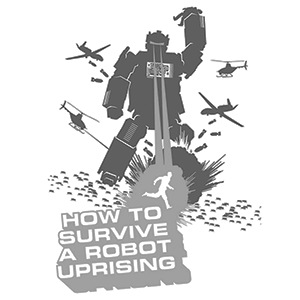
The Butlerian Jihad is an event in the back-story of Frank Herbert’s fictional ‘Dune’ universe. Occurring over 11,000 years in the future (10,000 years before the events chronicled in ‘Dune’), this jihad leads to the outlawing of certain technologies, primarily ‘thinking machines,’ a collective term for computers and artificial intelligence of any kind.
This prohibition is a key influence on the nature of Herbert’s fictional setting. Herbert may have coined the name from 19th-century author Samuel Butler, who has the citizens of ‘Erewhon’ enact a prohibition on machines newer than 270 years fearing that, ‘it was the race of the intelligent machines and not the race of men which would be the next step in evolution.’
read more »
Posted in Language, Technology, War |
Leave a Comment »
July 24, 2013
Kevin Kelly (b. 1952) is the founding executive editor of ‘Wired’ magazine, and a former editor/publisher of the ‘Whole Earth Catalog.’ He has also been a writer, photographer, conservationist, and student of Asian and digital culture. Kelly was born in Pennsylvania and graduated from Westfield High School in New Jersey in 1970. He dropped out of University of Rhode Island after only one year. He currently lives in Pacifica, California, a small coastal town just south of San Francisco. He is a devout Christian. He is married and has three children; Tywen, Ting, and Kaileen.
Among Kelly’s personal involvements is a campaign to make a full inventory of all living species on earth, an effort also known as the Linnaean enterprise. The goal is to make an attempt at an ‘all species’ web-based catalog in one generation (25 years). He is also sequencing his genome and co-organizes the Bay Area Quantified Self Meetup Group (a lifelogging organization).
read more »
Posted in Language, Technology |
Leave a Comment »
July 24, 2013

‘What Technology Wants‘ is a 2010 nonfiction book by ‘Wired’ magazine co-founder Kevin Kelly focused on technology as an extension of life. In his young adulthood Kelly spent many years traveling remote parts of the developing world, an experience which helped inform his perspective on what he has coined the ‘technium.’ The opening chapter, entitled ‘My Question,’ chronicles this period in Kelly’s life and gives the reader a sense of how Kelly went from being a nomadic traveler with few possessions to a tech guru.
Kelly focuses on human-technology relations and argues for the existence of technology as the emerging seventh kingdom of life on earth. He offers the anthropomorphic conception that technology is one giant force – the technium, ‘…a word to designate the greater, global, massively interconnected system of technology vibrating around us.’
Posted in Language, Technology |
Leave a Comment »
July 23, 2013

The term ‘media ecology‘ was formally introduced in 1968 by cultural critic Neil Postman (who would later become well known for his 1985 book about television, ‘Amusing Ourselves to Death’), but the concept was originally proposed four years earlier by Canadian philosopher of communication theory Marshall McLuhan. Media ecology theory centers on the principles that technology not only profoundly influences society, it also controls virtually all walks of life. It is a study of how media and communication processes affect human perception and understanding.
To strengthen this theory, McLuhan and graphic designer Quentin Fiore claim that it is the media of the epoch that defines the essence of the society by presenting four epochs, inclusive of Tribal Era, Literate Era, Print Era, and Electronic Era, which corresponds to the dominant mode of communication of the time respectively. McLuhan argues that media act as extensions of the human senses in each era, and communication technology is the primary cause of social change.
read more »
Posted in Language, Science, Technology |
Leave a Comment »
July 16, 2013
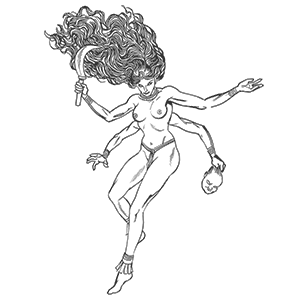
‘Testament‘ was an American comic book series written by media theorist Douglas Rushkoff with art and covers by Liam Sharp. It was published from February 2006 to March 2008 under DC Comics’ Vertigo imprint.
The story takes place simultaneously in the near future and the biblical past to illustrate the most prominent theme: that history repeats itself. This is done by juxtaposing the two timelines, the purpose of which seems to be to illustrate that religion is a continually evolving, living story that is being written by how people, and specifically the protagonists, live their daily lives. Other themes include increasing numbers of fascist governments, human rights, technology, and information economics in the form of a global currency, manna.
read more »
Posted in Art, Language, Philosophy |
Leave a Comment »
July 16, 2013

Douglas Rushkoff (b. 1961) is an American media theorist, graphic novelist, and documentarian. He is best known for his association with the early cyberpunk culture, and his advocacy of open source solutions to social problems. Rushkoff coined the terms: viral media (or media virus), digital native, and social currency. He has written ten books on media, technology, and culture.
He wrote the first syndicated column on cyberculture for ‘The New York Times Syndicate,’ as well as a regular column for ‘The Guardian of London.’ Rushkoff currently teaches in the Media Studies department at The New School University in Manhattan. He has previously lectured at the ITP at New York University’s Tisch School of the Arts and taught a class called ‘Narrative Lab.’
read more »
Posted in Language, Money, Technology |
Leave a Comment »
July 14, 2013

Hypermasculinity [hahy-per-mas-kyuh-lin-i-tee] is a psychological term for the exaggeration of male stereotypical behavior, such as an emphasis on physical strength, aggression, and sexuality . This term can be pejorative, though it is also used when examining the behavior (as adaptive or maladaptive) dispassionately.
One of the first studies of hypermasculinity was conducted by pyschologists Donald L. Mosher and Mark Sirkin in 1984. Mosher and Sirkin have operationally defined hypermasculinity or the ‘macho personality’ as consisting of the following three variables: a) ‘callous sexual attitudes toward women,’ b) ‘the belief that violence is manly,’ and c) ‘the experience of danger as exciting.’ They developed the Hypermasculinity Inventory (HMI) designed to measure the three components. Research has found that hypermasculinity is associated with sexual and physical aggression against women. Prisoners have higher hypermasculinity scores than control groups.
Posted in Language, Sex |
Leave a Comment »
July 14, 2013
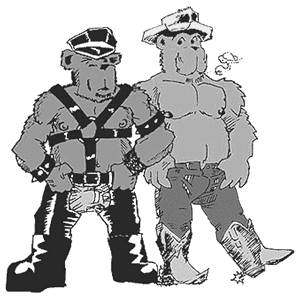
The Natural Bears Classification System (NBCS), also called the ‘bear code,’ is a set of symbols using letters, numbers and other characters commonly found on modern, Western computer keyboards, and used for the self-identification of those who self-identify as ‘bears’ in the sense of a mature gay or bisexual man with facial or substantial body hair.
These codes are used in email, Usenet, and Internet forum postings to identify the physical type and preferences of the poster.
read more »
Posted in Language, Sex |
Leave a Comment »


 The Daily Omnivore