July 14, 2013
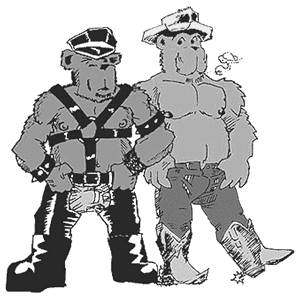
The Natural Bears Classification System (NBCS), also called the ‘bear code,’ is a set of symbols using letters, numbers and other characters commonly found on modern, Western computer keyboards, and used for the self-identification of those who self-identify as ‘bears’ in the sense of a mature gay or bisexual man with facial or substantial body hair.
These codes are used in email, Usenet, and Internet forum postings to identify the physical type and preferences of the poster.
read more »
Posted in Language, Sex |
Leave a Comment »
July 14, 2013
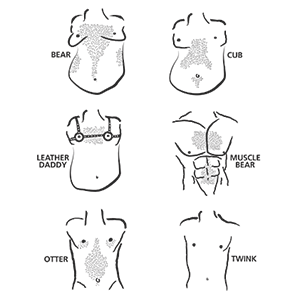
In gay culture, a Bear is a large, hairy man who projects an image of rugged masculinity. As a rising subculture in the gay and bisexual male communities, Bears are one of many LGBT communities with events, codes, and a culture-specific identity.
The term was popularized by Richard Bulger, who, along with his then partner Chris Nelson (1960–2006) founded ‘Bear Magazine’ in 1987. There is some contention surrounding whether Bulger originated the term and the subculture’s conventions. Author George Mazzei, for example, wrote an article for ‘The Advocate’ in 1979 called ‘Who’s Who in the Zoo?,’ that characterized homosexuals as seven types of animals, including bears.
read more »
Posted in Language, Sex |
1 Comment »
July 14, 2013
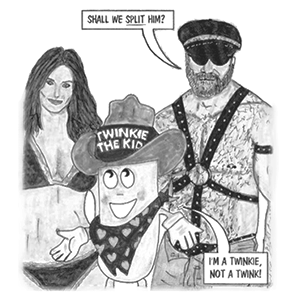
Twink [twingk] is a gay slang term describing a young or young-looking man with a slender, ectomorph build (long and thin), little or no body hair, and no facial hair. In some societies, the terms ‘fox,’ ‘plum,’ ‘chick,’ or ‘chicken’ are preferred. The related term ‘twinkle-toes,’ which implies that a man is effeminate, tends to be used in a derogatory manner. The terms can be complimentary or pejorative. The opposite of a twink in gay slang is a ‘bear,’ a large, hairy man who projects an image of rugged masculinity.
The term’s namesake is the ‘golden-colored phallic-shaped snack cake’ Hostess Twinkie, commonly regarded as the quintessential junk food: ‘little nutritional value, sweet to the taste and creme-filled.’ In ‘Queering Pornography: Desiring Youth, Race and Fantasy in Gay Porn,’ essayist Zeb J. Tortorici notes that gay twink porn thrives on the production and performance of ‘consumable and visually/anally receptive masculinity.’
read more »
Posted in Language, Sex |
Leave a Comment »
July 13, 2013
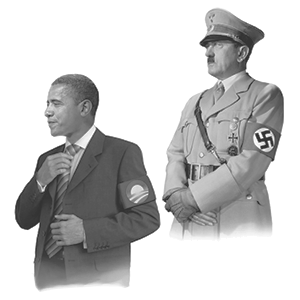
In historical analysis, biblical criticism and comparative mythology parallelomania [par-uh-lel-uh-mey-nee-uh] refers to a phenomenon where authors perceive apparent similarities and construct parallels and analogies without historical basis.
The concept was introduced to scholarly circles in 1961 by Rabbi Samuel Sandmel of the Hebrew Union College in a paper of the same title, where he stated that he had first encountered the term in a French book of 1830, but did not recall the author or the title. Sandmel stated that the simple observations of similarity between historical events are often less than valid, but at times lead to a phenomenon where authors first notice a supposed similarity, overdose on analogy, and then, ‘proceeds to describe source and derivation as if implying a literary connection flowing in an inevitable or predetermined direction.’
read more »
Posted in Education, Language, Philosophy |
Leave a Comment »
July 8, 2013
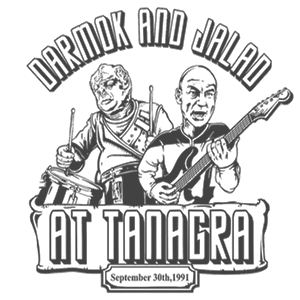
‘Darmok‘ is the 102nd episode of the science fiction television series ‘Star Trek: The Next Generation,’ the second episode of the fifth season. The episode features Paul Winfield, who previously played Captain Terrell in ‘Star Trek II: The Wrath of Khan.’
The senior crew discuss their latest mission: to make contact with the Tamarian race who have been transmitting signals toward Federation space for weeks. The Enterprise makes contact with a Tamarian ship in orbit around the planet El-Adrel. Though the universal translator can translate their words, the Tamarians only communicate through metaphor which baffles the Enterprise crew. Likewise, the Tamarians cannot understand Picard’s straightforward use of language.
read more »
Posted in Art, Language |
Leave a Comment »
July 3, 2013

An open secret is a concept or idea that is ‘officially’ secret or restricted in knowledge but is actually widely known; or it refers to something that is widely known to be true but which none of the people most intimately concerned is willing to categorically acknowledge in public.
The existence of the British Secret Intelligence Service (MI6) was widely known for several decades before the government’s official acknowledgement of the organization in 1994. Likewise, Delta Force, the elite US Army unit, can be considered an open secret, since its existence has been denied in the past by the government. Israel is widely acknowledged to possess nuclear weapons. This can be considered an open secret, because the Israeli government has never explicitly stated whether or not it possesses a nuclear stockpile, officially maintaining a policy of deliberate ambiguity.
read more »
Posted in Language, Politics, World |
1 Comment »
July 1, 2013
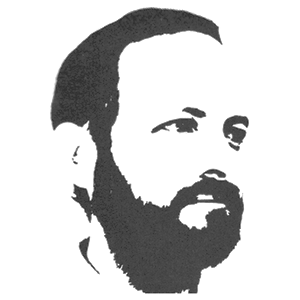
‘A Deepness in the Sky‘ is a novel by mathematician and science fiction author Vernor Vinge. Published in 1999, the novel is a loose prequel (set twenty thousand years earlier) to his 1992 novel ‘A Fire Upon the Deep’ (set thousands of years into the future). The title is coined by one of the story’s main characters in a debate, in a reference to the hibernating habits of his species and to the vastness of space.
The plot begins with the discovery of an intelligent alien species on a planet orbiting an anomalous star, dubbed ‘On/Off’ because for 215 of every 250 years it is dormant, releasing almost no energy. During this period, the planet freezes and its fauna go into hibernation.
read more »
Posted in Language, Science |
Leave a Comment »
June 26, 2013
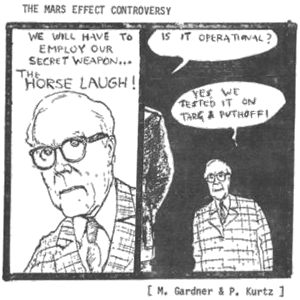
Pseudoskepticism [soo-doh-skep-tuh-siz-uhm] refers to a philosophical or scientific position which appears to be that of skepticism or scientific skepticism but which in reality fails to be so, for whatever reason.
The term is usually used pejoratively.
read more »
Posted in Language, Philosophy, Science |
Leave a Comment »
June 17, 2013

Mark Dery (b. 1959) is an American author, lecturer and cultural critic. He writes about ‘media, the visual landscape, fringe trends, and unpopular culture.’ From 2001 to 2009, he taught media criticism and literary journalism in the Department of Journalism at New York University. In 2000, he was appointed Chancellor’s Distinguished Fellow at the University of California, Irvine. In 2009, he was awarded a scholar-in-residence position at the American Academy in Rome.
He identifies his politics as ‘unrepentantly leftist’ and his religion as the parodic Church of the SubGenius. Dery’s books include ‘The Pyrotechnic Insanitarium: American Culture on the Brink’ and ‘Escape Velocity: Cyberculture at the End of the Century.’ He edited the anthology ‘Flame Wars: The Discourse of Cyberculture’ and wrote the monograph ‘Culture Jamming: Hacking, Slashing, and Sniping in the Empire of Signs.’ His essay collection ‘I Must Not Think Bad Thoughts: Drive-By Essays on American Dread, American Dreams’ was published in 2012.
read more »
Posted in Language, Technology |
Leave a Comment »
June 14, 2013

‘Tunnel Through the Deeps‘ (also published as ‘A Transatlantic Tunnel, Hurrah!’) is a 1972 alternate history/science fiction novel by Harry Harrison. It was serialized in ‘Analog’ magazine beginning in the April 1972 issue.
The title refers to the construction of a submerged floating-tube pontoon bridge/tunnel across the Atlantic Ocean.
read more »
Posted in Language, Technology, World |
Leave a Comment »
June 14, 2013
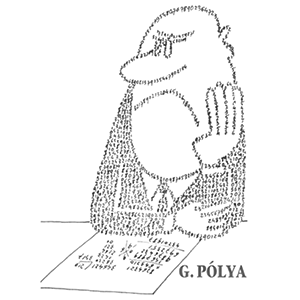
How to Solve It (1945) is a small volume by mathematician George Pólya describing methods of problem solving.
He suggests four steps when solving a mathematical problem: 1) First, understand the problem; 2) After understanding, then make a plan; 3) Carry out the plan; and; 4) Look back on your work — how could it be better? If this technique fails, Pólya advises: ‘If you can’t solve a problem, then there is an easier problem you can solve: find it.’ Or: ‘If you cannot solve the proposed problem, try to solve first some related problem. Could you imagine a more accessible related problem?’
read more »
Posted in Education, Language, Science |
Leave a Comment »
June 14, 2013

Thinking, Fast and Slow is a 2011 book by Nobel Memorial Prize winner in Economics Daniel Kahneman which summarizes research that he conducted over decades, often in collaboration with cognitive scientist Amos Tversky. It covers all three phases of his career: his early days working on cognitive biases (unknowingly using poor judgement), prospect theory (the tendency to base decisions on the potential value of losses and gains rather than the final outcome), and his later work on happiness (e.g. positive psychology).
The book’s central thesis is a dichotomy between two modes of thought: System 1 is fast, instinctive and emotional; System 2 is slower, more deliberative, and more logical. The book delineates cognitive biases associated with each type of thinking, starting with Kahneman’s own research on loss aversion (the tendency to favor avoiding losses over acquiring gains). From framing choices (the tendency to avoid risk when a positive context is presented and seek risks when a negative one is) to attribute substitution (using an educated guess to fill in missing information), the book highlights several decades of academic research to suggest that people place too much confidence in human judgment.
read more »
Posted in Health, Language, Science |
Leave a Comment »



