July 1, 2013
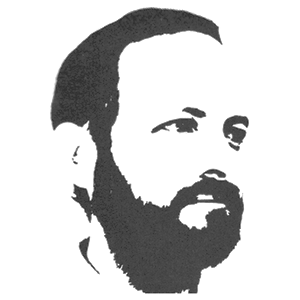
‘A Deepness in the Sky‘ is a novel by mathematician and science fiction author Vernor Vinge. Published in 1999, the novel is a loose prequel (set twenty thousand years earlier) to his 1992 novel ‘A Fire Upon the Deep’ (set thousands of years into the future). The title is coined by one of the story’s main characters in a debate, in a reference to the hibernating habits of his species and to the vastness of space.
The plot begins with the discovery of an intelligent alien species on a planet orbiting an anomalous star, dubbed ‘On/Off’ because for 215 of every 250 years it is dormant, releasing almost no energy. During this period, the planet freezes and its fauna go into hibernation.
read more »
Posted in Language, Science |
Leave a Comment »
June 26, 2013
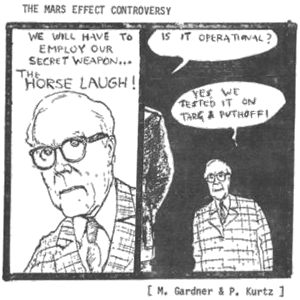
Pseudoskepticism [soo-doh-skep-tuh-siz-uhm] refers to a philosophical or scientific position which appears to be that of skepticism or scientific skepticism but which in reality fails to be so, for whatever reason.
The term is usually used pejoratively.
read more »
Posted in Language, Philosophy, Science |
Leave a Comment »
June 17, 2013

Mark Dery (b. 1959) is an American author, lecturer and cultural critic. He writes about ‘media, the visual landscape, fringe trends, and unpopular culture.’ From 2001 to 2009, he taught media criticism and literary journalism in the Department of Journalism at New York University. In 2000, he was appointed Chancellor’s Distinguished Fellow at the University of California, Irvine. In 2009, he was awarded a scholar-in-residence position at the American Academy in Rome.
He identifies his politics as ‘unrepentantly leftist’ and his religion as the parodic Church of the SubGenius. Dery’s books include ‘The Pyrotechnic Insanitarium: American Culture on the Brink’ and ‘Escape Velocity: Cyberculture at the End of the Century.’ He edited the anthology ‘Flame Wars: The Discourse of Cyberculture’ and wrote the monograph ‘Culture Jamming: Hacking, Slashing, and Sniping in the Empire of Signs.’ His essay collection ‘I Must Not Think Bad Thoughts: Drive-By Essays on American Dread, American Dreams’ was published in 2012.
read more »
Posted in Language, Technology |
Leave a Comment »
June 14, 2013
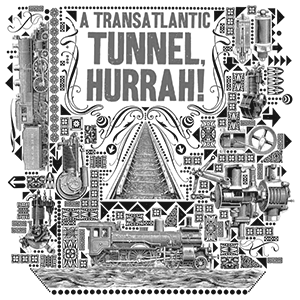
‘Tunnel Through the Deeps‘ (also published as ‘A Transatlantic Tunnel, Hurrah!’) is a 1972 alternate history/science fiction novel by Harry Harrison. It was serialized in ‘Analog’ magazine beginning in the April 1972 issue.
The title refers to the construction of a submerged floating-tube pontoon bridge/tunnel across the Atlantic Ocean.
read more »
Posted in Language, Technology, World |
Leave a Comment »
June 14, 2013
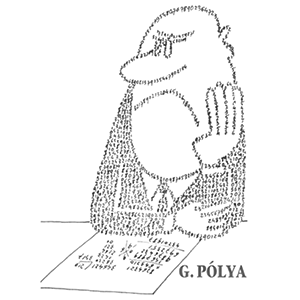
How to Solve It (1945) is a small volume by mathematician George Pólya describing methods of problem solving.
He suggests four steps when solving a mathematical problem: 1) First, understand the problem; 2) After understanding, then make a plan; 3) Carry out the plan; and; 4) Look back on your work — how could it be better? If this technique fails, Pólya advises: ‘If you can’t solve a problem, then there is an easier problem you can solve: find it.’ Or: ‘If you cannot solve the proposed problem, try to solve first some related problem. Could you imagine a more accessible related problem?’
read more »
Posted in Education, Language, Science |
Leave a Comment »
June 14, 2013
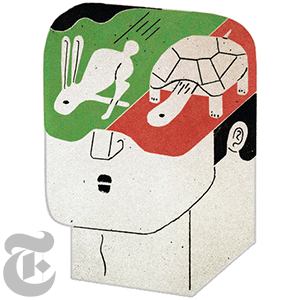
Thinking, Fast and Slow is a 2011 book by Nobel Memorial Prize winner in Economics Daniel Kahneman which summarizes research that he conducted over decades, often in collaboration with cognitive scientist Amos Tversky. It covers all three phases of his career: his early days working on cognitive biases (unknowingly using poor judgement), prospect theory (the tendency to base decisions on the potential value of losses and gains rather than the final outcome), and his later work on happiness (e.g. positive psychology).
The book’s central thesis is a dichotomy between two modes of thought: System 1 is fast, instinctive and emotional; System 2 is slower, more deliberative, and more logical. The book delineates cognitive biases associated with each type of thinking, starting with Kahneman’s own research on loss aversion (the tendency to favor avoiding losses over acquiring gains). From framing choices (the tendency to avoid risk when a positive context is presented and seek risks when a negative one is) to attribute substitution (using an educated guess to fill in missing information), the book highlights several decades of academic research to suggest that people place too much confidence in human judgment.
read more »
Posted in Health, Language, Science |
Leave a Comment »
June 13, 2013

Apophasis [uh-pof-uh-sis] (Latin: ‘to say no’) refers, in general, to ‘mention by not mentioning.’ Apophasis covers a wide variety of figures of speech.
The term was originally and more broadly a method of logical reasoning or argument by denial—a way of describing what something is by explaining what it is not, or a process-of-elimination way of talking about something by talking about what it is not. An example of this is the Wikipedia article: ‘What Wikipedia is not.’
read more »
Posted in Language |
Leave a Comment »
June 13, 2013

Scare quotes are quotation marks placed around a word or phrase to imply that it may not signify its apparent meaning or that it is not necessarily the way the quoting person would express its concept.
Use of the term appears to have arisen at some point during the first half of the 20th century. In books it appears as early as 1946 in ‘Southern California: An Island on the Land’ by Carey McWilliams and in the 1950s in academic literature.
read more »
Posted in Humor, Language |
2 Comments »
June 12, 2013
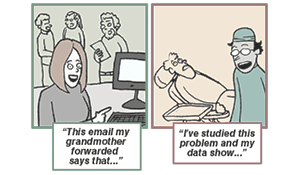

Today, false balance is used to describe a perceived or real media bias, where journalists present an issue as being more balanced between opposing viewpoints than the evidence actually supports.
Journalists may present evidence and arguments out of proportion to the actual evidence for each side, or may even actually suppress information which would establish one side’s claims as baseless. False balance is also often found in political reports, company press releases, and general information from organizations with special interest groups in promoting their respective agendas.
read more »
Posted in Language, Politics, Science |
Leave a Comment »
June 12, 2013
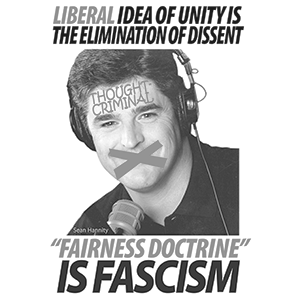
The Fairness Doctrine was a policy of the FCC, introduced in 1949, that required the holders of broadcast licenses to both present controversial issues of public importance and to do so in a manner that was, in the Commission’s view, honest, equitable and balanced (i.e. air contrasting views regarding those matters).
The FCC decided to eliminate the Doctrine in 1987, and in 2011, formally removed the language that implemented it. Stations were given wide latitude as to how to provide contrasting views: It could be done through news segments, public affairs shows, or editorials. The doctrine did not require equal time for opposing views but required that contrasting viewpoints be presented. (The Fairness Doctrine should not be confused with the ‘Equal Time’ rule, which deals only with political candidates.)
read more »
Posted in Language, Politics, Technology |
Leave a Comment »
June 10, 2013
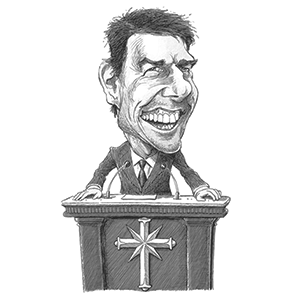
‘Going Clear: Scientology, Hollywood, and the Prison of Belief’ is a 2013 non-fiction book about Scientology written by American journalist Lawrence Wright. The book contains interviews from current and former Scientologists, the history of founder L. Ron Hubbard and current leader David Miscavige, and analysis of the relationships of Tom Cruise and John Travolta to the organization.
In an interview with the ‘New York Times’ Wright said that ‘There are a lot of people out there who were very high up in the church and know a lot about it who have become outspoken…I’m very lucky to come along at a time when a lot of these people are ready to talk.’ Wright also disclosed that he has received ‘innumerable’ letters threatening legal action from lawyers representing the church and celebrities who belong to it.
read more »
Posted in Language, Money, Philosophy |
Leave a Comment »
June 7, 2013
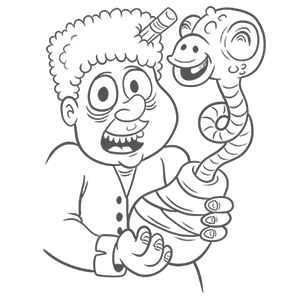
A coloring book is a type of book containing line art to which a child may add color using crayons (however, adult coloring products exist as well, including pornograhic, horror, and medical books).
Some coloring books have perforated edges so their pages can be removed from the books and used as individual sheets. Others may include a storyline and so are intended to be left intact. Coloring books may also incorporate other activities such as connect the dots, mazes, and other puzzles. Some coloring books also incorporate the use of stickers.
read more »
Posted in Art, Education, Language |
Leave a Comment »


 The Daily Omnivore