June 13, 2013

Apophasis [uh-pof-uh-sis] (Latin: ‘to say no’) refers, in general, to ‘mention by not mentioning.’ Apophasis covers a wide variety of figures of speech.
The term was originally and more broadly a method of logical reasoning or argument by denial—a way of describing what something is by explaining what it is not, or a process-of-elimination way of talking about something by talking about what it is not. An example of this is the Wikipedia article: ‘What Wikipedia is not.’
read more »
Posted in Language |
Leave a Comment »
June 13, 2013

Scare quotes are quotation marks placed around a word or phrase to imply that it may not signify its apparent meaning or that it is not necessarily the way the quoting person would express its concept.
Use of the term appears to have arisen at some point during the first half of the 20th century. In books it appears as early as 1946 in ‘Southern California: An Island on the Land’ by Carey McWilliams and in the 1950s in academic literature.
read more »
Posted in Humor, Language |
2 Comments »
June 12, 2013


Today, false balance is used to describe a perceived or real media bias, where journalists present an issue as being more balanced between opposing viewpoints than the evidence actually supports.
Journalists may present evidence and arguments out of proportion to the actual evidence for each side, or may even actually suppress information which would establish one side’s claims as baseless. False balance is also often found in political reports, company press releases, and general information from organizations with special interest groups in promoting their respective agendas.
read more »
Posted in Language, Politics, Science |
Leave a Comment »
June 12, 2013
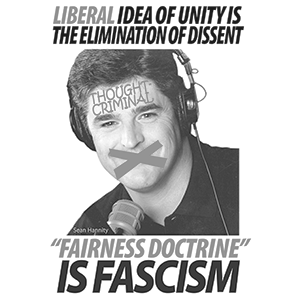
The Fairness Doctrine was a policy of the FCC, introduced in 1949, that required the holders of broadcast licenses to both present controversial issues of public importance and to do so in a manner that was, in the Commission’s view, honest, equitable and balanced (i.e. air contrasting views regarding those matters).
The FCC decided to eliminate the Doctrine in 1987, and in 2011, formally removed the language that implemented it. Stations were given wide latitude as to how to provide contrasting views: It could be done through news segments, public affairs shows, or editorials. The doctrine did not require equal time for opposing views but required that contrasting viewpoints be presented. (The Fairness Doctrine should not be confused with the ‘Equal Time’ rule, which deals only with political candidates.)
read more »
Posted in Language, Politics, Technology |
Leave a Comment »
June 10, 2013
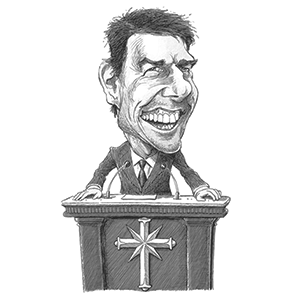
‘Going Clear: Scientology, Hollywood, and the Prison of Belief’ is a 2013 non-fiction book about Scientology written by American journalist Lawrence Wright. The book contains interviews from current and former Scientologists, the history of founder L. Ron Hubbard and current leader David Miscavige, and analysis of the relationships of Tom Cruise and John Travolta to the organization.
In an interview with the ‘New York Times’ Wright said that ‘There are a lot of people out there who were very high up in the church and know a lot about it who have become outspoken…I’m very lucky to come along at a time when a lot of these people are ready to talk.’ Wright also disclosed that he has received ‘innumerable’ letters threatening legal action from lawyers representing the church and celebrities who belong to it.
read more »
Posted in Language, Money, Philosophy |
Leave a Comment »
June 7, 2013
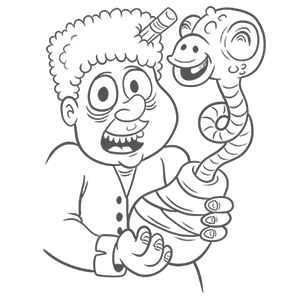
A coloring book is a type of book containing line art to which a child may add color using crayons (however, adult coloring products exist as well, including pornograhic, horror, and medical books).
Some coloring books have perforated edges so their pages can be removed from the books and used as individual sheets. Others may include a storyline and so are intended to be left intact. Coloring books may also incorporate other activities such as connect the dots, mazes, and other puzzles. Some coloring books also incorporate the use of stickers.
read more »
Posted in Art, Education, Language |
Leave a Comment »
June 6, 2013

Inscape, in visual art, is a term especially associated with certain works of Chilean artist Roberto Matta, but it is also used in other senses within the visual arts. Though the term has been applied to stylistically diverse artworks, it usually conveys some notion of representing the artist’s psyche as a kind of interior landscape. The word inscape can therefore be read as a kind of portmanteau, combining interior (or inward) with landscape.
According to Professor Claude Cernuschi, Matta’s use of the term inscape for a series of landscape-like abstract or surrealist paintings reflects ‘the psychoanalytic view of the mind as a three-dimensional space: the ‘inscape.” The ‘inscape’ concept is particularly apt for Matta’s works of the late 1930s. As art historian Dawn Ades writes, ‘A series of brilliant oil paintings done during the years of his [Matta’s] first association with the Surrealists explore visual metaphors for the mental landscape.’
read more »
Posted in Art, Language, Philosophy |
Leave a Comment »
June 6, 2013

Biomorphism is an art movement that began in the 20th century. It models artistic design elements on naturally occurring patterns or shapes reminiscent of nature.
Taken to its extreme it attempts to force naturally occurring shapes onto functional devices, often with mixed results.
read more »
Posted in Art, Language |
Leave a Comment »
June 5, 2013

‘Juicy‘ is a single by American hip hop artist The Notorious B.I.G. and his solo debut single from his 1994 debut album ‘Ready to Die.’ It was produced by Poke of Trackmasters & Sean ‘Puffy’ Combs. It is a sample of Mtume’s ‘Juicy Fruit,’ but samples from the song’s ‘Fruity Instrumental’ mix, and has an alternative chorus sung by girl group Total.
The song is considered one of the greatest hip hop songs of all time. After the death of The Notorious B.I.G. in 1997, a tribute version of this song was made in his honor by the R&B musical group Next with new lyrics.
read more »
Posted in Art, Language, Money |
Leave a Comment »
June 5, 2013

Lookism is a term used to refer to the positive stereotypes, prejudice, and preferential treatment given to physically attractive people, or more generally to people whose appearance matches cultural preferences.
The pejorative term ‘body fascism’ is also used as a synonym and educator and activist Warren Farrell has proposed the term ‘genetic celebrity’ to describe adoration of the attractive.
read more »
Posted in Language, Politics, Sex |
Leave a Comment »
June 3, 2013

Stetson Kennedy (1916 – 2011) was an American author and human rights activist. One of the pioneer folklore collectors during the first half of the 20th century, he is remembered for having infiltrated the Ku Klux Klan in the 1940s, exposing its secrets to authorities and the outside world.
His actions led to the 1947 revocation by the state of Georgia of the Klan’s national corporate charter. Kennedy wrote or co-wrote ten books.
read more »
Posted in Language, Politics |
Leave a Comment »
June 3, 2013

In 1946, human rights activist Stetson Kennedy infiltrated the KKK. Concerned that the organization had links to police forces, Kennedy decided to use his findings to strike at the Klan in a different way. He contacted the producers of the ‘Superman’ radio show and proposed a story where the superhero battles the Klan. Looking for new villains, the producers eagerly agreed.
To that end, he provided information—including secret codewords and details of Klan rituals—to the writers. The result was a series of episodes, ‘Clan of the Fiery Cross,’ in which Superman took on the Klan. Kennedy intended to strip away the Klan’s mystique. The trivialization of the Klan’s rituals and codewords was perceived to have had a negative impact on Klan recruiting and membership. Reportedly, Klan leaders denounced the show and called for a boycott of Kellogg’s products. However, the story arc earned spectacular ratings, and the food company stood by its support of the show.
Posted in Language, Politics |
Leave a Comment »



