April 2, 2013

Dumpster diving (called ‘skipping’ in the UK) is the practice of sifting through commercial or residential waste to find items that have been discarded by their owners, but that may prove useful to the dumpster diver. Dumpster diving is also viewed as an effective urban foraging technique.
Dumpster divers will forage dumpsters for items such as clothing, furniture, food, and similar items in good working condition. The dumpster diving term originates from the best-known manufacturer of commercial trash bins, Dempster, who use the trade name ‘Dumpster’ for their bins, and the fanciful image of someone leaping head first into a dumpster as if it were a swimming pool. In practice, the size and design of most dumpsters makes it possible to retrieve many items from the outside of dumpsters without having to ‘dive’ into them.
read more »
Posted in Food, Language, Money |
Leave a Comment »
March 29, 2013

Marvels is a four-issue limited series comic book written by Kurt Busiek, painted by Alex Ross and edited by Marcus McLaurin, and published by Marvel Comics in 1994. Set from 1939 to 1974; the series examines the Marvel Universe, the collective setting of most of Marvel’s superhero series, from the perspective of an Everyman character: news photographer Phil Sheldon.
The street-level series portrayed ordinary life in a world full of costumed supermen, with each issue featuring events well known to readers of Marvel comics as well as a variety of minute details and retelling the most famous events in the Marvel universe. Busiek and Ross returned to the ‘everyday life in a superhero universe’ theme in the Homage Comics series ‘Astro City.’
read more »
Posted in Art, Language |
1 Comment »
March 29, 2013
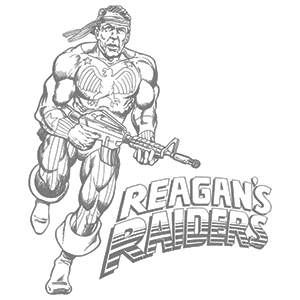
The American Monomyth is a 1977 book by Robert Jewett and John Shelton Lawrence arguing for the existence and cultural importance of an ‘American Monomyth,’ a variation on the classical monomyth (the hero’s journey, a theme found in narratives from around the world) as proposed by Joseph Campbell. The hero ventures from the normal world into a supernatural one, winning a decisive victory there and returning with a ‘boon.’
In contrast, Jewett and Lawrence define the American monomyth as: ‘A community in a harmonious paradise is threatened by evil; normal institutions fail to contend with this threat; a selfless superhero emerges to renounce temptations and carry out the redemptive task; aided by fate, his decisive victory restores the community to its paradisiacal condition; the superhero then recedes into obscurity.’
Posted in Language, Politics, World |
Leave a Comment »
March 29, 2013

The American way of life is an expression that refers to the lifestyle of people living in the United States of America. It is an example of a behavioral modality, developed from the 17th century until today.
It refers to a nationalist ethos that purports to adhere to principles of ‘life, liberty and the pursuit of happiness.’ It has some connection to the concept of American exceptionalism and the American Dream.
read more »
Posted in Language, Politics, World |
Leave a Comment »
March 29, 2013

Superfolks is a 1977 novel by Robert Mayer, which satirizes the superhero and comic book genres, and was aimed at a more adult audience than those genres typically attracted. Superfolks examines comic book conventions and clichés from a more serious, ‘literary’ perspective.
The novel was influential on many writers of superhero comic books in the 1980s and 1990s, notably Alan Moore and Kurt Busiek. Although the book’s pop culture references clearly date it to the 1970s, its influence on the deconstruction of the superhero genre is still felt through Moore’s ‘Watchmen,’ ‘Marvelman,’ and ‘Superman: Whatever Happened to the Man of Tomorrow?’
read more »
Posted in Humor, Language |
Leave a Comment »
March 23, 2013

The Bell Jar is American writer and poet Sylvia Plath’s only novel, which was originally published under the pseudonym ‘Victoria Lucas’ in 1963. The novel is semi-autobiographical with the names of places and people changed.
The book is often regarded as a roman à clef (real events disguised as fiction), with the protagonist’s descent into mental illness paralleling Plath’s own experiences with what may have been clinical depression. Plath committed suicide a month after its first UK publication. The novel was published under her name for the first time in 1967 and was not published in the United States until 1971, pursuant to the wishes of Plath’s mother and her husband Ted Hughes.
read more »
Posted in Death, Health, Language |
Leave a Comment »
March 23, 2013

Confessional poetry is a style of poetry that emerged in the United States during the 1950s and 1960s that has been describe as poetry ‘of the personal.’ The content of confessional poems is autobiographical and marked by its exploration of subject matter that was considered taboo at the time. This subject matter included topics like mental illness, sexuality, and suicide.
The school of poetry that became known as ‘Confessional Poetry’ was associated with several poets who redefined American poetry in the generation following World War II, including Robert Lowell, Sylvia Plath, John Berryman, Anne Sexton, Allen Ginsberg, and W. D. Snodgrass.
read more »
Posted in Art, Language |
Leave a Comment »
March 22, 2013
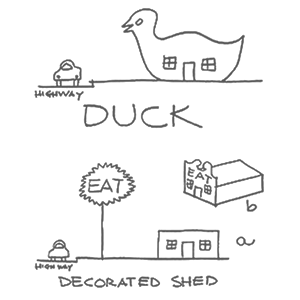
The Big Duck is a ferrocement (cement, sand, and steel mesh) building in the shape of a duck located in Flanders, New York, on Long Island. It was originally built in 1931 by duck farmer Martin Maurer in nearby Riverhead, and used as a shop to sell ducks and duck eggs.
The Big Duck is a prime example of literalism in advertising. The building measures 18 feet (5.5 m) wide, 30 feet (9.1 m) long and 20 feet (6.1 m) tall to the top of the head. The duck’s eyes are made from Ford Model T tail lights and the interior floor space is confined to 11 feet (3.4 m) by 15 feet (4.6 m).
read more »
Posted in Humor, Language, Money |
Leave a Comment »
March 20, 2013

The rasputitsa refers to the biannual mud seasons when unpaved roads become difficult to traverse in parts of Belarus, Russia, and Ukraine. The word may be translated as the ‘quagmire season’ because during this period the large flatlands become extremely muddy and marshy, as do most unpaved roads. The rasputitsa occurs more strongly in the spring due to the melting snow but it usually recurs in the fall due to frequent heavy rains. The rasputitsa seasons of Russia are well known as a great defensive advantage in wartime. Napoleon found the mud in Russia to be a very great hindrance in 1812.
During the Second World War the month-long muddy period slowed down the German advance during the Battle of Moscow, and may have helped save the Soviet capital, as well as the presence of ‘General Winter,’ that followed the autumn rasputitsa period – this sort of wintertime hindrance to German military motor vehicle transport on the Eastern Front partly inspired the design and mass production of a unique fully tracked artillery tractor for such conditions.
read more »
Posted in Language, War, World |
Leave a Comment »
March 18, 2013

Paul Krassner (b. 1932) is an American author, journalist, stand-up comedian, and the founder, editor and a frequent contributor to the freethought magazine ‘The Realist,’ first published in 1958. Krassner became a key figure in the counterculture of the 1960s as a member of Ken Kesey’s ‘Merry Pranksters’ and a founding member of the Yippies (Youth International Party).
Krassner was a child violin prodigy (and was the youngest person ever to play Carnegie Hall, in 1939 at age six). His parents were Jewish, but Krassner is firmly secular, considering religion ‘organized superstition.’
read more »
Posted in Humor, Language, Politics |
1 Comment »
March 18, 2013
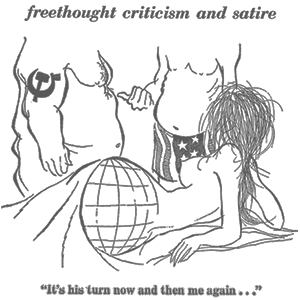
The Realist was a pioneering magazine of ‘social-political-religious criticism and satire, ‘intended as a hybrid of a grown-ups version of ‘Mad’ and Lyle Stuart’s anti-censorship monthly ‘The Independent.’ Edited and published by journalist and stand-up comedian Paul Krassner, and often regarded as a milestone in the American underground or countercultural press of the mid-20th century, it was a nationally-distributed newsstand publication as early as 1959.
Publication was discontinued in 2001. First published in the spring of 1958 in New York City in the offices of ‘Mad,’ ‘The Realist’ appeared on a fairly regular schedule during the 1960s and then on an irregular schedule after the early 1970s. In 1984, it was revived as a much smaller newsletter. Articles and cartoons from the magazine were collected in a book, ‘The Best of the Realist.’
read more »
Posted in Humor, Language, Politics |
Leave a Comment »
March 13, 2013
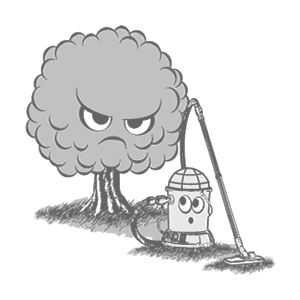
A power vacuum is, in its broadest sense, an expression for a condition that exists when someone has lost control of something and no one has replaced them. It is usually used to refer to a political situation that can occur when a government has no identifiable central authority.
The metaphor implies that, like a physical vacuum, other forces will tend to ‘rush in’ to fill the vacuum as soon as it is created, perhaps in the form of an armed militia or insurgents, military coup, warlord or dictator.
read more »
Posted in Language, Politics |
Leave a Comment »


 The Daily Omnivore