March 12, 2013

A comfort object, transitional object, or security blanket is an item used to provide psychological comfort, especially in unusual or unique situations, or at bedtime for small children. Among toddlers, comfort objects may take the form of a blanket, a stuffed animal, or a favorite toy, and may be referred to by English-speaking toddlers as ‘blankey’ or ‘lovey.’ Stuffed toys are sometimes equipped in emergency vehicles and police patrol cars, to be given to victims involved in an accident or traumatic shock, to provide them comfort.
Paramedics are trained to treat physical shock with a wide array of blankets designed to preserve heat, blood, and wounds for life threatening traumas. Often charities will provide comfort objects such as blankets and quilts to survivors of disasters. Psychologists are experimenting with the use of heavy thick fleece blankets to replace restraints such as straitjackets. They have noted through experiments with autistic children that weighted blankets have a desirable soothing effect to help calm agitated patients.
read more »
Posted in Health, Language |
Leave a Comment »
March 9, 2013
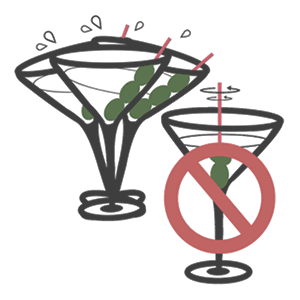
‘Shaken, not stirred‘ is a catchphrase of Ian Fleming’s fictional British Secret Service agent James Bond, and his preference for how he wished his martini prepared. The phrase first appears in the novel ‘Diamonds Are Forever’ (1956), though Bond does not actually say the line until ‘Dr. No’ (1958) but says it ‘shaken and not stirred’ instead of ‘shaken, not stirred.’ It was first uttered in the films by Sean Connery in Goldfinger in 1964 (though the villain Dr. Julius No offers this drink and utters those words in the first film, Dr. No, in 1962).
It was used in numerous Bond films thereafter with the notable exceptions of ‘You Only Live Twice,’ in which the drink is offered stirred, not shaken (Bond, ever the gentleman, ignores his host’s gaffe, telling him the drink is perfect), and ‘Casino Royale,’ in which Bond, after losing millions of dollars in a game of poker, is asked if he wants his martini shaken or stirred, and snaps, ‘Do I look like I give a damn?’
read more »
Posted in Food, Language |
Leave a Comment »
March 7, 2013
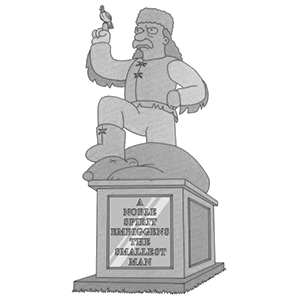
A neologism [nee-ol-uh-jiz-uhm] is a newly coined term, word, or phrase, that may be in the process of entering common use, but has not yet been accepted into mainstream language. Neologisms are often directly attributable to a specific person, publication, period, or event. The term is first attested in English in 1772, borrowed from French ‘néologisme.’ In psychiatry, the term is used to describe the use of words that have meaning only to the person who uses them, independent of their common meaning.
This tendency is considered normal in children, but in adults can be a symptom of psychopathy or a thought disorder (e.g. schizophrenia). People with autism also may create neologisms. Additionally, use of neologisms may be related to aphasia (sudden loss of language comprehension) acquired after brain damage resulting from a stroke or head injury. In theology, a ‘neologism’ is a relatively new doctrine (e.g. Transcendentalism). In this sense, a neologist is one who proposes either a new doctrine or a new interpretation of source material such as religious texts.
read more »
Posted in Health, Language |
Leave a Comment »
March 7, 2013

The Style Invitational, or Invite, is a long-running humor contest that ran first in the Style section of the Sunday ‘Washington Post’ before moving to Saturday’s Style and later returning to the Sunday paper. Started in 1993, it has run weekly, except for a hiatus in late 1999. In that time, it has had two anonymous head judges who select winning entries: ‘The Czar’ abdicated in late 2003, leaving the contest in the hands of his former associate, ‘The Empress.’
The humor ranges from an intellectual vein to a less mature style, and frequently touches on sophisticated political or historical allusions. While the contest theme changes every week, some popular contests are periodically repeated. The S.I. has a loyal following of self-proclaimed ‘Losers,’ who refer to having a contest entry published as ‘getting ink.’
read more »
Posted in Games, Humor, Language |
1 Comment »
March 6, 2013

Thomas Frank (b. 1965) is an American political analyst, historian, and journalist. He co-founded and edited ‘The Baffler magazine.’ He is a former columnist for the ‘Wall Street Journal,’ authoring ‘The Tilting Yard’ from 2008 to 2010. Frank is a historian of culture and ideas and analyzes trends in American electoral politics and propaganda, advertising, popular culture, mainstream journalism and economics.
With his writing, he explores the rhetoric and impact of the ‘Culture Wars’ in American political life, and the relationship between politics and culture in the United States. Frank started his political journey as a College Republican, but has come to be highly critical of conservatism, especially the presidency of George W. Bush. Frank summarized the thesis of his book ‘The Wrecking Crew: How Conservatives Rule’ as ‘Bad government is the natural product of rule by those who believe government is bad.’
Posted in Language, Money, Politics |
Leave a Comment »
March 5, 2013

The Bitch Wars occurred within the Soviet labor camp system between 1945 and 1953 (around the death of Joseph Stalin). The Russian word ‘suka’ (literally, ‘bitch’) has a stronger negative connotation than its English equivalent.
In Russian criminal argot, it specifically refers to a person from the criminal world who had cooperated with law enforcement or the government, or ‘went bitch.’ Within the Russian prison system, there was a historical and social structure that had existed since the Tsarist era. One of the important tenets of the system was that members would not serve or collaborate with the Tsarist and later Soviet government. This rule encompassed any kind of collaboration, not only ‘snitching’ or ‘ratting.’
read more »
Posted in Language, War, World |
Leave a Comment »
March 5, 2013

Mat is a term for strong obscene profanity in Russian and some other Slavic language communities. Mat is censored in the media and the use of mat in public constitutes a form of disorderly conduct, or mild hooliganism (although, such laws are only enforced episodically, in particular due to the vagueness of the legal definition).
However, despite the public ban, mat is used by Russians of all ages and nearly all social groups, with particular fervor in male-dominated military and the structurally similar social strata.
read more »
Posted in Language, World |
Leave a Comment »
March 5, 2013
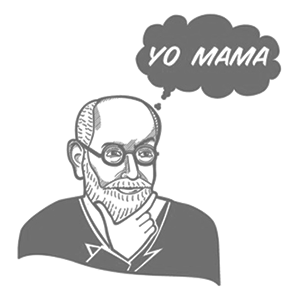
Sigmund Freud noticed that humor, like dreams, can be related to unconscious content. In the 1905 book ‘The Joke and Its Relation to The Unconscious,’ as well as in the 1928 journal article ‘Humor,’ Freud distinguished contentious jokes from non-contentious or silly humor. In fact, he sorted humor into three categories that could be translated as: joke, comic, and mimetic (imitation).
In Freud’s view, jokes (the verbal and interpersonal form of humor) happened when the conscious allowed the expression of thoughts that society usually suppressed or forbade. The superego (conscience) allowed the ego (self) to generate humor. A benevolent superego allowed a light and comforting type of humor, while a harsh superego created a biting and sarcastic type of humor. A very harsh superego suppressed humor altogether.
read more »
Posted in Health, Humor, Language |
Leave a Comment »
March 5, 2013
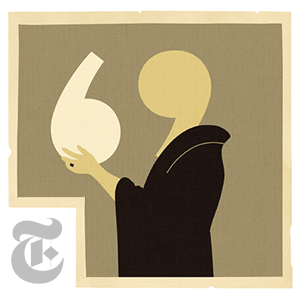
A quotation is the repetition of one expression as part of another one, particularly when the quoted expression is well-known or explicitly attributed by citation to its original source, and it is indicated by (punctuated with) quotation marks. A quotation can also refer to the repeated use of units of any other form of expression, especially parts of artistic works: elements of a painting, scenes from a movie or sections from a musical composition.
Quotations are used for a variety of reasons: to illuminate the meaning or to support the arguments of the work in which it is being quoted, to provide direct information about the work being quoted(whether in order to discuss it, positively or negatively), to pay homage to the original work or author, to make the user of the quotation seem well-read, and/or to comply with copyright law. Quotations are also commonly printed as a means of inspiration and to invoke philosophical thoughts from the reader.
read more »
Posted in Language |
Leave a Comment »
March 5, 2013

‘Shooting the messenger‘ is a metaphoric phrase used to describe the act of lashing out at the (blameless) bearer of bad news. In earlier times, messages were usually delivered in person by a human envoy. Sometimes, as in war, for example, the messenger was sent from the enemy camp.
An easily provoked combatant receiving such an overture could more easily vent anger (or otherwise retaliate) on the deliverer of the unpopular message than on its author. ‘Attacking the messenger’ is a subdivision of the ad hominem logical fallacy (making an argument personally against an opponent instead of against their argument).
read more »
Posted in Death, Language |
Leave a Comment »
March 4, 2013
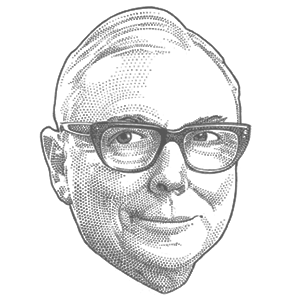
Charlie Munger (b. 1924) is an American business magnate, lawyer, investor, and philanthropist. He is Vice-Chairman of Berkshire Hathaway Corporation, the diversified investment corporation chaired by Warren Buffett; in that capacity, Buffett describes Munger as ‘my partner.’
Munger served as chairman of Wesco Financial Corporation from 1984 through 2011 (Wesco was approximately 80%-owned by Berkshire-Hathaway during that time). He is also the chairman of the Daily Journal Corporation, based in Los Angeles, and a director of Costco Wholesale Corporation.
read more »
Posted in Language, Money |
1 Comment »
March 2, 2013
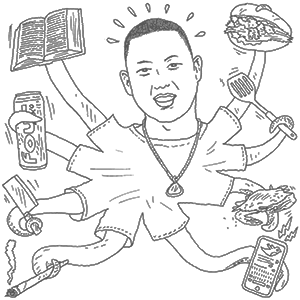
‘Fresh Off the Boat: A Memoir‘ is a 2013 autobiography by American food personality Eddie Huang. The book relates Huang’s early life and rise in the food celebrity scene in New York, and his relationship with his Asian background.
Huang, educated as a lawyer, became prominent in New York’s restaurant scene after the success of his BaoHaus, a purveyor of Chinese Cha siu bao, or pork buns. He developed a reputation as a food personality after hosting food-themed programs on the Food Network and Vice TV.
read more »
Posted in Food, Humor, Language |
1 Comment »



