February 18, 2013

‘More Guns, Less Crime‘ is a book by economist John Lott that says violent crime rates go down when states permit the concealed carry of guns. He presents the results of his statistical analysis of crime data for every county in the United States during 29 years from 1977 to 2005. The book examines city, county and state level data from the entire United States and measures the impact of 11 different types of gun control laws on crime rates. The book expands on an earlier study published in 1997 by Lott and his co-author David Mustard in ‘The Journal of Legal Studies.’
Lott also examines the effects of gun control laws, including the Brady Law. His conclusion is that ‘shall issue’ laws, which allow citizens to carry concealed weapons, steadily decrease violent crime. He explains that this result makes sense because criminals are deterred by the risk of attacking an armed victim. As more citizens arm themselves, the danger to criminals increases. Lott also examines the effects of training requirements on crime rate and accident rate. He finds that training requirements have very little effect on both crime rates and accident rates.
read more »
Posted in Language, Politics |
Leave a Comment »
February 17, 2013
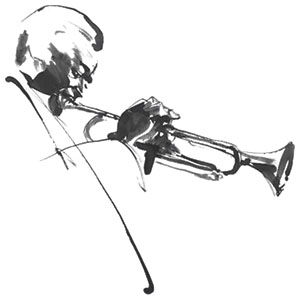
Coolness is an admired aesthetic of attitude, behavior, comportment, appearance and style, influenced by and a product of the Zeitgeist (‘spirit of the age’). Because of the varied and changing connotations of cool, as well its subjective nature, the word has no single meaning.
It has associations of composure and self-control and often is used as an expression of approval. Although commonly regarded as slang, it is widely used among disparate social groups, and has endured in usage for generations. Because there is no single concept of cool, one of its essential characteristics is mutability—what is considered cool changes over time and varies among cultures and generations.
read more »
Posted in Language, Money, Philosophy |
Leave a Comment »
February 14, 2013

‘The Rebel Sell: Why the culture can’t be jammed’ (published in the US as ‘Nation of Rebels: Why Counterculture Became Consumer Culture’) is a non-fiction book written by University of Toronto philosopher Joseph Heath and Canadian journalist Andrew Potter in 2004. Their central claim is that counter-cultural movements have failed, and that they all share a common fatal error in the way they understand society; thus counter-culture is not a threat to ‘the system.’
Following their claim that conformity isn’t something perpetuated by mainstream media, Potter and Heath identify other sources of conformity using work from Hobbes, Rousseau, and Freud. They describe conformity as often the byproduct of simple market preferences or, alternatively, as an attempt to resolve a collective action problem. For instance, they claim that school uniforms curb the fashion ‘arms race’ created between students when no restrictions are in place, and that they are not intended merely to stamp out individualism, as many counter-cultural figures have suggested.
read more »
Posted in Language, Money, Politics |
Leave a Comment »
February 12, 2013
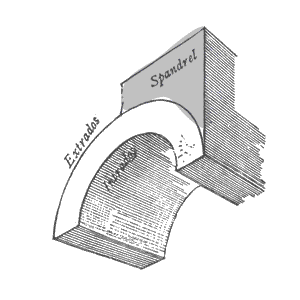
In evolutionary biology, a spandrel [span-druhl] is a a characteristic that did not originate by the direct action of natural selection, that was later co-opted for a current use. The term was coined by the Harvard paleontologist Stephen Jay Gould and population geneticist Richard Lewontin in their influential paper ‘The Spandrels of San Marco and the Panglossian Paradigm: A Critique of the Adaptationist Program’ (1979).
In their paper Gould and Lewontin employed the analogy of spandrels in Renaissance architecture: curved areas of masonry between arches supporting a dome that arise as a consequence of decisions about the shape of the arches and the base of the dome, rather than being designed for the artistic purposes for which they were often employed. The authors singled out properties like the necessary number of four and their specific three-dimensional shape.
read more »
Posted in Language, Science |
1 Comment »
February 11, 2013
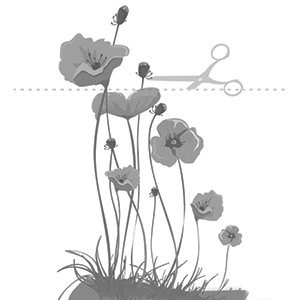
Tall poppy syndrome (TPS) is a pejorative term primarily used in the UK, Canada, New Zealand, and other Anglosphere nations to describe a social phenomenon in which people of genuine merit are resented, attacked, cut down, or criticized because their talents or achievements elevate them above or distinguish them from their peers.
Australia’s usage of the term has evolved and is not uniformly negative. In Australia, a long history of ‘underdog’ culture and profound respect for humility in contrast to that of Australia’s English feudal heritage results in a different understanding of the concept.
read more »
Posted in Language, War, World |
Leave a Comment »
February 10, 2013

Naked Lunch is the 1991 film adaptation written and directed by David Cronenberg, of William S. Burroughs’ novel of the same name. Rather than attempting a straight adaptation, Cronenberg took a few elements from the book and combined them with elements of Burroughs’ life, creating a hybrid film about the writing of the book rather than the book itself. Peter Weller starred as William Lee, the pseudonym Burroughs used when he wrote ‘Junkie.’
Lee is an exterminator who finds that his wife Joan is stealing his insecticide (pyrethrum) to use as a drug. When Lee is arrested by the police, he begins hallucinating because of ‘bug powder’ exposure. He believes he is a secret agent whose controller (a giant bug) assigns him the mission of killing Joan, who is an agent of an organization called Interzone Incorporated. Lee dismisses the bug and its instructions and kills it. He returns home to find Joan sleeping with Hank, one of his writer friends. Shortly afterwards, he accidentally kills her while attempting to shoot a drinking glass off her head in imitation of William Tell.
read more »
Posted in Art, Drugs, Language |
Leave a Comment »
February 10, 2013

Naked Lunch is a novel by William S. Burroughs originally published in 1959. The book is structured as a series of loosely-connected vignettes. Burroughs stated that the chapters are intended to be read in any order.
The reader follows the narration of junkie William Lee, who takes on various aliases, from the US to Mexico, eventually to Tangier and the dreamlike Interzone (international zone, a type of extraterritoriality governed by international law). The vignettes (called ‘routines’) are drawn from Burroughs’ own experience in these places, and his addiction to drugs (heroin, morphine, and while in Tangier, ‘Majoun’—a strong marijuana confection—as well as a German opioid, brand name Eukodol, of which he wrote frequently).
read more »
Posted in Drugs, Language, Politics |
Leave a Comment »
February 8, 2013

‘A Study of History‘ is the 12-volume magnum opus of British historian Arnold J. Toynbee, finished in 1961, in which the author traces the development and decay of all of the major world civilizations in the historical record. Toynbee applies his model to each of these civilizations, detailing the stages through which they all pass: genesis, growth, time of troubles, universal state, and disintegration.
The major civilizations, as Toynbee sees them, are: Egyptian, Andean, Sinic, Minoan, Sumerian, Mayan, Indic, Hittite, Hellenic, Western, Orthodox Christian (Russia), Far Eastern, Orthodox Christian (main body), Persian, Arabic, Hindu, Mexican, Yucatec, and Babylonic. There are four ‘abortive civilizations’ (Abortive Far Western Christian, Abortive Far Eastern Christian, Abortive Scandinavian, Abortive Syriac) and five ‘arrested civilizations’ (Polynesian, Eskimo, Nomadic, Ottoman, Spartan).
read more »
Posted in Language, Politics, World |
1 Comment »
February 7, 2013
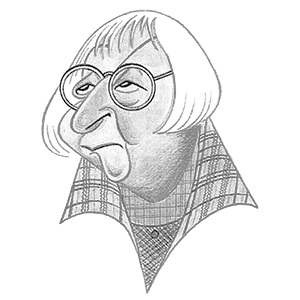
‘Dark Age Ahead‘ is a 2004 book by Jane Jacobs describing what she sees as the decay of five key ‘pillars’ in North America: community and family, higher education, science and technology, taxes and government responsive to citizen’s needs, and self-policing by the learned professions. She argues that this decay threatens to create a dark age unless the trends are reversed. Jacobs characterizes a dark age as a ‘mass amnesia’ where even the memory of what was lost is lost.
People are increasingly choosing consumerism over family welfare, that is: consumption over fertility; debt over family budget discipline; fiscal advantage to oneself at the expense of community welfare. Universities are more interested in credentials than providing high quality education. Economics has become as the main ‘science’ to consider in making major political decisions. Governments are more interested in deep-pocket interest groups than the welfare of the population. She describes, a culture that prevents people from understanding/realizing the deterioration of fundamental physical resources which the entire community depends on.
read more »
Posted in Language, Politics |
1 Comment »
February 7, 2013

Sturgeon’s revelation, commonly referred to as Sturgeon’s law, is an adage commonly cited as ‘ninety percent of everything is crap.’ It is derived from quotations by Theodore Sturgeon, an American science fiction author.
The phrase was derived from Sturgeon’s observation that while science fiction was often derided for its low quality by critics, it could be noted that the majority of examples of works in other fields could equally be seen to be of low quality and that science fiction was thus no different in that regard to other art.
read more »
Posted in Humor, Language |
Leave a Comment »
February 6, 2013
The ingénue [awn-zhuh-nyoo] is a stock character in literature, film, and a role type in the theater generally a girl or a young woman who is endearingly innocent and wholesome. Ingenue may also refer to a new young actress or one typecast in such roles.
The term comes from the French adjective ‘ingénu’ meaning ‘ingenuous’ or innocent, virtuous, and candid. The term may also imply a lack of sophistication and cunning.
read more »
Posted in Art, Language |
Leave a Comment »
February 5, 2013

Flaming Carrot Comics is a comic book series by cartoonist Bob Burden. The title character first appeared in ‘Visions’ #1, a magazine published by the Atlanta Fantasy Fair in 1979. ‘Flaming Carrot’ can be seen as a parody of various aspects of the superhero genre (though his origin story is much the same as that of Don Quixote).
‘The Flaming Carrot’ origin states that ‘having read 5,000 comics in a single sitting to win a bet, this poor man suffered brain damage and appeared directly thereafter as — the Flaming Carrot!’ Carrot, who lives in Palookaville, a neighborhood of Iron City, has staved off at least three alien invasions, a Communist take over, flying dead dogs, the Man in the Moon, Death itself, and a cloned horde of evil marching Hitler’s boots. Possessing no real super powers, the Carrot wins the day through sheer grit, raw determination, blinding stupidity, and bizarre luck.
read more »
Posted in Art, Humor, Language |
Leave a Comment »


 The Daily Omnivore