November 17, 2012

Chronological snobbery, a term coined by friends C. S. Lewis and philosopher Owen Barfield, is a logical fallacy describing the erroneous argument that the thinking, art, or science of an earlier time is inherently inferior when compared to that of the present. As Barfield explains it, it is the belief that ‘intellectually, humanity languished for countless generations in the most childish errors on all sorts of crucial subjects, until it was redeemed by some simple scientific dictum of the last century.’
The subject came up between them when Barfield had converted to Anthroposophy (a philosophy popularized in the early 1900s that teaches that through inner development a person can better know the spiritual world) and was persuading Lewis (an atheist at that time) to join him.
read more »
Posted in Art, Language, Philosophy |
Leave a Comment »
November 17, 2012

Presentism [prez-ent-iz-uhm] is a mode of literary or historical analysis in which present-day ideas and perspectives are anachronistically introduced into depictions or interpretations of the past. Some modern historians seek to avoid presentism in their work because they believe it creates a distorted understanding of their subject matter.
The practice of presentism is a common fallacy in historical writings. Historian David Hackett Fischer identifies presentism as a fallacy also known as the ‘fallacy of nunc pro tunc’ (‘now for then,’ a court ruling applied retroactively to correct an earlier ruling). He has written that the ‘classic example’ of presentism was the so-called ‘Whig history,’ in which certain eighteenth- and nineteenth-century British historians wrote history in a way that used the past to validate their own political beliefs.
read more »
Posted in Education, Language, Philosophy |
Leave a Comment »
November 9, 2012

Will Shortz (b. 1952) is the long-time crossword puzzle editor for ‘The New York Times.’ Shortz was born and raised on an Arabian horse farm in Indiana. He is the only person known to hold a college degree in enigmatology, the study of puzzles.
Shortz achieved this feat by designing his own curriculum through Indiana University’s Individualized Major Program. He also earned a Juris Doctor degree from the University of Virginia School of Law (1977), though he forewent the bar exam and began a career in puzzles instead. Shortz began his career at ‘Penny Press Magazines,’ then moved to ‘Games’ magazine for 15 years, serving as its editor from 1989–1993.
read more »
Posted in Games, Humor, Language |
Leave a Comment »
November 9, 2012

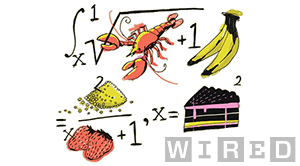
Molecular gastronomy [ga-stron-uh-mee] is a subdiscipline of food science that seeks to investigate, explain and make practical use of the physical and chemical transformations of ingredients that occur while cooking, as well as the social, artistic and technical components of culinary and gastronomic phenomena in general. Molecular gastronomy is a modern style of cooking, which is practiced by both scientists and food professionals in many professional kitchens and labs and takes advantage of many technical innovations from the scientific disciplines.
The term ‘molecular gastronomy’ was coined in 1992 by late Oxford physicist Nicholas Kurti and the French INRA (a public research institute dedicated to agriculture) chemist Hervé This. Some chefs associated with the term choose to reject its use, preferring other terms such as ‘culinary physics’ and ‘experimental cuisine.’ There are many branches of food science, all of which study different aspects of food such as safety, microbiology, preservation, chemistry, engineering, physics, and the like. Until the advent of molecular gastronomy, there was no formal scientific discipline dedicated to studying the processes in regular cooking as done in the home or in a restaurant.
read more »
Posted in Food, Language, Science |
Leave a Comment »
November 8, 2012
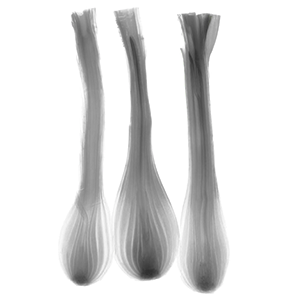
‘Modernist Cuisine: The Art and Science of Cooking’ is a 2011 cookbook by Nathan Myhrvold, Chris Young, and Maxime Bilet. The book is an encyclopedia and a guide to the science of contemporary cooking. Five volumes cover history and fundamentals, techniques and equipment, animals and plants, ingredients and preparation, plated dish recipes; the sixth volume is a kitchen manual.
Myhrvold has attended Ecole de Cuisine la Varenne, a cooking school in Burgundy, France and has also cooked part-time at Rover’s, a French restaurant in Seattle owned by Thierry Rautureau. He is also a scientist, having earned advanced degrees in geophysics, space physics, and theoretical and mathematical physics, done post-doctoral research with Stephen Hawking at Cambridge University, and worked for many years as the chief technology officer and chief strategist of Microsoft.
read more »
Posted in Food, Language, Science |
Leave a Comment »
November 7, 2012

‘Our Dumb World‘ is a parody of the standard desk atlas created by the staff of ‘The Onion’ and published in 2007. It is The Onion’s first book of entirely original content since 1999’s ‘Our Dumb Century.’ The book, written in the satirical paper’s editorial voice, contains entries for nearly every country on Earth, including detailed maps and humorous stereotyped descriptions of regional history and customs. For example, Canada’s entry is subtitled, ‘For the United States, see pages 9 – 22.’ The sections devoted to the Northern and Southern Poles and Greenland, are touted as, ‘larger than Africa and South America combined.’
The visual style of the atlas has been compared to Dorling Kindersley’s ‘Eyewitness’ series. The book uses faux xenophobia to illustrate the cultural differences of various nations, often mocking racial stereotypes with satirical comments. In the ‘New York Times,’ William Grimes called it ‘an astoundingly offensive guide to the states of the union and the countries of the world, compiled on the premise that all countries are ridiculous and contemptible’ and found it ‘sophomoric, transgressive, and intermittently brilliant.’ Elements of the book have been transferred to an electronic format available on the paper’s website and as a layer on Google Earth.
Posted in Humor, Language, World |
Leave a Comment »
November 7, 2012

‘Our Dumb Century: The Onion Presents 100 Years of Headlines from America’s Finest News Source’ is a satirical humor book written by the staff of ‘The Onion’ and published in 1999. The chief editor of the book was Scott Dikkers, with specific sections edited by Robert D. Siegel, Maria Schneider, and John Krewson.
The book, spun off from ‘The Onion’ weekly-newspaper format of dryly satirizing current events, features mocked-up newspaper front pages from the entire 20th century, presented as though ‘The Onion’ had been continuously in print since before 1900. The publication of the book is in itself a parody of other end of the century retrospectives that had been published in 1999, notably ‘Time’ magazine and ‘The New York Times.’
read more »
Posted in Humor, Language, Politics |
Leave a Comment »
November 7, 2012


A hyperforeignism is a non-standard language form resulting from an unsuccessful attempt to apply the rules of a foreign language to a loan word (for example, the application of the rules of one language to a word borrowed from another) or, occasionally, a word believed to be a loan word.
The result reflects ‘neither the… rules of English nor those of the language from which the word in question comes.’
read more »
Posted in Language, World |
Leave a Comment »
November 7, 2012

The gay lisp is a stereotypical manner of speech associated with gay males, particularly in English-speaking countries, that involves their pronunciation of sibilant consonants (fricatives, made by directing a stream of air with the tongue towards the sharp edge of the teeth, which are held close together) and sometimes others verbal features.
The phenomenon of the ‘gay lisp’ and its study are poorly understood, similar to other secondary external attributes or verbal and non-verbal mannerisms of both gay and straight people. These attributes have proven difficult to define and quantify but seem somewhat independent of other variables in the phonology of the English language, such as accent and register.
read more »
Posted in Language, Sex |
Leave a Comment »
November 7, 2012


A fricative [frik-uh-tiv] is a consonant that is made when you squeeze air through a small hole or gap in your mouth. For example, the gaps in between your teeth can make fricative consonants. When the gaps in the teeth are used, these fricatives are called sibilants (e.g. ‘voiceless coronal sibilant,’ as in ‘sip’; ‘voiced coronal sibilant,’ as in ‘zip’). There are also non-sibilant fricatives (e.g. ‘voiceless labiodental fricative,’ as in ‘fine’; ‘voiced dental fricative,’ as in ‘that’).
A small number of languages including Navajo and Welsh have lateral fricatives (consonants, in which the airstream proceeds along the sides of the tongue, blocked by the tongue from going through the middle of the mouth). Many languages also have pseudo-fricatives (unvoiced vowels, e.g. ‘voiceless glottal transition,’ as in ‘hat’).
read more »
Posted in Language, World |
Leave a Comment »
November 6, 2012

There are numerous fallacious ideas and beliefs about the origins (or etymologies) of common English words. The word ‘fuck’ did not originate in Christianized Anglo-Saxon England as an acronym of ‘Fornication Under Consent of King’; nor did it originate as an acronym of ‘For Unlawful Carnal Knowledge,’ either as a sign posted above adulterers in the stocks, or as a criminal charge against members of the British Armed Forces; nor did it originate during the 15th-century Battle of Agincourt as a corruption of ‘pluck yew’ (an idiom falsely attributed to the English for drawing a longbow).
Modern English was not spoken until the 16th century, and words such as ‘fornication’ and ‘consent’ did not exist in any form in English until the influence of Anglo-Norman in the late 12th century. The earliest recorded use of ‘fuck’ in English comes from c. 1475, in the poem ‘Flen flyys,’ where it is spelled ‘fuccant’ (conjugated as if a Latin verb meaning ‘they fuck’). It is of Proto-Germanic origin, and is related to Dutch ‘fokken’ and Norwegian ‘fukka.’
read more »
Posted in Language, World |
Leave a Comment »
November 6, 2012
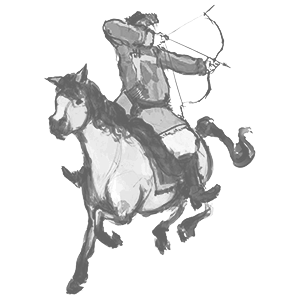
The Parthian [pahr-thee-uhn] shot was a military tactic made famous by the Parthians (an ancient Iranian empire). Their archers mounted on light horse, while retreating at a full gallop, would turn their bodies back to shoot at the pursuing enemy. The maneuver required superb equestrian skills, since the rider’s hands were occupied by his bow. As the stirrup had not been invented yet, the rider relied solely on pressure from his legs to guide his horse. The tactic was first employed by Eurasian nomads, including the Scythians, Huns, Turks, Magyars, and Mongols, before spreading to armies away from the Eurasian steppe, such as the Sassanid clibanariis and cataphract.
The Parthians famously used it to defeat the Roman general Crassus in the Battle of Carrhae. The phrase ‘parting shot’ has its origins from the Parthian shot. The first recorded usage was by John McCleod, surgeon on board the HMS Alceste contained in: ‘A narrative of a Voyage to the Yellow Sea’ (1818). The two phrases have rather similar phonetic soundings but are actually separately derived at different times. Although the Parthian archers of old have been famous for their shooting, the term ‘parthian shot’ was recorded for the first time in 1832 by Captain Mundy, ADC to Lord Combermere on a hunting trip in India.
Posted in Language, War, World |
1 Comment »


 The Daily Omnivore