September 17, 2012
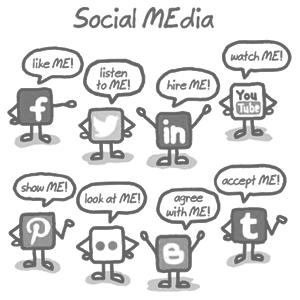
The Culture of Narcissism: American Life in an Age of Diminishing Expectations is a book by the cultural historian Christopher Lasch, first published in 1979. It explores the roots and ramifications of the normalizing of pathological narcissism in 20th century American culture using psychological, cultural, artistic, and historical synthesis.
The book proposes that post-war, late-capitalist America, through the effects of ‘organized kindness’ on the traditional family structure, has produced a personality-type consistent with clinical definitions of ‘pathological narcissism.’ This pathology is not akin to everyday narcissism — a hedonistic egoism — but rather a very weak sense of self requiring constant external validation. For Lasch, ‘pathology represents a heightened version of normality.’
read more »
Posted in Health, Language, Money |
1 Comment »
September 16, 2012

To have one’s cake and eat it too is a popular English idiomatic proverb or figure of speech most often used negatively, to connote the idea of consuming a thing whilst managing to preserve it. This may also indicate having or wanting more than one can handle or deserve, or trying to have two incompatible things. The proverb’s meaning is similar to the phrases, ‘you can’t have it both ways’ and ‘you can’t have the best of both worlds.’
Conversely, in the positive sense, it would refer to ‘having it both ways’ or ‘having the best of both worlds.’ This concept, known as opportunity cost, is one of the most important economic concepts. The phrase’s earliest recording is from 1546 as ‘wolde you bothe eate your cake, and have your cake?’ (John Heywood’s ‘A dialogue Conteinyng the Nomber in Effect of All the Prouerbes in the Englishe Tongue’). This phrase alludes to the impossibility of eating your cake and still having it afterwards.
read more »
Posted in Food, Language, Money |
Leave a Comment »
September 16, 2012

Artistic license is a colloquial term, sometimes euphemism, used to denote the distortion of fact, alteration of the conventions of grammar or language, or rewording of pre-existing text made by an artist to improve a piece of art. The artistic license may also refer to the ability of an artist to apply smaller distortions, such as a poet ignoring some of the minor requirements of grammar for poetic effect.
For example, Mark Antony’s ‘Friends, Romans, Countrymen, lend me your ears’ from Shakespeare’s ‘Julius Caesar’ would technically require the word ‘and’ before ‘countrymen,’ but the conjunction ‘and’ is omitted to preserve the rhythm of iambic pentameter (syllabic pattern). Conversely, on the next line, the end of ‘I come to bury Caesar, not to praise him’ has an extra syllable because omitting the word ‘him’ would make the sentence unclear, but adding a syllable at the end would not disrupt the meter. Both of these are examples of artistic license.
read more »
Posted in Art, Language |
Leave a Comment »
September 16, 2012
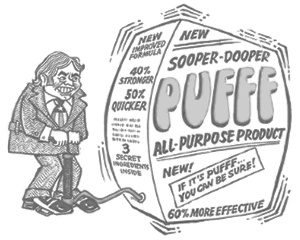
Puffery [puhf-uh-ree] as a legal term refers to promotional statements and claims that express subjective rather than objective views, which no ‘reasonable person’ would take literally. Puffery serves to ‘puff up’ an exaggerated image of what is being described and is especially featured in testimonials. In a legal context, the term originated in the English Court of Appeal case, which centered on whether a monetary reimbursement should be paid when an influenza preventive device failed to work.
The manufacturers had paid for advertising stating that £100 would be paid in such circumstances then failed to follow through. Part of their defense was that such a statement was ‘mere puff’ and not meant to be taken seriously. While the defense ultimately lost the case the principle was confirmed that certain statements made by advertisers, that were obviously not made in a serious manner, could be exempt from usual rules relating to promises in open contracts.
read more »
Posted in Language, Money, Politics |
Leave a Comment »
September 14, 2012

Afrofuturism is an emergent literary and cultural aesthetic that combines elements of science fiction, historical fiction, fantasy, Afrocentricity, and magic realism with non-Western cosmologies in order to critique not only the present-day dilemmas of people of color, but also to revise, interrogate, and re-examine the historical events of the past.
Examples of seminal afrofuturistic works include the novels of Samuel R. Delany and Octavia Butler; the canvases of Jean-Michel Basquiat and the photography of Renée Cox; as well as the extraterrestrial mythos of Parliament-Funkadelic and Sun Ra, and the music of DJ Spooky.
read more »
Posted in Art, Language, World |
1 Comment »
September 14, 2012

In linguistics, an eggcorn is an idiosyncratic substitution of a word or phrase for a word or words that sound similar or identical in the speaker’s dialect. The new phrase introduces a meaning that is different from the original, but plausible in the same context, such as ‘old-timers’ disease’ for ‘Alzheimer’s disease.’ This is as opposed to a malapropism, where the substitution creates a nonsensical phrase. Classical malapropisms generally derive their comic effect from the fault of the user, while eggcorns are errors that exhibit creativity or logic. Eggcorns often involve replacing an unfamiliar, archaic, or obscure word with a more common or modern word (‘baited breath’ for ‘bated breath’).
The term eggcorn was coined by professor of linguistics Geoffrey Pullum in 2003, in response to an article by Mark Liberman on ‘Language Log,’ a blog for linguists. Liberman discussed the case of a woman who substitutes the phrase ‘egg corn’ for the word ‘acorn,’ arguing that the precise phenomenon lacked a name; Pullum suggested using ‘eggcorn’ itself. The phenomenon is very similar to the form of wordplay known as the pun, except that, by definition, the speaker (or writer) intends the pun to have some effect on the recipient, whereas one who speaks or writes an eggcorn is unaware of the mistake.
Posted in Humor, Language |
Leave a Comment »
September 14, 2012

Metonymy [mi-ton-uh-mee] is a figure of speech used in rhetoric (the art of discourse) in which a thing or concept is not called by its own name, but by the name of something intimately associated with that thing or concept.
Metonyms can be either real or fictional concepts representing other concepts real or fictional, but they must serve as an effective and widely understood second name for what they represent. For instance, ‘Hollywood’ is used as a metonym (an instance of metonymy) for the US cinema industry, because of the fame and cultural identity of Hollywood, a district of the city of Los Angeles, as the historical center of film studios and film stars.
read more »
Posted in Language |
Leave a Comment »
September 14, 2012
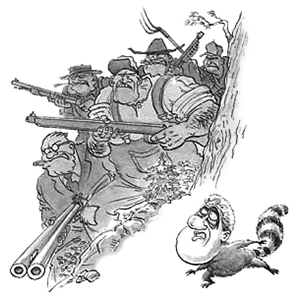
‘Vast right-wing conspiracy‘ was a theory advanced by then First Lady of the United States Hillary Rodham Clinton in 1998 in defense of her husband, President Bill Clinton, and his administration during the Lewinsky scandal, characterizing the Lewinsky charges as the latest in a long, organized, collaborative series of charges by Clinton’s political enemies. While popularized by Mrs. Clinton in her 1998 interview, the phrase did not originate with her.
In 1991 the ‘Detroit News’ wrote: ‘Thatcher-era Britain produced its own crop of paranoid left-liberal films. … All posited a vast right-wing conspiracy propping up a reactionary government ruthlessly crushing all efforts at opposition under the guise of parliamentary democracy.’ An AP story in 1995 also used the phrase, relating an official’s guess that the Oklahoma City bombing was the work of ‘maybe five malcontents’ and not ‘some kind of vast right-wing conspiracy.’
read more »
Posted in Language, Politics |
2 Comments »
September 13, 2012

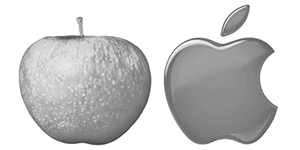
‘A moron in a hurry‘ is a hypothetical person against whom a claimant’s concern might be judged in an English law civil action for passing off or trademark infringement.
The expression is used to reject a claim that two items could reasonably be confused by a passer-by (i.e. that even a moron in a hurry would notice the difference), on the grounds that the items are so different that the goodwill and brand of the claimant’s item cannot genuinely be affected by the existence of the other.
read more »
Posted in Language, Money, Politics |
Leave a Comment »
September 13, 2012

In cinematography, full frame refers to the use of the full film gate (the rectangular opening in the front of a motion picture camera where the film is exposed to light) at maximum width and height for 35mm film cameras. It is sometimes also referred to as ‘silent aperture’ or ‘full gate.’
It is the original gate size pioneered by William Dickson and Thomas Edison in 1892 and first used in the short film ‘Blacksmithing Scene.’ Full frame is generally used by all 4-perf (four perforations per frame) films, whether silent, standard 35 (Academy ratio width), or Super 35.
read more »
Posted in Language, Technology |
Leave a Comment »
September 12, 2012


Hanna Rosin is an American Journalist. Rosin was born in Israel and grew up in Queens, New York where her father was a taxi driver. She graduated from Stuyvesant High School in 1987. She graduated from Stanford University, and is married to ‘Slate’ editor David Plotz; they live in Washington, D.C. with their three children. She is a co-founder of ‘DoubleX,’ a women’s site connected to ‘Slate.’ She is also a writer for ‘The Atlantic.’ A character portrayed by actress Chloë Sevigny in the movie ‘Shattered Glass’ about Rosin’s colleague at ‘The New Republic,’ Stephen Glass, was loosely based on Rosin. Rosin has written a book based on her 2010 Atlantic story, ‘The End of Men.’
In the past she has specialized in writing about religious-political issues, in particular the influence of evangelical Christians on the 2004 U.S. presidential campaign. She is the author of ‘God’s Harvard: A Christian College on a Mission to Save America,’ published in 2007. Based on a ‘New Yorker’ story, the book follows several young Christians at Patrick Henry College, a new evangelical institution that teaches its students to ‘shape the culture and take back the nation.’ Rosin’s portrayals of the students are part of a larger attempt to chronicle the cultural and political history of the modern Christian right.
Posted in Language, Money, Politics |
Leave a Comment »
September 11, 2012
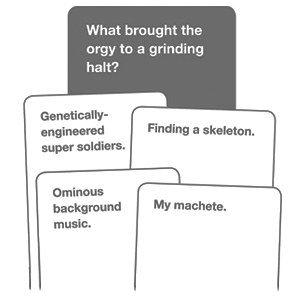
Cards Against Humanity is a multiplayer party game currently available as a free download or a published hardcopy. The game is available under a Creative Commons license. Its title references the phrase ‘crimes against humanity,’ reflecting its politically incorrect content.
Cards Against Humanity was created by a group of alumni of Highland Park High School as a party game for a New Year’s Eve celebration. The project was financed through the website Kickstarter. Co-creator Ben Hantoot stated in an interview that the game was developed by ‘8 of us who are the core writer-creators, 5 or 6 additional ‘part time’ developers’ and ‘dozens of friends and acquaintances who have played the game.’
read more »
Posted in Games, Humor, Language |
Leave a Comment »


 The Daily Omnivore