September 12, 2012


Hanna Rosin is an American Journalist. Rosin was born in Israel and grew up in Queens, New York where her father was a taxi driver. She graduated from Stuyvesant High School in 1987. She graduated from Stanford University, and is married to ‘Slate’ editor David Plotz; they live in Washington, D.C. with their three children. She is a co-founder of ‘DoubleX,’ a women’s site connected to ‘Slate.’ She is also a writer for ‘The Atlantic.’ A character portrayed by actress Chloë Sevigny in the movie ‘Shattered Glass’ about Rosin’s colleague at ‘The New Republic,’ Stephen Glass, was loosely based on Rosin. Rosin has written a book based on her 2010 Atlantic story, ‘The End of Men.’
In the past she has specialized in writing about religious-political issues, in particular the influence of evangelical Christians on the 2004 U.S. presidential campaign. She is the author of ‘God’s Harvard: A Christian College on a Mission to Save America,’ published in 2007. Based on a ‘New Yorker’ story, the book follows several young Christians at Patrick Henry College, a new evangelical institution that teaches its students to ‘shape the culture and take back the nation.’ Rosin’s portrayals of the students are part of a larger attempt to chronicle the cultural and political history of the modern Christian right.
Posted in Language, Money, Politics |
Leave a Comment »
September 11, 2012
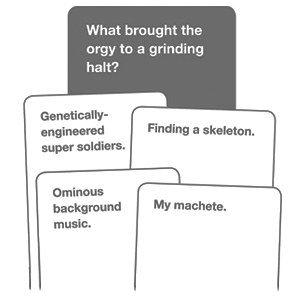
Cards Against Humanity is a multiplayer party game currently available as a free download or a published hardcopy. The game is available under a Creative Commons license. Its title references the phrase ‘crimes against humanity,’ reflecting its politically incorrect content.
Cards Against Humanity was created by a group of alumni of Highland Park High School as a party game for a New Year’s Eve celebration. The project was financed through the website Kickstarter. Co-creator Ben Hantoot stated in an interview that the game was developed by ‘8 of us who are the core writer-creators, 5 or 6 additional ‘part time’ developers’ and ‘dozens of friends and acquaintances who have played the game.’
read more »
Posted in Games, Humor, Language |
Leave a Comment »
September 8, 2012

The core concept of the Online Disinhibition Effect refers to a loosening (or complete abandonment) of social restrictions and inhibitions that would otherwise be present in normal face-to-face interaction during interactions with others on the Internet. Because of the loss of inhibition, some users may exhibit benign tendencies; people may become more affectionate, more willing to open up to others, less guarded about their emotions and may speak to others about what they are feeling in an attempt to achieve emotional catharsis.
According to psychologist John Suler, this particular occurrence is called benign disinhibition. With respect to bad behavior, users on the Internet can frequently do or say as they wish without fear of any kind of meaningful reprisal. In most Internet forums, the worst kind of punishment one can receive for bad behavior is usually being banned from a particular site. In practice, however, this serves little use; the person involved can usually circumvent the ban by simply registering another username and continuing the same behavior as before. Suler calls this toxic disinhibition.
read more »
Posted in Health, Language, Technology |
1 Comment »
September 8, 2012

Paul Bacon (b. 1923), is an American book and album cover designer and jazz musician. He is known for introducing the ‘Big Book Look’ in book jacket design, and has designed about 6,500 jackets and more than 200 jazz record covers. His first big hit came in 1956 with ‘Compulsion,’ a novel by Meyer Levin.
This cover also marked the inception of the ‘Big Book Look’ that Bacon became known for. This look features a large, bold title, a prominent author’s name, and a small conceptual image. Instances of this ‘look’ include ‘Catch-22’ by Joseph Heller, ‘Visions of Cody’ by Jack Kerouac, and ‘Bullet Park’ by John Cheever, along with countless others.
read more »
Posted in Art, Language, Money |
Leave a Comment »
September 5, 2012

A General Theory of Love is a 2000 book about the science of human emotions and biological psychiatry written by Thomas Lewis, Fari Amini, and Richard Lannon, psychiatry professors at the University of California, San Francisco. It has since been reissued twice, with new editions appearing in 2001 and 2007. The book examines the phenomenon of love and human connection from a combined scientific and cultural perspective.
It attempts to reconcile the language and insights of humanistic inquiry and cultural wisdom (literature, song, poetry, painting, sculpture, dance, and philosophy) with the more recent findings of social science, neuroscience, and evolutionary biology. However, the book has been criticized for its ‘convoluted and opaque’ prose style, as well as its extensive reliance on the model of the triune brain (reptilian, pre-mammalian, and mammalian) as defined by Paul D. MacLean, a model that has been variously categorized as obsolete, imprecise, or unnecessary.
read more »
Posted in Health, Language, Love |
Leave a Comment »
September 4, 2012
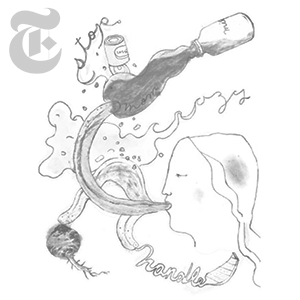
Lexical-gustatory [lek-si-kuhl guhs-tuh-tawr-ee sin-uhs-thee-zhuh] synesthesia [sin-uhs-thee-zhuh] is one of the rarer forms of synesthesia (a mixing of the senses), in which spoken or written words evoke vivid sensations of taste, sometimes including temperature and texture (e.g., for lexical-gustatory synesthete JIW, ‘jail’ tastes of cold, hard bacon).
This form of synesthesia was first documented in 1907 in both Italy and the United States, but has only recently become the topic of scientific investigation.
read more »
Posted in Food, Health, Language |
Leave a Comment »
September 4, 2012

Ideasthesia is a neurological or cognitive phenomenon in which activation of a particular concept triggers a sensory-like experience. Specifically it is when activations of concepts (inducers) evoke perception-like experiences (concurrents). The name comes from Greek, meaning sensing concepts or sensing ideas.
The main reason for introducing the notion of ideaesthesia was the empirical evidence indicating that the related term synesthesia (i.e. union of senses) suggests incorrect explanation of a set of phenomena traditionally covered by this heading.
read more »
Posted in Health, Language, Science |
Leave a Comment »
September 4, 2012

Grapheme-color [graf-eem] synesthesia [sin-uhs-thee-zhuh] is a form of synesthesia (mixing of sensations) in which an individual’s perception of numbers and letters is associated with the experience of colors. Like all forms of synesthesia, grapheme-color synesthesia is involuntary, consistent, and memorable. It is one of the most common forms of synesthesia, and because of the extensive knowledge of the visual system, one of the most studied. While it is extremely unlikely that any two synesthetes will report the same colors for all letters and numbers, studies of large numbers of synesthetes find that there are some commonalities across letters (e.g., ‘A’ is likely to be red).
Early studies argued that the condition was not due to associative learning, such as from playing with colored refrigerator magnets. However, one recent study has documented a case of synesthesia in which synesthetic associations could be traced back to colored refrigerator magnets. Despite the existence of this individual case, the majority of synesthetic associations do not seem to be driven by learning of this sort. Rather, it seems that more frequent letters are paired with more frequent colors, and some meaning-based rules, such as ‘b’ being blue, drive most synesthetic associations.
read more »
Posted in Health, Language, Science |
Leave a Comment »
September 3, 2012

Ask Me Anything refers to when a user of an internet forum invites questions from other users.
Usually it is designated by the abbreviation AMA.
Posted in Language, Technology |
Leave a Comment »
August 27, 2012

Idiopathic [id-ee-uh-path-ik] is an adjective used primarily in medicine meaning arising spontaneously or from an obscure or unknown cause. From Greek ‘idios’ (‘one’s own’) and ‘pathos’ (‘suffering’), it means approximately ‘a disease of its own kind.’ It is technically a term from nosology, the classification of disease.
For some medical conditions, one or more causes are somewhat understood, but in a certain percentage of people with the condition, the cause may not be readily apparent or characterized. In these cases, the origin of the condition is said to be idiopathic.
read more »
Posted in Health, Language |
Leave a Comment »
August 26, 2012

Electro house is a subgenre of house music influenced by 1980s music. The term has been used to describe the music of many of the world’s top DJs, such as David Guetta, deadmau5, Skrillex, and Tiësto. Electro house, sometimes resembling tech house (a hybrid of techno with house), typically retains elements of house music and can incorporate electro-influenced synths and samples.
It often has a ‘dirty’ bass sound created from saw waves with compression and distortion. The exact origins of the genre are uncertain; it has sometimes been seen as a fusion of electro and house; or a term using ‘electro’ as an adjective (meaning ‘futuristic’ or ‘hard’). French house, by artists such as Justice and especially Daft Punk, has also been considered a strong influence.
read more »
Posted in Art, Language, Technology |
Leave a Comment »
August 25, 2012
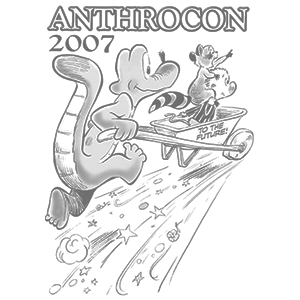
The furry fandom is a subculture interested in anthropomorphic animal characters. According to fandom historian Fred Patten, the concept of furry originated at a science fiction convention in 1980, when a character drawing from Steve Gallacci’s ‘Albedo Anthropomorphics’ started a discussion of anthropomorphic characters in science fiction novels. This led to the formation of a discussion group that met at science fiction and comics conventions.
The specific term ‘furry fandom’ was being used in fanzines as early as 1983, however, fans consider the origins of the subculture to be much earlier, with fictional works such as ‘Kimba, The White Lion’ released in 1965, Richard Adams’ novel ‘Watership Down,’ published in 1972 (and its 1978 film adaptation), as well as Disney’s ‘Robin Hood’ as oft-cited examples. To distinguish these personae from seriously depicted animal characters, such as Lassie or Old Yeller, cartoon animals are referred to as ‘funny animals,’ a term that came into use in the 1910s.
read more »
Posted in Games, Language, Sex |
2 Comments »


 The Daily Omnivore