May 2, 2012
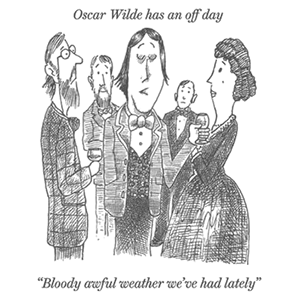
In linguistics, a phatic expression [fat-ik] is one whose only function is to perform a social task, as opposed to conveying information. The term was coined by anthropologist Bronisław Malinowski in the early 1900s from Greek ‘phanein’ (‘to show oneself,’ ‘appear’).
In Russian linguist Roman Jakobson’s work, ‘Phatic’ communication is that which concerns the channel of communication, for instance when one says ‘I can’t hear you, you’re breaking up’ in the middle of a cell phone conversation. In the modern context, this usage appears in online communities and more specifically on micro-blogging.
read more »
Posted in Language, World |
Leave a Comment »
May 2, 2012

Aizuchi [eye-zoo-chee] is the Japanese term for frequent interjections during a conversation that indicate the listener is paying attention and understanding the speaker. In linguistic terms, these are a form of phatic expression (one whose only function is to perform a social task, as opposed to conveying information).
Aizuchi are considered reassuring to the speaker, indicating that the listener is active and involved in the discussion. Aizuchi are frequently misinterpreted by non-native speakers as agreement on the part of the listener, because common aizuchi include: ‘hai,’ ‘ee,’, or ‘un’ (‘yes,’ with varying degrees of formality); ‘sō desu ne’ (‘I see’); ‘sō desu ka’ (‘is that so?’); ‘honma’ (‘really’); ‘naruhodo’ (‘I see, that’s right’); and nodding. These can be compared to English ‘yeah, yeah,’ ‘yeah, ok,’ ‘got it,’ ‘yep,’ ‘uhuh,’ or ‘go on,’ but are more pronounced and important in Japanese.
read more »
Posted in Language, World |
Leave a Comment »
May 1, 2012

A displacement activity is the result of two contradicting instincts in a particular situation. Birds, for example, may peck at grass when uncertain whether to attack or flee from an opponent; similarly, a human may scratch his or her head when they do not know which of two options to choose. Displacement activities often involve actions to bring comfort such as scratching, drinking, or feeding.
The first description of a displacement activity (though not the use of the term) is probably by English evolutionary biologist Julian Huxley in 1914. The subsequent development of research on displacement activities was a direct consequence of Austrian zoologist Konrad Lorenz’s works on instincts. However, the first mentions of the phenomenon came in 1940 by the two Dutch zoological researchers Nikolaas Tinbergen and Adriaan Kortlandt.
Posted in Language, Science |
Leave a Comment »
April 30, 2012

Simon Reynolds (b. 1963) is an English music critic who is well known for his writings on electronic dance music and for coining the term ‘post-rock.’ Besides electronic dance music, Reynolds has written about a wide range of artists and musical genres, and has written books on post-punk and rock. He has contributed to ‘Melody Maker’ (where he first made his name), ‘Spin,’ ‘Rolling Stone,’ ‘Mojo,’ and others. He currently resides in the East Village in NY.
Reynolds’ first experience writing about music was with ‘Monitor,’ a fanzine he helped to found in 1984 while he was studying history at Oxford. The publication only lasted for six issues. When it was discontinued in 1986, Reynolds was already making his name writing for ‘Melody Maker,’ one of the three major British music magazines of the time (the other two being the ‘New Musical Express’ (NME) and ‘Sounds’).
read more »
Posted in Art, Language, Politics |
Leave a Comment »
April 29, 2012

Tehrangeles [te-ran-juh-luhs] is a portmanteau deriving from the combination of Tehran, the capital of Iran, and Los Angeles. It is used when referring to the large number (up to 800,000) of former Iranian nationals and their descendants residing in the Los Angeles metropolitan area; it is the largest such population outside of Iran. In common usage, it usually refers to the proportionally larger Persian-American subset of Iranian immigrants, many of whom are second generation citizens.
This area is now officially recognized by the City of Los Angeles as ‘Persian Square.’ The Persian community in the L.A. area originally centered in the Westwood neighborhood of west Los Angeles, often referred to as Little Persia or Persian Hills/Persian Square. Immigration to the area increased several-fold due to the events surrounding the 1979 Iranian Revolution. Westwood Boulevard became known for its many Persian shops and restaurants; and the Persian expatriate community of Los Angeles entered all forms of media including magazines, newspapers, radio and television stations.
Posted in Language, World |
Leave a Comment »
April 26, 2012

Ken Nordine (b. 1920) is an American voiceover and recording artist best known for his series of ‘Word Jazz’ albums. His deep, resonant voice has also been featured in many commercial advertisements and movie trailers. One critic wrote that ‘you may not know Ken Nordine by name or face, but you’ll almost certainly recognize his voice.’ During the 1940s, he was heard on ‘The World’s Great Novels’ and other radio programs broadcast from Chicago. He attracted wider attention when he recorded the aural vignettes on ‘Word Jazz’ (1957), which features Nordine’s narration over cool jazz by the Chico Hamilton jazz group, recording under the alias of Fred Katz, who was then the cellist with Hamilton’s quintet.
Nordine began performing and recording such albums at the peak of the beat era and was associated with the poetry-and-jazz movement. However, some of Nordine’s ‘writings are more akin to Franz Kafka or Edgar Allan Poe’ than to the beats. Many of his word jazz tracks feature critiques of societal norms. Some are lightweight and humorous, while others reveal dark, paranoid undercurrents and bizarre, dream-like scenarios. Nordine was Linda Blair’s vocal coach for her role in ‘The Exorcist.’
Posted in Art, Language |
Leave a Comment »
April 26, 2012

Vocaloid is a singing synthesizer. Its signal processing part was developed through a joint research project led by Kenmochi Hideki at the Pompeu Fabra University in Spain in 2000. Backed by the Yamaha Corporation it was developed into a commercial product, which was first released in 2004. The software enables users to synthesize singing by typing in lyrics and melody. It uses synthesizing technology with specially recorded vocals of voice actors or singers. A piano roll type interface is used to input the melody and the lyrics can be entered on each note. The software can change the stress of the pronunciations, add effects such as vibrato, or change the dynamics and tone of the voice.
Each Vocaloid is sold as ‘a singer in a box’ designed to act as a replacement for an actual singer. The software was originally only available in English and Japanese, but as of Vocaloid 3, Spanish, Chinese, and Korean have been added. The software is intended for professional musicians as well as light computer music users and has so far sold on the idea that the only limits are the users’ own skills. Japanese musical groups Livetune and Supercell have released their songs featuring Vocaloid as vocals. Japanese record label Exit Tunes of Quake Inc. also have released compilation albums featuring Vocaloids. Artists such as Mike Oldfield have also used Vocaloids within their work for back up singer vocals and sound samples.
read more »
Posted in Language, Money, Technology |
Leave a Comment »
April 26, 2012

Foreign Accent Syndrome is a rare medically recognised condition which is a speech impediment that usually occurs as a resulting side effect of brain injury, such as a stroke or head trauma. As a result of the speech impediment those suffering from the Foreign Accent Syndrome pronounce their native language with an accent that to the ear of the listeners may be mistaken as foreign or dialectical.
It has many other impacts and effects, including poor memory and concentration span, as well as a feeling of loss of identity, potentially causing those affected to go through a bereavement process. Two cases have been reported of individuals with the condition as a development problem and one associated with severe migraine. Between 1941 and 2009 there have been sixty recorded cases.
read more »
Posted in Health, Language, World |
Leave a Comment »
April 26, 2012

Clay Shirky (b. 1964) is an American writer, consultant, and teacher on the social and economic effects of Internet technologies. He has a joint appointment at NYU as a Distinguished Writer in Residence at the Arthur L. Carter Journalism Institute and Assistant Arts Professor in the New Media focused graduate Interactive Telecommunications Program (ITP). His courses address, among other things, the interrelated effects of the topology of social networks and technological networks, how our networks shape culture and vice-versa.
Shirky divides his time between consulting, teaching, and writing on the social and economic effects of Internet technologies. His consulting practice is focused on the rise of decentralized technologies such as peer-to-peer, web services, and wireless networks that provide alternatives to the wired client–server infrastructure that characterizes the World Wide Web. He is a member of the Wikimedia Foundation’s Advisory Board. In 2010, Kevin Kelly (founding executive editor of ‘Wired’ magazine) cited the phrase ‘Institutions will try to preserve the problem to which they are the solution,’ and called it the ‘Shirky Principle,’ as the phrasing reminded him of the clarity of the Peter Principle.
read more »
Posted in Language, Politics, Technology |
Leave a Comment »
April 24, 2012

Automated essay scoring (AES) is the use of specialized computer programs to assign grades to essays written in an educational setting. It is a method of educational assessment and an application of natural language processing. Its objective is to classify a large set of textual entities into a small number of discrete categories, corresponding to the possible grades—for example, the numbers 1 to 6. Therefore, it can be considered a problem of statistical classification.
Several factors have contributed to a growing interest in AES. Among them are cost, accountability, standards, and technology. Rising education costs have led to pressure to hold the educational system accountable for results by imposing standards. The advance of information technology promises to measure educational achievement at reduced cost.
read more »
Posted in Education, Language, Technology |
Leave a Comment »
April 23, 2012

Élan vital [ey-lahn vee-tal] was coined by French philosopher Henri Bergson in his 1907 book ‘Creative Evolution,’ in which he addresses the question of self-organization and spontaneous morphogenesis of things in an increasingly complex manner. Elan vital was translated in the English edition as ‘vital impetus,’ but is usually translated by his detractors as ‘vital force.’ It is a hypothetical explanation for evolution and development of organisms, which Bergson linked closely with consciousness.
It was believed by others that this essence (élan vital) could be harvested and embedded into an inanimate substance and activated with electricity, perhaps taking literally another of Bergson’s metaphorical descriptions, the ‘current of life.’ British biologist Julian Huxley remarked that Bergson’s élan vital is no better an explanation of life than is explaining the operation of a railway engine by its ‘élan locomotif’ (‘locomotive driving force’). The same epistemological fallacy is parodied in Molière’s ‘Le Malade imaginaire,’ where a quack ‘answers’ the question of ‘Why does opium cause sleep?’ with ‘Because of its soporific [sleep-inducing] power.’
read more »
Posted in Language, Politics |
Leave a Comment »
April 23, 2012

In William Gibson’s fiction, the Sprawl is a colloquial name for the Boston-Atlanta Metropolitan Axis (BAMA), an urban sprawl environment on a massive scale, and a fictional extension of the real Northeast Megalopolis. The novels ‘Neuromancer’ (1984), ‘Count Zero’ (1986), and ‘Mona Lisa Overdrive’ (1988) (collectively known as the Sprawl trilogy) take place in this environment, as do the short stories ‘Johnny Mnemonic,’ ‘New Rose Hotel,’ ‘Burning Chrome,’ and ‘Fragments of a Hologram Rose.’
The Sprawl is a visualization of a future where virtually the entire East Coast of the United States, from Boston to Atlanta, has melded into a single mass of urban sprawl. It has been enclosed in several geodesic domes and merged into one megacity. The city has become a separate world with its own climate, no real night/day cycle, and an artificial sky that is always grey. It is said of the Sprawl that ‘the actors change but the play remains the same.’
Posted in Art, Language, Technology |
Leave a Comment »


 The Daily Omnivore