March 29, 2012
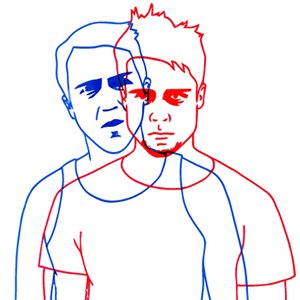
An unreliable narrator is a narrator, whether in literature, film, or theater, whose credibility has been seriously compromised. The term was coined in 1961 by Wayne C. Booth in ‘The Rhetoric of Fiction.’ This narrative mode is one that can be developed by an author for a number of reasons, usually to deceive the reader or audience.
Unreliable narrators are usually first-person narrators, but third-person narrators can also be unreliable. The nature of the narrator is sometimes immediately clear. For instance, a story may open with the narrator making a plainly false or delusional claim or admitting to being severely mentally ill, or the story itself may have a frame in which the narrator appears as a character, with clues to his unreliability.
read more »
Posted in Art, Language |
Leave a Comment »
March 29, 2012
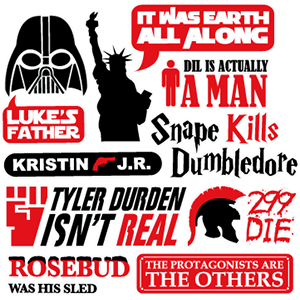
Spoiler is any element of any summary or description of any piece of fiction that reveals any plot element which will give away the outcome of a dramatic episode within the work of fiction, or the conclusion of the entire work. It can also be used to refer to any piece of information regarding any part of a given media. Because enjoyment of fiction sometimes depends upon the dramatic tension and suspense which arises within it, the external revelation of such plot elements can ‘spoil’ the enjoyment that some consumers of the narrative would otherwise have experienced.
The term spoiler was introduced in the early days of the internet, and is often associated with specialist internet sites and in newsgroup postings. Early rules of netiquette insisted that spoilers could and should be normally avoided, but if the posting of “‘spoiling’ information was unavoidable, it be preceded by a warning (‘SPOILER!’), or the spoiler itself has to be masked so that it can not be visible to any but those keen for details and not fazed at the thought of such potentially plot-revealing information.
read more »
Posted in Art, Language |
1 Comment »
March 29, 2012

The tricky slave is a stock character. He is a clever, lower-class person who brings about the happy ending of a comedy for the lovers. He is more clever than the upper-class people about him, both the lovers and the characters who block their love, and typically also looking out for his own interests; in the New Comedy, the tricky slave or ‘dolosus servus’ aimed to get his freedom by assisting his young master in love. Besides the actual slaves of classical theater, he also appears as the scheming valet in Renaissance comedy, called the ‘gracioso’ in Spanish. The ‘zanni’ of Commedia dell’arte are often tricky slaves, as are Puss-in-Boots in Perrault’s fairy tale, Jeeves in P. G. Wodehouse’s work, and Figaro. In fairy tales, the same function is often fulfilled by fairy godmothers, talking animals, and like creatures.
A female version of the tricky slave would be Morgiana, a clever slave girl from ‘Ali Baba and the Forty Thieves’ in the ‘One Thousand and One Nights.’ She is initially in Cassim’s household but on his death she joins his brother Ali Baba and through her quick wittedness she saves Ali’s life many times and eventually kills his worst enemy, the leader of the Forty Thieves. As reward, Ali frees her and Morgiana marries Cassim’s son. In contrast to these positive depictions, the tricky slave is portrayed as the antagonist in another Arabian Nights tale, ‘The Three Apples,’ an early example of a murder mystery. After the murderer reveals himself near the middle of a story, he narrates the events leading up to the murder in a flashback. Within this flashback, a slave convinces him of his wife’s infidelity, thus leading to her murder.
Posted in Art, Language |
Leave a Comment »
March 29, 2012
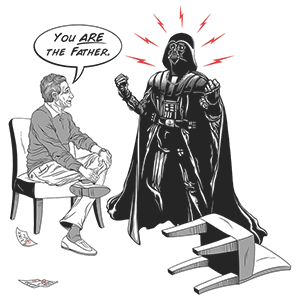
Anagnorisis [an-ag-nawr-uh-sis] is a moment in a play or other work when a character makes a critical discovery. Anagnorisis originally meant recognition in its Greek context, not only of a person but also of what that person stood for. It was the hero’s sudden awareness of a real situation, the realization of things as they stood, and finally, the hero’s insight into a relationship with an often antagonistic character in Aristotelian tragedy.
In the Aristotelian definition of tragedy, it was the discovery of one’s own identity or true character (e.g. Cordelia, Edgar, Edmund, etc. in Shakespeare’s ‘King Lear’) or of someone else’s identity or true nature (e.g. Lear’s children, Gloucester’s children) by the tragic hero. In his ‘Poetics,’ Aristotle defined anagnorisis as ‘a change from ignorance to knowledge, producing love or hate between the persons destined by the poet for good or bad fortune.’ Shakespeare did not base his works on Aristotelian theory of tragedy, including use of hamartia (an injury committed in ignorance), yet his tragic characters still commonly undergo anagnorisis as a result of their struggles.
read more »
Posted in Art, Language, Philosophy |
2 Comments »
March 29, 2012
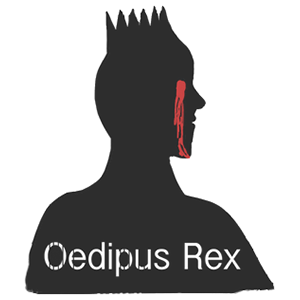
Peripeteia [per-uh-pi-tee-uh] is a reversal of circumstances, or turning point. The term is primarily used with reference to works of literature. The English form of peripeteia is peripety. Peripety is a sudden reversal dependent on intellect and logic. Aristotle defines it as ‘a change by which the action veers round to its opposite, subject always to our rule of probability or necessity.’ According to Aristotle, peripeteia, along with discovery, is the most effective when it comes to drama, particularly in a tragedy. Aristotle wrote ‘The finest form of Discovery is one attended by Peripeteia, like that which goes with the Discovery in ‘Oedipus’…’
Peripeteia includes changes of character, but also more external changes. A character who becomes rich and famous from poverty and obscurity has undergone peripeteia, even if his character remains the same. When a character learns something he had been previously ignorant of, this is normally distinguished from peripeteia as ‘anagnorisis’ (‘discovery’), a distinction derived from Aristotle’s work. Aristotle considered anagnorisis, leading to peripeteia, the mark of a superior tragedy. One such play is ‘Oedipus the King,’ where the oracle’s information that Oedipus had killed his father and married his mother brought about his mother’s death and his own blindness and exile. That plot is considered complex and superior to simple plots without anagnorisis or peripeteia, such as when Medea resolves to kill her children, knowing they are her children, and does so.
Posted in Art, Language |
1 Comment »
March 29, 2012

A plot twist is a change in the expected direction or outcome of the plot of a work of fiction. It is a common practice in narration used to keep the interest of an audience, usually surprising them with a revelation. Some ‘twists’ are foreshadowed and can thus be predicted by many viewers/readers, whereas others are a complete shock. When a plot twist happens near the end of a story, especially if it changes one’s view of the preceding events, it is known as a twist ending.
Revealing the existence of a plot twist often spoils a movie, since the majority of the movie generally builds up to the plot twist. A device used to undermine the expectations of the audience is the false protagonist. It involves presenting a character at the start of the film as the main character, but then disposing of this character, usually killing them. It is a red herring (a clue intended to mislead).
read more »
Posted in Art, Language |
Leave a Comment »
March 28, 2012
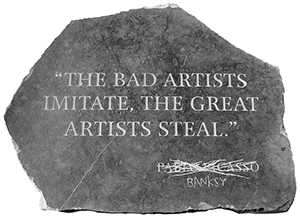
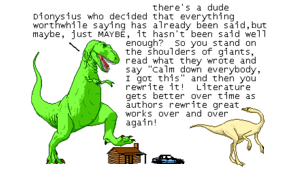
Dionysian imitatio is the influential literary method of imitation as formulated by Greek author Dionysius of Halicarnassus in the first century BCE, which conceived it as the rhetoric practice of emulating, adapting, reworking and enriching a source text by an earlier author. It marked the beginning of the doctrine of imitation, which dominated the Western history of art up until 18th century, when the notion of romantic originality was introduced.
The imitation literary approach is closely linked with the widespread observation that ‘everything has been said already,’ which was also stated by Egyptian scribes around 2000 BCE. The ideal aim of this approach to literature was not originality, but to surpass the predecessor by improving their writings and set the bar to a higher level.
read more »
Posted in Art, Language, Philosophy |
Leave a Comment »
March 27, 2012
The Grass Mud Horse or Caoníma, is a Chinese Internet meme widely used as a form of symbolic defiance of the widespread Internet censorship in China. It is a play on the Mandarin language words which translate literally to, ‘fuck your mother,’ and is one of the so-called ’10 mythical creatures’ created in a hoax article on ‘Baidu Baike’ (a collaborative encyclopedia) in early 2009 whose names form obscene puns. Official ‘cleanup’ of the internet, which threatens the Caonima, has led Chinese internet users to create other ‘Mud Horse’ variants, such as the ‘Rolling Mud Horse’ and ‘Working Mud Horse,’ which are also puns for ‘fuck your mother.’
The ‘China Digital Times’ sees Caonima as the ‘de facto mascot of netizens in China fighting for free expression, inspiring poetry, photos and videos, artwork, lines of clothing, and more.’ It is an illustration of the ‘resistance discourse’ of Chinese internet users with ‘increasingly dynamic and sometimes surprising presence of an alternative political discourse: images, frames, metaphors and narratives that have been generated from Internet memes [that] undermine the values and ideology that reproduce compliance with the Chinese Communist Party’s authoritarian regime, and, as such, force an opening for free expression and civil society in China.’
read more »
Posted in Humor, Language, Politics |
1 Comment »
March 27, 2012
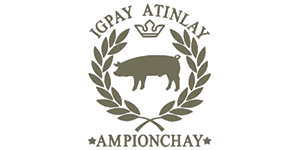
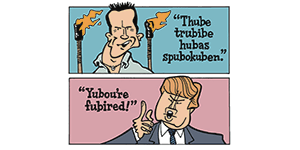
A language game (also called secret language or ludling or argot) is a system of manipulating spoken words to render them incomprehensible to the untrained ear. Language games are used primarily by groups attempting to conceal their conversations from others.
Some common examples are Pig Latin, which is used all over the globe; the Gibberish family, prevalent in the United States and Sweden; and Verlan, spoken in France. Each of these language games involves a usually simple standard transformation to speech, thus encoding it. The languages can be easily mentally encoded and decoded by a skilled speaker at the rate of normal speech, while those who either don’t know the key or aren’t practiced in rapid speech are left hearing nothing but gibberish.
read more »
Posted in Games, Humor, Language |
Leave a Comment »
March 27, 2012
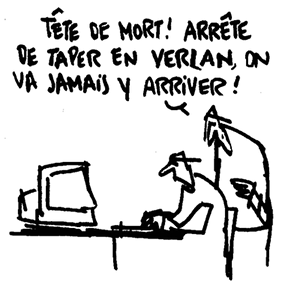
Verlan [veyr-lahn] is a French argot (secret language) featuring inversion of syllables in a word, and is common in slang and youth language. It rests on a long French tradition of transposing syllables of individual words to create slang words.
The name verlan is an example: it is derived from inverting the syllables in ‘l’envers’ [lan-ver](‘the inverse’). Different rules apply for one-syllable words, and words with more than one syllable may be verlanized in more than one way. For example, ‘cigarette’ may yield ‘garetsi’ or ‘retsiga.’
read more »
Posted in Drugs, Language, Sex |
Leave a Comment »
March 27, 2012


Valspeak is a common name for an American sociolect (social dialect), originally of the San Fernando Valley in Southern California, in particular Valley girls. This stereotype, which originated in the 1970s, became an international fad for a certain period.
Many phrases and elements of Valleyspeak, along with surfer slang and skateboarding slang, are stable elements of the California English dialect lexicon, and in some cases wider American English (such as the use of ‘like’ as a hedge, a mitigating device used to lessen the impact of an utterance).
read more »
Posted in Language, Money |
Leave a Comment »
March 27, 2012

The high rising terminal (HRT), also known as uptalk, upspeak, rising inflection, or high rising intonation, is a feature of some accents of English where statements have a rising intonation pattern in the final syllable or syllables of the utterance.
The origins of HRT remain uncertain. Geographically, anecdotal evidence places the conception of the American English variety on the West Coast – anywhere from Southern California to the Pacific Northwest. Others have suggested it originated in New Zealand, and it is unclear whether the American English varieties and the Oceanic varieties had any influence on each other regarding the spread of HRT.
read more »
Posted in Language, World |
Leave a Comment »


 The Daily Omnivore