March 14, 2012
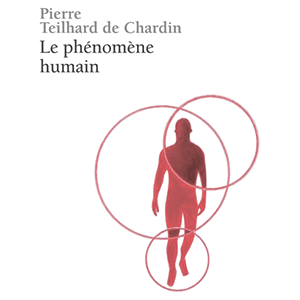
Omega Point is a term coined by the French Jesuit Pierre Teilhard de Chardin (1881–1955) to describe a maximum level of complexity and consciousness towards which he believed the universe was evolving.
In this theory, developed by Teilhard in ‘The Future of Man’ (1950), the universe is constantly developing towards higher levels of material complexity and consciousness, a theory of evolution that Teilhard called the Law of Complexity/Consciousness. For Teilhard, the universe can only move in the direction of more complexity and consciousness if it is being drawn by a supreme point of complexity and consciousness.
read more »
Posted in Language, Philosophy, Technology |
Leave a Comment »
March 13, 2012

A Hello world program is a computer program that outputs ‘Hello, world’ on a display device. Because it is typically one of the simplest programs possible in most programming languages, it is by tradition often used to illustrate to beginners the most basic syntax of a programming language, or to verify that a language or system is operating correctly (called a sanity test). In a device that does not display text, a simple program to produce a signal, such as turning on an LED, is often substituted for ‘Hello world’ as the introductory program. Itis also used by computer hackers as a proof of concept that arbitrary code can be executed through an exploit where the system designers did not intend code to be executed—for example, on Sony’s PlayStation Portable. This is the first step in using homemade content (‘home brew’) on such a device.
While small test programs existed since the development of programmable computers, the tradition of using the phrase ‘Hello, world!’ as a test message was influenced by an example program in the seminal book ‘The C Programming Language.’ The example program from that book prints ‘hello, world’ (without capital letters or exclamation mark), and was inherited from a 1974 Bell Laboratories internal memorandum by Brian Kernighan, ‘Programming in C: A Tutorial.’
Posted in Language, Money, Technology |
Leave a Comment »
March 12, 2012

Sweat equity is a term that refers to a party’s contribution to a project in the form of effort — as opposed to financial equity, which is a contribution in the form of capital. In a partnership, some partners may contribute to the firm only capital and others only sweat equity. Similarly, in a startup company formed as a corporation, employees may receive stock or stock options, becoming thus part-owners of the firm, in return for accepting salaries that are below their respective market values (this includes zero wages). This concept, also called ‘stock for services’ and sometimes ‘equity compensation’ can also be seen when startup companies use their shares of stock to entice service providers to provide necessary corporate services in exchange for a discount or for deferring service fees until a later date,
The term can also be used to describe the value added to real estate by owners who make improvements by their own toil. The more labor applied to the home, and the greater the resultant increase in value, the more sweat equity that has been used. In a successful model used by Habitat for Humanity, families who would otherwise be unable to purchase their own home (based on qualifying factors including need, ability to pay, and willingness to partner) contribute sweat equity hours to the construction of their own home, the homes of other Habitat for Humanity partner families or by volunteering to assist the organization in other ways.
Posted in Language, Money |
Leave a Comment »
March 12, 2012
An opsimath [ahp-se-math] can refer to a person who begins, or continues, to study or learn late in life. Opsimathy was once frowned upon, used as a put down with implications of laziness, and considered less effective by educators than early learning. The emergence of opsimath clubs has demonstrated that opsimathy has shed much of this negative connotation, and that this approach may, in fact, be desirable.
Notable opsimaths include Sir Henry Rawlinson, Grandma Moses, and Cato the Elder who learned Greek only at the age of 80. George Dawson (1898 – 2001) was called ‘America’s favorite poster child for literacy’ after learning to read at the age of 98. His life story, ‘Life Is So Good,’ was published in 2000.
Posted in Education, Language |
Leave a Comment »
March 12, 2012

In literature, the competent man is a stock character who can do anything perfectly, or at least exhibits a very wide range of abilities and knowledge, making him a form of polymath. While not the first to use such a character type, the heroes (and heroines) of Robert A. Heinlein’s fiction are generally competent men/women (with Jubal Harshaw being a prime example), and one of Heinlein’s characters Lazarus Long gives a good summary of requirements: ‘A human being should be able to change a diaper, plan an invasion, butcher a hog, conn a ship, design a building, write a sonnet, balance accounts, build a wall, set a bone, comfort the dying, take orders, give orders, cooperate, act alone, solve equations, analyze a new problem, pitch manure, program a computer, cook a tasty meal, fight efficiently, die gallantly. Specialization is for insects.’
The competent man, more often than not, is written without explaining how he achieved his wide range of skills and abilities, especially as true expertise typically suggests practical experience instead of learning through books or formalized education alone. While not implausible with older or unusually long lived characters, when such characters are young it is often not adequately explained as to how they acquired so many skills at an early age. It would be easy for a reader to form the impression that the competent man is just basically a superior sort of human being. Many non-superpowered comic book characters are written as hyper-competent characters due to the perception that they would simply be considered underpowered otherwise.
Posted in Art, Language, Philosophy |
1 Comment »
March 12, 2012
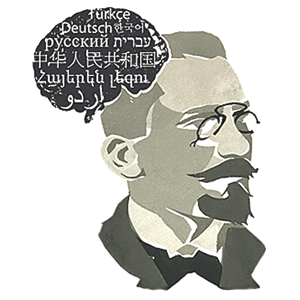
A polyglot [pol-ee-glot] is someone with a high degree of proficiency in several languages. A bilingual person can speak two languages fluently, whereas a trilingual three; above that the term multilingual may be used. A hyperpolyglot is one who can speak six or more languages fluently. The term was coined by the linguist Richard Hudson in 2003. One notable hyperpolyglot was Emil Krebs (1867-1930) who mastered 68 languages in speech and writing.
There are several theories as to why some people learn many languages with relative ease, while others struggle learning even one foreign language. One theory is that a spike in testosterone levels in the womb can increase a brain’s asymmetry. Neuroscientist Katrin Amunts studied the brain of Emil Krebs and determined that the area of Krebs’ brain responsible for language—Broca’s area—was organized differently than in monolingual men. However, neurolinguist Loraine Obler has suggested a link with the Geschwind–Galaburda cluster, which shows a high coincidence of left-handedness, auto-immune disorders, learning disorders and talents in art, mathematics and, possibly, languages.
Posted in Health, Language, World |
Leave a Comment »
March 12, 2012
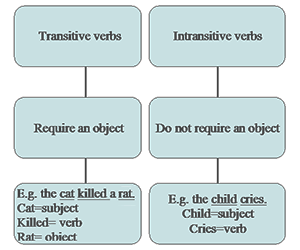

Transitivity [tran-si-tiv-i-tee] in grammar refers to whether a verb has an object or not.
An intransitive verb is an action that involves the object or person doing the action by itself: ‘The door opened.’ This contrasts with a transitive verb, where the action is done by someone or something else: ‘John opened the door.’
Posted in Language |
Leave a Comment »
March 11, 2012


Gotcha journalism is a term used to describe methods of interviewing which are designed to entrap interviewees into making statements which are damaging or discreditable to their cause, character, integrity, or reputation. The aim is to make film or sound recordings of the interview which can be selectively edited, compiled, and broadcast or published to show the subject in an unfavourable light.
Methods include misrepresenting the topic of the interview, then switching to an embarrassing subject, leading the interviewee to commit to a certain answer, and confronting them with prepared material designed to contradict or discredit that position, repeatedly baiting the interviewee to befuddle them and get their guard down to elicit an embarrassing response. Another technique is for the interviewer to remain silent after something the subject has said, which often leads the subject to say something to fill the silence. Gotcha journalism is often designed to keep the interviewee on the defensive by, for example, being required to explain some of their own statements taken out of context thus effectively preventing the interviewee from discussing their own agenda for the interview.
Posted in Language, Politics |
Leave a Comment »
March 9, 2012


Don’t Make Me Think is a book by Steve Krug about human-computer interaction and web usability. The book’s premise is that a good software program or web site should let users accomplish their intended tasks as easily and directly as possible. Krug points out that people are good at satisficing, or taking the first available solution to their problem, so design should take advantage of this.
He frequently cites Amazon.com as an example of a well-designed web site that manages to allow high-quality interaction, even though the site gets bigger and more complex every day. The book itself is intended to be an example of concision (brevity) and well-focused writing. The goal, according to the book’s introduction, was to make a text that could be read by an executive on a two-hour flight of an airplane.
Posted in Language, Technology |
Leave a Comment »
March 9, 2012

DWIM (‘Do What I Mean‘) computer systems attempt to anticipate what users intend to do, correcting trivial errors automatically rather than blindly executing users’ explicit but incorrect input. The term was coined by Lisp programmer Warren Teitelman in 1966. Teitelman’s DWIM package ‘correct[ed] errors automatically or with minor user intervention,’ similarly to a spell checker for natural language. Teitelman and his Xerox PARC colleague Larry Masinter later described this philosophy:
‘Although most users think of DWIM as a single identifiable package, it embodies a pervasive philosophy of user interface design: at the user interface level, system facilities should make reasonable interpretations when given unrecognized input. …the style of interface used throughout Interlisp allows the user to omit various parameters and have these default to reasonable values… DWIM is an embodiment of the idea that the user is interacting with an agent who attempts to interpret the user’s request from contextual information. Since we want the user to feel that he is conversing with the system, he should not be stopped and forced to correct himself or give additional information in situations where the correction or information is obvious.’
Posted in Language, Technology |
Leave a Comment »
March 8, 2012

The Intelligent Investor by Benjamin Graham, first published in 1949, is a widely acclaimed book on value investing, an investment approach Graham began teaching at Columbia Business School in 1928 and subsequently refined with David Dodd. Value investing generally refers to buying securities whose shares appear underpriced. Graham’s favorite allegory is that of Mr. Market, an obliging fellow who turns up every day at the shareholder’s door offering to buy or sell his shares at a different price. Often, the price quoted by Mr. Market seems plausible, but sometimes it is ridiculous.
The investor is free to either agree with his quoted price and trade with him, or ignore him completely. Mr. Market doesn’t mind this, and will be back the following day to quote another price. The point of this anecdote is that the investor should not regard the whims of Mr. Market as a determining factor in the value of the shares the investor owns. He should profit from market folly rather than participate in it. The investor is advised to concentrate on the real life performance of his companies and receiving dividends, rather than be too concerned with Mr. Market’s often irrational behavior.
Posted in Language, Money |
Leave a Comment »
March 8, 2012

Utne Reader [ut-nee] is an American bimonthly magazine, which collects and reprints articles on politics, culture, and the environment from generally alternative media sources, including journals, newsletters, weeklies, zines, music, and DVDs. In addition, the magazine’s writers and editors contribute books, film, and music reviews and original articles which tend to focus on emerging cultural trends. The magazine’s website produces ten blogs covering politics, environment, media, spirituality, science and technology, great writing, and the arts.
The magazine was founded in 1984 by Eric Utne and Nina Rothschild Utne. Utne Reader was part of the salon movement of the 1980s, devoted to debate on the issues of the day, and was an early source of coverage of the mythopoetic men’s movement when it surfaced in the early 1990s. Every year, the magazine gives out its Utne Independent Press Awards, which honor alternative and independent magazines from around the world. Past winners include the ‘Wilson Quarterly,’ ‘In These Times,’ ‘Virginia Quarterly Review,’ and ‘High Country News.’
Posted in Language, Politics |
Leave a Comment »


 The Daily Omnivore