March 6, 2012

‘Amor fati‘ is a Latin phrase loosely translating to ‘love of fate.’ It is used to describe an attitude in which one sees everything that happens in one’s life, including suffering and loss, as good. Moreover, it is characterized by an acceptance of the events or situations that occur in one’s life. The phrase has been linked to the writings of Marcus Aurelius, who did not himself use the words (he wrote in Greek, not Latin), but was popularized in Friedrich Nietzsche’s writings and is representative of the general outlook on life he articulates:
‘I want to learn more and more to see as beautiful what is necessary in things; then I shall be one of those who make things beautiful. Amor fati: let that be my love henceforth! I do not want to wage war against what is ugly. I do not want to accuse; I do not even want to accuse those who accuse. Looking away shall be my only negation. And all in all and on the whole: some day I wish to be only a Yes-sayer.’ ‘My formula for greatness in a human being is amor fati: that one wants nothing to be different, not forward, not backward, not in all eternity. Not merely bear what is necessary, still less conceal it—all idealism is mendaciousness in the face of what is necessary—but love it.’
Posted in Language, Philosophy |
1 Comment »
March 6, 2012
Poetic justice is a literary device in which virtue is ultimately rewarded or vice punished, often in modern literature by an ironic twist of fate intimately related to the character’s own conduct. English drama critic Thomas Rymer coined the phrase in ‘The Tragedies of the Last Age Considere’d’ (1678) to describe how a work should inspire proper moral behavior in its audience by illustrating the triumph of good over evil.
The demand for poetic justice is consistent in Classical authorities and shows up in Horace, Plutarch, and Quintillian, so Rymer’s phrasing is a reflection of a commonplace. Philip Sidney, in ‘Defense of Poetry,’ argued that poetic justice was, in fact, the reason that fiction should be allowed in a civilized nation.
read more »
Posted in Art, Language, Politics |
Leave a Comment »
March 6, 2012

‘Asshole: How I Got Rich and Happy by Not Giving a Shit About You’ is a 2008 spoof self-help book and memoir by American author Martin Kihn. The first line of the book, is ‘I was the nicest guy in the world and it was killing me.’ Kihn, who worked for a marketing company, was told by his boss that unless he started ‘playing hardball,’ they were going to demote him and upgrade a colleague Kihn calls ‘The Nemesis’ to a window office. So to save his career, Kihn decided to turn himself into an asshole, and in telling his story, he describes exactly how the reader can can follow his lead.
To become an asshole, Kihn builds a team, consisting of an acting coach, life coach and both personal and dog trainer – to help ‘master the art of assholism.’ Kihn then creates a ten-step “assholism’ program which involves ‘ignoring other peoples’ feelings, never saying sorry, dressing in black silk and only eating red meat.’ Other tasks saw Kihn signing up to the National Rifle Association, learning kickboxing, screaming at colleagues and eating garlic bagels on public transport. Additionally, Kihn takes inspiration from famous figures whom he considers ‘assholes’ such as: Donald Trump, Rudy Giuliani, Martha Stewart, David Letterman, Nicole Kidman, Machiavelli, Scarface and Paris Hilton. He also takes inspiration from Ayn Rand’s ‘The Fountainhead’ and ‘The Virtue of Selfishness.’
Posted in Humor, Language, Money |
1 Comment »
March 6, 2012

Creative consultant is a credit that has been given to screenwriters who have ‘doctored’ a movie screenplay. It is often given by producers in lieu of official credit. Those given this credit in the television field work closely with an Executive Producer, Head Writer/showrunner, and Casting Director. They are involved in the writing process (proposing and editing story outlines/scripts), casting roles, and hiring/firing writers, producers, directors, and other crew members.
Sometimes they are given the credit of Executive Consultant. A Story Consultant is strictly involved in the writing process, and has no influence in the hiring and firing of writers or other crew members. A Script Consultant is only involved in the proposal and execution of a script. The Writers Guild of America disapproves of the credit.
Posted in Art, Language, Money |
Leave a Comment »
March 6, 2012

A buzzword (also fashion word and vogue word) is a term of art, salesmanship, politics, or technical jargon that is used in the media and wider society outside of its originally narrow technical context. Buzzwords differ from jargon in that jargon is esoteric but precisely defined terminology used for ease of communication between specialists in a given field, whereas a buzzword (which often develops from the appropriation of technical jargon) is often used in a more general way. Buzzwords are used as a form of thought-control via intentional vagueness.
In management, by stating organization goals with opaque words of unclear meaning; their positive connotations prevent questioning of intent, especially when many buzzwords are used. they also are used to inflate the trivial to something of importance and stature, to impress a judge or an examiner by seeming to know a topic, by name-dropping it, or to camouflage chit-chat while saying nothing. Examples include: ‘Going forward,’ ‘Leverage,’ ‘Long tail,’ ‘Next generation,’ ‘Paradigm,’ and ‘Incentivize.’
Posted in Language, Money, Politics |
1 Comment »
March 6, 2012

Martin Kihn (b. 1950) is an American writer and digital marketer. Martin Kihn was born in Zambia, where his parents met while working in a hospital. His South African-born father is a doctor, and his Scottish mother, a former actress, is now a drama teacher. He grew up in Michigan. He has earned a BA in Theater Studies from Yale, and in the late 1990s was Head Writer for the popular television program ‘Pop-Up Video’ on MTV Networks and was nominated for an Emmy for Writing. He lost to ‘Win Ben Stein’s Money,’ decided to quit writing and got into business school. He received an MBA from Columbia Business School.
Kihn’s first book was an expose of the consulting agencies called ‘House of Lies: How Management Consultants Steal Your Watch and Then Tell You the Time’ (2005), based on the three years he spent working for a large consultancy, Booz Allen. It was adapted by Showtime as a series with Don Cheadle playing Marty Kaan, an ‘outside the box’ management consultant, loosely based on Marty Kihn himself. Kihn reemerged a few years later with a satirical memoir called ‘Asshole: How I Got Rich and Happy by Not Giving a Shit About You’ (2008).
Posted in Art, Language, Money |
Leave a Comment »
March 5, 2012

A greeble or nurnie is a small piece of detailing added to break up the surface of an object to add visual interest to a surface or object, particularly in movie special effects. They serve no real purpose other than to add complexity to the object, and cause the flow of the eye over the surface of the object to be interrupted, usually giving the impression of increased size. It is essentially the small detailed technical part of a larger object. The detail can be made from geometric primitives, including cylinders, cubes, and rectangles, combined to create intricate, but meaningless, surface detail.
Greebles are commonly found on models or drawings of fictional spacecraft in science fiction. The earliest recorded use of the term ‘greeble’ found to date was by those working on the special effects for ‘Star Wars’ — the group who would later become Industrial Light and Magic. They also described this design method as ‘guts on the outside.’ Ron Thornton is widely believed to have coined the term ‘nurnies’ referring to CGI technical detail that his company Foundation Imaging produced for the ‘Babylon 5’ series.
read more »
Posted in Art, Language, Technology |
Leave a Comment »
March 1, 2012

In academic publishing, the least publishable unit (LPU), colloquially ‘publon’ – the smallest measurable quantum of publication, is the minimum amount of information that can generate a publication in a peer-reviewed journal. The term is often used as a joking, ironic, or sometimes derogatory reference to the strategy of pursuing the greatest quantity of publications at the expense of their quality. Publication of the results of research is an essential part of science. The number of publications is sometimes used to assess the work of a scientist and as a basis for distributing research funds. In order to achieve a high rank in such an assessment, there is a trend to split up research results into smaller parts that are published separately, thus increasing the number of publications.
‘Salami publication’ or ‘salami slicing’ is a variant of the smallest-publishable-unit strategy. In salami slicing, data gathered by one research project is separately reported (wholly or in part) in multiple end publications. Salami slicing, apparently named by analogy with the thin slices made from larger pieces of salami meat, is generally considered questionable when not explicitly labeled, as it may lead to the same data being counted multiple times as apparently independent results in aggregate studies.
Posted in Education, Humor, Language, Science |
Leave a Comment »
March 1, 2012
Cryptomnesia [krip-tam-nee-zha] occurs when a forgotten memory returns without it being recognized as such by the subject, who believes it is something new and original. It is a memory bias whereby a person may falsely recall generating a thought, not deliberately engaging in plagiarism but rather experiencing a memory as if it were a new inspiration.
The word was first used by the psychiatrist Théodore Flournoy, in reference to the case of a psychic medium, to suggest a high incidence of ‘latent memories on the part of the medium that come out, sometimes greatly disfigured by a subliminal work of imagination or reasoning, as so often happens in our ordinary dreams.’ Jung suggested the phenomenon in Nietzsche’s ‘Also Sprach Zarathustra.’
read more »
Posted in Language, Philosophy, Politics |
Leave a Comment »
February 29, 2012
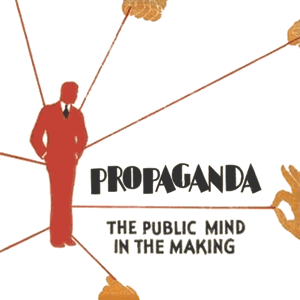
Edward Bernays (1891 – 1995) was a pioneer in the field of public relations and propaganda, referred to in his obituary as ‘the father of public relations.’
He combined the ideas of Gustave Le Bon and Wilfred Trotter on crowd psychology with the psychoanalytical ideas of his uncle, Sigmund Freud. He felt manipulation was necessary in society, which he regarded as irrational and dangerous as a result of the ‘herd instinct’ that Trotter had described.
read more »
Posted in Language, Money, Politics |
Leave a Comment »
February 29, 2012
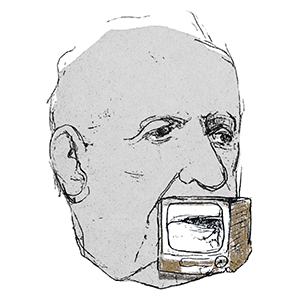
Propaganda is a 1928 book by public relations pioneer Edward Bernays. It argued that the scientific manipulation of public opinion was necessary to overcome chaos and conflict in society: ‘The conscious and intelligent manipulation of the organized habits and opinions of the masses is an important element in democratic society. Those who manipulate this unseen mechanism of society constitute an invisible government which is the true ruling power of our country. We are governed, our minds are molded, our tastes formed, our ideas suggested, largely by men we have never heard of.’
‘This is a logical result of the way in which our democratic society is organized. Vast numbers of human beings must cooperate in this manner if they are to live together as a smoothly functioning society. […] In almost every act of our daily lives, whether in the sphere of politics or business, in our social conduct or our ethical thinking, we are dominated by the relatively small number of persons […] who understand the mental processes and social patterns of the masses. It is they who pull the wires which control the public mind.’
Posted in Language, Money, Politics |
Leave a Comment »
February 29, 2012

Xenophilia [zen-uh-fil-ee-uh] means an affection for unknown objects or peoples. It is the opposite of xenophobia. Xenophilia is a theme found in science fiction, primarily the space opera sub-genre, in which one explores the consequences of love and sexual intercourse between humans and extraterrestrials, particularly humanoid ones. A satirical example is ‘XXXenophile,’ an X-rated comic book written by Phil Foglio. A more somber example is the relationship of Sarek and Amanda Grayson (Spock’s parents) in ‘Star Trek.’
The 1970 film ‘Watermelon Man’ centers in part around a white man trying to have sex with a white woman he works with. His efforts fail until he is magically turned into an African American, at which point she is more than willing to sleep with him. It is only the following day that the protagonist realizes, to his horror, that the woman is a xenophile and only had sex with him because of his race; she had no interest in him as a person. George Washington, in his 1796 Farewell Address, described the influence of xenophilia in politics, which he saw as negative: ‘Such an attachment of a small or weak towards a great and powerful nation dooms the former to be the satellite of the latter.’
Posted in Language, Sex, World |
Leave a Comment »



 The Daily Omnivore